
UK Asylum FAE: Flawed Tech, High Stakes
The UK plans to use flawed facial age estimation (FAE) AI for asylum seeker age checks, despite internal reports confirming severe biases and inaccuracies, especially for Sub-Saharan Africans. This tech risks misclassifying vulnerable children as adults, leading to loss of legal protections. Critics call for its abandonment.
Verdict
In an alarming development, the UK government is poised to implement a facial age estimation (FAE) system for asylum seekers, a technology proven to be fundamentally flawed and prone to severe demographic biases. Despite internal reports detailing its inaccuracies and the potential for life-altering errors, the Home Office appears determined to push forward with a system that could mistakenly classify vulnerable children as adults, stripping them of vital protections. This isn't just a technical misstep; it's a policy decision with profound human consequences, built on shaky AI foundations.
Introduction: The Promise vs. The Peril of AI Age Verification
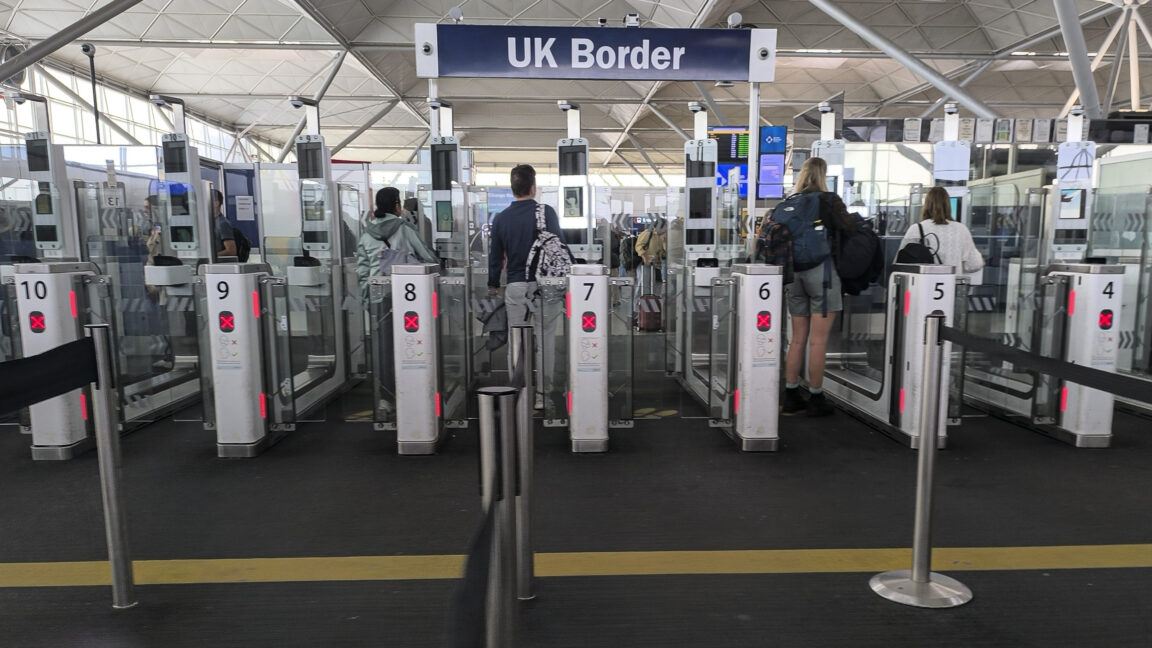
Age verification is increasingly pervasive online, from social media to adult content sites. The next frontier, however, is offline, with the UK planning to deploy facial age estimation (FAE) AI at its borders starting in 2027. This marks a significant shift, as it's believed to be the first time such a system will be used in this context. The stated goal is to "modernize" age assessments and "crack down on fake claims" by adults attempting to pose as minors. Many asylum seekers arrive without documentation, making age verification a critical, often challenging, process for border officials.
However, an investigation by WIRED, Lighthouse Reports, and The Independent has unearthed an internal UK government report revealing significant concerns. The report details extensive testing of FAE technologies, indicating that these systems frequently misidentify children as adults and suffer from serious inherent biases. These issues are particularly acute for Sub-Saharan Africans, who represent a large demographic among those seeking asylum in the UK. The evidence strongly suggests that, far from being a cutting-edge solution, this FAE system is a risky and potentially harmful gamble with human lives.
Under the Hood: How FAE Works (and Fails)
Facial age estimation technology operates by analyzing an individual's facial features and, based on training from millions of pre-labeled faces, generating an estimated age. In highly controlled laboratory conditions, the most advanced algorithms can predict age within approximately 2.5 years. This level of accuracy might seem acceptable for low-stakes applications, like verifying access to certain websites.
However, the real-world performance of FAE systems is far less reliable. The source content highlights several critical limitations:
- Variable Accuracy: Performance fluctuates significantly depending on the specific algorithm used, an individual's gender, and their demographic background.
- Image Quality Dependence: Poor-quality images, inadequate lighting, or factors like facial expressions can drastically impair the system's accuracy. Some systems have even been fooled by images of video game characters.
- Stress and Trauma Impact: Crucially, the internal Home Office report indicated that "temporary aging" associated with trauma and the "stress of travel"—conditions frequently experienced by asylum seekers—appeared to negatively impact FAE system accuracy.
These inherent weaknesses mean that even the "best performing algorithm" mentioned in the leaked Home Office report had "substantial deviations" in its estimations, particularly when applied to the very population it's intended to assess.
Performance and Bias: A Deep Dive into the Flaws
The investigation exposed severe and deeply troubling performance issues and biases within the FAE systems tested by the Home Office:
- Demographic Bias: The system performed significantly worse when estimating the ages of Sub-Saharan Africans compared to other groups. This is a critical flaw, as Sub-Saharan Africans constituted the largest group of migrants requiring age assessments in the UK in 2025.
- Age Overestimation: For female Sub-Saharan Africans, the average age estimation was off by 4.6 years. This means a 13.5-year-old girl could be incorrectly identified as an 18-year-old adult. More generally, the system tended to classify 17-year-olds as over 18, and its accuracy was consistently worse for females.
- Real-world vs. Lab Conditions: The Home Office's own testing was primarily conducted using high-quality images of documented individuals. The report acknowledged that the accuracy rates would likely be even worse in practical scenarios, given that photos taken at initial encounters are "routinely worse" than follow-up images.
- Cognitec's Performance: While the specific algorithm purchased by the UK government remains unnamed, Cognitec, a German company from which the UK spent over $400,000 on face-scanning technology, was among the seven tested. Public data analysis of Cognitec's systems revealed that its algorithm misclassified twice as many 16-year-olds as 18 or older when using lower-quality border crossing photos compared to high-quality visa photos. Furthermore, Lighthouse Reports' audit showed that 16-year-olds from West Africa were more prone to being classified as adults than Eastern European 16-year-olds.
Cognitec acknowledges that "demographic differences" in performance are common across all FAE algorithms but states they are actively working to reduce bias through improved methodologies and data diversification. However, the current documented biases present an unacceptable risk for high-stakes applications like asylum age verification.
Implementation and Oversight: Cause for Concern
The Home Office's handling of this technology raises serious questions about transparency and due diligence:
- Disbanded Expert Committee: During its exploration of AI age estimation, the Home Office disbanded a scientific committee specifically designed to advise on broader age assessment methods. A former committee member, Tim Cole, described the face scans as "hideously inaccurate" and noted that the committee was denied the opportunity to highlight these inadequacies before its closure.
- Lack of Clarity on Usage: While the Home Office states FAE will be an "additional" tool to support human judgment and that individuals will be treated as children in cases of uncertainty, it has failed to provide detailed answers on critical operational aspects. These include how border officers will interact with the FAE estimates, whether specific training will address system weaknesses, or what standards will be enforced for photo collection.
- Existing Human Assessment Flaws: Even the current human-led age assessments have been criticized for issues such as poor record-keeping, perfunctory visual assessments, and a historical lack of specific training for staff, suggesting that merely adding a flawed AI system without addressing underlying operational issues is unlikely to improve outcomes significantly.
Human Impact: The Real Cost of Flawed Tech
For asylum seekers, especially children, the stakes are incredibly high. An incorrect age classification can lead to a child being stripped of legal protections and placed in adult detention centers, an outcome described as "life-changing" and resulting from "unimaginable trauma." Rights groups like Foxglove, alongside 61 other organizations, have issued an open letter urging the Home Office to abandon these plans, labeling the technology "experimental tech that has baked-in inaccuracy and racist bias."
Experts also worry about the "dehumanizing" nature of the technology and the risk of its normalization among staff. Anna Bacciarelli of Human Rights Watch articulates the core concern: "There’s so much risk in every component of this system that it’s really just not worth pursuing."
The Verdict: A Risky Bet on Flawed Technology
Given the documented and acknowledged flaws, the UK's decision to proceed with facial age estimation for asylum seekers is deeply concerning. The technology's significant demographic biases, particularly against vulnerable populations, and its sensitivity to real-world conditions like image quality and stress, make it fundamentally unsuitable for such a high-stakes application. While the desire to modernize and streamline processes is understandable, deploying a system known to be inaccurate and biased, with potentially devastating consequences for individuals, is irresponsible.
This isn't just about a new piece of tech; it's about its impact on human rights and dignity. Until these systems can demonstrate unquestionable accuracy and fairness across all demographics and real-world conditions, their deployment in sensitive contexts like asylum processing should be unequivocally rejected. The current evidence suggests the UK is prioritizing perceived efficiency over proven reliability and ethical considerations.
FAQ
Q: What are the main flaws of the UK's facial age estimation system for asylum seekers? A: The primary flaws include significant inaccuracy, particularly a tendency to classify children as adults, and severe demographic bias, with performance being notably worse for Sub-Saharan Africans and females. The system's accuracy is also heavily impacted by poor image quality and the stress or trauma experienced by asylum seekers.
Q: Why is the bias against Sub-Saharan Africans particularly concerning? A: This bias is especially concerning because Sub-Saharan Africans constituted the largest group of migrants requiring age assessments in the UK in 2025. This means the system's known inaccuracies and biases would disproportionately affect the most vulnerable and largest demographic it is designed to assess, leading to potentially life-altering incorrect classifications.
Q: What are the potential consequences for asylum seekers if this flawed technology is implemented? A: If a child asylum seeker is incorrectly classified as an adult by the FAE system, they could be stripped of critical legal protections and placed in adult-only detention centers. This has profound implications for their safety, well-being, and legal rights, exacerbating the trauma they may have already experienced during their journey.
Related articles
Android 17 QPR2 Beta 7.1: The Performance Relief You've Been Waiting
Android 17 QPR2 Beta 7.1: Finally Fixing the QPR1 Performance Woes Verdict: Android 17 QPR2 Beta 7.1 is a crucial and highly anticipated software update for Google Pixel users, specifically targeting and resolving the

DJI Solo Video Setups: Smart Choices for Lone Creators
This review delves into DJI's recommended solo video setups, highlighting the Osmo Pocket 3 Creator Combo as a top pick for its integrated camera, gimbal, and mic. It also covers stabilizers like the Osmo Mobile 8 and RS 4, and the DJI Mic Mini series for enhanced audio, providing honest pros, cons, and clear buying advice.

Mark Wahlberg on using AI in film ‘the right way’ and being open to
Actor Mark Wahlberg believes AI has a place in filmmaking if used responsibly for enhancement, not script generation or actor replacement. At TechCrunch Disrupt, he expressed openness to an AI likeness carrying on his legacy, managed by his family, and emphasized storytelling.

Ars Technica's Rocket Report: Your Essential Space Industry Briefing
Quick Verdict Ars Technica's Rocket Report, presented by veteran space reporter Stephen Clark, offers an invaluable and meticulously organized weekly (or similar frequency, implied by "Edition 9.15") digest of the most

Apple iPhone Duo: A Daring Debut with Notable Compromises
Apple's highly anticipated iPhone Duo, priced at $2,000, has gone on pre-order. While hailed as "Apple's most exciting device in a decade" for its innovative foldable design and immersive display, it comes with significant drawbacks like the absence of FaceID and a premium camera.

Tesla Unveils Thruster-Equipped Roadster, 2028 Production Targeted
Tesla has unveiled its second-generation Roadster, featuring cold-gas thrusters co-developed with SpaceX, enabling it to jump and flip. The electric sports car demonstrated 0-60mph in an astonishing 0.81 seconds, with production targeted for 2028. This highly anticipated reveal also serves as a key recruitment tool for Tesla's ambitious AI and robotics initiatives.