
Indefinite Causal Order Superposition: A Quantum Breakthrough
The Verdict: A Glimpse Beyond Causality The latest quantum experiment exploring “indefinite causal order” is a foundational breakthrough, offering compelling evidence that the temporal sequence of events might not be
The Verdict: A Glimpse Beyond Causality
The latest quantum experiment exploring “indefinite causal order” is a foundational breakthrough, offering compelling evidence that the temporal sequence of events might not be fixed in the quantum realm. While still in its early stages with acknowledged loopholes, the application of a Bell's-like inequality to this problem represents a significant leap in rigorously testing one of quantum mechanics' most mind-bending predictions. This isn't a consumer product, but a vital piece of scientific inquiry that could profoundly reshape our understanding of reality and unlock novel technological capabilities.
Unpacking the "Indefinite Causal Order"
At its core, this research delves into whether the familiar concept of cause-and-effect, where event A definitively precedes and influences event B, holds true in the quantum world. The phenomenon under scrutiny, known as "indefinite causal order" (ICO), suggests that in certain quantum scenarios, the order of events (A before B, or B before A) can exist in a superposition – an indeterminate state where both sequences are simultaneously possible, or neither is distinctly defined. Previous experiments hinted at this bizarre reality, showing that particles could experience a mixture of temporal orders within specific setups. However, these earlier demonstrations were limited, unable to generalize their findings beyond the particular experimental arrangements.
This new work, conducted by a team at the University of Vienna, elevates the inquiry by introducing a more formal, generalized test. Instead of merely observing a superposition in a controlled environment, they sought to formally prove its fundamental nature, much like Bell's inequalities did for entanglement and hidden variables decades ago.
Experimental Design and Rigor
The ingenuity of the Vienna team lies in adapting Bell's inequalities, a well-established tool in quantum physics, to the problem of causal order. Bell's inequalities typically help physicists determine if observed quantum correlations are due to some underlying, yet hidden, local variables, or if they represent a deeper, non-local quantum reality. By creating an equivalent framework for indefinite causal order, the researchers devised a method to definitively test whether the superposition of temporal orders is a fundamental feature of quantum mechanics, or merely an artifact of specific experimental conditions.
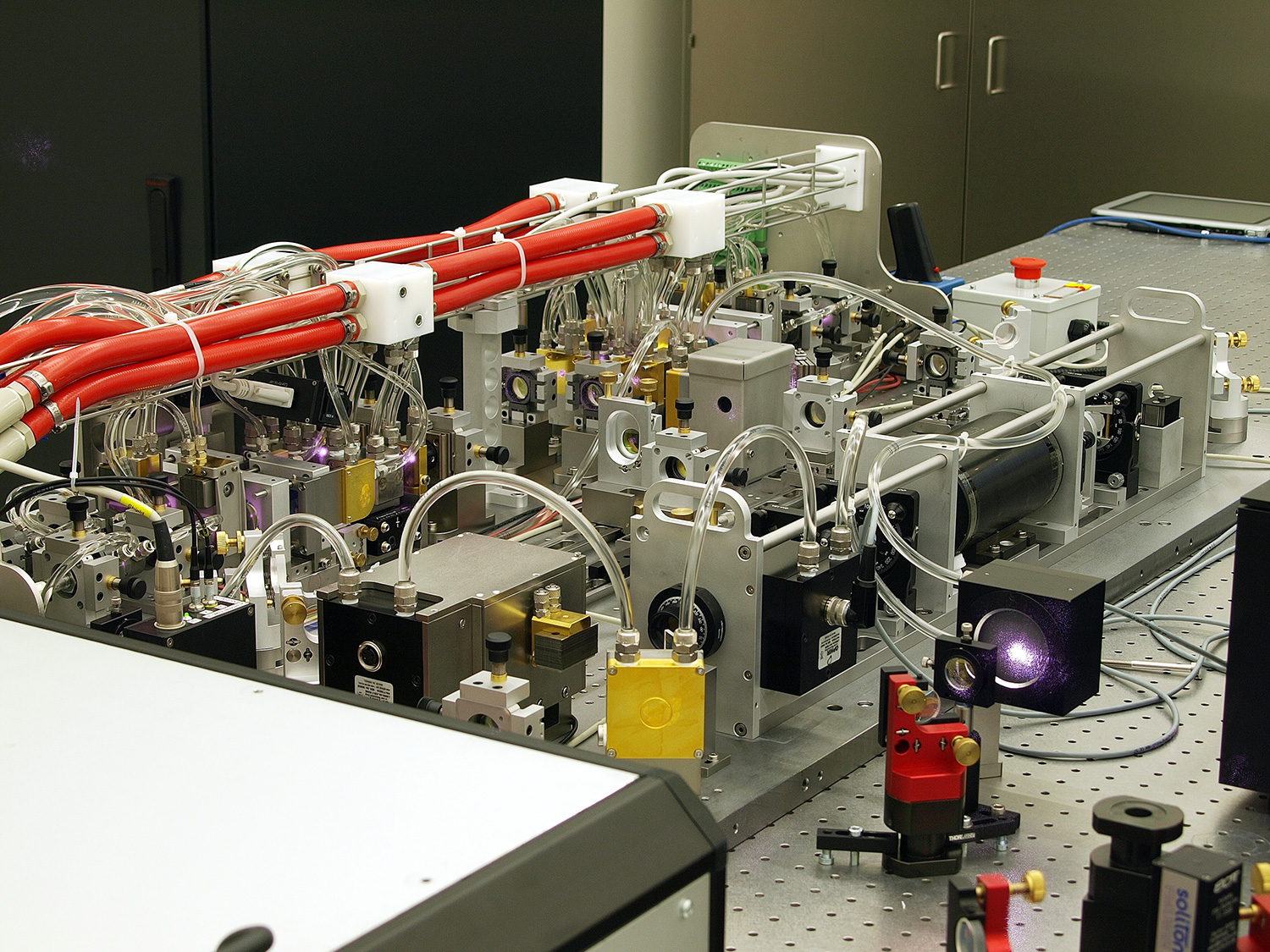
Their setup involved entangled photons. One photon was sent through a device designed to apply two manipulations, A and B. Crucially, the order in which these manipulations occurred (A then B, or B then A) depended on the photon's polarization. After passing through the device, its path was measured. Meanwhile, its entangled partner's polarization was measured, which indirectly revealed the causal order experienced by the first photon. This intricate design allowed them to probe the system's response to an indeterminate causal sequence.
Initial Results: A Resounding "Yes"
The results were striking: the measurements deviated by an astounding 18 standard deviations from what would be expected if a definite causal order or local hidden variables were at play. This is an exceptionally strong statistical indicator, providing compelling evidence that the superposition of temporal order is indeed a fundamental aspect of quantum mechanics, rather than an illusion or a byproduct of an incomplete theory. It suggests our conventional, linear understanding of time and causality may not apply universally at the quantum scale.
The "Pros" – Why This Matters
This experiment offers several key advantages:
- Formal Verification: Moving beyond mere observation, it provides a rigorous, generalized framework for testing indefinite causal order, analogous to the foundational tests of entanglement.
- Strong Evidence: The 18 standard deviation result offers powerful statistical support for the existence of ICO as a fundamental quantum phenomenon.
- Path to Future Research: It establishes a clear methodology for designing future experiments to close current limitations.
- Broad Practical Implications: The researchers highlight numerous potential applications for devices that leverage indefinite causal order. These include enhanced channel discrimination, solving complex "promise problems," optimizing communication complexity, mitigating noise in quantum systems, improving thermodynamic processes, quantum metrology (highly precise measurements), secure quantum key distribution, and even generating and distilling entanglement more effectively. In essence, intentionally blurring the lines of causality could lead to new ways of processing information and performing tasks that outperform traditional, causally ordered systems.
The "Cons" – Remaining Loopholes and Challenges
Despite its significance, the experiment, like many pioneering quantum tests, is not without its limitations:
- Photon Loss: A substantial number of photons (around 99%) were lost during the experiment. While the results are compelling, it's technically possible that this loss preferentially affected a subset of photons, potentially masking correlations that might be compatible with hidden variables. This "detection loophole" is a common challenge in quantum optics experiments.
- Spacial Separation: The hardware used in the experiment was not separated by sufficient distances to definitively rule out sub-light-speed influences. This is analogous to the "locality loophole" in Bell tests, where closely spaced detectors could, in principle, allow for classical communication between measurement events, even if unintended.
- Specific ICO Oddities: The authors acknowledge that there may be other unique potential oddities inherent to indefinite causal-order experiments that still need to be addressed in future work.
These loopholes indicate that while the evidence is incredibly strong, the scientific community will need to conduct further, more refined experiments to definitively close all avenues for alternative explanations. The current state is compared to where entanglement research was decades ago – groundbreaking, but with room for refinement and more comprehensive testing.
Recommendation: A Must-Watch Space for Deep Tech Enthusiasts
For anyone interested in the foundational aspects of quantum mechanics, cutting-edge theoretical physics, or the distant horizons of quantum computing and communication, this research is incredibly significant. It pushes the boundaries of what we understand about reality, causality, and time itself. While you won't be "buying" a device based on indefinite causal order next year, the conceptual breakthrough lays crucial groundwork for future technologies that might harness these counter-intuitive quantum properties. This experiment offers a tantalizing glimpse into a future where manipulating the very fabric of cause-and-effect could yield unparalleled computational and communication power. Keep a close eye on this field; the implications are profound, even if practical applications are years away.
FAQ
Q: What does "indefinite causal order" mean for everyday life?
A: For everyday life, the implications are negligible. Our macroscopic world operates under clear cause-and-effect. Indefinite causal order is a phenomenon observed at the quantum scale, affecting particles, not people or objects you interact with daily. However, a deeper understanding of it could eventually lead to new technologies that impact our lives, much like understanding quantum mechanics led to lasers and transistors.
Q: How far are we from seeing practical applications of indefinite causal order?
A: The research explicitly states that applications like enhanced channel discrimination, noise mitigation, and quantum metrology are potential benefits. However, the experiment itself is still in the stage of closing fundamental loopholes, analogous to early entanglement research. Therefore, while the theoretical promise is high, practical, widespread applications are likely many years, if not decades, away. This is foundational science paving the way for future engineering.
Q: Is this related to time travel?
A: While the concept of events not having a fixed temporal order might sound like time travel, it's not the same. Indefinite causal order in quantum mechanics refers to a superposition of sequences at a microscopic level, where a particle effectively experiences 'A then B' and 'B then A' simultaneously or indeterminately. It does not imply that information or matter can travel backward in time in the way depicted in science fiction. It challenges our classical notion of a definite past, present, and future at the quantum scale, but doesn't offer a mechanism for macroscopic time travel.
Related articles
Android 17 QPR2 Beta 7.1: The Performance Relief You've Been Waiting
Android 17 QPR2 Beta 7.1: Finally Fixing the QPR1 Performance Woes Verdict: Android 17 QPR2 Beta 7.1 is a crucial and highly anticipated software update for Google Pixel users, specifically targeting and resolving the

DJI Solo Video Setups: Smart Choices for Lone Creators
This review delves into DJI's recommended solo video setups, highlighting the Osmo Pocket 3 Creator Combo as a top pick for its integrated camera, gimbal, and mic. It also covers stabilizers like the Osmo Mobile 8 and RS 4, and the DJI Mic Mini series for enhanced audio, providing honest pros, cons, and clear buying advice.

Ars Technica's Rocket Report: Your Essential Space Industry Briefing
Quick Verdict Ars Technica's Rocket Report, presented by veteran space reporter Stephen Clark, offers an invaluable and meticulously organized weekly (or similar frequency, implied by "Edition 9.15") digest of the most
Apple iPhone Duo: A Daring Debut with Notable Compromises
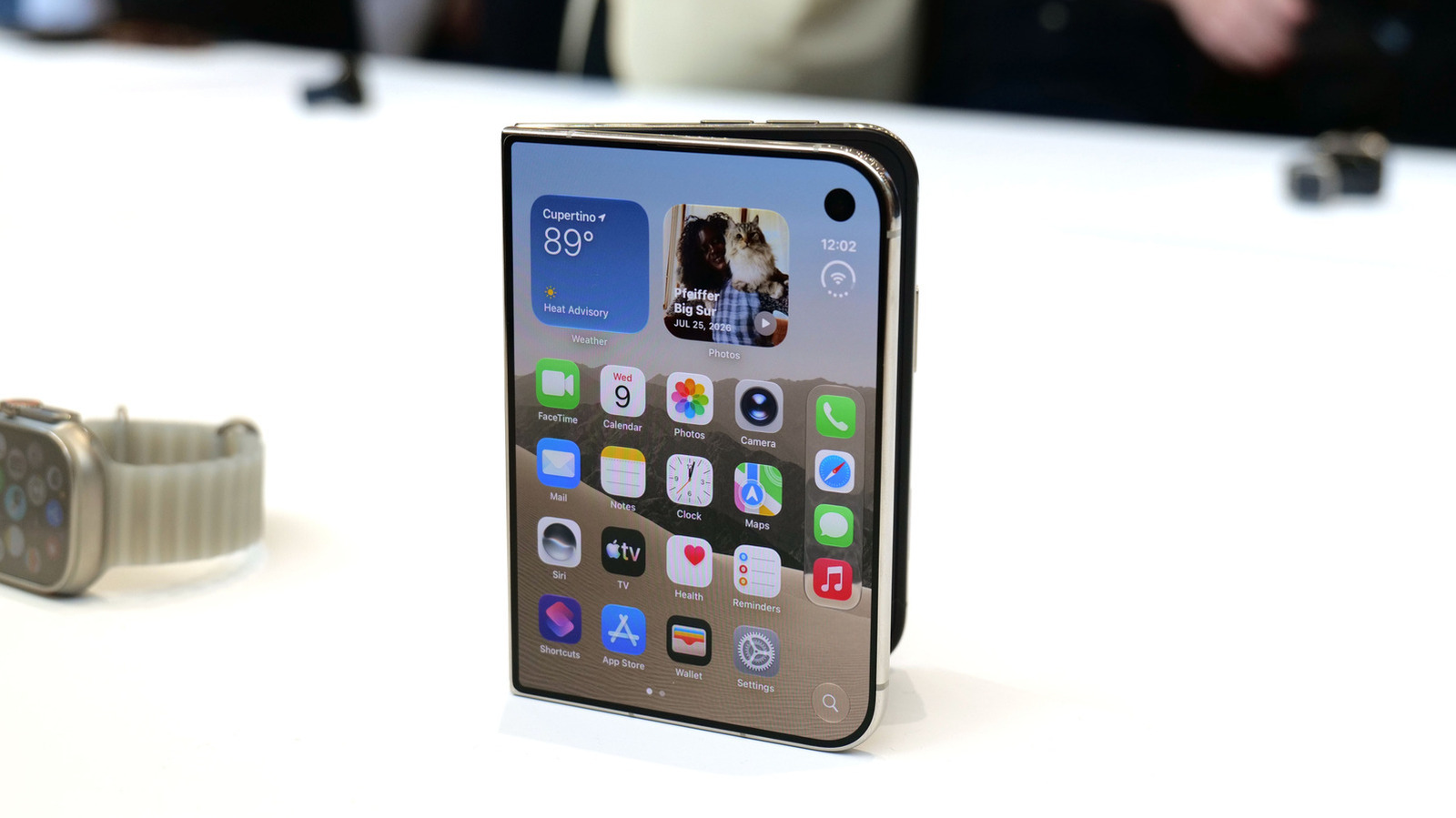
Apple's highly anticipated iPhone Duo, priced at $2,000, has gone on pre-order. While hailed as "Apple's most exciting device in a decade" for its innovative foldable design and immersive display, it comes with significant drawbacks like the absence of FaceID and a premium camera.

KDE Plasma 6.8: A Future-Focused 30th Anniversary Update
Quick Verdict KDE Plasma 6.8, arriving as the "30th Anniversary Edition," is a pivotal release that decisively pushes the desktop environment into the future. With a definitive farewell to native X11 sessions and a
Galaxy Watch One UI 9 Beta: Promising Progress, But Patience Needed
Galaxy Watch 8, Watch Ultra, and Watch 7 are receiving a new One UI 9 Watch beta build with bug fixes and a security patch. Active development signals progress, but a stable release date remains elusive.