
Great Question (YC W21) Seeks Applied AI Interns: A Deep Dive
As fellow developers, we’re constantly scanning the landscape for companies pushing the boundaries, especially in the rapidly evolving AI space. Great Question, a Y Combinator W21 alumnus, has caught our eye with an
As fellow developers, we’re constantly scanning the landscape for companies pushing the boundaries, especially in the rapidly evolving AI space. Great Question, a Y Combinator W21 alumnus, has caught our eye with an intriguing opportunity for an AI Engineer Intern. This isn't just another internship; it's a chance to ship production-grade AI features in a company that's truly AI-native.
The Problem: Unlocking Customer Insights at Scale
Great Question addresses a fundamental challenge for product teams: understanding customers efficiently. Traditional user research can be a laborious process involving recruitment, conducting interviews or surveys, and then synthesizing mountains of data into actionable insights. Their platform aims to streamline this by providing an all-in-one solution for participant recruitment, research execution, and insight sharing.
At its core, Great Question believes AI is a "multiplier for creativity, speed, and scale." This isn't just lip service; it's ingrained in their culture, where every team member is encouraged to leverage AI to enhance their craft, whether it's in writing, design, coding, or analysis.
The Role: Shipping Real AI Features
This isn't an internship where you'll be siloed on a theoretical side project. Great Question explicitly states that the AI Engineer Intern will "ship real features alongside the team — not a side project, not a sandbox." This commitment to real-world impact is a significant draw for any aspiring applied AI engineer.
Working directly with the CTO as a mentor, interns will own a project from inception to deployment. The challenges outlined are genuinely complex and span several critical areas of modern AI application:
- Semantic Search Across Interview Hours: Imagine sifting through tens of thousands of hours of customer interviews. This requires more than keyword matching; it demands understanding the meaning and context of conversations. An intern would work on building and refining retrieval systems capable of surfacing relevant insights from vast unstructured data using advanced semantic indexing and querying techniques.
- Realtime Agentic AI Moderator: This is perhaps the most ambitious project mentioned. It involves creating an AI agent that can moderate user research sessions in real-time. This necessitates integrating multimodal capabilities like Text-to-Speech (TTS) for natural language output, Speech-to-Text (STT) for understanding participant responses, and potentially computer vision for analyzing non-verbal cues. Building such an agent involves complex state management, decision-making logic, and robust real-time processing.
- MCP Tool Structuring and Prompt Tuning: "MCP" likely refers to Multi-tool Coordinated Pipeline or similar complex AI workflows. This suggests work on orchestrating various AI models or tools to achieve a larger goal. Prompt tuning, a critical skill in large language model (LLM) development, involves carefully crafting inputs to guide the model towards desired outputs, requiring iterative experimentation and a deep understanding of model behavior.
- Evals and Quality Measures: The focus isn't just on building, but on building well. Interns will be involved in establishing evaluation frameworks and quality metrics for these AI tools and internal agents. This highlights a mature approach to AI development, recognizing the need for continuous monitoring, bias detection, and performance validation in production environments.
What They're Looking For: A Hacker's Mindset
Great Question emphasizes a meritocratic approach, valuing demonstrated ability over traditional credentials. The ideal candidate is someone "already doing this on your own time" – a self-starter with a "hacker profile." This means:
- Demonstrated AI Prowess: Your personal projects, GitHub repos, or weekend builds are your primary resume. They want to see how you think, what tools you gravitate towards, and your ability to build something that not only works but stays working.
- Solid Engineering Fundamentals: While AI-centric, the role requires fundamental software engineering skills. Proficiency in Python, JavaScript, or Ruby, combined with experience in Git, testing methodologies, and shipping production-ready code, is essential.
- Beyond Tutorials: They're looking for individuals who have moved beyond introductory concepts and can apply AI principles to solve real problems, demonstrating an opinionated and curious approach to the evolving AI tooling landscape.
- Clear Communication: The ability to articulate technical concepts and decisions is highly valued, both for collaborating with the team and presenting project outcomes.
Significantly, specific degrees, years of experience, or preferred frameworks are considered less important than tangible proof of your skills and passion.
The Application: Show, Don't Just Tell
The application process itself reinforces their focus on practical skills. Instead of just a cover letter, they request three key items:
- A Lightweight Demo: This is your opportunity to showcase your thinking. Build something with AI – a repository, a deployed application, or even a video walkthrough. The goal is to demonstrate your thought process, your preferred tools, and how you engage with problem-solving relevant to user research.
- A Short Written Answer: Explain why you are the right fit for this specific role, connecting your skills and interests to Great Question's mission.
- Your Resume: Provided for context, but explicitly stated as secondary to the demo.
This approach signals a company that truly prioritizes hands-on capability and alignment with their innovative spirit.
Practical Takeaways for Aspiring AI Developers
This internship opening offers several insights for anyone looking to break into applied AI development:
- Build a Portfolio: Side projects and personal repos are your most powerful assets. They demonstrate initiative, practical skills, and a genuine passion for the field.
- Focus on Application: Moving beyond theoretical knowledge to actually shipping functional AI tools is crucial.
- Multimodal and Agentic AI are Key: The projects hint at the growing importance of AI systems that can interact with the world through multiple senses and make autonomous decisions.
- Quality and Evaluation Matter: Understanding how to test, evaluate, and ensure the reliability of AI systems in production is a non-negotiable skill.
- Soft Skills are Hard Skills: Communication, self-starting, and curiosity are highlighted as essential traits.
Great Question is offering a compelling opportunity for a self-driven AI enthusiast to make a significant impact. If you're building in AI on your own time and are eager to apply those skills to solve real-world problems at a fast-paced, AI-first startup, this could be an excellent fit.
FAQ
Q: What specific AI system components might an intern at Great Question work with? A: Based on the job description, interns would engage with various AI system components including LLM pipelines for generating and processing text, AI agents for autonomous decision-making in interactive scenarios, sophisticated retrieval systems for semantic search, evaluation frameworks to measure AI performance, and prompt optimization techniques for fine-tuning LLM outputs.
Q: How does Great Question approach AI development and quality assurance for their projects? A: The company emphasizes building production-ready, tested, and well-documented code, indicating a robust development process. Interns are explicitly responsible for "setting up evals and quality measures across MCP tools and internal agents," which underscores a strong focus on continuous evaluation, quality assurance, and potentially MLOps principles to ensure the reliability and effectiveness of their AI systems.
Q: What level of autonomy and impact can an AI Engineer Intern expect on their projects? A: Interns at Great Question are granted significant autonomy and are expected to have a tangible impact. The role involves "owning the full lifecycle of your project — from scoping through to shipped, production-ready code." This means contributing real features, not just sandbox experiments, with direct mentorship from the CTO, fostering a high-agency environment.
Related articles

AI's Confidence vs. Formal Methods' Rigor: Design Flaws & Verification
While AI accelerates code generation, formal methods remain critical for ensuring system correctness. Languages like TLA+ and tools like Quint enable developers to model and verify system designs before coding, catching subtle flaws. Quint makes formal methods more accessible with developer-friendly syntax and executability. This approach is vital for verifying AI-generated code through trace validation and model-based testing, ensuring reliability against real-world data.
Ephemeral PR Preview Environments on GKE: A Deep Dive
Every development team eventually grapples with the limitations of shared staging environments. The familiar scenario: multiple features deployed simultaneously, database migrations clashing, and the phrase "it works on
Secure Internal API Access for AI Agents with MCP
AI agents accessing internal APIs directly pose significant risks, including identity loss, unrestricted queries, and security bypasses. The Model Context Protocol (MCP) offers a solution by defining explicit tools. A secure architecture involves an MCP server wrapping the API with strict input validation, coupled with a gateway that handles authentication, rate limiting, and audit logging, ensuring safe and accountable access.

Prototype Racing 2030: A Unified Future Driven by Software
Prototype racing is heading towards a unified, LMDh-based rule set by 2030, promising greater stability, cost-effectiveness, and a focus on software-driven innovation for OEMs, despite current economic challenges.

policy: Disney seeks assets from controversial AI companion start-up
Walt Disney Co. has bid $20 million to license intellectual property from Character.AI, an AI companion start-up in bankruptcy. The move is controversial as Character.AI faces a Kentucky lawsuit alleging its chatbots encouraged self-harm, raising significant ethical questions for Disney's foray into advanced AI.
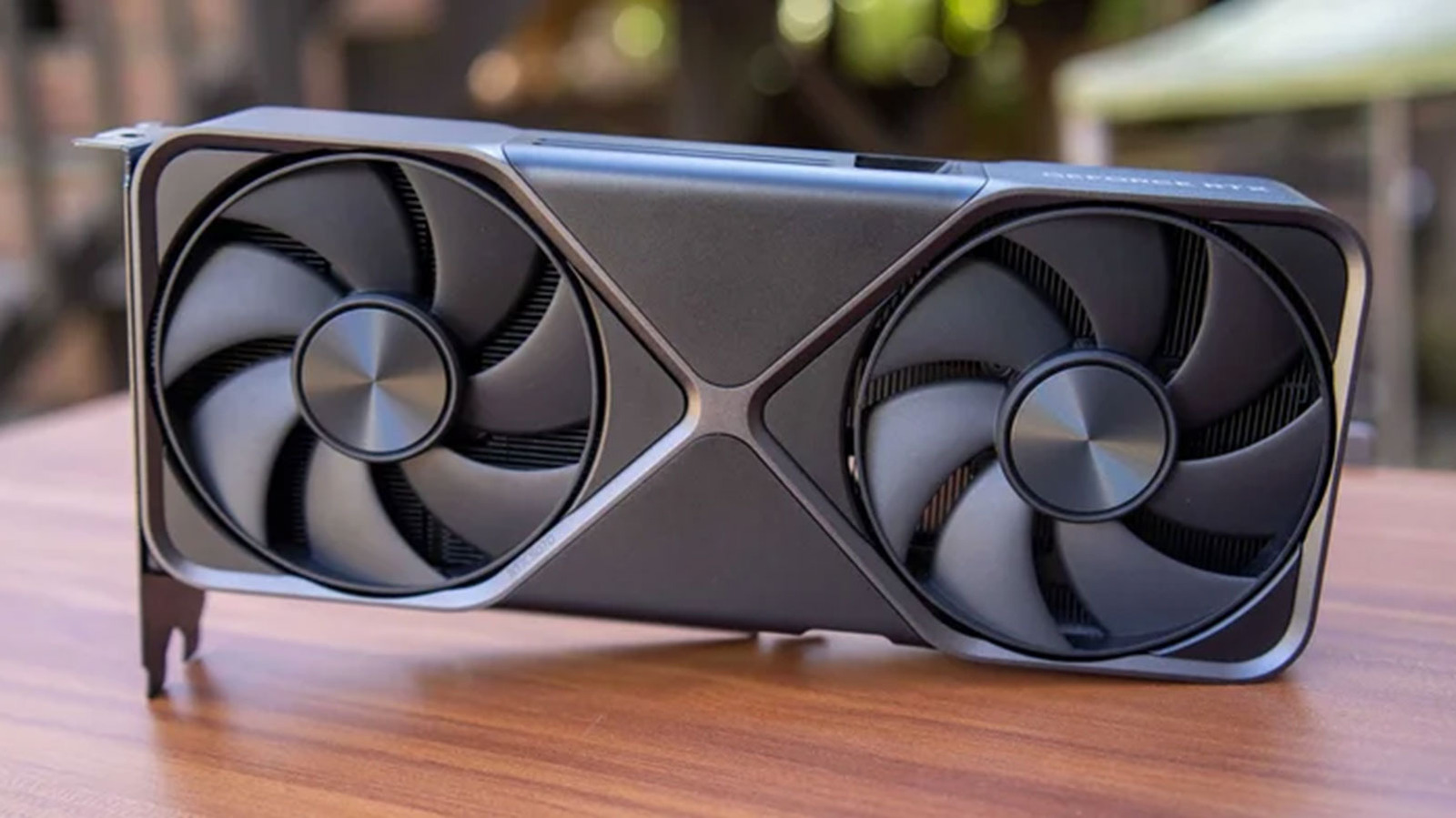
NVIDIA DLSS: A Powerful AI Upscaling Game-Changer
NVIDIA DLSS, or Deep Learning Super Sampling, has become a cornerstone technology for PC gamers with RTX graphics cards. It's a proprietary upscaling solution designed to boost game performance and, in some cases,