
Prototype Racing 2030: A Unified Future Driven by Software
Prototype racing is heading towards a unified, LMDh-based rule set by 2030, promising greater stability, cost-effectiveness, and a focus on software-driven innovation for OEMs, despite current economic challenges.
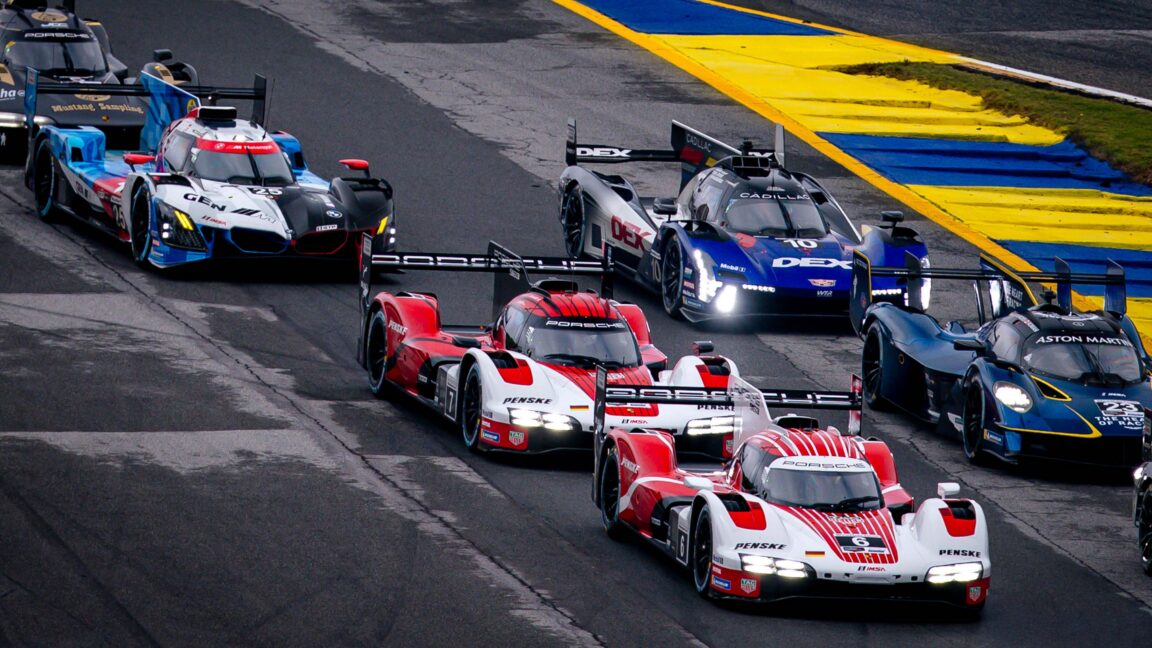
Prototype Racing in 2030: A Unified Future Driven by Software
Verdict: Promising – The convergence of prototype racing regulations towards a more cost-effective, software-driven model in 2030 looks set to stabilize the sport, foster innovation, and maintain fan engagement, despite current economic headwinds.
The world of endurance prototype racing, encompassing series like IMSA’s WeatherTech Sportscar Championship and the global World Endurance Championship (WEC), is experiencing a significant boom. Fueled by phenomena like the 'Drive to Survive' effect in Formula 1, multi-hour, multi-class racing is perfectly suited for the streaming era, drawing in larger audiences both domestically and internationally. The accessibility for fans, with open paddocks and grid walks, further enhances its appeal, allowing enthusiasts to get up close with stunning hybrid prototypes and road-derived GT cars.
However, this resurgence isn't without its challenges. Geopolitical events and the sport's inherent reliance on manufacturer investment mean stability is often tenuous. Recent years have seen key players like Porsche scale back factory programs, while Alpine and Acura announced exits from WEC and IMSA GTP, respectively. This flux, while creating grid space, underscores the need for a resilient, sustainable framework. The good news is that new entries from Genesis, Ford, and McLaren indicate a positive long-term trajectory for the sport.
The Battle of the Rulebooks: LMDh vs. Hypercar
A central point of contention and discussion in prototype racing has been the existence of two distinct top-tier regulatory frameworks: IMSA's LMDh (Le Mans Daytona h) and WEC's Hypercar ruleset. These parallel systems allow different manufacturers to compete for overall victory at events like the 24 Hours of Le Mans and the Petit Le Mans, but they do so via different technical philosophies.
LMDh, favored by a majority of OEMs including BMW, Porsche, Cadillac, and Aston Martin, mandates common hybrid systems, gearboxes, and requires teams to build on one of four approved carbon-fiber chassis. This approach significantly reduces development costs, making participation more accessible for manufacturers.
Hypercar, adopted by Ferrari, Toyota, and Peugeot, offers greater technical freedom. This includes the option for bespoke batteries and all-wheel-drive hybrid systems, allowing for more unique engineering solutions. While this technically enables more diverse designs, it also translates to substantially higher development expenses.
Interestingly, despite the technical differences, both rule sets are governed by a Balance of Performance (BoP) system, which aims to equalize lap times across different cars. This raises a pertinent question: if all cars are ultimately balanced to similar performance levels, is the added cost and technical complexity of the Hypercar regulations truly justified?
Here’s a breakdown of the key differences:
| Feature | LMDh (IMSA) | Hypercar (WEC) |
|---|---|---|
| Hybrid System | Mandates common hybrid systems | Optional all-wheel drive hybrid; bespoke allowed |
| Gearbox | Mandates common gearboxes | Greater technical freedom |
| Chassis | Requires one of four approved carbon-fiber chassis | Greater technical freedom |
| Development Cost | More cost-effective | More expensive |
| Manufacturer Adoption | BMW, Porsche, Cadillac, Aston Martin (most OEMs) | Ferrari, Toyota, Peugeot, Aston Martin (Valkyrie) |
| Performance Balancing | All cars balanced to roughly same lap times | All cars balanced to roughly same lap times |
| Future Outlook | Likely basis for 2030 unified rules | Likely to converge with LMDh evolution |
The Drive Towards Unity: 2030 and Beyond
There's a broad consensus among stakeholders that operating with two distinct top-tier regulations is inefficient. IMSA President John Doonan and Porsche's prototype program head, Urs Kuratle, both advocate for a single set of regulations post-2030, when the current rulesets expire. The prevailing sentiment is that IMSA's LMDh approach, having been the choice of the majority of OEMs due to its cost-effectiveness, will form the basis for this unified future. The goal is to evolve LMDh, preserving its value proposition while ensuring stability and longevity for the sport, especially in the face of economic uncertainties.
Innovation Beyond the Track: Software and Data
While direct technology transfer of hardware from race cars to road cars is less common than it once was (though examples like Porsche's T-hybrid engine still exist), the future of innovation in prototype racing lies increasingly in software and data. IMSA has proactively embraced this by launching 'IMSA Labs,' an initiative that provides vast amounts of race-generated data to researchers and developers. This data-rich environment is a fertile ground for developing new software solutions, business applications, AI, and predictive analytics.
OEM representatives have confirmed that learnings from the hybrid systems in GTP cars, particularly the strategic implementation of hybrid power, are immediately being utilized in road car product development. This authentic connection between racing and consumer vehicles, shifting from purely mechanical breakthroughs to sophisticated software strategies, is crucial. As Kuratle wisely noted, fans may not care about the specifics of a fuel pump, but they do care about compelling racing and the broader environmental relevance of the technology being showcased. Therefore, future regulations must prioritize transferable technologies that excite fans and address modern concerns like environmental impact, all while maintaining a cost-controlled, stable platform for manufacturers.
Pros and Cons
Pros:
- Increased Stability: A unified rule set based on LMDh promises greater stability and longevity for prototype racing, attracting and retaining manufacturer involvement.
- Cost-Effectiveness: The LMDh philosophy prioritizes shared components, making top-tier racing more accessible and sustainable for OEMs.
- Software-Driven Innovation: The focus shifts to advanced software, AI, and data analytics, offering relevant technology transfer to road cars in an increasingly digital world.
- Enhanced Fan Engagement: Consistent, exciting racing with major manufacturers on a stable platform, coupled with fan access, continues to boost the sport's popularity.
- Environmental Relevance: Future rules are expected to incorporate environmental considerations, aligning with broader industry trends.
Cons:
- Reduced Technical Freedom: A unified LMDh-based rule set may limit the extreme technical diversity seen in the Hypercar category, potentially stifling bespoke engineering efforts.
- Manufacturer Exits: Current economic pressures and differing strategic priorities still lead to some manufacturers departing, highlighting ongoing fragility.
- Dependence on BoP: While necessary, the Balance of Performance system can occasionally lead to controversy or perceived unfairness.
Recommendation
The trajectory for prototype racing in 2030, leaning towards a unified, LMDh-derived regulatory framework, is a highly recommended path for the sport's long-term health. While the allure of pure engineering freedom in Hypercar is understandable, the economic realities of motorsports necessitate a more cost-conscious and stable approach. The shift towards software and data as primary avenues for technology transfer aligns perfectly with modern automotive development. This strategy will ensure that prototype racing remains a relevant, exciting, and sustainable laboratory for innovation, benefiting manufacturers, fans, and the broader automotive industry.
FAQ
Q: What is the main reason for the proposed change to a single rule set in 2030? A: The main reason is to enhance stability and longevity for prototype racing. A single, cost-effective rule set (likely evolving from LMDh) is expected to attract and retain manufacturer participation by reducing development expenses and simplifying competition across different championships.
Q: How will this impact technology transfer from racing to road cars? A: The focus of technology transfer is shifting from direct hardware to software, data, and hybrid strategy. IMSA Labs, for instance, provides race data for developing AI, predictive analytics, and business solutions. OEMs are already applying hybrid system learnings directly to their road car development.
Q: Will this make the racing less interesting or competitive? A: While a unified rule set might reduce some extreme technical diversity, the sport relies on Balance of Performance (BoP) to ensure close racing regardless of the underlying technical package. The goal is to maintain competitive, exciting races that fans love, while promoting sustainability for the teams and manufacturers involved.
Related articles

Ars Technica's Rocket Report: Your Essential Space Industry Briefing
Quick Verdict Ars Technica's Rocket Report, presented by veteran space reporter Stephen Clark, offers an invaluable and meticulously organized weekly (or similar frequency, implied by "Edition 9.15") digest of the most

Apple iPhone Duo: A Daring Debut with Notable Compromises
Apple's highly anticipated iPhone Duo, priced at $2,000, has gone on pre-order. While hailed as "Apple's most exciting device in a decade" for its innovative foldable design and immersive display, it comes with significant drawbacks like the absence of FaceID and a premium camera.

Amazon Prime Video Launches AI-Powered Prime 360 for NBA Coverage
Amazon Prime Video is elevating its NBA coverage with the introduction of Prime 360, an AI-powered replay system offering immersive, 'fly through' views of the action. Kicking off its second season, Prime Video also adds Yahoo fantasy integration and gains exclusive Eastern Conference Finals rights, expanding its tech-driven sports broadcast. The new features aim to deliver a unique and interactive viewing experience for basketball fans.

KDE Plasma 6.8: A Future-Focused 30th Anniversary Update
Quick Verdict KDE Plasma 6.8, arriving as the "30th Anniversary Edition," is a pivotal release that decisively pushes the desktop environment into the future. With a definitive farewell to native X11 sessions and a
Galaxy Watch One UI 9 Beta: Promising Progress, But Patience Needed
Galaxy Watch 8, Watch Ultra, and Watch 7 are receiving a new One UI 9 Watch beta build with bug fixes and a security patch. Active development signals progress, but a stable release date remains elusive.

Enterprise AI Beyond Chatbots: A Vision for Actionable Intelligence
Quick Verdict: Redefining Enterprise AI's Potential TechRadar Pro's opinion piece, "What it takes to move enterprise AI beyond the chatbot," delivers a refreshingly honest and vital perspective on the current state and