
Ephemeral PR Preview Environments on GKE: A Deep Dive
Every development team eventually grapples with the limitations of shared staging environments. The familiar scenario: multiple features deployed simultaneously, database migrations clashing, and the phrase "it works on

Every development team eventually grapples with the limitations of shared staging environments. The familiar scenario: multiple features deployed simultaneously, database migrations clashing, and the phrase "it works on staging" losing all meaning. This common bottleneck slows down feedback loops, introduces instability, and makes reliable testing a constant struggle. Modern platform teams at companies like Vercel and Shopify have championed a superior pattern: ephemeral pull request preview environments.
Imagine a world where every open pull request automatically spins up a fresh, isolated instance of your application. Push a new commit, and the environment updates. Merge or close the PR, and the entire setup self-destructs. No more queues, no claiming of shared resources, no manual cleanup, and crucially, no environmental drift. This article delves into building such a system on Google Kubernetes Engine (GKE) using GitHub Actions, Ingress, and automatic TLS.
The Vision: Isolated, On-Demand Previews
The goal is a fully automated system that provides a dedicated, live preview URL for every pull request. From a reviewer's perspective, this means a bot comment appearing on the PR with an HTTPS link to a working environment, reflecting the latest code changes. The underlying mechanism involves:
- Automated Image Builds: GitHub Actions triggers a build for each PR, tagging container images uniquely.
- Isolated Deployment: A new, dedicated Kubernetes namespace (
pr-XX) is created within a GKE cluster for each environment, complete with resource quotas. - Intelligent Routing: A shared Ingress controller routes traffic for
pr-XX.preview.yourdomain.comto the correct namespace, leveraging a single wildcard DNS record. - Automatic TLS:
cert-managerhandles the issuance of valid HTTPS certificates via Let's Encrypt. - Dynamic Updates: Pushing new commits automatically redeploys the updated code.
- Self-Healing Cleanup: Merging or closing a PR deletes its associated namespace. A scheduled "reaper" job acts as a failsafe, catching any environments missed by the primary teardown.
Core Design Principles for Robustness and Efficiency
Building such a system effectively relies on three critical design decisions that differentiate it from simpler, less scalable approaches:
1. Keyless Authentication with Workload Identity Federation
Security is paramount. Storing long-lived service account JSON keys directly in CI/CD secrets is a common vulnerability. This architecture bypasses that risk by using Workload Identity Federation. GitHub Actions authenticates to Google Cloud by exchanging short-lived OIDC tokens, verified against a repository claim. This means no static credentials are ever stored or exposed, significantly enhancing your pipeline's security posture.
2. One Load Balancer, Many Environments
The naive approach of provisioning a cloud load balancer per preview environment quickly becomes cost-prohibitive. Our solution utilizes a single, shared Google Cloud load balancer coupled with an NGINX Ingress controller within the GKE cluster. All preview environments are served by this single load balancer. A wildcard DNS record (*.preview.yourdomain.com) points to its static IP, allowing the Ingress controller to route requests based on the Host header to the correct pr-XX namespace. This design minimizes infrastructure costs and complexity while maximizing scalability.
3. Cleanup That Assumes Failure (The Reaper)
Automated teardown workflows are essential, but even a 95% effective cleanup routine will eventually leak resources, leading to unexpected bills. To combat this, a scheduled reaper job is an integral part of the system. This job periodically scans for namespaces whose corresponding pull requests no longer exist or have exceeded a predefined maximum age. By proactively deleting these orphaned environments, the reaper ensures consistent resource hygiene and prevents runaway costs.
The Application and Its Intelligent Dockerfile
To demonstrate the system, we use a simple Go application that exposes a / endpoint displaying its PR number, Git SHA, Kubernetes namespace, and pod name, along with a /healthz endpoint for probes. The magic here lies in its Dockerfile:
dockerfile
... Stage 1: Build ...
FROM golang:1.27-alpine AS builder ARG PR_NUMBER=local ARG GIT_SHA=dev
...
RUN CGO_ENABLED=0 go build
-ldflags="-w -s -X main.prNumber=${PR_NUMBER} -X main.gitSha=${GIT_SHA}"
-o server main.go
... Stage 2: Runtime ...
FROM alpine:latest RUN addgroup -S appgroup && adduser -S appuser -G appgroup USER appuser
...
CMD ["./server"]
Key features of this Dockerfile include:
- Build-Time Metadata Injection: Using
go build -ldflags="-X main.prNumber=${PR_NUMBER}", the PR number and Git SHA are directly baked into the Go binary. This ensures the running application always reports its true origin, a crucial debugging aid. This approach is superior to environment variables as it ties the metadata to the immutable image, preventing potential discrepancies. - Static Binaries:
CGO_ENABLED=0forces a pure-Go, statically-linked binary. This eliminates dependencies on system C libraries (likeglibcvs.muslon Alpine), making the resulting image highly portable and reliable across different Linux environments. - Efficient Layer Caching: Copying
go.modand runninggo mod downloadbefore the application source code allows Docker to cache the dependency layer. Subsequent builds for the same PR that don't changego.modcan reuse this cached layer, dramatically speeding up CI build times. - Non-Root User: The
Dockerfileexplicitly creates anappuserand switches to it. Running containers as an unprivileged user is a fundamental security best practice, limiting the blast radius in case of an application vulnerability.
Infrastructure as Code with Terraform
The entire cloud infrastructure – including the GKE cluster, Google Artifact Registry for storing container images, and the Workload Identity Federation setup – is provisioned using Terraform. This ensures a consistent, repeatable setup and, critically, enables easy and reliable teardown via terraform destroy, preventing orphaned resources and associated costs.
Automating the Lifecycle with GitHub Actions
The system's automation relies on two primary GitHub Actions workflows:
- Spin-Up/Update Workflow: Triggered on
pull_requestopenedandsynchronizeevents, this workflow:- Authenticates to GCP using Workload Identity Federation.
- Builds the Docker image, injecting
PR_NUMBERandGIT_SHAas build arguments. - Pushes the tagged image to Artifact Registry.
- Applies Kustomize-templated Kubernetes manifests to create/update the
pr-XXnamespace,ResourceQuota,LimitRange,Deployment,Service, andIngress. - Uses a GitHub bot to post or update a comment on the pull request with the live preview URL.
- Teardown Workflow: Triggered on
pull_requestclosedormergedevents, this workflow simply deletes the entirepr-XXnamespace, removing all associated resources.
Conclusion
Building ephemeral PR preview environments on GKE with GitHub Actions, Ingress, and automatic TLS transforms the development and review process. By providing isolated, on-demand testing environments, teams can deliver features faster, with higher confidence, and eliminate the frustrations of shared staging. The architectural choices – keyless authentication, shared Ingress, and robust cleanup – ensure the system is secure, cost-effective, and maintainable, setting a new standard for modern CI/CD pipelines.
FAQ
Q: Why use CGO_ENABLED=0 in the Dockerfile?
A: Setting CGO_ENABLED=0 forces Go to produce a purely static binary without linking against C libraries. This makes the binary entirely self-contained and highly portable, ensuring it runs reliably on any Linux base image (like Alpine's musl) without encountering glibc compatibility issues.
Q: How does cert-manager issue TLS certificates for dynamic preview environments?
A: cert-manager works by observing Ingress resources. When a new Ingress for pr-XX.preview.yourdomain.com is created, cert-manager detects it, communicates with a ClusterIssuer (like Let's Encrypt), and requests a certificate. It typically uses the HTTP-01 challenge, where Let's Encrypt makes a public HTTP request to pr-XX.preview.yourdomain.com/.well-known/acme-challenge/... to verify domain ownership. Since a wildcard DNS record points to the shared Ingress, this challenge is successfully routed and completed, and cert-manager then provisions the certificate as a Kubernetes Secret for the Ingress to use.
Q: What is the primary benefit of baking PR_NUMBER and GIT_SHA directly into the binary instead of using environment variables?
A: The primary benefit is integrity and traceability. When PR_NUMBER and GIT_SHA are baked into the binary at build time, the running application inherently knows exactly which commit it was built from. If these were passed as environment variables, it would be possible for a deployment to present misleading information by setting incorrect environment variables, detaching the running code from its true source. Baking it in ensures the image itself carries its immutable metadata.
Related articles

AI's Confidence vs. Formal Methods' Rigor: Design Flaws & Verification
While AI accelerates code generation, formal methods remain critical for ensuring system correctness. Languages like TLA+ and tools like Quint enable developers to model and verify system designs before coding, catching subtle flaws. Quint makes formal methods more accessible with developer-friendly syntax and executability. This approach is vital for verifying AI-generated code through trace validation and model-based testing, ensuring reliability against real-world data.

Secure Internal API Access for AI Agents with MCP
AI agents accessing internal APIs directly pose significant risks, including identity loss, unrestricted queries, and security bypasses. The Model Context Protocol (MCP) offers a solution by defining explicit tools. A secure architecture involves an MCP server wrapping the API with strict input validation, coupled with a gateway that handles authentication, rate limiting, and audit logging, ensuring safe and accountable access.

NVIDIA DLSS: A Powerful AI Upscaling Game-Changer
NVIDIA DLSS, or Deep Learning Super Sampling, has become a cornerstone technology for PC gamers with RTX graphics cards. It's a proprietary upscaling solution designed to boost game performance and, in some cases,

Apple's HomeView & New Smart Home: A Promising, Pricey Ecosystem
Apple's HomeView smart display leads a substantial expansion into the smart home market, alongside new Apple TV 4K, HomePod Mini 2, and third-party accessories. This new lineup offers deep ecosystem integration but comes with premium pricing and staggered release dates.
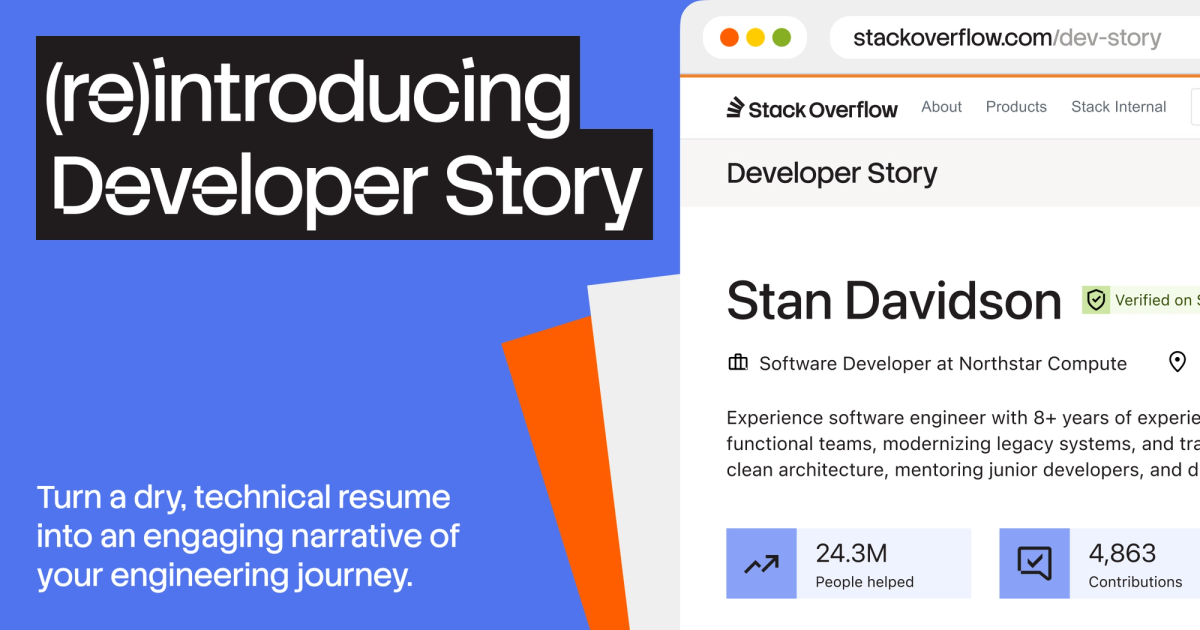
Beyond the Resume Noise: Developer Story Rethinks Tech Hiring
Stack Overflow is addressing the growing challenges in tech hiring, exacerbated by AI's influence leading to untrustworthy and generic resumes. Their solution, the re-introduced Developer Story, offers a platform for developers to authentically showcase their work, expertise, and impact through verifiable contributions and personal projects. This aims to provide hiring teams with more objective insights and help genuine talent stand out in a crowded market.
Adding & Validating JSON-LD Structured Data in Next.js
When we build websites, we want them to be discoverable and accurately understood by search engines. This isn't just about keywords and meta descriptions anymore; it's about providing explicit, machine-readable context.