
Google's App Store Overhaul: A New Era for Android
Google is overhauling Play Store fees and third-party app store policies, lowering commissions and allowing alternative billing, largely due to Epic's lawsuit.
Quick Take: Google Opens Up – Cautiously
Google is making significant waves in the Android ecosystem, announcing a major shift in its Play Store fee structure and a more formalized approach to alternative billing and third-party app stores. On the surface, this looks like a big win for developers and, potentially, consumers, promising lower costs and greater flexibility. The standard 30 percent cut is largely gone, replaced by more competitive rates, and the door is being flung open for developers to use their own billing systems or even host their own app stores more seamlessly. However, as with any major policy change from a tech giant, a closer look reveals layers of strategic business decisions and potential future caveats. While it's a definite step towards a more open platform, particularly compared to some competitors, Google still maintains a careful degree of control, with a phased rollout and hints of a more managed environment for third-party stores.
The New Landscape: Lower Fees and More Choices
The most immediate and impactful change for developers is Google's revamped fee structure. The long-standing 30 percent commission on Play Store transactions is largely being phased out. For many, this will drop to a more palatable 20 percent. Even better, for developers participating in Google's new App Experience program or the updated Google Play Games Level Up program, new installs could see fees as low as 15 percent. This is a considerable reduction, designed to incentivize participation in Google's ecosystem while offering a clear benefit to those creating new content and experiences.
Subscriptions, a crucial revenue stream for many apps, are also seeing a significant reduction, with Google's cut lowering to just 10 percent. This move could empower developers to invest more in ongoing content and service, potentially translating to better value or more features for subscribers.
Perhaps the most radical shift comes in how developers can manage payments. For those in the UK, US, or European Economic Area (EEA) who choose to use an alternative billing system instead of Google's own, the company will now charge a modest five percent fee. Other regions will face a "market-specific rate." This is a game-changer, allowing developers to retain a substantial portion of their revenue by bypassing Google's system entirely, provided they accept the reduced commission. The flexibility extends even further: developers can now "guide users outside of their app to their own websites for purchases." This is a notably more permissive approach than what Apple adopted in 2025, which only allows in-app links to external payment methods. This openness is a direct result of past legal battles, notably with Epic Games, who are now bringing Fortnite back to the Play Store globally, signifying a truce and a new era of cooperation.
Embracing Third-Party App Stores: A Controlled Openness
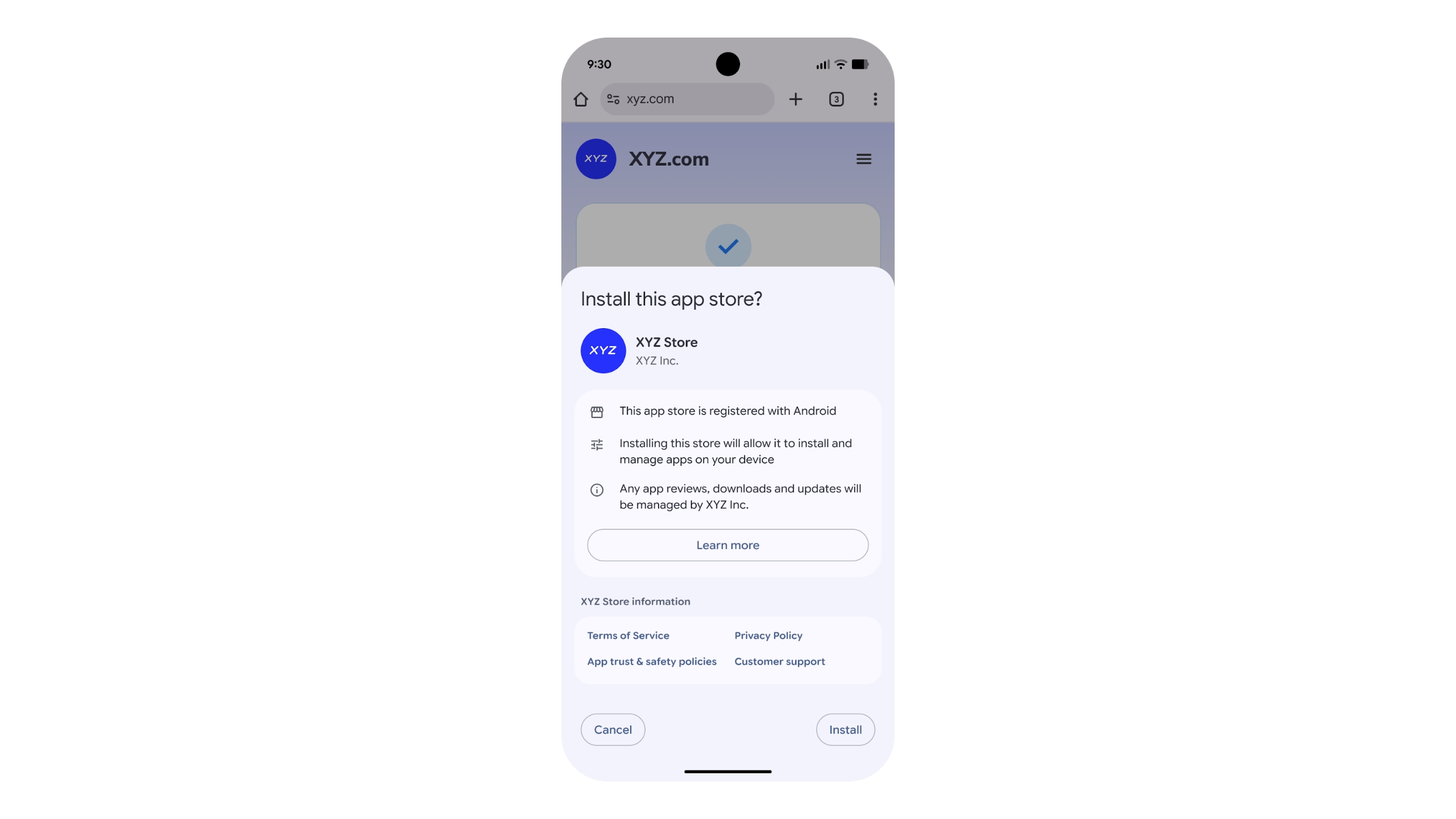
Beyond billing, Google is also formalizing the integration of third-party app stores into Android through its new "Registered App Stores" program. This isn't just about allowing sideloading – which will still be possible for unapproved stores – but about offering a streamlined installation interface for app stores that meet Google's "certain quality and safety benchmarks."
For developers or companies looking to run their own app stores, this program offers a clear advantage in terms of user experience and perceived legitimacy. Instead of navigating complex security warnings, users will have a smoother, more guided process for installing apps from approved third-party stores. This is a smart move by Google, creating an official pathway that encourages adherence to certain standards while still appearing to foster an open environment.
However, it's worth noting Google's careful wording. While participation is optional and sideloading remains a choice, the company's plans to "deliberately make the process more difficult" later in 2026 for unapproved sideloading could effectively strong-arm developers into applying for the Registered App Stores program. This indicates a preference for a more managed open ecosystem rather than an entirely free-for-all approach, ensuring Google still has a hand in the overall user experience and security, even for third-party solutions.
Why the Change? A Mix of Pressure and Partnership
These extensive changes aren't entirely altruistic. While benefiting developers and consumers, they are largely a strategic response to legal and regulatory pressure. The settlement with Epic Games in November 2025, a landmark case against Google and Apple regarding app store practices, served as a direct catalyst. Google is proactively implementing these changes rather than waiting for final judicial approval, demonstrating a clear intent to move forward.
Adding another layer to this is an entirely separate business deal between Google and Epic: an $800 million joint partnership for product development and Google leveraging Epic's core technology. This financial agreement likely made these policy changes a more palatable business decision for Google, ensuring that while they might be giving up a percentage of app store fees, they are securing other strategic advantages and partnerships. It's a calculated move that allows Google to present itself as more developer-friendly and open, while also consolidating its position through strategic alliances and avoiding further legal entanglements.
Impact and Recommendations
Pros:
- Significantly Lower Fees: For many developers, the reduction from 30% to 20%, 15%, or even 10% for subscriptions, is a massive boost to their bottom line.
- True Alternative Billing: The ability to guide users to external websites for purchases, with a minimal 5% fee for alternative billing systems in key markets, offers unprecedented financial freedom.
- Formalized Third-Party App Stores: The "Registered App Stores" program provides a legitimate and user-friendly pathway for alternative app distribution, potentially fostering more competition and niche stores.
- Epic Games' Return: Fortnite's global return to the Play Store signifies a more developer-friendly environment and could pave the way for other major titles or developers.
Cons:
- Phased Rollout: The global rollout of these changes is staggered, with some regions waiting until late 2027, creating an uneven playing field for developers.
- Potential Sideloading Hurdles: Google's hint at making unapproved sideloading more difficult in 2026 suggests a future where opting out of their "Registered App Stores" program might come with friction.
- Strategic, Not Purely Altruistic: The changes are driven by legal pressure and substantial business partnerships, reminding us that Google is ultimately making decisions that benefit its own long-term strategy.
- Still a Cut: While reduced, Google still takes a commission even when using alternative billing systems, ensuring they retain a piece of the pie.
For developers, these changes are largely positive, offering greater flexibility and potentially higher revenue. For consumers, the impact might be less direct initially but could lead to more competitive pricing, more feature-rich apps, and a wider variety of app distribution channels over time. While Google's motivations are multifaceted, the outcome moves Android closer to a genuinely open ecosystem, albeit one carefully curated by Google. If you're an Android user or developer, these are changes worth paying close attention to.
FAQ
Q: Will apps suddenly become cheaper due to lower fees?
A: While developers will pay Google less, there's no guarantee that these savings will be immediately passed on to consumers as lower app prices or in-app purchase costs. Developers might choose to reinvest the savings into app development, features, or marketing instead. However, the increased competition from alternative app stores and billing options could eventually lead to more competitive pricing.
Q: What does this mean for installing apps from outside the Play Store?
A: For now, you can still sideload apps or install alternative app stores not part of Google's new program. However, Google plans to make unapproved sideloading more difficult later in 2026. Approved "Registered App Stores" will offer a smoother, more guided installation process, which Google seems to prefer users utilize.
Q: When will these changes take effect globally?
A: The rollout is phased. Key markets like the EEA, UK, and US will see the updated fee structure by June 30th, 2025. Other regions will follow, with the entire world expected to have access to the updated fee structure by September 30, 2027. The "Registered App Stores" program will also roll out gradually, starting with a major Android release before the end of the year, in other regions first before coming to the US.
Related articles
Android 17 QPR2 Beta 7.1: The Performance Relief You've Been Waiting
Android 17 QPR2 Beta 7.1: Finally Fixing the QPR1 Performance Woes Verdict: Android 17 QPR2 Beta 7.1 is a crucial and highly anticipated software update for Google Pixel users, specifically targeting and resolving the

DJI Solo Video Setups: Smart Choices for Lone Creators
This review delves into DJI's recommended solo video setups, highlighting the Osmo Pocket 3 Creator Combo as a top pick for its integrated camera, gimbal, and mic. It also covers stabilizers like the Osmo Mobile 8 and RS 4, and the DJI Mic Mini series for enhanced audio, providing honest pros, cons, and clear buying advice.

Ars Technica's Rocket Report: Your Essential Space Industry Briefing
Quick Verdict Ars Technica's Rocket Report, presented by veteran space reporter Stephen Clark, offers an invaluable and meticulously organized weekly (or similar frequency, implied by "Edition 9.15") digest of the most

Apple iPhone Duo: A Daring Debut with Notable Compromises
Apple's highly anticipated iPhone Duo, priced at $2,000, has gone on pre-order. While hailed as "Apple's most exciting device in a decade" for its innovative foldable design and immersive display, it comes with significant drawbacks like the absence of FaceID and a premium camera.
KDE Plasma 6.8: A Future-Focused 30th Anniversary Update
Quick Verdict KDE Plasma 6.8, arriving as the "30th Anniversary Edition," is a pivotal release that decisively pushes the desktop environment into the future. With a definitive farewell to native X11 sessions and a
Galaxy Watch One UI 9 Beta: Promising Progress, But Patience Needed
Galaxy Watch 8, Watch Ultra, and Watch 7 are receiving a new One UI 9 Watch beta build with bug fixes and a security patch. Active development signals progress, but a stable release date remains elusive.