
8 ChatGPT Tricks: Unlock Your AI's Full Potential
Quick Verdict For anyone looking to move beyond basic queries with ChatGPT, the "8 ChatGPT tricks" guide by Android Authority serves as an invaluable roadmap. It highlights a collection of practical habits that

Quick Verdict
For anyone looking to move beyond basic queries with ChatGPT, the "8 ChatGPT tricks" guide by Android Authority serves as an invaluable roadmap. It highlights a collection of practical habits that transform how users interact with large language models, significantly boosting efficiency, output quality, and overall productivity. This isn't about complex technical skills but about refining your prompting approach, making it a highly recommended read for casual and power users alike.
Introduction: Beyond the Basics of ChatGPT
Most individuals, even those who frequently use ChatGPT, barely tap into its full capabilities, often treating it as little more than an advanced search engine. This common usage pattern, while adequate for simple lookups, falls far short of what the tool can truly achieve. The difference between a casual user and an expert isn't about deep technical knowledge; it's about developing specific core habits that profoundly alter the interaction with the AI model, allowing users to extract maximum value. The fundamental premise is that AI models inherently make assumptions, and better answers are a direct result of better questions. This guide distills years of experience pushing ChatGPT's limits into eight impactful strategies, promising to revolutionize your engagement with ChatGPT and other large language models.
The 8 Game-Changing ChatGPT Tricks
The strategies outlined aim to refine how you prompt and interact with AI, addressing common pitfalls like generic outputs and inefficient workflows.
1. Make it Ask You Questions Before it Starts
One of the most impactful yet underutilized tricks is to instruct ChatGPT to ask clarifying questions before generating a response. AI's default behavior involves making assumptions about tone, length, structure, and audience, leading to generic outputs. By prefacing your request with a command like, "Before you write anything, ask me whatever you need to know to do this well," you prompt the model to gather essential context. This results in far more precise and tailored outputs, particularly crucial for creative and strategic tasks like brand campaigns or personal content, where assumptions can lead to significant rework. An added benefit is that this exercise often forces the user to clarify their own objectives, aiding in the initial planning stage.
2. Feed it Base Information it Can Keep Referring To
Repetitive inputs across different conversations—such as company names, roles, project details, or technical specifications—are a common time sink. A more effective approach is to provide a comprehensive block of foundational information at the start of any working session. This initial briefing allows ChatGPT to consistently reference crucial context, reducing the need for constant corrections and repetitions. Examples include network engineers pasting IP addresses or content creators sharing brand voice guides. For ongoing workflows, this foundational information can even be saved in ChatGPT's Memory settings under "More About You" or formalized via a Custom GPT, ensuring the AI seamlessly leverages this background knowledge across all future chats, leading to highly coherent and accurate outputs.
3. Show it an Example of What You Actually Want
When asking ChatGPT to rephrase text for platforms like LinkedIn, simply asking for a "LinkedIn post" often yields generic, formulaic results that are unmistakably AI-generated. The AI defaults to a statistical average without a specific reference point. A superior method is to provide an example of desired output, whether a previously successful post of your own or one you admire. Instructing ChatGPT to "Write something in this style," or even more specifically, "Match the sentence length, the level of formality, and the way this builds to a point," significantly improves results. Large language models excel at pattern-matching tone, style, and syntax when given a concrete structural baseline. This method is effective for various content tasks, including writing samples, code snippets, and report formats. Conversely, showing an example of what you don't want can also be highly instructive, establishing clear stylistic boundaries. However, continuous use of the same positive example could inadvertently introduce new stylistic ruts.
4. Voice Mode is a Lot More Than Dictation
ChatGPT’s Voice Mode is often underestimated, perceived merely as a dictation tool similar to Google Assistant. Its true power lies in its ability to facilitate a more natural, conversational interaction, removing the friction of typing. This allows users to think out loud, ramble through complex problems, and let ideas evolve organically. It’s particularly useful for brainstorming, where the goal is to explore competing ideas rather than produce a polished output. The AI’s ability to ask clarifying questions and reflect thoughts back can uncover unique perspectives. Additionally, Voice Mode is excellent for on-the-go research or learning, enabling users to discuss topics while driving or walking, with the AI gently pushing back or stress-testing reasoning. The guide notes Voice Mode is like a "supercharged Google Assistant, similar to Gemini," indicating its advanced conversational capabilities for dynamic interactions.
5. Build a Custom GPT for Things You Do Repeatedly
For any task prompted to ChatGPT more than once a week, creating a Custom GPT is highly recommended. This one-time setup allows you to embed persistent instructions, a specific tone, a defined role, constraints, and background context that ChatGPT retains across all conversations. This ensures consistency and saves significant time by eliminating the need to re-establish parameters. An example provided is a Custom GPT configured to strictly flag grammatical errors without altering the original voice or style, a task that once required external tools like Grammarly. Custom GPTs can also be granted access to files, such as product databases or brand guidelines, for enhanced reference. The consistency and reliability gained from a purpose-built Custom GPT make it a powerful tool for recurring workflows.
6. Upload a Screenshot Instead of Describing a Problem
Often overlooked, the ability to upload images or screenshots directly to ChatGPT significantly streamlines problem-solving. Instead of laboriously describing an error message, a wall of log files, or unexpected code output, simply providing a visual is faster and more accurate. ChatGPT can parse text from images just as easily as copy-pasted text, ensuring the analysis is based on actual information rather than a potentially flawed summary. Beyond troubleshooting, this trick is useful for comparing complex pricing plans, understanding contract clauses, or translating any visual information into actionable insights quickly. It eliminates the need for users to translate visual data into words, boosting efficiency and accuracy.
7. Set Constraints Before You Ask a Question
Unconstrained prompts often lead to unfocused, open-ended answers. To achieve precise outputs for practical tasks, it's crucial to define guardrails or constraints upfront. These constraints don't limit the AI's potential; they help it focus its efforts. Beyond simple length limitations (e.g., character counts for social media posts), structural constraints can dictate formatting (e.g., bulleted lists), specify jargon to avoid, lock down a hyper-specific target audience, or enforce a particular layout. While it may seem counterintuitive to spend more time on the prompt, a well-constrained request typically yields usable results in a single pass, drastically reducing subsequent editing and rework.
8. Repurpose a Content Piece into Multiple Assets
ChatGPT excels at repurposing information across various media forms and platforms. A long-form article, podcast, or presentation contains ample raw material for a multitude of smaller content pieces. By feeding ChatGPT the original content, you can request different formats—such as a LinkedIn post, a short email newsletter, video script angles, or a caption summary—each tailored to specific lengths, tones, and audiences. This workflow, often used by professionals, can reduce hours of reformatting and editing into minutes, while maintaining structural consistency derived from the core ideas. Conversely, this trick can also be used in reverse: describe a topic and ask ChatGPT for five different angles or reader takeaways to help brainstorm before writing, using the AI as a sounding board.
User Experience: A Transformative Shift
Implementing these tricks fundamentally transforms the user experience with ChatGPT. Instead of battling generic responses or engaging in endless back-and-forth corrections, users will find themselves in a more collaborative and efficient relationship with the AI. The frustration of needing to constantly refine prompts diminishes, replaced by the satisfaction of receiving highly relevant and precise outputs on the first try. These habits foster a deeper understanding of how LLMs operate, enabling users to unlock ChatGPT's creative, analytical, and productive potential, turning it from a simple tool into a genuine digital assistant.
Pros and Cons
Pros:
- Enhanced Output Quality: Produces more precise, tailored, and less generic responses.
- Increased Efficiency: Significantly reduces time spent on corrections, rephrasing, and repetitive tasks.
- Improved Consistency: Custom GPTs and base information ensure consistent tone, style, and context.
- Better Goal Articulation: Forces users to clarify their own objectives, leading to clearer requests.
- Unlocks Creative Potential: Supports advanced brainstorming, research, and content repurposing.
- Reduces Friction: Voice Mode allows for natural, fluid thought processes and discussions.
- Broad Applicability: Many principles are beneficial for other LLMs, not just ChatGPT.
Cons:
- Initial Learning Curve: Requires an investment of time to understand and adopt new habits.
- Feature Dependency: Some tricks (e.g., Custom GPTs) may require a paid ChatGPT subscription.
- Stylistic Ruts: Over-reliance on a single example for style can lead to predictable outputs.
- Context Management: Requires user discipline to provide and maintain relevant base information.
- Not a Replacement for Critical Thinking: While helpful for brainstorming, human oversight remains essential.
Recommendation
These 8 ChatGPT tricks are not just minor adjustments; they represent a fundamental shift in how one should approach AI interactions. For anyone who uses ChatGPT, whether occasionally or daily, integrating these habits will undoubtedly lead to a more productive, satisfying, and powerful experience. The investment in learning these prompting techniques is minimal compared to the significant gains in efficiency and the quality of AI-generated content. Therefore, it is highly recommended that users adopt these strategies to unlock the true potential of ChatGPT and transform it into a truly indispensable tool.
FAQ
Q: Are these tricks exclusive to ChatGPT Plus subscribers?
A: The article primarily discusses features available within ChatGPT. While Custom GPTs typically require a Plus subscription, many of the core prompt engineering techniques (like asking for clarifying questions, providing examples, or setting constraints) are fundamental to how all large language models process information and should be beneficial across various versions of ChatGPT, including the free tier, though the underlying model's capabilities may differ.
Q: How quickly can users expect to see an improvement by implementing these tricks?
A: Many of these strategies, such as instructing ChatGPT to ask questions first or providing initial contextual information, can yield immediate improvements in the relevance and precision of the very next response. Others, like setting up a Custom GPT for a specific task, require an initial setup but then provide consistent benefits for recurring workflows. The overall transformation in efficiency and output quality is a gradual process of habit formation, but noticeable results can be seen almost instantly with individual applications.
Q: Can these techniques be applied to other large language models (LLMs) besides ChatGPT?
A: The article focuses on ChatGPT but strongly implies the broader applicability of these principles. It states that the path to becoming an expert user involves a "skill issue" relevant to "ChatGPT and other large language models." This suggests that the core strategies of effective prompting—such as providing context, showing examples, defining constraints, and fostering dynamic interaction—are broadly transferable and beneficial when interacting with most LLMs beyond just ChatGPT.
Related articles
Android 17 QPR2 Beta 7.1: The Performance Relief You've Been Waiting
Android 17 QPR2 Beta 7.1: Finally Fixing the QPR1 Performance Woes Verdict: Android 17 QPR2 Beta 7.1 is a crucial and highly anticipated software update for Google Pixel users, specifically targeting and resolving the

DJI Solo Video Setups: Smart Choices for Lone Creators
This review delves into DJI's recommended solo video setups, highlighting the Osmo Pocket 3 Creator Combo as a top pick for its integrated camera, gimbal, and mic. It also covers stabilizers like the Osmo Mobile 8 and RS 4, and the DJI Mic Mini series for enhanced audio, providing honest pros, cons, and clear buying advice.

Ditch Merge & Center: The Better Way to Align Text in Excel
Learn to use Excel's "Center Across Selection" to align text across cells without merging, avoiding common data manipulation issues. This guide provides steps to utilize this newly accessible feature and add it to your Quick Access Toolbar.

Ars Technica's Rocket Report: Your Essential Space Industry Briefing
Quick Verdict Ars Technica's Rocket Report, presented by veteran space reporter Stephen Clark, offers an invaluable and meticulously organized weekly (or similar frequency, implied by "Edition 9.15") digest of the most

Apple iPhone Duo: A Daring Debut with Notable Compromises
Apple's highly anticipated iPhone Duo, priced at $2,000, has gone on pre-order. While hailed as "Apple's most exciting device in a decade" for its innovative foldable design and immersive display, it comes with significant drawbacks like the absence of FaceID and a premium camera.
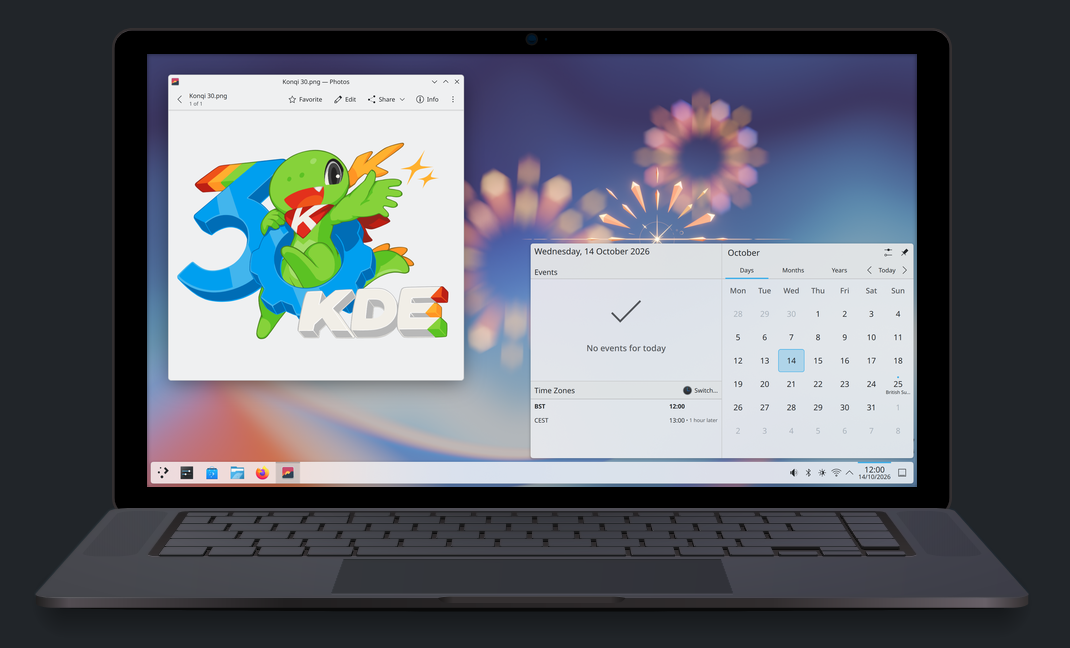
KDE Plasma 6.8: A Future-Focused 30th Anniversary Update
Quick Verdict KDE Plasma 6.8, arriving as the "30th Anniversary Edition," is a pivotal release that decisively pushes the desktop environment into the future. With a definitive farewell to native X11 sessions and a