
DMARC: What It Protects You From (and What It Doesn't)
DMARC: What It Protects You From (and What It Doesn't) As developers, we often encounter tools lauded for broad security capabilities, and DMARC (Domain-based Message Authentication, Reporting, and Conformance) is no
DMARC: What It Protects You From (and What It Doesn't)
As developers, we often encounter tools lauded for broad security capabilities, and DMARC (Domain-based Message Authentication, Reporting, and Conformance) is no exception. It's frequently cited as a silver bullet for email security, promising to halt phishing and obliterate spam. In reality, DMARC addresses a much more specific concern: validating if the domain visible in the From header of an email genuinely authorized its dispatch, a check performed using SPF or DKIM. Misunderstanding this narrow scope can lead to dangerous overconfidence in your email defenses.
The Dual Nature of Email Addresses
To grasp DMARC, we first need to understand that every email carries two distinct 'from' addresses:
- The Envelope Address: This is a hidden address, akin to a postal service's routing label. Mail servers use it to deliver the message, and it's typically discarded before reaching the recipient's inbox.
- The Visible
FromAddress: This is the human-readable address displayed by your mail client, such asalerts@your-bank.com. This is the address users see and often trust.
Attackers exploit the potential mismatch between these two. They can display a trusted domain in the visible From field while the envelope address points to their own servers. DMARC, alongside its foundational protocols SPF and DKIM, aims to close this gap.
SPF, DKIM, and DMARC: The Building Blocks
SPF (Sender Policy Framework) works at the envelope level. A domain owner publishes an SPF record in their DNS, listing all mail servers authorized to send email on their behalf. Receiving servers check if an incoming message's envelope sender originates from one of these approved servers.
DKIM (DomainKeys Identified Mail) adds a cryptographic signature to the email header. This signature includes a domain, allowing receivers to verify that the message originated from that domain and hasn't been tampered with in transit. The domain associated with the signature is also published in DNS.
DMARC then takes center stage, linking SPF and DKIM to the visible From address. Its primary function is to verify that the domain authenticated by SPF (the envelope sender) or DKIM (the signing domain) aligns with the visible From domain. If alignment is achieved and authentication passes, DMARC passes.
Understanding the Records
These authentication mechanisms are configured as TXT records in your domain's DNS. While the exact syntax isn't critical to memorize, recognizing their structure is helpful.
SPF Record Example
An SPF record specifies permitted sending sources. The -all directive indicates that mail from unauthorized servers should be treated as suspicious.
example.com. TXT "v=spf1 include:_spf.google.com include:sendgrid.net -all"
DKIM Record Example
DKIM records publish the public key portion of a cryptographic key pair, enabling receivers to validate message signatures.
selector1._domainkey.example.com. TXT "v=DKIM1; k=rsa; p=MIGfMA0GCSqGSIb3DQEBAQ...AB"
DMARC Record Example
The DMARC record tells receiving mail servers what to do with messages that fail authentication (p=reject asks for rejection) and where to send reports (rua= for aggregate reports).
_dmarc.example.com. TXT "v=DMARC1; p=reject; rua=mailto:reports@example.com"
How a DMARC Pass is Determined
DMARC evaluates SPF and DKIM independently. A message passes DMARC if either of these conditions are met:
- SPF Authentication and Alignment: The envelope domain passes SPF and that envelope domain aligns with the visible
Fromdomain. - DKIM Authentication and Alignment: A DKIM signature validates and its signing domain aligns with the visible
Fromdomain.
If neither path results in both authentication and alignment, DMARC fails. "Alignment" is key here, referring to how closely the authenticated domain must match the visible From domain. DMARC offers two modes:
- Relaxed Mode (default): The domains only need to share the same organizational domain (e.g.,
mail.example.comaligns withexample.com). - Strict Mode: The domains must be an exact match. In this mode,
mail.example.comwould not align withexample.com.
This distinction often explains why you might see an "SPF pass, DMARC fail" scenario: SPF authenticated the envelope domain, but that domain didn't align sufficiently with the visible From domain under the DMARC policy. Crucially, DMARC never inspects email content, links, attachments, or the sender's intent; it solely verifies the origin domain's authorization.
Where DMARC Truly Shines
DMARC's strongest defense is against exact-domain spoofing. If an attacker tries to send an email with your-bank.com in the From header without a corresponding aligned SPF or DKIM pass, a DMARC policy set to p=reject will instruct participating receivers to turn that email away. This offers robust protection for this specific attack vector. Furthermore, DMARC's aggregate reporting feature (via rua=) provides invaluable insight, revealing which systems are sending mail purportedly from your domain. This allows you to identify legitimate, but perhaps forgotten or misconfigured, sending services before an attacker exploits them.
DMARC's Limitations: What It Doesn't Protect Against
Despite its strengths, DMARC has critical limitations that are often overlooked:
- Lookalike Domains: DMARC has no control over domains you don't own. An attacker can register
your-bank-support.com, configure valid SPF/DKIM for it, and pass DMARC on their own domain. To receivers, this email is fully authenticated, even if it's malicious. - Display-Name Impersonation: DMARC only checks the technical domain. It doesn't analyze the friendly name displayed to users (e.g., "Your Bank Security" <
alerts@some-unrelated-domain.com>). Since many users primarily read the display name, this common phishing tactic bypasses DMARC entirely. - Compromised Mailboxes: If an attacker gains access to a legitimate user's credentials and sends mail through an authorized server, the message will typically pass SPF, DKIM, and DMARC. The protocols cannot differentiate between a legitimate user and an attacker controlling their account.
- Authenticated but Malicious Domains: Anyone can register a domain and set up perfect SPF/DKIM. Spammers and phishers often do this. A DMARC pass on
totally-legit-invoices.comonly confirms the domain owner authorized the mail; it says nothing about the owner's honesty or the message's intent. - Spam Filtering and Inbox Placement: DMARC is not a spam filter. While a DMARC pass might be one factor in a receiver's spam algorithm, authenticated spam is still spam. Inbox placement relies on a multitude of other factors and reputation metrics.
- Forwarding and Mailing Lists: Legitimate email intermediaries can inadvertently break DMARC authentication. Forwarding commonly breaks SPF because the forwarding server isn't authorized by the original sender's domain. Mailing lists often modify message content, invalidating DKIM signatures. This means legitimate mail can fail DMARC, highlighting why cautious monitoring and remediation are crucial before enforcing a
p=rejectpolicy.
Authentication is Not Trust
Ultimately, a DMARC pass confirms one specific thing: the domain in the From header authorized the message, verifiable via SPF or DKIM. This is valuable, helping to shut down exact-domain spoofing and providing visibility into your sending ecosystem. However, DMARC offers no opinion on whether a message is honest, safe to click, or if the sending account has been compromised. Relying solely on DMARC for comprehensive phishing protection is a false sense of security, overlooking a wide array of attack vectors it was never designed to address.
FAQ
Q: Can DMARC prevent all phishing attacks?
A: No. DMARC is highly effective against exact-domain spoofing, where an attacker tries to impersonate your domain directly. However, it offers no protection against lookalike domains (e.g., your-bank-support.com), display-name impersonation (e.g., "Your Bank Security" <attacker@example.com>), or attacks involving compromised legitimate mailboxes. Comprehensive anti-phishing requires multiple layers of defense.
Q: What is the main benefit of DMARC reporting?
A: DMARC's rua (aggregate report) functionality provides invaluable insights by showing you which systems are sending email using your domain, as observed by participating mail receivers. This helps you discover legitimate, authorized senders you might have forgotten about, as well as identify unauthorized or malicious senders, enabling you to bring legitimate senders into compliance and set stronger DMARC policies.
Q: What's the difference between DMARC's 'relaxed' and 'strict' alignment modes?
A: Alignment determines how closely the authenticated domain (from SPF or DKIM) must match the visible From domain. In 'relaxed' mode (the default), domains only need to share the same organizational domain (e.g., sub.example.com aligns with example.com). In 'strict' mode, the domains must be an exact match (e.g., sub.example.com would not align with example.com). Strict mode offers stronger protection but can be more challenging to implement without breaking legitimate mail from subdomains.
Related articles
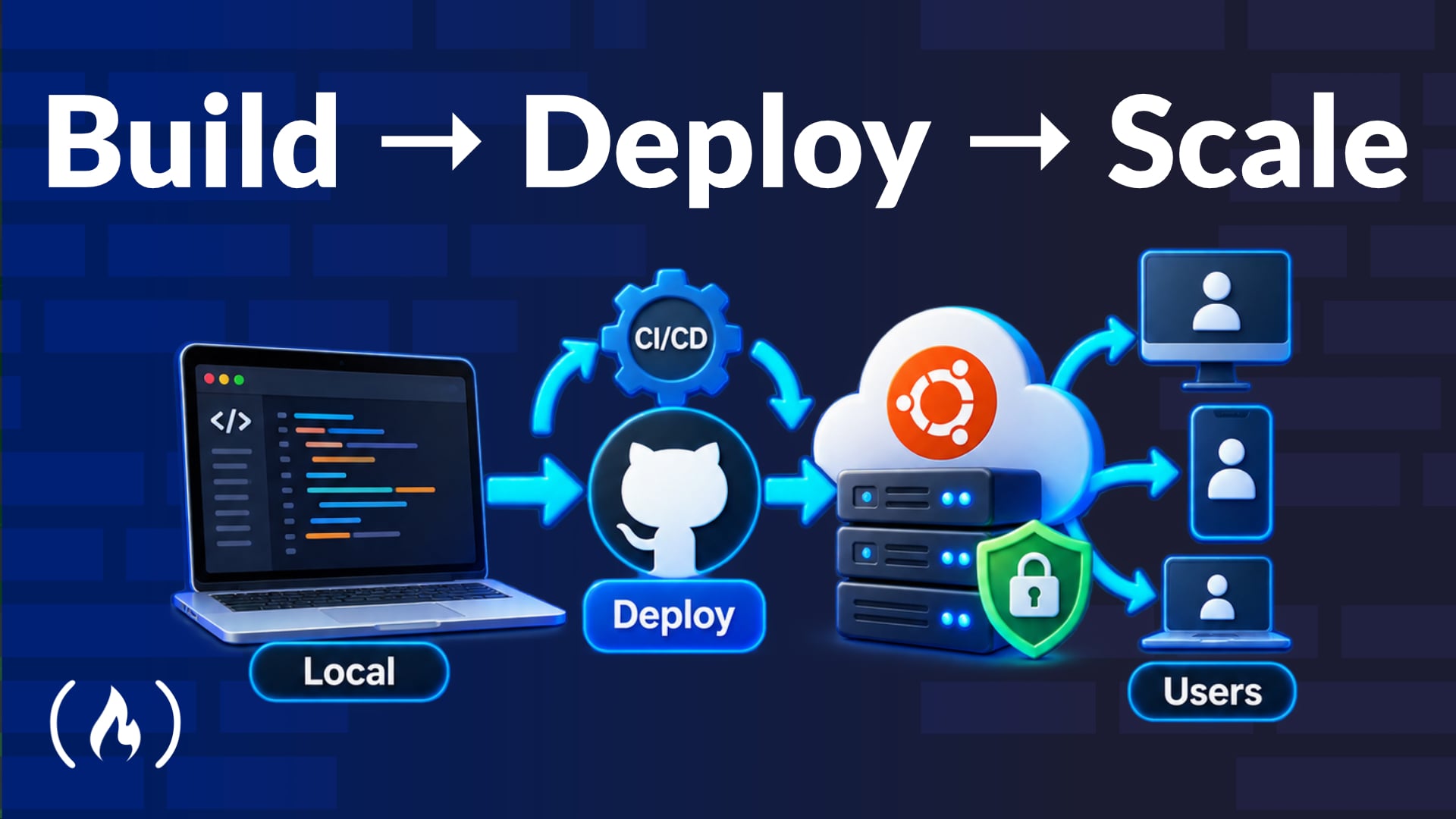
Mastering Full-Stack Deployment: Secure, Automate, Go Live
This article highlights a comprehensive freeCodeCamp.org course on deploying, securing, and automating full-stack web applications. It covers crucial steps from server provisioning and foundational security with UFW and Fail2Ban, to application runtime setup, data management, global access via Nginx and Cloudflare, and robust CI/CD pipelines with GitHub Actions. The course emphasizes a hands-on approach, integrating continuous security testing and observability, culminating in a production-ready application.
Ordewell: Orchestrating AI Coding Agents for Structured Development
Ordewell is an orchestration tool for AI coding agents that transforms a single development goal into an ordered, dependency-aware plan of tasks. Each task specifies its runner, model, thinking effort, and mode, allowing for granular control. It verifies results based on evidence rather than opinion, and offers CLI, VS Code, and web interfaces, along with an extensible skill system.

Only at TechCrunch Disrupt 2026: What happens when OpenAI ships your
AI founders face an unprecedented challenge: their core products becoming features of rapidly evolving foundation models from giants like OpenAI. TechCrunch Disrupt 2026 will host a critical session on navigating this shift, featuring Michel Tricot (Airbyte), Linda Tong (Webflow), and Rob Toews (Radical Ventures) to discuss building lasting defensibility.
OEMpocalypse: Unprivileged Android App to Root via OEM Code
The OEMpocalypse strategy offers a novel approach to rooting Android devices from an unprivileged app by targeting OEM-specific code. It bypasses generic Linux and chipset driver complexities, aiming for a stable page Use-After-Free (UAF) primitive in OEM kernel drivers, often after an initial sandbox escape through OEM IPC handlers. This method prioritizes reliability and portability across an OEM's lineup, accepting the trade-off of per-OEM exploitation.

AI's Impact on Malware Detection: Next-Gen Protection Deep Dive
The landscape of cybersecurity has transformed dramatically. Gone are the days when a simple virus attached itself to a file, easily quarantined by an antivirus scanner. Today, malware is sophisticated, multifaceted,

AI Cybersecurity: The Perpetual Cat and Mouse Game
In the rapidly evolving digital landscape, the interplay between artificial intelligence and cybersecurity has created a dynamic, ceaseless challenge—a true cat and mouse game. AI is not merely a tool for defense; it's