
Ordewell: Orchestrating AI Coding Agents for Structured Development
Ordewell is an orchestration tool for AI coding agents that transforms a single development goal into an ordered, dependency-aware plan of tasks. Each task specifies its runner, model, thinking effort, and mode, allowing for granular control. It verifies results based on evidence rather than opinion, and offers CLI, VS Code, and web interfaces, along with an extensible skill system.
As software developers, we're constantly looking for ways to streamline our workflows and tackle complex problems more efficiently. The rise of AI coding agents promises a future where much of the rote work is automated, but managing these agents for larger, multi-faceted goals often introduces a new layer of complexity. This is precisely the challenge Ordewell aims to solve.
The Challenge of Unstructured AI Development
Imagine having a high-level coding objective, like "implement a new authentication module" or "refactor the data access layer." While a single AI agent might assist with individual files or small functions, orchestrating a series of dependent tasks across multiple files, ensuring consistency, and verifying that the overall goal has been met can quickly become unwieldy. We often find ourselves manually breaking down the problem, prompting agents repeatedly, and then meticulously reviewing and integrating their fragmented outputs. This ad-hoc approach lacks structure, makes progress tracking difficult, and relies heavily on subjective judgment for validation.
This is where Ordewell steps in, offering a structured approach to agent-driven development. It transforms a single, ambitious coding goal into an organized, dependency-aware plan of individual coding-agent tasks.
How Ordewell Brings Order to AI-Driven Tasks
At its core, Ordewell is designed to manage the full lifecycle of an AI-driven development task, from initial goal formulation to final verification. Here’s a breakdown of its operational flow:
- Goal to Plan: You provide Ordewell with a single, overarching development goal. The
Planner, a key component within Ordewell'spackages/core, takes this goal and generates a sequence of discrete, actionable tasks. Crucially, this plan is not just a list; it'sdependency-aware, meaning tasks are ordered intelligently to respect their prerequisites. - Task Definition with Granular Control: Each task generated by the planner isn't a generic instruction. Instead, it's a rich object that specifies:
- Runner: The particular coding agent responsible for executing that specific task.
- Model: The underlying large language model (LLM) to be used by the runner, allowing for optimal model selection per task (e.g., a fast, cheap model for boilerplate, a more capable one for complex logic).
- Thinking Effort: The computational resources or 'deliberation time' the agent should expend, balancing speed against thoroughness.
- Mode: The specific operational mode or strategy the agent should adopt for the task.
- Orchestrated Execution: The
TaskOrchestratorthen takes charge, executing these tasks according to their defined order and dependencies. This ensures a coherent progression through the development goal. - Evidence-Based Verification: A standout feature is the
VerdictEngine. Rather than relying on a developer's subjective opinion, it verifies the results of each task based on concreteevidence. While the specifics of this evidence aren't detailed in the source, the emphasis on objectivity is clear, suggesting a framework for measurable outcomes, possibly through tests or explicit criteria. This is a significant leap from traditional agent interactions that often require manual vetting.
Under the Hood: Technical Architecture
Ordewell is built as a monorepo, demonstrating a clear separation of concerns:
packages/core: This is the brains of Ordewell. Written in pure TypeScript with no UI dependencies, it houses theSessionmanagement,PlanStorefor persistent plans, thePlanneritself, theTaskOrchestrator, theVerdictEngine, and resolvers forModelandModeselection. It also includes arunner plugin registry, indicating its extensibility for various coding agents.packages/cli: Provides theordewellbinary, offering a command-line interface. It incorporates a terminal UI built with a pure reducer and renderer, leveraging a raw-mode driver (as detailed in ADR-0006 for architecture decisions).packages/cli-alias: A simple package on npm that acts as an alias, requiring@ordewell/clito provide the unscopedordewellcommand.packages/vscode: An official VS Code extension, featuring an extension host and a React webview for an integrated development experience.packages/web: A local HTTP + WebSocket daemon, running on127.0.0.1, which serves as the communication hub for the CLI and TUI, allowing them to drive the core functionality.
The Role of Skills
A recent architectural refinement introduced a general SkillsService within packages/core. This system allows agents to invoke builtinSkills like /grilling or /to-spec via slash commands. This replaces older, more rigid toggles (grill-me, PRD), providing a more flexible and extensible way for agents to perform common, predefined actions. This also highlights a thoughtful approach to evolving agent capabilities, making them more modular and reusable.
Practical Takeaways for Developers
Ordewell offers several compelling advantages:
- Structured AI Development: Moving from fragmented agent interactions to a cohesive, dependency-aware plan significantly reduces cognitive load and improves project predictability.
- Control and Flexibility: The ability to specify a runner, model, thinking effort, and mode per task allows for fine-tuned control over how AI agents approach different parts of a problem.
- Verifiable Outcomes: The
VerdictEngine's focus on evidence-based verification offers a pathway to more reliable and trustworthy AI-generated code, reducing the need for extensive manual review and debugging cycles. - Developer-Friendly Interfaces: With CLI, VS Code, and web interfaces, developers can integrate Ordewell into their preferred workflow.
- Extensibility: The
runner plugin registryand theSkillsServicesuggest a design that encourages community contributions and adaptation to new agents and methodologies.
For those looking to integrate Claude Code agents, the CLAUDE.md file at the repository root serves as a direct entry point, outlining conventions and cross-referencing other essential documentation like CONTEXT.md and AGENTS.md. This demonstrates an understanding of how developers will onboard and collaborate with such tools.
Ordewell represents a step forward in making AI coding agents truly productive for complex software engineering tasks by focusing on orchestration, verification, and developer control.
FAQ
Q: How does Ordewell manage task dependencies in a plan?
A: Ordewell utilizes its Planner component to generate a dependency-aware plan of tasks from a single goal. The PlanStore persists these plans, and the TaskOrchestrator then executes tasks in the correct order, ensuring that prerequisites for each task are met before it begins.
Q: What exactly does Ordewell mean by "verifying results from evidence rather than opinion"?
A: The VerdictEngine is responsible for this. While the specific types of evidence are not detailed in the provided source, this statement implies an objective, measurable validation process for task outcomes. It suggests that Ordewell moves beyond subjective human judgment to use concrete data or tests to confirm that an agent's work fulfills its requirements.
Q: Can Ordewell integrate with custom or proprietary coding agents?
A: Yes, the architecture suggests extensibility. The packages/core component includes a runner plugin registry, which is designed to allow different agent runners to be integrated. Additionally, the recent introduction of the general SkillsService provides a mechanism for adding custom builtinSkills, further enhancing the platform's adaptability to various agent capabilities and workflows.
Related articles

US AI Data Centers: A Glimpse into Tomorrow's Power Demands
An in-depth analysis of US AI data centers' projected natural gas consumption, set to become the world's fifth-largest by 2035, highlighting environmental, economic, and infrastructure challenges.

Gates Foundation Pledges $1B to Leverage AI for Global Impact
The Gates Foundation is investing at least $1 billion over the next two years into artificial intelligence tools for global health, agriculture, and education, primarily targeting the poorest countries. This initiative aims to accelerate progress against disease and poverty, though CEO Mark Suzman clarifies that AI cannot replace vital government funding cuts to global health services. The foundation emphasizes AI's potential as an equalizer, but stresses the importance of equitable development and deployment.

Apple Home’s new security camera features cost as much as $60 a
Apple's new AI-powered security camera features for HomeKit Secure Video come with a hefty price tag, reaching up to $60 a month. These Apple Intelligence enhancements offer video summaries and advanced search but require higher-tier iCloud Plus subscriptions, a significant increase from the previous $1 monthly entry cost.

How to Grab the Bissell Cordless Stick Vacuum for $100 Off
Learn how to get the Bissell PowerClean DualBrush Cordless Stick Vacuum for $100 off. This guide details features, benefits, limitations, and provides sequential steps to secure this deal, ensuring you make an informed purchase.

Rockstar and Union Square Off: The Tribunal Has Begun
Rockstar Games and the IWGB union have presented their opening arguments in an employment tribunal concerning the dismissal of 34 staff members. Rockstar cites gross misconduct and confidential information leaks, while the union alleges the firings were due to union activities, including claims of an internal mole. This high-stakes legal battle highlights significant issues for worker rights and studio practices in the gaming industry.
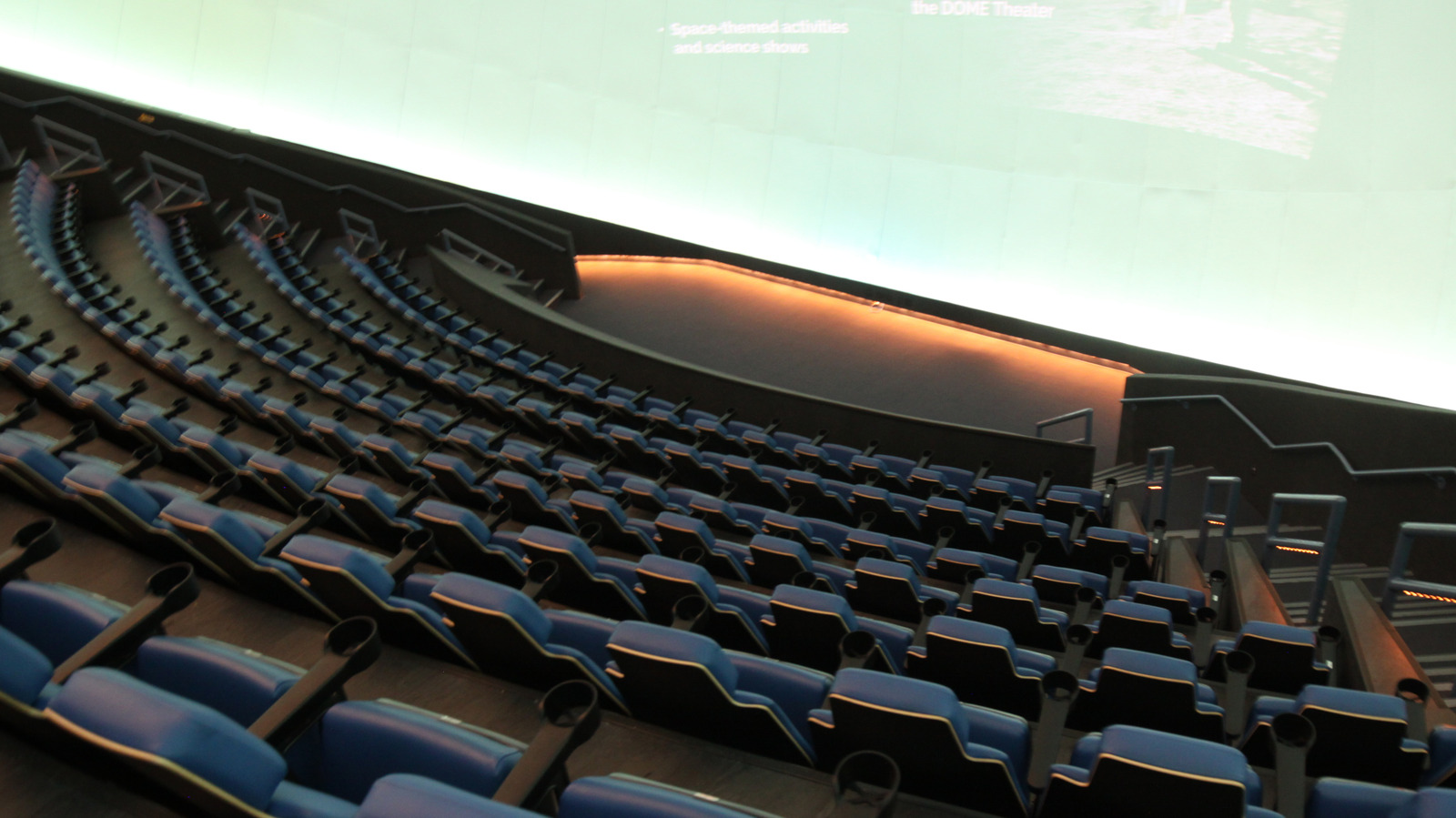
IMAX Theaters: The Quest for the Ultimate Cinematic Experience
Quick Verdict Finding the "biggest" IMAX theater isn't as straightforward as it sounds; it's a debate between sheer physical size and the purity of the cinematic format. While Germany boasts the largest screen by