
AI's Impact on Malware Detection: Next-Gen Protection Deep Dive
The landscape of cybersecurity has transformed dramatically. Gone are the days when a simple virus attached itself to a file, easily quarantined by an antivirus scanner. Today, malware is sophisticated, multifaceted,

The landscape of cybersecurity has transformed dramatically. Gone are the days when a simple virus attached itself to a file, easily quarantined by an antivirus scanner. Today, malware is sophisticated, multifaceted, and prolific. With over 450,000 new malicious programs emerging daily, manual human review is utterly impractical. This sheer volume, coupled with the increasing complexity of attacks, has forced a fundamental shift in how we approach malware detection: from relying on static signatures to harnessing the dynamic power of Artificial Intelligence.
The Shifting Sands of Malware Detection
Traditional antivirus systems operated on a straightforward principle: signature scanning. Security researchers would analyze known malicious files, extract unique identifying patterns—like a digital fingerprint—and add these "signatures" to a vast database. Your local antivirus software would download this database and meticulously compare it against every file on your system. A match meant the file was flagged and blocked.
This method was undeniably fast, cost-effective, and provided a clear verdict for known threats. However, its Achilles' heel quickly became apparent: attackers only needed to alter their code slightly—a new name, some padding, different packing—and the signature would no longer match. The old detection became instantly obsolete. This led to a constant, losing race where new threats would spread for hours or days before a new signature could be written, a problem compounded by attackers deliberately creating thousands of tiny variations of the same program.
Modern Malware's Stealth and Evasion
Today's malware actively works to be inconspicuous. It might lie dormant for days before activating, or arrive as an innocent-looking script that later downloads its true payload. Some threats, termed "fileless," never even write to disk, making traditional file scanning irrelevant. Microsoft groups these under the umbrella of fileless threats, which are particularly challenging to spot.
Furthermore, attackers frequently abuse legitimate tools already present on a system. Consider PowerShell, a standard Windows administration tool. If an attacker gains access, they can execute commands through PowerShell for malicious ends. The LOLBAS project catalogs numerous trusted Windows programs that can be repurposed this way. In such scenarios, nothing inherently "malicious" is installed; a trusted utility is simply misused. A file scanner, designed to look for known bad files, has virtually nothing to identify. This necessitates a change in the security question: instead of "have I seen this file before?", we now ask, "what is this program actually doing?"
Machine Learning Enters the Fray
This is where machine learning (ML) fundamentally changes the game. ML doesn't grant software a sixth sense; it empowers it to make informed judgment calls based on vast amounts of evidence. An ML model is trained on enormous datasets comprising both benign and malicious files. Through this training, it learns to discern patterns and traits that correlate with each group—things like file structure, code packing techniques, system calls, network communications, and interactions with other programs.
When encountering a novel file, the model assesses these traits and assigns a risk score. It hasn't seen this exact file, but it recognizes the underlying "shape" of the problem. This capability is particularly potent against malware variants. Attackers often superficially modify their code while retaining the core malicious logic. While signature-based systems would miss these variations, an ML model trained on behavior and structure can often detect these "family resemblances."
Behavioral Monitoring: Actions Speak Louder Than Files
Perhaps the most significant evolution in antivirus protection is the pivot from scanning static files to observing dynamic actions. Imagine an unknown program launching on a system. Within moments, it rapidly accesses and encrypts hundreds of documents, alters their extensions, deletes all recovery copies, and attempts to communicate with an unfamiliar server. There might not be a signature for this specific strain, but this sequence of actions unequivocally screams "ransomware."
Microsoft's documentation on behavioral blocking and containment details this approach, where machine learning models evaluate a chain of events rather than isolated files. Individually, these actions might appear innocuous, but collectively, they paint a clear picture of malicious intent. The critical advantage here is timing: the system doesn't need prior knowledge of the specific malware; it only needs to identify the attack pattern early enough to intervene and mitigate damage.
This real-time behavioral monitoring is especially crucial for ransomware. While known ransomware families are caught by signatures, new variants are designed to bypass them. Behavior monitoring provides a vital second line of defense by watching for tell-tale signs: rapid file modification across multiple directories, attempts to delete backups or shadow copies, and processes trying to disable security tools. Even a partial intervention—stopping an attack after dozens of files are encrypted versus thousands—can make an enormous difference, as highlighted by federal guidance from the CISA StopRansomware hub.
The Cloud as a Global Sensor Network
The evolution isn't just about what security software scrutinizes, but where the analysis happens. Traditional signature scanning was a fully local operation. Modern protection, however, intelligently distributes the workload. Fast, low-overhead checks occur on the device for immediate response, while more complex decisions are offloaded to the vendor's cloud infrastructure.
Here's how it typically works: a lightweight agent on your device continuously logs security-relevant events—process launches, parent-child relationships, registry modifications, outbound network connections, file hashes. If the local agent cannot definitively classify something, it sends aggregated metadata (e.g., hash, structural traits, contextual activity, not the full file) to the cloud backend via an encrypted channel. Microsoft describes this handoff for Defender in its notes on cloud protection, where the local client briefly holds a file while awaiting a cloud verdict.
In the cloud, automated systems immediately compare the submission against data from millions of other devices and score it using models too extensive for local deployment. If a clear verdict emerges, a response is sent back within milliseconds, without human involvement. If the situation is ambiguous, it escalates to human threat researchers and security operations teams. The power of this distributed model is immense: if the same unusual binary or process chain appears across thousands of unrelated organizations within a short period, the cloud backend instantly identifies this cluster, flagging it for expert analysis. These analysts then pull samples, detonate them in sandboxes, confirm their malicious nature, and develop new detections.
This creates a continuous feedback loop: confirmed threats become labeled training data for the next generation of ML models. New indicators, such as hashes and behavioral rules, are rapidly disseminated to all protected devices, often within minutes, while refined models follow on a slower cycle of days or weeks. This collective intelligence means that every protected device acts as a sensor, and detections are shared globally almost instantly, without waiting for the next large database update.
Beyond the File: Stopping Attacks Pre-Landing
Not all threats manifest as executables. Many begin with a simple message. Phishing remains a primary entry point, with the APWG reporting over a million phishing attacks in a single quarter. These fake pages are increasingly sophisticated, meticulously mimicking legitimate bank logins or delivery notifications to deceive even cautious users.
AI significantly bolsters defenses here by analyzing factors humans often overlook: the age of the domain, suspicious redirects, and whether the page matches known scam kits. Blocking a malicious page at this stage stops the attack much earlier, preventing downloads, eliminating the need for file scanning, and saving significant cleanup effort.
Where AI Still Faces Hurdles
Despite its advantages, AI in cybersecurity isn't a silver bullet. False positives are a persistent challenge; an unusual but legitimate application might be flagged as malicious, leading users to disable protection. Performance is another concern; all this sophisticated analysis must occur without noticeably slowing down the user's system.
Then there's the ongoing arms race. Attackers are also studying these models. NIST's report on adversarial machine learning details how models can be poisoned during training or cleverly fooled at the point of decision. An ML model, like any defense, is a target, not an impregnable fortress. Finally, privacy is a valid concern. Cloud analysis inherently means some metadata about files and network connections leaves your device. Users have a right to understand what data is collected and how long it's retained by vendors.
The Power of Layered Defense
Crucially, none of these AI-driven methods supersede previous techniques. The most robust security postures are built on layered defenses. Signatures remain invaluable for instantly catching known malware. Reputation checks block suspicious websites and untrusted programs. Behavioral monitoring identifies anomalous activity in real-time. Machine learning fills the critical gap for novel threats that no one has yet named.
The MITRE ATT&CK framework serves as an excellent resource for security teams to map attacker techniques against their defensive layers. This layered approach also provides essential context. A file with an impeccable history that suddenly exhibits strange behavior warrants closer scrutiny, whereas a file already identified as known malware requires no further analysis.
Practical Takeaways for Developers
For us as developers, the evolution of antivirus means understanding that modern protection extends far beyond simple file matching. Good security software today prioritizes rapidly identifying and responding to malicious behavior over merely recognizing bad files. When evaluating or implementing security solutions, prioritize those that actively monitor system activity, not just scan files, and critically, that block dangerous sites and downloads before they even reach the endpoint.
As attacks become faster and increasingly automated, our defenses must mirror that sophistication. AI is no longer a futuristic concept in malware detection; it's the core engine enabling next-generation protection against an ever-evolving threat landscape.
FAQ
Q: How do machine learning models specifically learn about malware traits without human intervention for every new variant?
A: Machine learning models are trained on massive datasets of both known good and known bad (malicious) files. During this training, they automatically identify patterns and statistical correlations across various attributes like file structure, API calls, network communication patterns, and code characteristics. They don't need a human to explicitly define rules for every new variant; instead, they learn to generalize from existing data, enabling them to flag new, unseen variants that share similar underlying malicious traits or behaviors.
Q: What kind of "metadata" is sent to the cloud for analysis, and why isn't the whole file sent?
A: Typically, metadata includes non-sensitive information such as the file's cryptographic hash, its structural characteristics (e.g., header information, section sizes), the types of system calls it makes, parent-child process relationships, and details about its network connections or registry modifications. The entire file is usually not sent due to performance considerations (bandwidth, latency), privacy concerns, and the fact that most malicious traits can be inferred from the metadata and behavioral context. Only in very ambiguous or critical cases might a sample be requested for deeper analysis in a secure sandbox environment.
Q: How does adversarial machine learning specifically target and attempt to defeat AI-driven malware detection?
A: Adversarial machine learning aims to trick AI models either during their training phase (poisoning attacks) or at the point of decision-making (evasion attacks). In poisoning, attackers inject subtly crafted malicious data into the training set to subtly alter the model's future classifications. In evasion, they craft malware that looks benign to the model by making minor, carefully calculated modifications to its features, exploiting the model's blind spots without changing the malware's core malicious functionality. This is a constant game of cat and mouse, requiring continuous model retraining and robustness improvements.
Related articles

Unions Level Up: How Collective Power is Reshaping Game Dev
The gaming industry is seeing a massive shift as unionization rises globally, securing vital worker protections, better pay, and AI safeguards. This collective movement is empowering developers and fundamentally changing workplace dynamics. It's a win for workers, and ultimately, for the games we play.

AI Cybersecurity: The Perpetual Cat and Mouse Game
In the rapidly evolving digital landscape, the interplay between artificial intelligence and cybersecurity has created a dynamic, ceaseless challenge—a true cat and mouse game. AI is not merely a tool for defense; it's
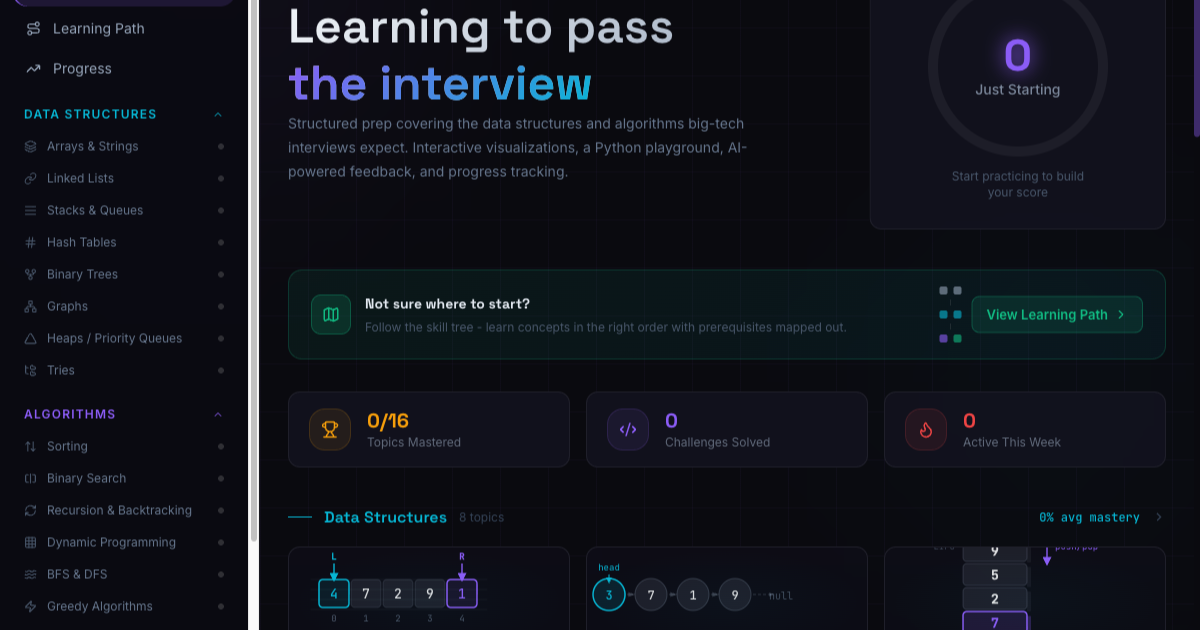
Learningto/Pass: Free, AI-Powered Interview Prep for Developers
Landing a role at a top-tier tech company often hinges on mastering complex data structures and algorithms, coupled with a solid grasp of system design. The problem for many aspiring software developers is that quality
The One Zero Company Achievement That Got Away From Me
Star Wars Zero Company is a stellar turn-based tactics game, but the author is playfully irked by one missing achievement: a reward for completing the game without losing any squad members to its brutal permadeath system. Despite this minor gripe, the game is lauded as one of the year's best, showcasing deep strategic gameplay.

RAM Crisis Deepens: AI Ramps Up, Severe Shortage by 2027
Analyst firm KB Securities warns of a severe RAM crisis by 2027, blaming surging AI demand. With Samsung and SK Hynix inventories critically low, consumers face higher prices and limited availability for computing components.

The Composite Design Pattern: Unifying Individual Objects and Groups
As software engineers, we frequently encounter scenarios where we need to manage collections of objects that can be either individual entities or groups containing other entities. Think of a file system with files and