
Defcon's Baochip Badge: A Visionary Open-Source Security Key
Defcon's latest badge, featuring the removable Baochip-1x, is a groundbreaking open-source hardware security key offering unprecedented transparency, robust features, and a second life beyond the conference.
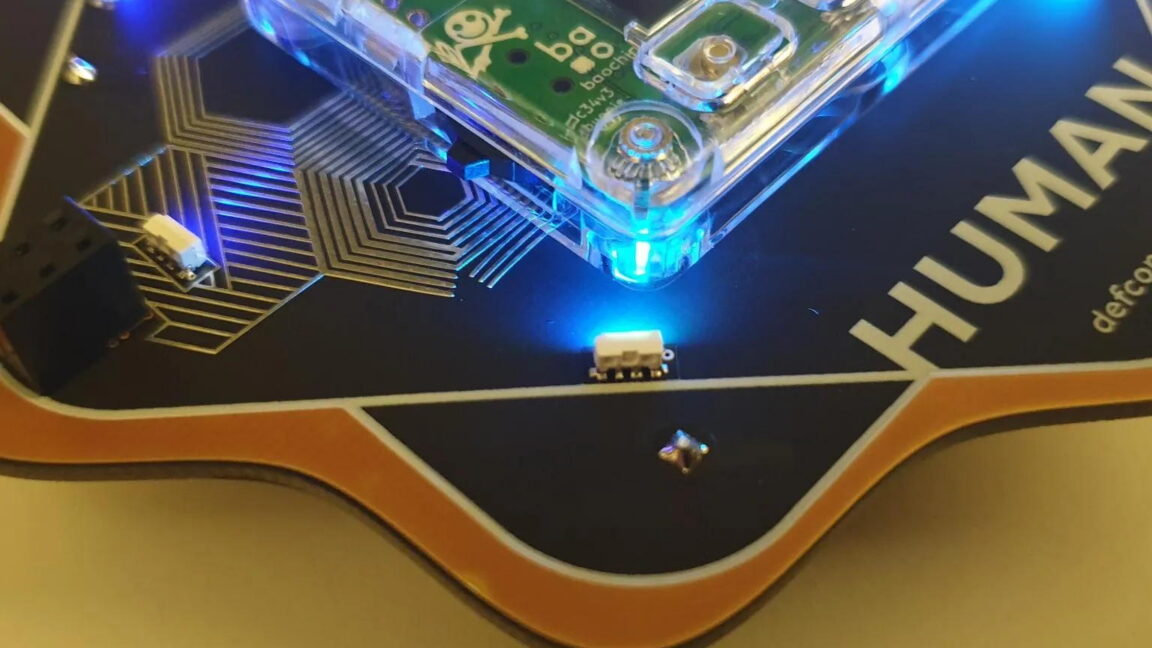
The annual Defcon hacker conference is celebrated for its cutting-edge security insights and its intricately designed, often electronic, badges. This year, the focus shifts. Moving beyond external artistry, Defcon introduces a badge that’s a security key you can literally see inside. Crafted by hardware hacking luminary Andrew "bunnie" Huang, this badge, featuring the Baochip-1x, represents a significant leap forward in hardware transparency and verifiable security. It’s an innovative, dual-purpose device promising utility well beyond the conference floor.
Unprecedented Transparency: Peer Inside Your Security
Traditional computer chips are opaque "black boxes," demanding users blindly trust manufacturers. Defcon’s new badge directly challenges this. The Baochip-1x is a "mostly" open-source microcontroller. Its operating system, firmware, processor core, cryptographic engines, and input-output system code are all available on GitHub for public inspection.
Critically, its transparency extends physically. Unlike conventional chips, the Baochip’s packaging allows infrared light to pass through the silicon. This innovative design enables researchers to visually inspect the chip's internal structures, comparing the physical layout against the published digital design. This unique capability dramatically enhances trust by offering unprecedented supply-chain verification, guarding against hidden backdoors introduced during manufacturing.
The "mostly" open-source designation acknowledges some low-level physical design and manufacturing elements, specific to TSMC’s 22-nanometer process, remain proprietary. Huang’s design also piggybacked on a Crossbar manufacturing run; while Crossbar's version uses proprietary ARM, Huang's Baochip utilizes an open-source RISC-V core. Despite these minor proprietary layers, the Baochip-1x sets a new benchmark for verifiable hardware.
Beyond the Badge: A Robust, Reusable Security Key
After the conference, the Baochip-1x's core module detaches, transforming into a fully functional, standalone hardware security token. This fulfills Defcon founder Jeff Moss's vision for badges with lasting utility, addressing the vulnerabilities of existing hardware security tokens and crypto wallets.
The Baochip-1x operates as a FIDO hardware security token, supporting time-based one-time password (TOTP) systems and password management. Huang describes it as "probably the world’s first open source security token that you can fully inspect all the way down to the bootloader [and] transistors." This offers a compelling, inspectable alternative in hardware authentication.
A small, low-resolution, nearsighted camera is integrated, specifically for scanning QR codes to register with authentication systems. Adhering to Defcon’s strict privacy policies, it only processes black and white data and doesn't store photos, mitigating privacy concerns. As a conference badge, it also features interactive LED lights, with patterns changing based on badge type and interactions with other attendees.
Performance & Security Deep Dive
Powering the Baochip-1x is a 350 MHz RISC-V processor, complemented by 2 megabytes of SRAM and 4 megabytes of resistive RAM (RRAM). RRAM, a nonvolatile memory, offers enhanced difficulty in physical data extraction compared to conventional flash memory. Four 700MHz PicoRV32 cores handle input-output operations.
Security is paramount. The operating system, written in Rust (known for memory safety), includes secure boot and a true random number generator, hardening it against remote attacks. Huang transparently estimates the chip can withstand attacks costing tens of thousands of dollars but concedes multi-million dollar adversaries with sophisticated labs could likely defeat it. He welcomes Defcon attendees to stress-test it, expecting "zero-days" to be found, contributing to its ongoing improvement. The Baochip supports MicroPython and offers C and Rust development kits, with potential for future expansion to run Linux or serve as a Hardware Security Module (HSM).
Pros & Cons
Pros:
- Unprecedented Transparency: "Mostly" open-source hardware, allowing physical silicon inspection via infrared.
- Verifiable Security: Enhances supply-chain trust by enabling direct comparison of physical chip to design.
- Dual Functionality: Serves as an interactive badge and a reusable FIDO hardware security token.
- Robust Core Security: Rust OS, secure boot, true RNG, RRAM for data protection.
- Community-Driven Improvement: Benefits from Defcon's hacker community for stress-testing and refinement.
Cons:
- Limited Retail Availability: Primarily distributed at Defcon; not broadly available as a standalone product yet.
- Not Fully Open: Some low-level manufacturing and physical design details remain proprietary.
- Attack Limitations: While strong, it is not impenetrable against extremely well-funded, sophisticated adversaries.
The Verdict & Who It's For
The Defcon Baochip badge is more than a collectible; it's a statement about the future of secure computing. For Defcon attendees, it's an exceptional and functional piece of conference history. For security professionals, researchers, and developers, it represents a visionary step towards truly verifiable hardware. Its ability to serve as an inspectable, FIDO-compliant security key after the event adds significant, lasting value. While not yet a consumer retail product, the Baochip-1x sets a new, higher standard for trustworthiness in hardware, pushing the industry towards greater transparency. If you value open security, verifiable hardware, and cutting-edge technology, this badge is an indispensable piece of kit.
Conclusion
Andrew Huang's Baochip badge for Defcon is a remarkable achievement, expertly blending the conference's tradition of intricate badges with a profound statement on hardware transparency and security. By offering a verifiable, open-source core that functions as a sophisticated security key, it champions the principles of agency and trust. This innovative badge is not merely a tool; it's a testament to what's possible when security is built from the ground up with openness and rigorous scrutiny in mind.
FAQ
Q: Can anyone buy the Baochip-1x as a standalone security key?
A: Currently, the Baochip-1x is primarily distributed as part of the Defcon conference badges. While its creator, Andrew "bunnie" Huang, plans to expand its features through his company, Baochip, its wider retail availability as a standalone product is not explicitly mentioned, but its potential for broader adoption is implied.
Q: How does the "mostly" open-source nature impact the Baochip-1x's security and trustworthiness?
A: The "mostly" open-source designation means its core software is publicly inspectable, but some underlying physical design and manufacturing elements are proprietary. Despite this, its unique physical inspection capability via infrared light, combined with open code, offers a significantly higher level of transparency and verifiability than most conventional security chips, greatly enhancing its trustworthiness for most users and researchers.
Q: What makes the Baochip-1x a more secure alternative to existing hardware security tokens or crypto wallets?
A: The Baochip-1x excels through its unprecedented transparency and verifiable hardware. Unlike many black-box tokens, users can scrutinize its source code and even peer inside the silicon, reducing reliance on blind trust. Its Rust-based OS, secure boot, true random number generator, and resistive RAM (RRAM) for data storage further contribute to a robust security posture against various attack vectors, particularly nonphysical ones.
Related articles

Street Fighter Popcorn Bucket: A Gloriously Goofy Collectible
Quick Verdict In an era where cinema experience accessories are becoming increasingly elaborate, the Street Fighter movie popcorn bucket stands out. Shaped like Guile's iconic, gravity-defying flattop hairstyle, this

Intel Arc 140T DLSS 5 Port: A Glimpse into AI-Powered Potential
An AI developer successfully ported DLSS 5 Neural Rendering to Intel Arc 140T integrated graphics, achieving 360p at 10.5 FPS. This technical marvel, aided by AI coding, is a groundbreaking proof-of-concept, but currently impractical for real-time gaming due to severe performance limitations and varied visual results based on game art style.
Prusa CORE One L+ Review: More Precise, Minor but Meaningful Upgrade
Tom's Hardware Verdict The Prusa CORE One L+ introduces small but impactful refinements to an already stellar 3D printer. The addition of a new nozzle wiper and enhanced GT1.5 belts boosts print quality and operational

Anthropic Bio Lab: Ambition Meets Uncertainty
Anthropic's Leap into the Physical: A New Era for AI in Biology Verdict: Anthropic's establishment of a physical bio research lab marks a pivotal, albeit opaque, moment for AI's expansion into tangible scientific

CNET's NYT Connections: Sports Edition Hints & Answers (Sept. 18)
CNET's NYT Connections: Sports Edition Hints & Answers (Sept. 18) Review: A Clear Victory Quick Verdict: CNET's daily guide for the NYT Connections: Sports Edition puzzle offers a clear, well-structured, and invaluable

Community Fibre 8.5Gbps: UK's Fastest, But Pricey Fibre
Quick Verdict Community Fibre has just launched the UK's fastest residential internet connection, boasting an incredible 8.5Gbps (8,200Mbps) symmetrical full fibre service. It's a technical marvel, delivering speeds