
Community Fibre 8.5Gbps: UK's Fastest, But Pricey Fibre
Quick Verdict Community Fibre has just launched the UK's fastest residential internet connection, boasting an incredible 8.5Gbps (8,200Mbps) symmetrical full fibre service. It's a technical marvel, delivering speeds
Quick Verdict
Community Fibre has just launched the UK's fastest residential internet connection, boasting an incredible 8.5Gbps (8,200Mbps) symmetrical full fibre service. It's a technical marvel, delivering speeds that redefine 'ultrafast'. However, this pioneering performance comes with an equally groundbreaking price tag: £300 per month on a 24-month contract. While a significant achievement in broadband infrastructure, for the vast majority of consumers, this speed is extreme overkill, and the cost is simply prohibitive, positioning it firmly in the realm of luxury and bragging rights rather than practical necessity.
Introduction: The New Speed King Arrives
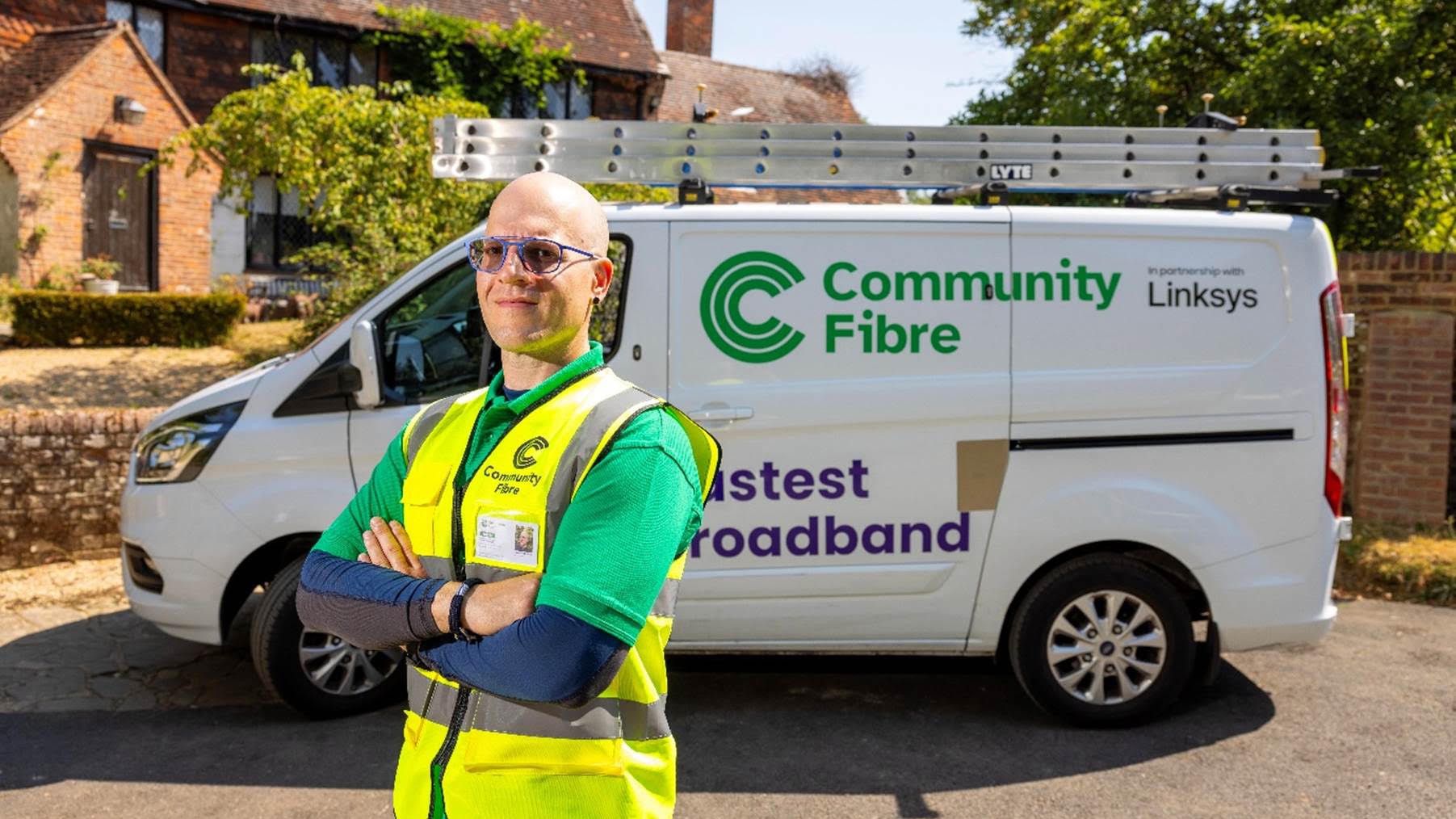
London's internet landscape just got a whole lot faster. Community Fibre has pushed the boundaries of residential broadband, rolling out a staggering 8.5Gbps full fibre connection to a homeowner in Beckton, Newham. This new offering isn't just an incremental upgrade; it represents a monumental 70% speed increase over their previous top-tier 5Gbps plan and sets a new benchmark for the fastest home internet in the entire UK.
Peter Rampling, Chief Commercial Officer at Community Fibre, highlights this as a testament to "world-class infrastructure...paired with relentless innovation and long-term investment." Indeed, bringing such speeds to a residential dwelling demonstrates significant technological prowess. But as with any bleeding-edge technology, the question quickly shifts from 'can it be done?' to 'is it worth it?' The answer, as we'll explore, depends heavily on your definition of 'worth' and the depth of your pockets.
Key Specifications & Performance
At the heart of this new service is its raw speed: 8.5Gbps, or precisely 8,200Mbps. Crucially, this is a symmetrical connection, meaning you get those eye-watering speeds for both downloading and uploading data. This symmetrical performance is a hallmark of true full fibre networks, where the fibre optic cable extends directly into the home (fibre-to-the-premises), unlike older Fibre-to-the-Cabinet (FTTC) connections that rely on slower copper wiring for the final stretch.
For context, many traditional broadband connections, even those labelled 'fibre', often deliver speeds closer to the author's personal experience of around 60Mbps, with uploads being significantly slower. The 8.5Gbps plan is a mind-boggling 136 times faster than that. This level of bandwidth means downloading massive files (think multi-gigabyte games or 8K video content) would be almost instantaneous. Streaming multiple ultra-high-definition videos concurrently, running sophisticated cloud applications, or handling heavy data transfers for professional purposes would face virtually no bottlenecks from the internet connection itself. It truly delivers on the promise of an 'ultrafast, faster, and fastest' tiered offering.
Pricing & Value Proposition
This is where the rubber meets the road, or perhaps, where the wallet takes a substantial hit. The 8.5Gbps connection comes with a monthly bill of exactly £300, tied to a 24-month contract. To say this is a premium is an understatement; it's a luxury tax on speed.
Let's put this into perspective by looking at Community Fibre's other plans:
- 5Gbps: £56.70 per month
- 2.5Gbps: £38.70 per month
The jump from 5Gbps to 8.5Gbps is a 70% increase in speed, but a staggering 429% increase in price (£56.70 to £300). This disproportionate leap suggests that the 8.5Gbps offering is not priced for its marginal utility over the 5Gbps plan for most users, but rather for its exclusivity and the sheer technical achievement it represents. As the source aptly puts it, it's "more about bragging rights than anything else for now." Even the 5Gbps plan, at a comparatively reasonable £56.70, already offers speeds far beyond what most households genuinely need. The 2.5Gbps at £38.70 seems like a sweet spot for power users or busy households, offering incredible speed at a highly competitive price, especially compared to the author's former FTTC connection which cost "a touch more than that."
User Experience and Practicality
While the theoretical performance of 8.5Gbps is astounding, the practical benefits for an average homeowner are questionable. Most home networks, including Wi-Fi 6 or even Wi-Fi 6E, would struggle to deliver these speeds wirelessly to individual devices. You would need a robust, multi-gigabit wired infrastructure within your home, including compatible network cards, switches, and potentially a very high-end router, to even begin to tap into this bandwidth.
For most activities – 4K streaming, online gaming, video conferencing, even running multiple smart home devices – even 1Gbps is more than sufficient. A 2.5Gbps or 5Gbps connection would already handle incredibly demanding scenarios with ease, such as numerous concurrent 8K streams, massive data backups to cloud storage, or professional-grade remote work involving huge file transfers. The additional 3.5Gbps from the 5Gbps to the 8.5Gbps plan offers diminishing returns for all but the most extreme, niche use cases, such as large media production studios operating out of a home, or individuals who frequently transfer multi-terabyte datasets.
Pros and Cons
Pros:
- Record-Breaking Speed: The fastest residential internet connection available in the UK, a true technological feat.
- Symmetrical Bandwidth: Full 8,200Mbps for both downloads and uploads, ideal for demanding tasks like large file transfers, content creation, and real-time collaboration.
- Future-Proofing: Offers an immense amount of headroom for future applications and simultaneous high-bandwidth demands that have yet to emerge.
- Full Fibre Technology: Robust and reliable, direct fibre connection means less susceptibility to network degradation compared to copper-based solutions.
Cons:
- Exorbitant Cost: At £300 per month, it is prohibitively expensive for the vast majority of households.
- Limited Practical Benefit: Most users will not be able to fully utilize these speeds, even with multiple devices, making much of the bandwidth redundant.
- Disproportionate Price Jump: The massive price increase from 5Gbps to 8.5Gbps offers very poor value for money in terms of usable speed gains.
- Geographical Limitation: Currently only available in Community Fibre's serviced areas within London and its surroundings.
- Internal Network Requirements: To leverage these speeds, homeowners would likely need significant upgrades to their internal wired networking infrastructure.
Comparison to Alternatives
Let's break down Community Fibre's top-tier offerings and compare them to a typical older-generation connection:
| Feature | Community Fibre 8.5Gbps | Community Fibre 5Gbps | Community Fibre 2.5Gbps | Author's FTTC Connection |
|---|---|---|---|---|
| Download Speed | 8,200Mbps | 5,000Mbps | 2,500Mbps | ~60Mbps on average |
| Upload Speed | 8,200Mbps | 5,000Mbps | 2,500Mbps | Lower, asymmetric (not specified) |
| Monthly Cost | £300 | £56.70 | £38.70 | >£38.70 (at one point) |
| Contract Length | 24 months | Not specified | Not specified | Not specified |
| Technology | Full Fibre | Full Fibre | Full Fibre | Fibre-to-Cabinet + Copper |
| Target User | Ultra-niche, extreme demand, early adopters | Power users, demanding households | Most tech-savvy households, gamers | Standard browsing, light streaming |
Buying Recommendation
For almost everyone, including even the most demanding power users and multi-person households, the Community Fibre 8.5Gbps plan is simply not a sensible investment. The 5Gbps plan at £56.70 per month already offers immense speed at a fraction of the cost, providing ample bandwidth for virtually any residential need for the foreseeable future. The 2.5Gbps plan, at just £38.70, represents exceptional value for incredible performance.
Who is the 8.5Gbps plan for, then? It's for the very small segment of the market that prioritizes being at the absolute bleeding edge of technology, irrespective of cost or practical utility. Perhaps a tech enthusiast with a boundless budget, a specialized home business with extreme bandwidth requirements, or someone who genuinely believes that having the 'fastest ever' internet connection is a status symbol worth £300 a month. For anyone else, look at Community Fibre's 5Gbps or 2.5Gbps plans; they offer phenomenal speeds at a far more justifiable price point.
FAQ
Q: Is 8.5Gbps really necessary for a typical home user?
A: No, the source content strongly implies that the 8.5Gbps plan is far beyond what the vast majority of consumers would ever need or even be able to utilize effectively. Even 5Gbps or 2.5Gbps plans are considered more than sufficient for most demanding household internet usage.
Q: What's the main advantage of full fibre over FTTC?
A: Full fibre (Fibre-to-the-Premises) provides a direct fibre optic cable connection all the way into your home. This eliminates the slower copper wiring segment used in Fibre-to-the-Cabinet (FTTC) connections, allowing for significantly higher, more reliable, and often symmetrical download and upload speeds.
Q: Is this 8.5Gbps service widely available across the UK?
A: No, this specific 8.5Gbps service is offered by Community Fibre, whose network is primarily concentrated in and around London, currently reaching about 1.4 million homes. It is not a national offering.
Related articles

Anthropic Claude Merger: Unified AI for Enhanced Productivity
Anthropic Claude Merger: The Verdict Anthropic is making a bold move, consolidating its previously distinct AI tools — Claude chat and Claude Cowork — into a single, more intuitive “all-powerful Claude.” This strategic

September Pixel Drop: Small Update, Big Convenience
Google's September 2026 Pixel Drop brings enhanced one-tap calling/messaging via VIPs widget and expanded on-device scam protection for text messages, making communication safer and faster for Pixel 6 and newer users.
Pixel 11 Pro: A Hidden Camera Gem Elevates Mobile Photography
The Pixel 11 Pro ($1,099) introduces redesigned Quick Access camera controls, offering intuitive, customizable on-the-fly adjustments like exposure and "Camera Looks." While powerful and user-friendly once enabled, Google hides them deep in settings and disables them by default, hindering discoverability. Despite this flaw, it's a significant upgrade for mobile photography enthusiasts.

Pennsylvania Measles Outbreak: A Grim Warning on Vaccine Hesitancy
This detailed analysis of the alarming Pennsylvania measles outbreak highlights four tragic fatalities, including an 18-year-old from severe neurological complications. It underscores critical public health challenges, including declining vaccination rates and federal data reporting controversies, while emphasizing the urgent need for reliable information and widespread vaccination.

US AI Data Centers: A Glimpse into Tomorrow's Power Demands
An in-depth analysis of US AI data centers' projected natural gas consumption, set to become the world's fifth-largest by 2035, highlighting environmental, economic, and infrastructure challenges.
Windows 11 Media Creation Tool: The Official Path to Bootable USBs
Verdict: Windows 11 Media Creation Tool - Your Gateway to a Fresh OS Install For anyone looking to install Windows 11, either on a brand-new PC or by performing a clean wipe on an existing one, Microsoft's official