
China's Desert Greening Project: A Promising Model
Quick Verdict China's ambitious project to green the edges of the Taklamakan Desert, often called the "Sea of Death," represents a monumental environmental engineering achievement. After five decades of persistent
Quick Verdict
China's ambitious project to green the edges of the Taklamakan Desert, often called the "Sea of Death," represents a monumental environmental engineering achievement. After five decades of persistent effort, this initiative has demonstrably transformed hyperarid zones into carbon-absorbing shrublands and forests. While not a standalone solution for global climate change, it serves as a robust, verifiable model for climate change mitigation and desertification control in even the most extreme arid environments, provided there's strong political will and sustained, long-term planning.
Overview: Tackling the "Sea of Death"
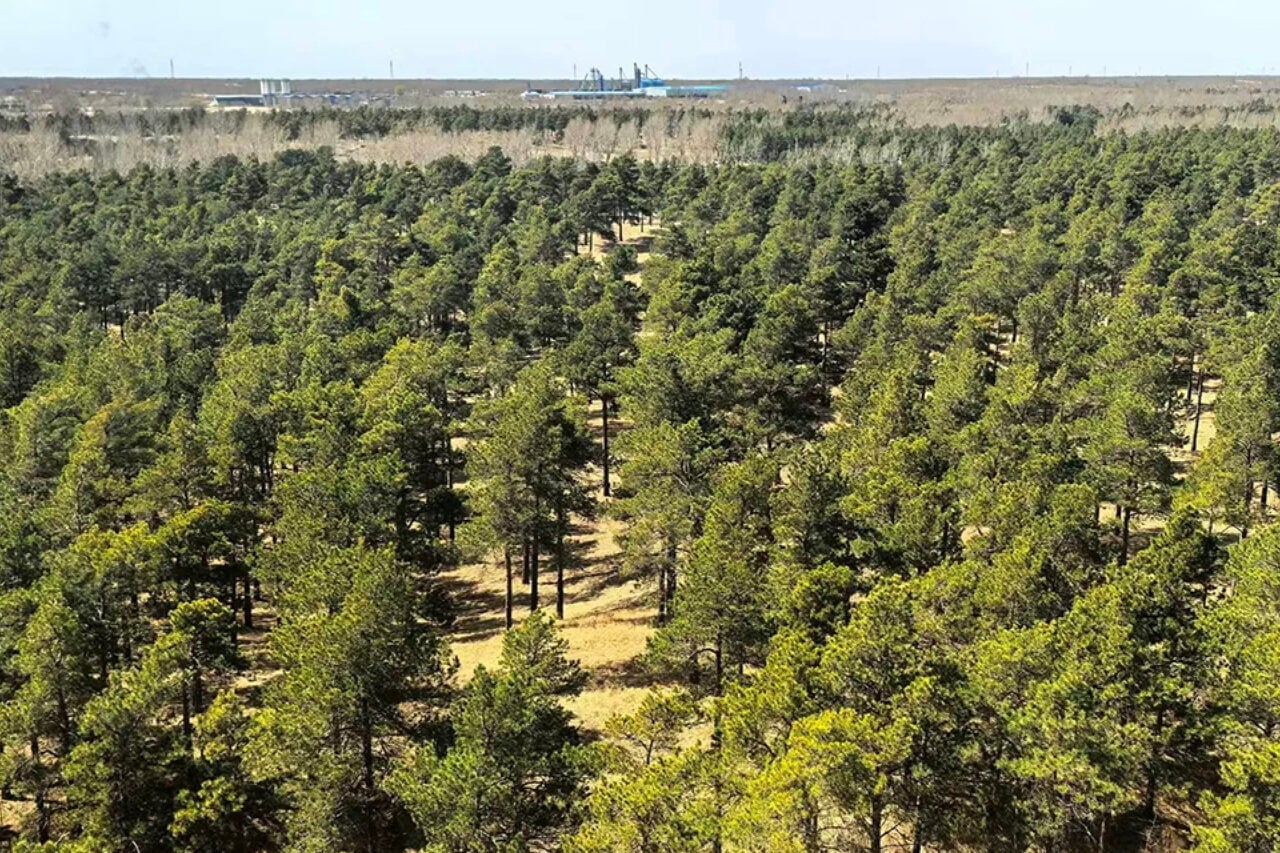
For centuries, the Taklamakan Desert in northwestern China has been known for its unforgiving conditions. Covering an immense 130,000 square miles (337,000 square kilometers), it's been described by scientists as a "biological void." However, recent research spearheaded by atmospheric physicist King-Fai Li at the University of California, Riverside, confirms a significant transformation. Leveraging years of data from NASA's Orbiting Carbon Observatory (OCO) and MODIS imagers, Li and his international team have verified the Chinese government's success in converting parts of this ancient desert into an active carbon sink. This isn't about creating Amazon-like rainforests; Li clarifies that many regions are akin to Southern California's chaparral. Yet, the consistent and measurable CO2 drawdown, verifiable from space, marks a pivotal success.
Key Specifications and Goals
This grand ecological engineering endeavor, initiated in 1978, is part of China's extensive 72-year environmental plan. Its objectives are multi-faceted:
- Desert Expansion Control: The primary goal was to create a natural bulwark of forest to halt the expansion of the Taklamakan, the world's second-largest "mobile desert."
- Natural Irrigation: The chosen method relies on high-elevation runoff, specifically seasonal snowmelt from the Kunlun Mountains to the south, providing a sustainable water source.
- Socio-Economic Improvement: Secondary benefits sought include enhanced agricultural conditions and easing political unrest among local minority ethnic groups, including the Uyghur communities.
- National Programs Integration: The project extends to planting along the 340-mile (550-kilometer) Tarim Desert Highway, integrated into China’s Three-North Shelterbelt program, slated to continue until 2050.
- International Contribution: China explicitly aims to increase its northern forest cover from 5.05% to 14.95%, aligning with its commitments to the United Nations Strategic Plan for Forests.
Implementation and Measurable Impact
Monitoring vegetation cover, CO2 levels, and weather patterns via NASA satellite sensor data, Li and his team observed consistent positive trends. During the wet season (July to September), increasing vegetation reliably absorbed approximately three parts per million (ppm) of atmospheric CO2 each year, compared to the dry season. While Li cautions that greening the entire Taklamakan might absorb around 60 million tons of carbon annually – a substantial amount but only a tiny fraction of the estimated 40 billion tons emitted globally – the principle is profound. "We're not going to solve the climate crisis by planting trees in deserts alone," Li emphasized, "But understanding where and how much CO2 can be drawn down, and under what conditions, is essential."
Beyond carbon sequestration, the afforestation initiative has provided crucial local environmental benefits. It has effectively impeded wind erosion, leading to a notable reduction in the frequency and severity of sandstorms, thereby protecting local farms and enhancing regional stability. The strategic planting of hardy shrubs and trees, irrigated by natural runoff, highlights a pragmatic and effective methodology for challenging landscapes.
Pros
- Verifiable Carbon Sink: Satellite data confirms consistent annual CO2 absorption, making it a measurable contribution to climate change mitigation.
- Effective Desertification Control: The project successfully stems the expansion of a vast and mobile desert, protecting adjacent lands.
- Improved Local Environment: Reduced wind erosion and fewer sandstorms benefit local agriculture and communities.
- Model for Extreme Arid Landscapes: Offers a viable blueprint for nature-based climate solutions in environments previously thought to be unsalvageable.
- Long-Term Vision and Execution: The 72-year plan demonstrates a sustained commitment crucial for such ambitious ecological engineering.
- Multi-faceted Benefits: Addresses environmental, agricultural, and socio-economic goals simultaneously.
Cons
- Limited Global Impact: While significant regionally, the project's total CO2 absorption capacity is a minute fraction of global annual emissions, meaning it cannot be the sole solution to climate change.
- Specific Environmental Prerequisites: Its success heavily relies on the availability of high-elevation runoff for natural irrigation, a condition not universally present in all deserts.
- Cost and Resource Intensive: Although not detailed in the source, projects of this scale typically require substantial state funding, labor, and long-term organizational commitment.
Comparison: Taklamakan vs. The Great Green Wall
While China's Taklamakan project is showing promising results, similar ambitious undertakings have faced significant hurdles. The United Nations-backed "Great Green Wall" project, aiming to green parts of the Sahara Desert, largely failed. The source content highlights key differences in their approach and execution:
| Feature | China's Taklamakan Project | UN's "Great Green Wall" (Sahara) |
|---|---|---|
| Success Status | Corroborated success in creating carbon sinks and controlling desert. | Largely failed. |
| Planning & Commitment | Long-term, 72-year plan (since 1978, extending to 2050), strong political support. | Limited political support and lack of money cited as major reasons for failure. |
| Organizational Structure | Robust, state-funded workers, integrated into national programs. | Weak organizational structures, according to Voice of America. |
| Environmental Consideration | Focus on hardy, locally adapted plants and natural irrigation via snowmelt. | Not enough consideration for the environment (species choice, water). |
| Verification | Success verified by NASA satellite data (OCO, MODIS imagers). | Lacked widespread, independent, long-term verification of success. |
The stark contrast underscores the critical role of sustained political will, robust funding, and environmentally sensitive long-term planning as demonstrated by China's approach.
Recommendation
Based on the verifiable success and detailed analysis, China's Taklamakan Desert greening initiative offers a compelling blueprint for other nations and regions grappling with desertification and climate change. It is highly recommended as a model for "nature-based solutions" in "even the most extreme arid landscapes." The critical factors for adoption elsewhere include fostering successful long-term planning, securing consistent political support, ensuring adequate funding, and developing strong organizational structures that prioritize environmental suitability. As Li states, "Even deserts are not hopeless... With the right planning and patience, it is possible to bring life back to the land, and, in so doing, help us breathe a little easier."
FAQ
Q: How much CO2 does the Taklamakan project absorb?
A: The increasing vegetation consistently sucks up atmospheric CO2 by approximately three parts per million (ppm) each year during the July to September wet season. If the entire Taklamakan desert were successfully blanketed in woodlands, it is estimated to absorb roughly 60 million tons of carbon annually.
Q: What makes China's project successful where others, like the Great Green Wall, have failed?
A: Key factors for China's success include long-term planning (a 72-year plan), strong political support, sustained funding, robust organizational structures, and careful consideration for the environment, such as utilizing natural high-elevation runoff for irrigation and selecting hardy, suitable plants.
Q: Can this project alone solve global climate change?
A: No, scientists explicitly state that planting trees in deserts alone will not solve the climate crisis. While the project absorbs a significant amount of CO2 regionally, it represents only a minute fraction of the estimated 40 billion tons of carbon emitted globally per year. It is a valuable piece of the solution but not a standalone answer.
Related articles

Ars Technica's Rocket Report: Your Essential Space Industry Briefing
Quick Verdict Ars Technica's Rocket Report, presented by veteran space reporter Stephen Clark, offers an invaluable and meticulously organized weekly (or similar frequency, implied by "Edition 9.15") digest of the most

Apple iPhone Duo: A Daring Debut with Notable Compromises
Apple's highly anticipated iPhone Duo, priced at $2,000, has gone on pre-order. While hailed as "Apple's most exciting device in a decade" for its innovative foldable design and immersive display, it comes with significant drawbacks like the absence of FaceID and a premium camera.

AI's Confidence vs. Formal Methods' Rigor: Design Flaws & Verification
While AI accelerates code generation, formal methods remain critical for ensuring system correctness. Languages like TLA+ and tools like Quint enable developers to model and verify system designs before coding, catching subtle flaws. Quint makes formal methods more accessible with developer-friendly syntax and executability. This approach is vital for verifying AI-generated code through trace validation and model-based testing, ensuring reliability against real-world data.

KDE Plasma 6.8: A Future-Focused 30th Anniversary Update
Quick Verdict KDE Plasma 6.8, arriving as the "30th Anniversary Edition," is a pivotal release that decisively pushes the desktop environment into the future. With a definitive farewell to native X11 sessions and a

Kojima Compares Divisive New Film 'Digger' to MGS2's Prescient Vision
Gaming icon Hideo Kojima has praised the divisive 2026 film *Digger*, drawing intriguing parallels to his own prophetic game, *Metal Gear Solid 2*. Both works, he explains, uniquely explore the dangers of misinformation and a fragmented digital reality, anxieties he shares with *Digger*'s director, Alejandro González Iñárritu.
Galaxy Watch One UI 9 Beta: Promising Progress, But Patience Needed
Galaxy Watch 8, Watch Ultra, and Watch 7 are receiving a new One UI 9 Watch beta build with bug fixes and a security patch. Active development signals progress, but a stable release date remains elusive.