
US Quantum Bet: Ambitious, Risky, and Legally Contentious
The United States government's substantial $2 billion investment in quantum computing, highlighted by the creation of the Anderon quantum foundry, represents a bold move to secure a leading position in this
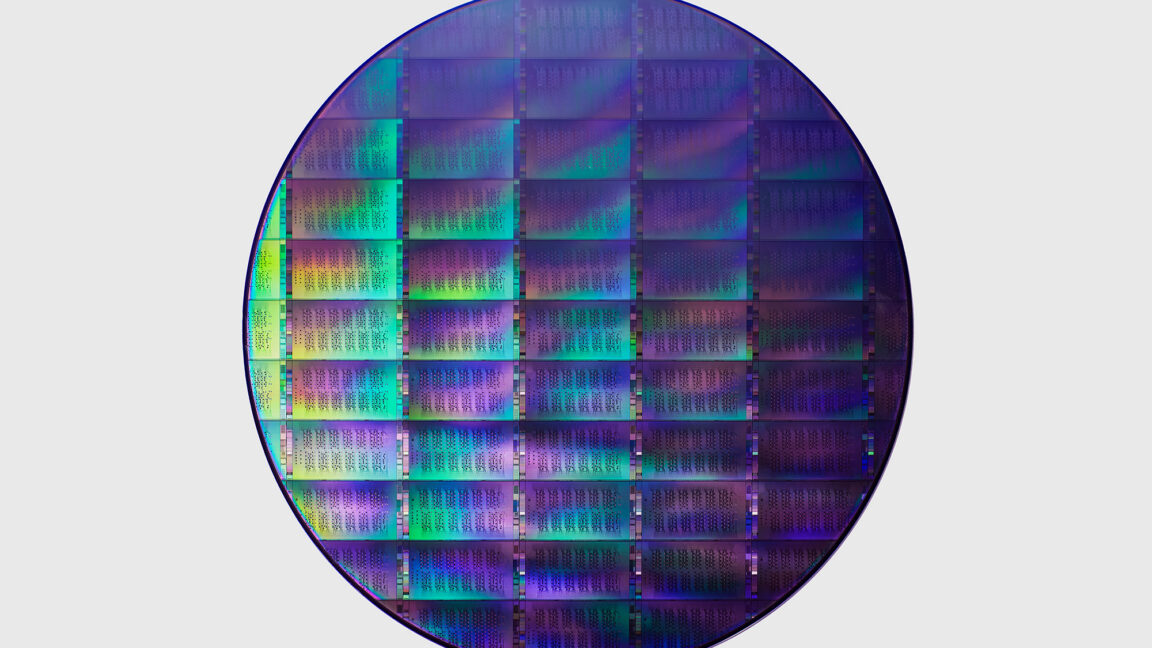
The United States government's substantial $2 billion investment in quantum computing, highlighted by the creation of the Anderon quantum foundry, represents a bold move to secure a leading position in this next-generation technology. However, this ambitious strategy is shadowed by significant legal challenges and inherent market uncertainties, making it a highly contentious and risky venture.
The Quantum Leap: US Government's Ambitious Bet
Last week, the US government announced a colossal $2 billion investment aimed at bolstering the nation's quantum computing capabilities. A significant portion of this funding, $100 million each, has been directed towards numerous quantum computing startups, providing crucial financial lifelines for companies that are still years away from delivering widely applicable products. The most substantial chunk of this investment, however, is earmarked for a newly established entity called Anderon. This quantum foundry, a joint venture backed by $1 billion each from IBM and the government, is designed to inherit considerable intellectual property, assets, and skilled personnel from IBM. Its primary function will be to fabricate quantum processing units (QPUs), offering its services to IBM and other companies seeking access to state-of-the-art quantum hardware.
This strategic move aims to replicate the success of conventional semiconductor foundries like TSMC, providing a dedicated manufacturing hub for quantum chips. The intention is to foster rapid innovation and development within the quantum ecosystem, making cutting-edge fabrication more accessible to a broader range of companies. By centralizing quantum chip production, the government hopes to accelerate the transition from theoretical research to practical applications.
Legal Clouds on the Horizon
Despite the government's grand vision, the legality of this massive investment has been called into serious question. Representative Zoe Lofgren (D–Calif.), the ranking member of the House Science, Space, and Technology Committee, has vehemently criticized the deal, labeling it "illegal and troubling on so many levels." Her core argument centers on the source of the funds: the CHIPS and Science Act. According to Lofgren, this act was specifically passed to allocate money for microelectronics research and development, with a clear focus on semiconductor technology and fostering public/private research partnerships. She argues that quantum processors, while technologically advanced, only partially overlap with traditional semiconductor technology, and these new deals deviate significantly from the intended public/private partnership model.
Furthermore, Lofgren pointed out that the largest sum of money is being directed to IBM, and she raised concerns about the potential involvement of a former IBM executive, Dario Gil (currently the Under Secretary for Science at the Department of Energy), in the negotiations that led to this deal. While acknowledging that quantum processing itself is a promising field and the recipient companies might be worthy of support, Lofgren firmly believes that such investments require specific congressional allocation of funds. Stopping the deal, however, presents a significant challenge. A lawsuit would require a party with standing to sue, and any legal battle would likely be protracted, potentially consuming the allocated funds before a resolution is reached.
A Foundry for the Quantum Future: Anderon's Role and Implications
For years, IBM has maintained a leading edge in quantum computing, largely thanks to its extensive in-house materials science and fabrication capabilities. This allowed for rapid iteration and refinement of quantum chip designs. Google, recognizing this advantage, also invested in its own fabrication facility. The creation of Anderon signifies a strategic shift for IBM, essentially spinning off these critical capabilities into a standalone company.
This move, despite its legal controversies, is expected to benefit the broader quantum computing field, particularly for companies focused on transmon-based hardware. Many startups designing transmon-based chips often struggle with limited production runs in general-purpose fabs or compete with academic institutions for fabrication time. Anderon aims to address this by offering access to higher-quality hardware and enabling faster design iterations. This will significantly reduce the dependence on the quality and availability of external fabrication facilities, potentially accelerating the development of various transmon-based quantum technologies. IBM's confidence in its current hardware error rates might be a driving factor, suggesting they believe the foundational research benefits of in-house fabrication have largely been realized, making it opportune to share the costs and resources with the government.
However, this government-backed initiative also has a significant drawback: it inherently favors transmon technology. The quantum computing landscape is diverse, with other promising qubit technologies like trapped ions and those utilizing liquid helium, which operate on fundamentally different hardware principles. By heavily investing in a transmon-focused foundry, the government is effectively picking a technological winner, potentially at the expense of exploring other viable avenues for quantum computation.
Navigating the Quantum Unknown: Long-Term Outlook and Risks
We are still a considerable distance from achieving widely useful, error-corrected quantum computing, with broad applications potentially a decade or more away. The current investment aims to sustain companies through this critical developmental phase, ensuring that various technologies can be thoroughly evaluated. Yet, this strategy also guarantees that some of the supported companies will inevitably fail. History has shown how such outcomes can become targets for political criticism and "cheap political point-scoring," as seen with past ventures like Solyndra.
Looking further ahead, the long-term market size and stability for Anderon remain uncertain. While a strong initial demand is anticipated from the numerous startups testing design variants, the eventual annual need for these specialized chips is less clear. Large-scale, error-corrected quantum computers, particularly those based on transmons, will require operation at milliKelvin temperatures and will likely involve chaining multiple chips within specialized, refrigerated data centers accessed online. This highly centralized and specialized operational model suggests that the market for quantum chips might not be as vast or distributed as traditional semiconductors. Consequently, there's a real potential for a "boom-and-bust" cycle in the demand for these highly specialized components.
The Verdict
The US government's $2 billion quantum computing initiative, culminating in the creation of the Anderon foundry, is a double-edged sword. On one hand, it represents a strategically vital commitment to an emerging technology with immense potential, offering a crucial lifeline to nascent companies and providing a much-needed fabrication hub for transmon-based quantum chips. This could undeniably accelerate progress in a critical sector.
On the other hand, the investment is mired in legal controversy, accused of misusing funds allocated under the CHIPS and Science Act and potentially exhibiting a conflict of interest. Furthermore, by heavily backing transmon technology, it risks inadvertently stifling diversification and investment in other promising quantum approaches. The long-term market viability for a specialized quantum foundry like Anderon also carries significant financial risks due to the unique operational requirements and potentially limited user base of future quantum computers. For taxpayers, it's a high-stakes gamble on a transformative technology, made more complex by the questions surrounding its legality and economic sustainability. This bet, while potentially game-changing, comes with considerable financial and policy uncertainties.
FAQ
Q: Is the US government's quantum computing investment truly illegal? A: According to Representative Zoe Lofgren, a ranking member of the House Science, Space, and Technology Committee, the investment is illegal because the funds originate from the CHIPS and Science Act, which was intended for microelectronics R&D focused on semiconductor technology and public/private partnerships, not direct investment in quantum computing companies or the creation of a private foundry. The overlap between quantum processors and traditional semiconductors is considered only partial, and the deals are not structured as public/private partnerships as originally intended.
Q: How will the Anderon quantum foundry impact the broader quantum computing industry? A: Anderon is expected to significantly benefit the broader quantum computing field, especially for companies working with transmon-based hardware. By providing access to high-quality fabrication capabilities, it will allow these companies to rapidly iterate and test new designs more efficiently. This could accelerate the development of transmon quantum chips by reducing reliance on general-purpose fabs or competition for academic fabrication time. However, it also inherently favors transmon technology over other qubit types, potentially influencing the direction of quantum research and development.
Q: What are the main risks associated with this government investment in quantum computing? A: The primary risks include legal challenges regarding the allocation of funds from the CHIPS and Science Act, potentially leading to prolonged court battles. There's also the financial risk that some recipient companies will fail, which could lead to political scrutiny. Long-term market uncertainty for Anderon is another concern, as the specialized nature and operational requirements (milliKelvin temperatures, centralized data centers) of future large-scale quantum computers could result in a limited market and a potential boom-and-bust demand cycle for quantum chips.
Related articles
Android 17 QPR2 Beta 7.1: The Performance Relief You've Been Waiting
Android 17 QPR2 Beta 7.1: Finally Fixing the QPR1 Performance Woes Verdict: Android 17 QPR2 Beta 7.1 is a crucial and highly anticipated software update for Google Pixel users, specifically targeting and resolving the

DJI Solo Video Setups: Smart Choices for Lone Creators
This review delves into DJI's recommended solo video setups, highlighting the Osmo Pocket 3 Creator Combo as a top pick for its integrated camera, gimbal, and mic. It also covers stabilizers like the Osmo Mobile 8 and RS 4, and the DJI Mic Mini series for enhanced audio, providing honest pros, cons, and clear buying advice.

Ars Technica's Rocket Report: Your Essential Space Industry Briefing
Quick Verdict Ars Technica's Rocket Report, presented by veteran space reporter Stephen Clark, offers an invaluable and meticulously organized weekly (or similar frequency, implied by "Edition 9.15") digest of the most

Apple iPhone Duo: A Daring Debut with Notable Compromises
Apple's highly anticipated iPhone Duo, priced at $2,000, has gone on pre-order. While hailed as "Apple's most exciting device in a decade" for its innovative foldable design and immersive display, it comes with significant drawbacks like the absence of FaceID and a premium camera.

Tesla Unveils Thruster-Equipped Roadster, 2028 Production Targeted
Tesla has unveiled its second-generation Roadster, featuring cold-gas thrusters co-developed with SpaceX, enabling it to jump and flip. The electric sports car demonstrated 0-60mph in an astonishing 0.81 seconds, with production targeted for 2028. This highly anticipated reveal also serves as a key recruitment tool for Tesla's ambitious AI and robotics initiatives.
KDE Plasma 6.8: A Future-Focused 30th Anniversary Update
Quick Verdict KDE Plasma 6.8, arriving as the "30th Anniversary Edition," is a pivotal release that decisively pushes the desktop environment into the future. With a definitive farewell to native X11 sessions and a