
The SaaS Survival Guide: AI's Impact & Workday's Strategy Reviewed
ZDNet's article, "'The SaaS apocalypse is overrated': How Workday and other software providers plan to survive AI," offers a refreshingly balanced and insightful perspective on a topic often shrouded in sensationalism.

ZDNet's article, "'The SaaS apocalypse is overrated': How Workday and other software providers plan to survive AI," offers a refreshingly balanced and insightful perspective on a topic often shrouded in sensationalism. Far from declaring the imminent demise of Software-as-a-Service (SaaS), this piece acts as a vital guide for anyone navigating the complex interplay between generative AI and established enterprise software models. It’s a recommended read for business leaders, tech strategists, and even investors looking beyond the hype to understand the genuine challenges and strategic responses.
The Verdict: A Grounded Look at AI's Real Impact
This ZDNet analysis effectively cuts through the noise surrounding the so-called 'SaaS apocalypse.' It presents a well-researched argument that while agentic AI will undoubtedly cause significant disruption and lead to disintermediation, it’s more likely to trigger a 'metamorphosis' within the SaaS landscape rather than an extinction event. The article leverages expert opinions and real-world executive insights to paint a picture of adaptation and evolution, making it an essential resource for understanding the strategic shifts underway.
Unpacking the Core Disruption: Agentic AI and Disintermediation
The article begins by clearly defining the central challenge: agentic AI's potential to disintermediate traditional enterprise applications. This means AI agents could become the primary interface through which businesses access services, bypassing the direct user interaction with existing SaaS platforms. Technology analyst Gartner forecasts a staggering $234 billion in enterprise application spending is at risk from this agentic arbitrage between now and 2030, potentially accounting for 20% of SaaS spending by the decade's end. This has, admittedly, fueled fears of a 'SaaS apocalypse,' contributing to an estimated $300 billion loss in SaaS valuations recently.
However, ZDNet, drawing on Gartner's perspective, frames this not as destruction, but as a 'metamorphosis.' IDC research director Shannon Kalvar reinforces this, stating that while the 'SaaS apocalypse is overrated,' the concept of disintermediation is accurate. He highlights how AI models can generate 'ephemeral applications' on the fly, pulling capabilities from various sources and becoming the new 'work surface' for professionals, effectively circumventing traditional software interfaces. The article emphasizes that for vendors to survive, they must identify and hone their 'durable capabilities' – their truly unique thinking or mathematical prowess that AI giants cannot easily replicate.
Design for Survival: Strategies from Industry Leaders
The most compelling aspect of the article is its detailed examination of how major SaaS providers are tackling this existential threat. By interviewing executives from Workday, Freshworks, and Snowflake, ZDNet provides concrete examples of strategic adaptation:
- Workday's Trust-Centric Approach: Clare Hickie, CTO for EMEA at Workday, stresses that in an era of AI uncertainty, businesses will gravitate towards trusted providers. Workday's focus on privacy by design and robust security frameworks is presented as their core 'durable capability.' They plan to integrate agentic services, like their next-gen Sana platform, as the 'front door to work,' allowing employees to interact with enterprise data via natural language while ensuring trust and security for cross-business workflows.
- Freshworks' Specialization Defense: Murali Swaminathan, CTO of Freshworks, argues that while AI giants might excel at the interaction layer, they won't build out every underlying system. He believes critical operational data will still reside in specialized 'systems of record' like Freshworks. AI specialists, he suggests, are unlikely to invest in coding complex workflows, SLAs, and business rules specific to service management, thus preserving the need for specialized SaaS solutions.
- Snowflake's Data-First Philosophy: Benoît Dageville, co-founder and president of Snowflake, asserts that "there is no AI without data." Snowflake's strategy revolves around being the trusted data platform. He draws parallels with the rise of cloud computing, where Snowflake co-exists with giants like AWS by offering specialized data services, rather than being usurped. Dageville posits that AI giants will similarly prioritize their core strengths rather than trying to become specialists in every software domain.
The Article's Strengths and Areas for Deeper Insight
Pros:
- Balanced Perspective: The article successfully counters alarmist narratives, providing a more pragmatic and actionable understanding of AI's impact on SaaS.
- Expert Endorsement: It bolsters its arguments with quotes from reputable analysts (Gartner, IDC) and senior executives, lending significant credibility.
- Concrete Examples: The inclusion of Workday, Freshworks, and Snowflake offers specific, company-level strategies that illustrate the broader trends.
- Clear Key Takeaways: The upfront bullet points succinctly capture the article's core arguments.
- Focus on Differentiators: It highlights crucial elements like 'trust,' 'security,' 'specialized workflows,' and 'data platforms' as key survival strategies.
Cons:
- Depth of Implementation: While executives outline their plans, the article could benefit from a slightly deeper dive into the technical intricacies or challenges of integrating agentic AI into legacy systems, or the practical difficulties of defining and operationalizing 'durable capabilities' across different SaaS sectors.
- Limited Scope of Examples: While the chosen examples are strong, a brief mention of other sectors within SaaS (e.g., marketing automation, development tools) and their unique AI challenges/responses could further broaden the perspective.
- Reliance on Executive Optimism: Naturally, executives present their companies in a positive light. While their strategies are sound, the article could subtly acknowledge the inherent challenges in these transformations and the competitive pressures that remain intense.
Moving Beyond the Hype: A Recommended Read
In a tech landscape awash with hyperbolic predictions, this ZDNet article stands out as a beacon of clear, measured analysis. It provides a much-needed counter-narrative to the 'SaaS apocalypse' fears, offering instead a framework for understanding how established software providers can and are adapting. It’s an empowering read that shifts the focus from fear to strategic innovation.
For enterprise leaders, CIOs, and IT managers, this article offers valuable insights into what to demand from their software vendors and how to plan their own AI integration strategies. For investors, it provides a more nuanced lens through which to evaluate SaaS companies' long-term viability. It's not just a report on the future; it's a guide to navigating it.
FAQ
Q: Does this article suggest SaaS is completely immune to the impact of AI?
A: No, the article explicitly states that agentic AI will cause significant disruption and disintermediation, with billions of dollars in enterprise application spending at risk. However, it argues against a complete 'apocalypse,' positing that SaaS will undergo a 'metamorphosis' rather than be destroyed.
Q: What is the main takeaway for software vendors from this analysis?
A: The primary takeaway is the urgent need for software vendors to identify and hone their 'durable capabilities' – unique intellectual property, trust frameworks, security, and specialized workflow expertise – that cannot be easily replicated by general-purpose AI models. They must integrate AI agents while strengthening their core value proposition.
Q: How do the featured companies plan to leverage AI while fending off disintermediation?
A: Workday plans to use AI agents (like Sana) as a trusted 'front door to work' for personalized insights while emphasizing security. Freshworks believes AI giants won't replicate their specialized workflows and underlying data systems. Snowflake sees itself as the indispensable data platform that fuels all AI, partnering with others rather than being replaced.
Related articles
Android 17 QPR2 Beta 7.1: The Performance Relief You've Been Waiting
Android 17 QPR2 Beta 7.1: Finally Fixing the QPR1 Performance Woes Verdict: Android 17 QPR2 Beta 7.1 is a crucial and highly anticipated software update for Google Pixel users, specifically targeting and resolving the

DJI Solo Video Setups: Smart Choices for Lone Creators
This review delves into DJI's recommended solo video setups, highlighting the Osmo Pocket 3 Creator Combo as a top pick for its integrated camera, gimbal, and mic. It also covers stabilizers like the Osmo Mobile 8 and RS 4, and the DJI Mic Mini series for enhanced audio, providing honest pros, cons, and clear buying advice.

Ditch Merge & Center: The Better Way to Align Text in Excel
Learn to use Excel's "Center Across Selection" to align text across cells without merging, avoiding common data manipulation issues. This guide provides steps to utilize this newly accessible feature and add it to your Quick Access Toolbar.
Ars Technica's Rocket Report: Your Essential Space Industry Briefing
Quick Verdict Ars Technica's Rocket Report, presented by veteran space reporter Stephen Clark, offers an invaluable and meticulously organized weekly (or similar frequency, implied by "Edition 9.15") digest of the most

Apple iPhone Duo: A Daring Debut with Notable Compromises
Apple's highly anticipated iPhone Duo, priced at $2,000, has gone on pre-order. While hailed as "Apple's most exciting device in a decade" for its innovative foldable design and immersive display, it comes with significant drawbacks like the absence of FaceID and a premium camera.
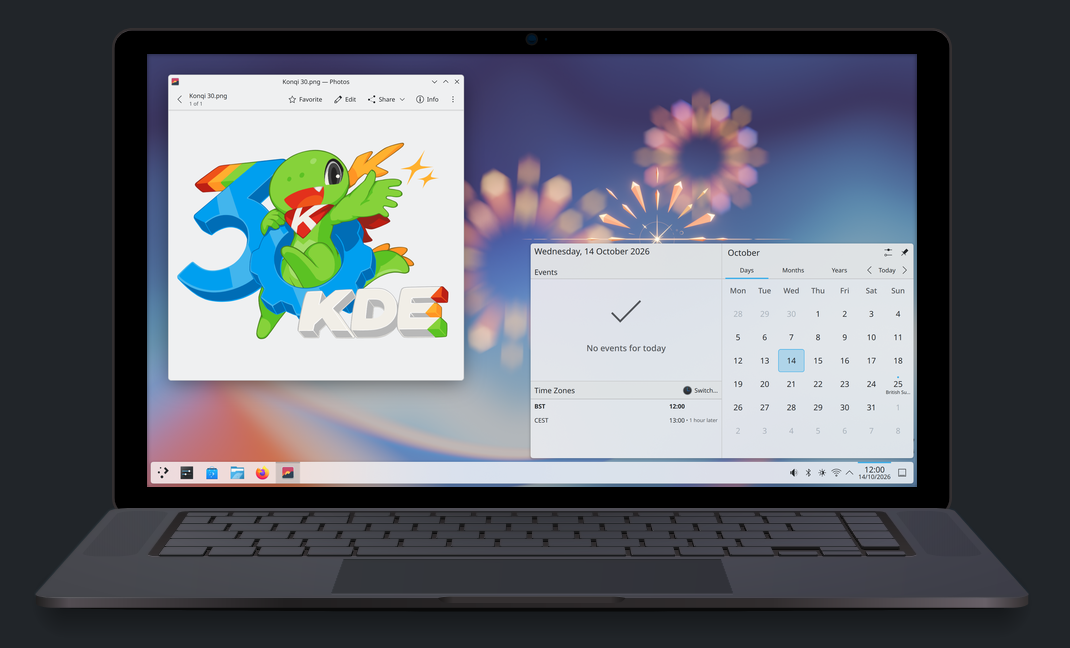
KDE Plasma 6.8: A Future-Focused 30th Anniversary Update
Quick Verdict KDE Plasma 6.8, arriving as the "30th Anniversary Edition," is a pivotal release that decisively pushes the desktop environment into the future. With a definitive farewell to native X11 sessions and a