
US Orders Federal Agencies to Remove China’s DeepSeek AI — Key Details
US federal civilian agencies are ordered to remove DeepSeek AI products and services due to national security concerns over data access by Chinese authorities. This expands a previous ban and highlights intensifying US-China AI competition, amidst accusations of DeepSeek's model distillation.

The U.S. government has mandated that all federal civilian agencies cease purchasing and remove products and services from Chinese artificial intelligence startup DeepSeek, citing escalating national security concerns. The directive, issued today by the Department of Homeland Security (DHS), extends to third-party services leveraging DeepSeek's technology, marking a significant escalation in Washington's efforts to curb the use of Chinese-made AI in its systems.
The DHS specifically highlighted worries regarding DeepSeek's data handling practices. The agency warned that sensitive information from U.S. government users could become vulnerable and accessible to Chinese authorities, particularly under China's national security laws which compel companies to cooperate with intelligence operations.
This sweeping order underscores the intensifying technological competition in the AI sector between the United States and China. DeepSeek, known for its low-cost, open-weight models, has emerged as a formidable challenger to American AI giants like OpenAI and Meta, adding a strategic dimension to the geopolitical friction.
China has swiftly pushed back against the U.S. action. Foreign Ministry spokesperson Mao Ning criticized the U.S. for "overstretching the concept of national security and politicizing technology and trade issues," vowing to protect the legitimate rights of Chinese enterprises.
Broadening Government Restrictions
Today's directive significantly broadens existing restrictions. A law enacted in December 2025 initially targeted DeepSeek's use within U.S. intelligence and national security systems. The latest order now encompasses federal civilian agencies, mandating the removal of DeepSeek technologies from both new procurements and existing government IT infrastructure, though provisions for exceptions exist.
DeepSeek garnered global attention and market disruption in January 2025 when its R1 reasoning model shook the AI industry, even triggering a notable sell-off in Nvidia shares. Since then, the Chinese AI lab has faced increasing scrutiny from governments and regulators worldwide regarding its technology and operations.
Allegations of Model Distillation
Beyond data security, the U.S. has accused DeepSeek of engaging in large-scale model distillation, a technique involving the extraction of information from existing AI systems to train new ones. A September report specifically implicated DeepSeek and five other Chinese AI firms, including Alibaba and Moonshot AI, in using this method against American AI systems.
Leading U.S. AI developers have echoed these concerns. OpenAI informed U.S. lawmakers earlier this year of suspected attempts by DeepSeek to distill its models. Similarly, Anthropic reported identifying unauthorized efforts by DeepSeek and other Chinese AI labs to collect outputs from its Claude model.
Geopolitical Tensions and Reciprocal Actions
The U.S. move against DeepSeek is not occurring in isolation. Last week, Bloomberg reported that China is reportedly considering its own export restrictions on 23 AI-related technologies, including advanced AI models and chip designs. These potential measures highlight a deepening, reciprocal dynamic in the tech rivalry, with both superpowers seeking to assert control over critical AI infrastructure and innovation.
The unfolding situation signals a further fragmentation of the global technology landscape, as nations prioritize national security and economic sovereignty in the race for AI supremacy. The DeepSeek ban exemplifies the increasing challenges faced by AI companies operating across geopolitical divides.
FAQ
Q: Why has the U.S. government ordered the removal of DeepSeek AI?
A: The U.S. Department of Homeland Security cited national security concerns, specifically the risk that sensitive U.S. government user data could be accessed by Chinese authorities under Chinese law due to DeepSeek's operations in China.
Q: What is included in the U.S. government's order?
A: The order prohibits federal civilian agencies from purchasing or using DeepSeek products and also extends to third-party products and services that are built using DeepSeek's technology. Agencies can, however, request exceptions to the ban.
Q: Has DeepSeek faced other accusations or scrutiny?
A: Yes, DeepSeek has faced global scrutiny since its R1 reasoning model emerged in January 2025. The U.S., along with AI companies like OpenAI and Anthropic, has also accused DeepSeek of using "model distillation" to extract information from American AI systems to train its own models.
Related articles

AI Model Lock-in? It's Not the Model, It's Everything Else
A recent survey reveals that while swapping AI models is becoming common, the real lock-in risk for enterprises lies in the surrounding infrastructure: integrations, agent workflows, and guardrails. Despite concerns about vendor lock-in, it often ranks lower than immediate priorities like security and cost in AI purchasing decisions. However, multi-model adopters are proactively building open, flexible architectures, demonstrating a path to mitigate future migration headaches.
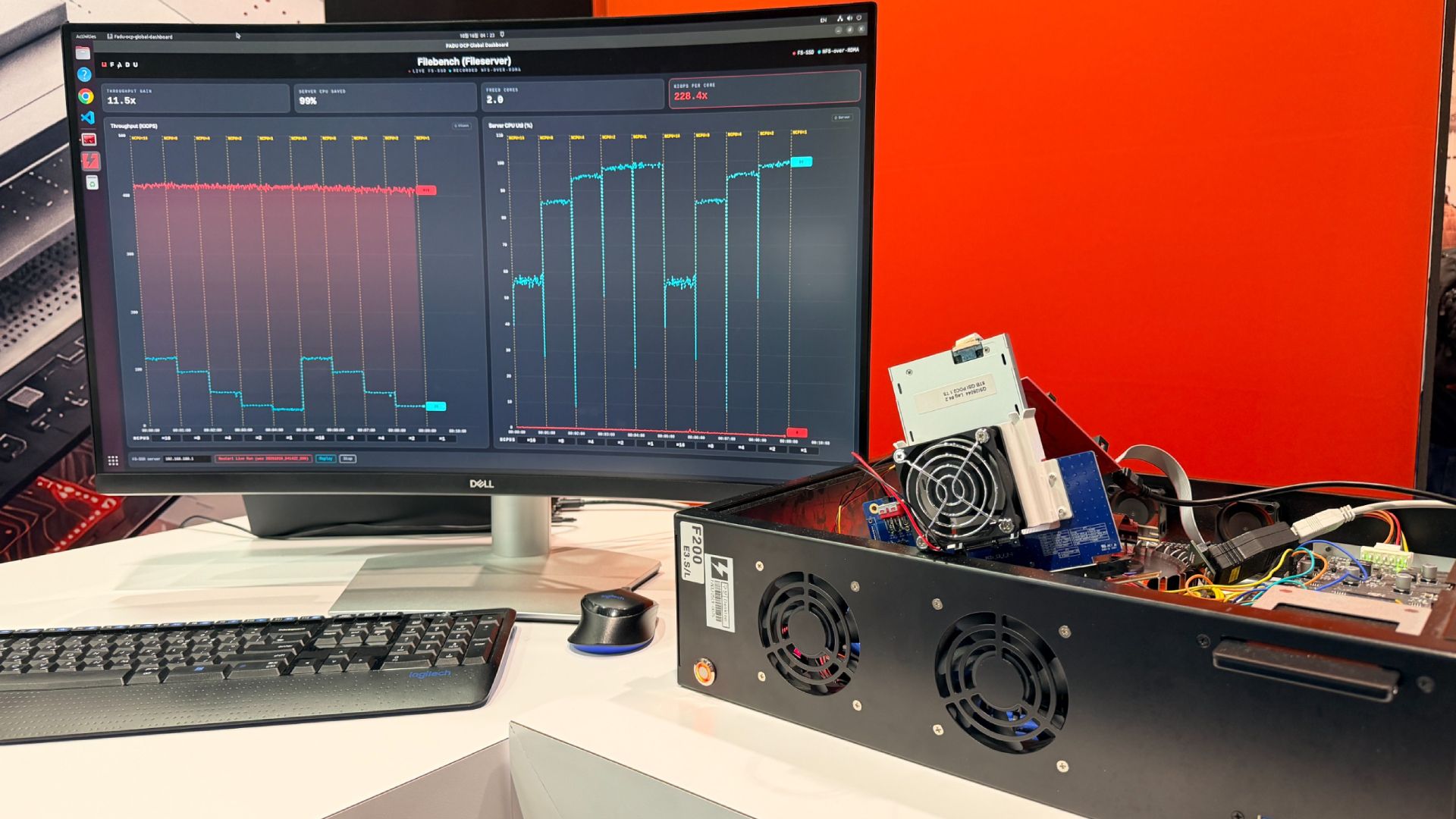
FADU FS-SSD: A Glimpse into the Future of Storage
FADU's File-Semantic SSD moves the filesystem directly into the drive, aiming to dramatically reduce host CPU overhead for file operations, especially for GPUs and DPUs. Promising early results, but a long wait for samples (Q3 2027).

Anthropic Pitches AI Safety Bill: Blocking Models at 50+ Deaths
Anthropic has pitched a draft AI safety bill to Congress that would allow blocking an AI model's release if it poses a "catastrophic risk" – defined as potentially causing over 50 deaths or $1 billion in damages through specific threats. The controversial proposal mandates that federal agencies seek judicial approval to halt a model's distribution, limiting their independent authority. This move comes amid ongoing debates over AI regulation and concerns about agentic hacking.

Google's Personalized Gemini AI Hits Cars, Leveraging User Data
Google is introducing "Personal Intelligence" to Gemini AI in cars, allowing the assistant to leverage user data from Google apps like Gmail, Calendar, and Maps for highly personalized assistance. Rolling out to Android Auto today and to cars with Google built-in soon, this update offers contextual help like checking flight statuses or navigating to appointments. Users must opt-in to enable this feature, and personalized responses only work when a phone is connected, emphasizing user control over privacy.

SpaceX's AI Business Fuels Explosive Q3 2026 Revenue Growth
SpaceX reported Q3 2026 revenues of $14.6 billion, a 161% jump, primarily driven by an 830% year-over-year surge in its Super Intelligence (SI) division. This growth was fueled by new cloud services, the Cursor acquisition, and wider Grok AI adoption, alongside robust performance in its Starlink Connectivity business.

Secure Your Secrets: Lock ChatGPT Conversations with a PIN
Worried about curious eyes peeking at your private ChatGPT conversations? You're in luck! ChatGPT now offers a "Locked Chats" feature, allowing you to hide your sensitive discussions behind a four-digit PIN or biometric