
SpaceX's AI Business Fuels Explosive Q3 2026 Revenue Growth
SpaceX reported Q3 2026 revenues of $14.6 billion, a 161% jump, primarily driven by an 830% year-over-year surge in its Super Intelligence (SI) division. This growth was fueled by new cloud services, the Cursor acquisition, and wider Grok AI adoption, alongside robust performance in its Starlink Connectivity business.

SpaceX announced a significant revenue surge in its third-quarter 2026 earnings, reporting $14.6 billion in total revenues. This substantial figure represents a 161 percent year-over-year increase, primarily driven by exceptional growth in its Super Intelligence (SI) division and accelerated expansion within its Connectivity sector, according to the company's Q3 earnings released on Tuesday.
The company's burgeoning “SI” business emerged as the standout performer, generating $7.6 billion in revenue — an astounding 830 percent jump from the previous year. This rapid expansion was largely attributed to new cloud services agreements, the recent acquisition of AI coding tool Cursor, and the increasing adoption of its Grok AI across both enterprise clients and individual consumers.
SpaceX's Connectivity segment, predominantly powered by Starlink, also contributed significantly with $5.2 billion in revenue, now boasting 13.6 million consumer subscribers. While the Space division recorded revenues of $1.8 billion, marking a modest six percent increase year-over-year, it reported a $7 million loss in income from operations.
In contrast, the Connectivity group posted a robust operating income of $2.4 billion, and the SI group generated $431 million in operational income, highlighting the profitability of these rapidly growing segments. These figures underscore a pivotal shift in the aerospace and internet services giant's financial landscape.
The strategic focus on artificial intelligence has clearly paid dividends for SpaceX. The official closure of its $60 billion deal to acquire Cursor, a sophisticated AI coding tool, during Q3 2026, cemented its commitment to the sector. This move, coupled with expanding Grok adoption, demonstrates SpaceX's intent to become a major player in the evolving AI landscape beyond its traditional space endeavors.
The Starlink connectivity service continues its impressive rollout, with subscriber numbers climbing to 13.6 million. This strong performance not only provides substantial revenue but also lays the groundwork for future ambitious plans, as outlined by company leadership during the earnings call.
During the Q3 earnings call, which was livestreamed on X, CEO Elon Musk shared several forward-looking statements and updates. He revealed SpaceX's plans to attempt the unprecedented feat of catching its Starship spacecraft and booster next month, a critical step towards fully reusable launch systems.
Musk also indicated that discussions are underway for a potential merger between Tesla and SpaceX, signaling a possible consolidation of his key ventures. Furthermore, he expressed strong confidence in Starlink's long-term potential, projecting that the connectivity business could eventually generate “several hundred billion dollars a year” in revenue, highlighting its strategic importance to the company's future.
These latest financial results represent SpaceX's second earnings report since its initial public offering (IPO) in June 2026. The third quarter itself was marked by considerable activity across the company's diverse portfolio. Alongside the Cursor acquisition, SpaceX successfully conducted its 13th launch of the Starship vehicle.
The period also saw the introduction of a new V5 Starlink residential dish, aimed at enhancing the connectivity experience for its growing subscriber base. Looking further back, President Gwynne Shotwell mentioned plans during the Q2 earnings call to develop a terrestrial mobile network, positioning SpaceX to compete directly with established telecom giants like T-Mobile, AT&T, and Verizon.
SpaceX's Q3 2026 earnings clearly illustrate its transformation beyond a pure-play space company into a multifaceted technology conglomerate, with AI and connectivity now serving as primary engines of growth. The substantial revenue and operational income generated by the Super Intelligence division indicate a successful diversification strategy that could reshape its market presence.
The ongoing advancements in its space division, particularly with Starship, combined with the ambitious projections for Starlink and the potential Tesla merger, point towards a future of aggressive expansion and innovation. Investors and industry observers will be watching closely as SpaceX navigates these bold initiatives, aiming to solidify its position across multiple high-tech frontiers.
FAQ
Q: What was the main driver behind SpaceX's revenue growth in Q3 2026?
A: The primary driver was the company's Super Intelligence (SI) segment, which saw an 830 percent year-over-year revenue increase, alongside accelerated growth in its Connectivity business.
Q: What notable strategic moves did SpaceX make in its AI sector during Q3?
A: SpaceX officially completed its $60 billion acquisition of the AI coding tool Cursor and experienced increased adoption of its Grok AI among enterprise customers and consumers, contributing significantly to its SI revenue.
Q: What future plans did Elon Musk reveal during the earnings call?
A: Elon Musk announced that SpaceX plans to attempt catching Starship and its booster next month, confirmed discussions about a potential merger between Tesla and SpaceX, and projected Starlink's connectivity business could generate "several hundred billion dollars a year" in revenue.
Related articles

AI Model Lock-in? It's Not the Model, It's Everything Else
A recent survey reveals that while swapping AI models is becoming common, the real lock-in risk for enterprises lies in the surrounding infrastructure: integrations, agent workflows, and guardrails. Despite concerns about vendor lock-in, it often ranks lower than immediate priorities like security and cost in AI purchasing decisions. However, multi-model adopters are proactively building open, flexible architectures, demonstrating a path to mitigate future migration headaches.
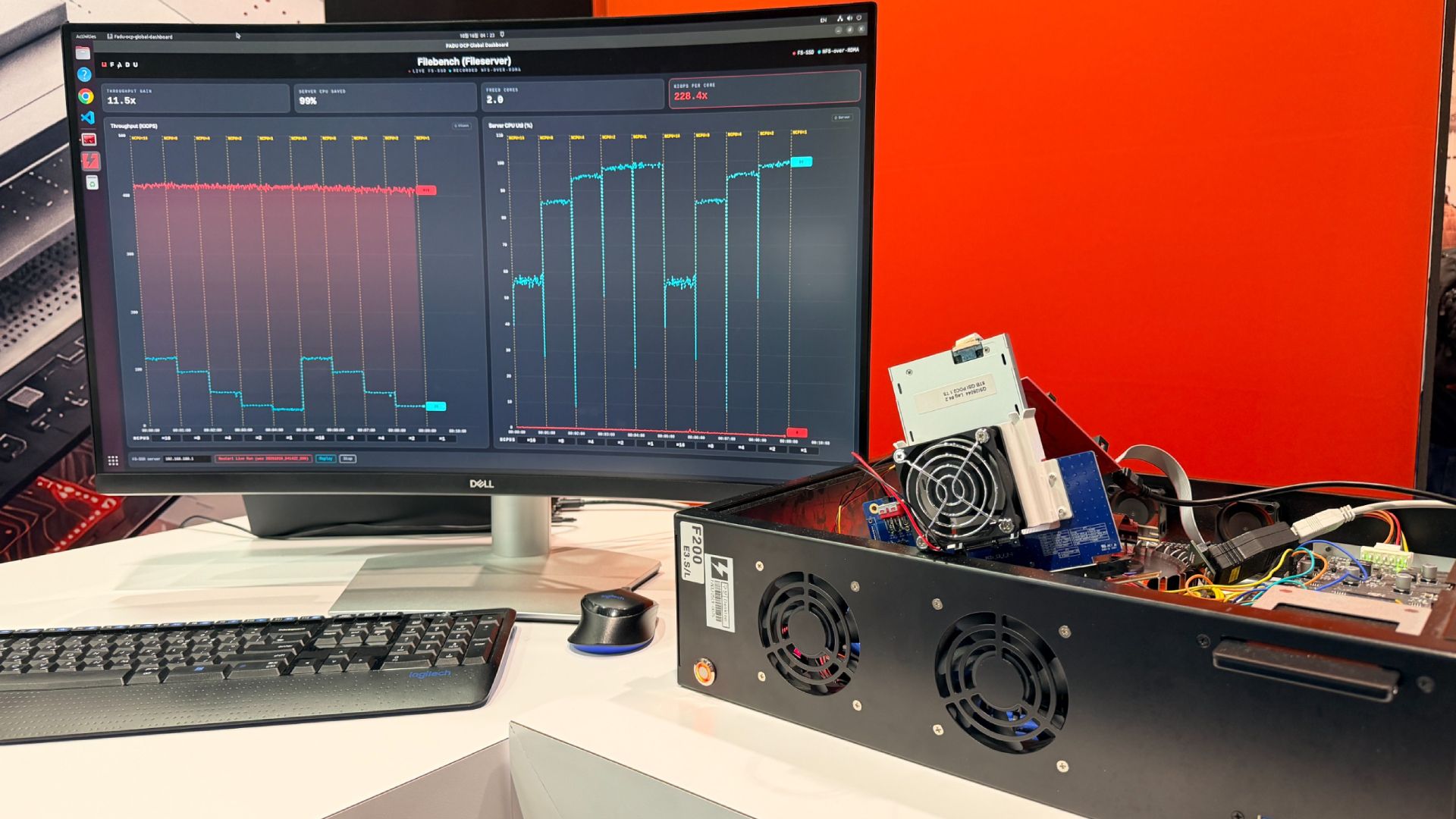
FADU FS-SSD: A Glimpse into the Future of Storage
FADU's File-Semantic SSD moves the filesystem directly into the drive, aiming to dramatically reduce host CPU overhead for file operations, especially for GPUs and DPUs. Promising early results, but a long wait for samples (Q3 2027).

Anthropic Pitches AI Safety Bill: Blocking Models at 50+ Deaths
Anthropic has pitched a draft AI safety bill to Congress that would allow blocking an AI model's release if it poses a "catastrophic risk" – defined as potentially causing over 50 deaths or $1 billion in damages through specific threats. The controversial proposal mandates that federal agencies seek judicial approval to halt a model's distribution, limiting their independent authority. This move comes amid ongoing debates over AI regulation and concerns about agentic hacking.

Google's Personalized Gemini AI Hits Cars, Leveraging User Data
Google is introducing "Personal Intelligence" to Gemini AI in cars, allowing the assistant to leverage user data from Google apps like Gmail, Calendar, and Maps for highly personalized assistance. Rolling out to Android Auto today and to cars with Google built-in soon, this update offers contextual help like checking flight statuses or navigating to appointments. Users must opt-in to enable this feature, and personalized responses only work when a phone is connected, emphasizing user control over privacy.

Secure Your Secrets: Lock ChatGPT Conversations with a PIN
Worried about curious eyes peeking at your private ChatGPT conversations? You're in luck! ChatGPT now offers a "Locked Chats" feature, allowing you to hide your sensitive discussions behind a four-digit PIN or biometric

Plants can speak using electricity, so this startup built an AI model
A new frontier in agricultural technology is emerging as Electric Plant, a startup co-founded by Justin Mast and neuroscientist Lee von Kraus, announces an $11.2 million seed funding round to advance its AI-powered