
AI Model Lock-in? It's Not the Model, It's Everything Else
A recent survey reveals that while swapping AI models is becoming common, the real lock-in risk for enterprises lies in the surrounding infrastructure: integrations, agent workflows, and guardrails. Despite concerns about vendor lock-in, it often ranks lower than immediate priorities like security and cost in AI purchasing decisions. However, multi-model adopters are proactively building open, flexible architectures, demonstrating a path to mitigate future migration headaches.

The landscape of AI development is evolving at breakneck speed, and with it, new challenges for technical leaders. For years, the concern about vendor lock-in has shadowed enterprise technology decisions, and with the rise of Large Language Models (LLMs) and AI agents, many have worried about being inextricably tied to a specific 'frontier lab' or model provider. However, recent survey data from Stacklok paints a surprising picture: the models themselves are becoming commodities, easily swappable. The real lock-in risk lies in the custom layers built around them.
The Multi-Model Reality
A survey of 520 technical leaders, all running LLMs or agents in pilot or production at North American companies with over 500 employees, revealed a stark truth: single-model deployments are rapidly becoming a rarity. Only 8% of respondent organizations rely on a single model provider, while a significant 25% are already leveraging five or more. This rapid adoption of diverse models suggests that the fear of model-layer lock-in, while valid in theory, is being circumvented by practical multi-model strategies.
So, if models are increasingly interchangeable, what's proving difficult to move? The answer points directly to the infrastructure and logic we build on top. A striking 53% of respondents identified “integrations to internal systems or MCP servers” as one of their two hardest elements to migrate. Multi-step agent workflows followed closely at 52%, with guardrails and access-control configurations also presenting significant hurdles. These are the components that don't port automatically when you switch models; they demand a complete rebuild, consuming considerable time and resources.
Lock-in: A Concern, Not a Top Priority (Yet)
Despite the clear evidence of integration friction, the survey unearthed a curious paradox in decision-making. Eighty-one percent of leaders acknowledged that frontier labs and hyperscalers complicate vendor switching, and 84% affirmed the importance of avoiding lock-in in their AI strategy. More than 80% have even delayed or restructured migrations due to high switching costs, with 29% experiencing this frequently. Furthermore, 57% estimated migrations off current providers would take four months or longer.
Yet, when it comes to actual buying criteria for AI solutions, “Ability to switch model providers without rebuilding” ranked sixth out of eight options, and “Avoiding dependence on a single vendor” landed dead last. This dissonance is rational, albeit frustrating for those advocating for architectural flexibility. Security, privacy, cost control, and compliance emerge as the immediate priorities. The immediate pressures of quarterly bills and annual audits often overshadow the hypothetical rebuild two years down the line, a problem often deferred to a future team or budget cycle.
Lessons from the Multi-Model Pioneers
Organizations already juggling five or more model providers offer valuable insights. Their approach to AI architecture differs significantly from those using fewer models. For instance, 76% of these multi-model leaders have proactively built integrations to internal systems, compared to just 42% of organizations using one or two providers. They are also twice as likely to use open-source agent frameworks (45% vs. 22%) and place a much higher premium on portability across providers (67% deeming it critically or very important, vs. 47%).
These organizations didn't necessarily start with an ideological commitment to openness; they adopted it out of necessity. Running multiple providers through bespoke, tightly coupled integration layers is simply unsustainable and miserable. They’ve learned to treat the model as a replaceable component behind a stable interface—much like how we’ve learned to treat compute nodes in a Kubernetes environment. This approach allows them to achieve flexibility and avoid being held hostage by a single vendor's ecosystem.
The Push for Open Architecture
The appetite for open alternatives is strong and growing. Eighty percent of respondents indicated they would likely evaluate an open alternative to closed frontier architectures, and a resounding 88% expect to gain more control over their AI architecture as they accumulate experience, rather than continuing to rely solely on current vendors.
Their concerns about closed platforms are specific and pragmatic: 39% worry about product or API deprecation, and 37% are anxious about being unable to export critical assets like agent state, memory, or evaluation data. They recognize their agent layer as a valuable asset that could be trapped.
What would drive them to embrace open architectures? Not ideology, but practical assurances: security and compliance guarantees, performance parity with frontier models, and robust enterprise support. Essentially, they want the power of leading models combined with the freedom and control offered by an open, vendor-neutral harness.
Practical Takeaways for Developers
If you're currently developing MCP servers, agent workflows, or policy configurations, you are building the very layer that this survey highlights as the hardest to migrate. Taking proactive steps now can save significant headaches later:
- Embrace Open Protocols for Tool Definitions: Stick to open standards for defining your AI tools rather than proprietary vendor extensions. This ensures your tools are portable.
- Own Your Orchestration: Keep your AI orchestration logic within your own codebase, under your control, rather than deeply embedding it into a vendor-specific framework.
- Model-Agnostic Evals: Design your evaluation pipelines to run effectively against any model endpoint. This allows you to benchmark and compare different models without re-engineering your testing framework.
- Build (Don't Rent) Your Harness: Consider developing your own AI harness or framework that gives you full control over identity management, memory, tool integration, and other critical components. This insulates you from vendor-specific changes and ensures long-term flexibility.
- Seek Trusted Expertise: The AI landscape is dynamic. Collaborate with experts who can help you navigate architectural decisions and avoid common pitfalls.
The future of enterprise AI isn't about choosing one model and sticking with it; it's about building a robust, flexible architecture around interchangeable models. The developers who recognize this now will be best positioned for long-term success.
FAQ
Q: What does it mean to "own orchestration in code" for AI agents? A: Owning orchestration in code means defining the flow, decision-making, and tool utilization logic of your AI agents within your own application's codebase, using standard programming languages and frameworks, rather than relying on a proprietary visual builder or a platform-specific agent framework that tightly couples your logic to a single vendor's environment. This grants you full control over your agent's behavior and makes it portable across different model providers.
Q: Why are "integrations to internal systems" so hard to migrate in the AI context? A: These integrations are challenging because they involve custom code and configurations specific to how your AI agents interact with your existing enterprise databases, APIs, legacy systems, or cloud services. When you switch AI model providers or underlying agent frameworks, these custom integration points often need to be completely rewritten or heavily adapted to the new system's API, authentication methods, or data formats, rather than simply being plug-and-play.
Q: What is an "AI harness," and why should I build one instead of renting? A: An AI harness is a layer of software that wraps around your AI models and agents, providing a standardized way to manage common functionalities like identity, session memory, tool access, logging, and evaluation. Building (or owning) your harness means you control this critical layer, preventing vendor lock-in by abstracting away the specifics of the underlying models. Renting a harness typically means using a platform-provided solution that might tie you to that platform's ecosystem, limiting your ability to swap out models or move your agent logic elsewhere.
Related articles
FADU FS-SSD: A Glimpse into the Future of Storage
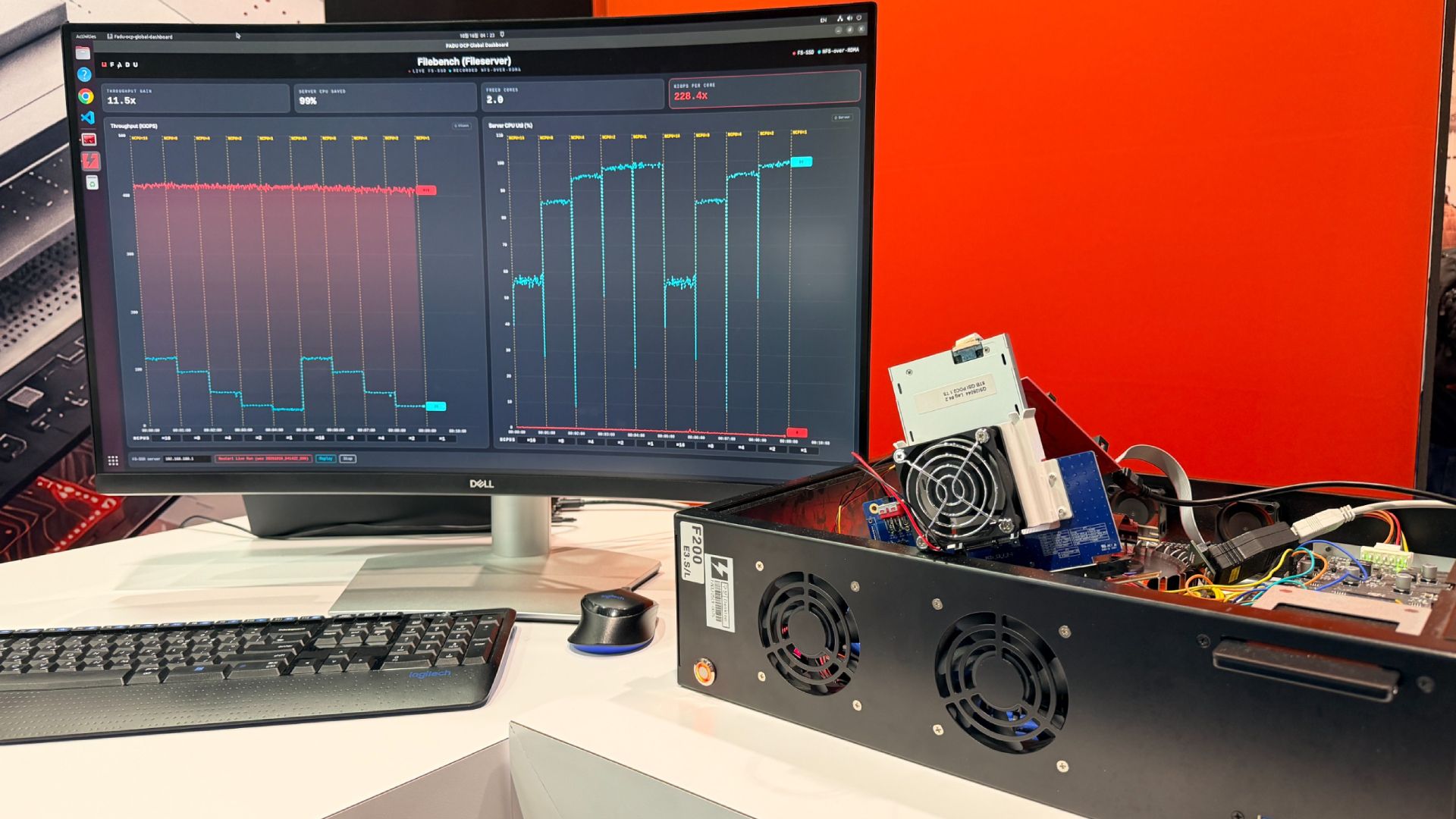
FADU's File-Semantic SSD moves the filesystem directly into the drive, aiming to dramatically reduce host CPU overhead for file operations, especially for GPUs and DPUs. Promising early results, but a long wait for samples (Q3 2027).

Anthropic Pitches AI Safety Bill: Blocking Models at 50+ Deaths
Anthropic has pitched a draft AI safety bill to Congress that would allow blocking an AI model's release if it poses a "catastrophic risk" – defined as potentially causing over 50 deaths or $1 billion in damages through specific threats. The controversial proposal mandates that federal agencies seek judicial approval to halt a model's distribution, limiting their independent authority. This move comes amid ongoing debates over AI regulation and concerns about agentic hacking.

Google's Personalized Gemini AI Hits Cars, Leveraging User Data
Google is introducing "Personal Intelligence" to Gemini AI in cars, allowing the assistant to leverage user data from Google apps like Gmail, Calendar, and Maps for highly personalized assistance. Rolling out to Android Auto today and to cars with Google built-in soon, this update offers contextual help like checking flight statuses or navigating to appointments. Users must opt-in to enable this feature, and personalized responses only work when a phone is connected, emphasizing user control over privacy.

SpaceX's AI Business Fuels Explosive Q3 2026 Revenue Growth
SpaceX reported Q3 2026 revenues of $14.6 billion, a 161% jump, primarily driven by an 830% year-over-year surge in its Super Intelligence (SI) division. This growth was fueled by new cloud services, the Cursor acquisition, and wider Grok AI adoption, alongside robust performance in its Starlink Connectivity business.

Secure Your Secrets: Lock ChatGPT Conversations with a PIN
Worried about curious eyes peeking at your private ChatGPT conversations? You're in luck! ChatGPT now offers a "Locked Chats" feature, allowing you to hide your sensitive discussions behind a four-digit PIN or biometric

Xbox Game Pass Poised for Massive Overhaul: Farewell, All-You-Can-Eat
Well, gamers, if you thought Xbox Game Pass had settled into its groove, think again. Reports are swirling that Microsoft is preparing for a significant shake-up of its flagship subscription service, moving away from