
The Trump phone sure looks a lot like this HTC handset: HTC U24 Pro
A new investigation reveals the upcoming Trump T1 Phone closely resembles the HTC U24 Pro, strongly suggesting both devices share an undisclosed Original Design Manufacturer (ODM). This link to a mid-range phone from two years ago, which received middling reviews, raises questions about the T1 Phone's potential performance and flagship claims.

A new investigation reveals the upcoming T1 Phone, promoted by Trump Mobile, bears an uncanny resemblance to the HTC U24 Pro, suggesting both devices may originate from the same undisclosed Original Design Manufacturer (ODM). This discovery, based on a reader tip and detailed comparison, raises questions about the Trump phone's touted innovation and flagship status, linking it instead to a mid-range device launched just a few years ago.
The T1 Phone, which has undergone multiple design and spec changes over eight months, shares numerous visual and hardware similarities with the HTC U24 Pro, a device launched in 2024. While HTC's global director of PR, Sohaib Ahmed, confirmed that "HTC does not design or manufacture phones for third parties," the striking parallels point to a common, external design and manufacturing partner for both products.
A Design Language Shared
Both the T1 Phone and the U24 Pro feature a distinctive slightly asymmetric angular frame, with edges jutting out and a heavily curved screen. This unique form factor, including the precise positioning of antenna lines around buttons, is uncommon in the smartphone market. Even minute details like the front sensor array align, with both phones displaying a segmented speaker grill, a notification LED dot, and a proximity sensor in an unusual three-part configuration at the top of the display.
Further reinforcing the connection are rarer features like a headphone jack and a microSD card slot, both positioned identically on the top frame. These inclusions are increasingly scarce in contemporary smartphones, making their shared presence a significant indicator. Both phones also support up to 1TB microSD cards, on top of a base 512GB of internal storage.
Matching Specs Beyond the Surface
Beneath their potentially varied exteriors, the two phones appear to share core internal specifications. The Trump T1 Phone is expected to feature a Qualcomm Snapdragon 7 Gen 3 processor, matching the U24 Pro. Both devices reportedly boast 50-megapixel sensors for their main and selfie cameras, with the camera UI on the T1 Phone glimpsed showing ultrawide and 2x zoom options—features also present on the U24 Pro.
While the rear camera modules look physically different, the underlying sensor capabilities seem to correspond. The U24 Pro features a split camera layout, whereas the T1 Phone groups its lenses, but with uneven spacing that could accommodate similar internal components. Other shared specifications include a 6.8-inch OLED display, 60W wired charging, and an IP67 rating for dust and water protection. A notable difference is battery capacity, with the U24 Pro at 4,600mAh compared to the T1 Phone's promised 5,000mAh, which could potentially displace features like wireless charging coils.
The Likelihood of a Shared ODM
The most probable explanation for these extensive similarities is that HTC, and subsequently Trump Mobile, partnered with the same Original Design Manufacturer (ODM). ODMs specialize in designing and manufacturing hardware for various brands, often reusing or adapting existing designs and components for different clients. HTC has reportedly relied on ODMs in recent years, especially after selling a significant portion of its smartphone business to Google in 2017.
Trump Mobile has previously confirmed working with manufacturing partners outside the U.S., with "final assembly" occurring in Miami, but has not disclosed the manufacturer's name or location. Despite repeated inquiries, Trump Mobile has not responded to requests for comment on these findings. This scenario suggests that the T1 Phone may be a rebranded or slightly modified version of an existing ODM design, rather than an entirely bespoke device.
Implications for the T1 Phone's Future
The HTC U24 Pro itself received middling reviews upon its release, with critics from publications like Tech Advisor calling it "hard to recommend over rivals" and Notebookcheck describing it as "modern and yet out of date." While it fared well in durability tests, the U24 Pro was noted for lacking some premium features HTC once pioneered, like sapphire crystal displays.
If the T1 Phone is indeed based on the U24 Pro, its origins in a moderately-received mid-range device from two years ago could temper expectations for its performance and value proposition. This connection potentially undermines the perception of the T1 Phone as a cutting-edge flagship offering, aligning it instead with a product that struggled to stand out in a competitive market.
Q: Is HTC secretly making the Trump phone? A: No, HTC has explicitly stated it does not design or manufacture phones for third parties. The strong resemblance suggests both phones likely share an Original Design Manufacturer (ODM) that created the underlying hardware design.
Q: What does this mean for the Trump T1 Phone's potential performance? A: The HTC U24 Pro, which the T1 appears to be based on, received middling reviews, with critics calling it "hard to recommend" and "out of date." This suggests the T1 Phone may not live up to expectations of a high-end, innovative device.
Q: Why would two different phones look so similar? A: It's common for Original Design Manufacturers (ODMs) to develop hardware designs and then license them or adapt them for various clients. It's theorized that both HTC and Trump Mobile partnered with the same ODM, leading to the shared design elements and specifications.
Videos
Related articles

Apple Unveils iPhone Duo: Pricey Foldable Sees Soaring Demand
Apple has officially entered the foldable smartphone arena with the long-anticipated launch of the iPhone Duo. Priced starting at a hefty $1,999, the device features a 5.4-inch outer display and a larger 7.6-inch inner

DJI Solo Video Setups: Smart Choices for Lone Creators
This review delves into DJI's recommended solo video setups, highlighting the Osmo Pocket 3 Creator Combo as a top pick for its integrated camera, gimbal, and mic. It also covers stabilizers like the Osmo Mobile 8 and RS 4, and the DJI Mic Mini series for enhanced audio, providing honest pros, cons, and clear buying advice.

in-depth: Chicago-Area Cops Helped HSI Spy on Minnesota Anti-ICE
Chicago-area law enforcement, including local police and HSI agents, conducted undercover surveillance on Minnesota anti-ICE activists at an April 2, 2022, talk in Chicago. This operation was part of a federal conspiracy probe into 15 Minnesota activists facing felony charges related to immigration enforcement resistance. Civil liberties advocates have condemned the surveillance as a troubling intrusion into protected political activity.

Mark Wahlberg on using AI in film ‘the right way’ and being open to
Actor Mark Wahlberg believes AI has a place in filmmaking if used responsibly for enhancement, not script generation or actor replacement. At TechCrunch Disrupt, he expressed openness to an AI likeness carrying on his legacy, managed by his family, and emphasized storytelling.
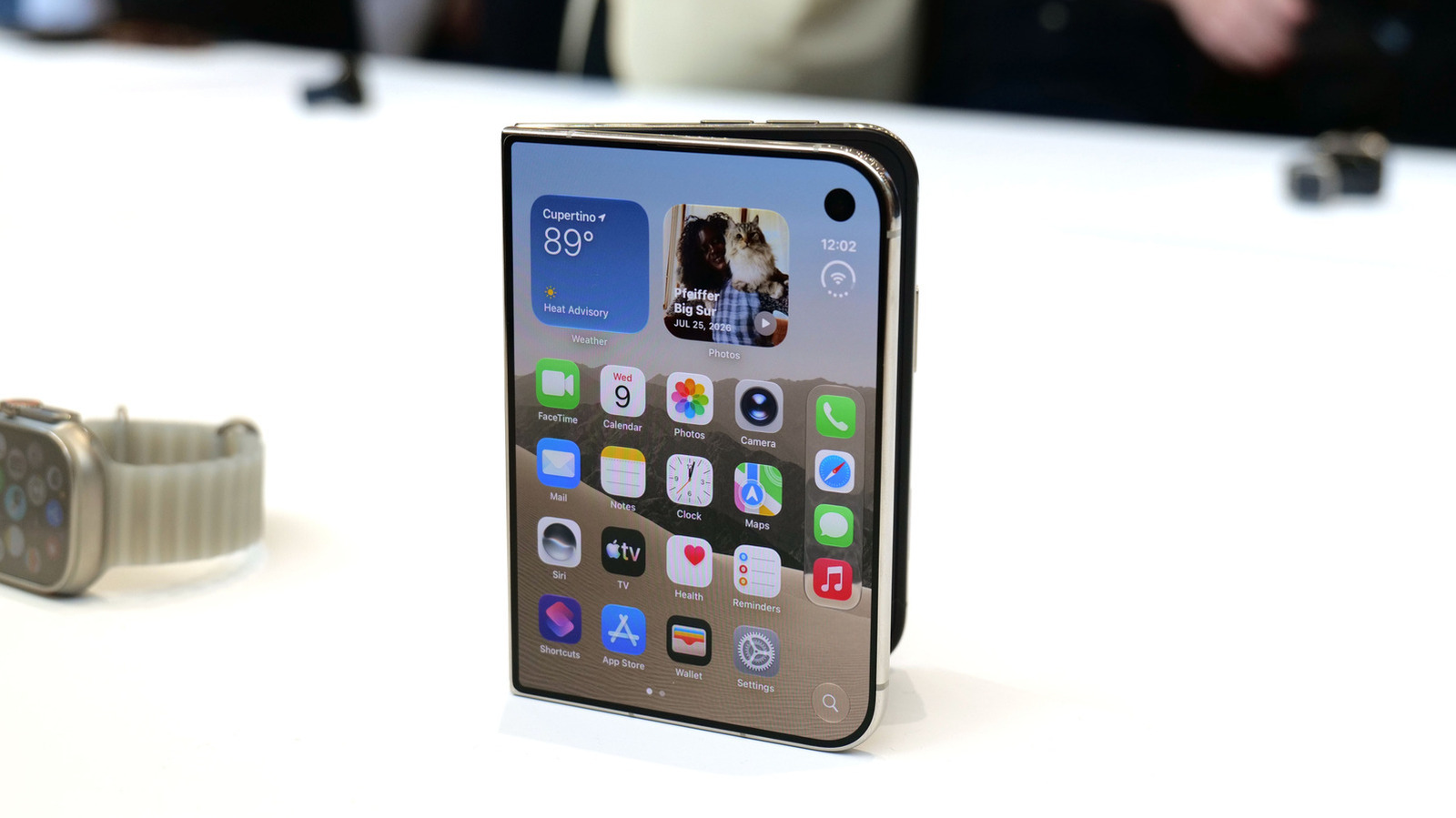
Apple iPhone Duo: A Daring Debut with Notable Compromises
Apple's highly anticipated iPhone Duo, priced at $2,000, has gone on pre-order. While hailed as "Apple's most exciting device in a decade" for its innovative foldable design and immersive display, it comes with significant drawbacks like the absence of FaceID and a premium camera.
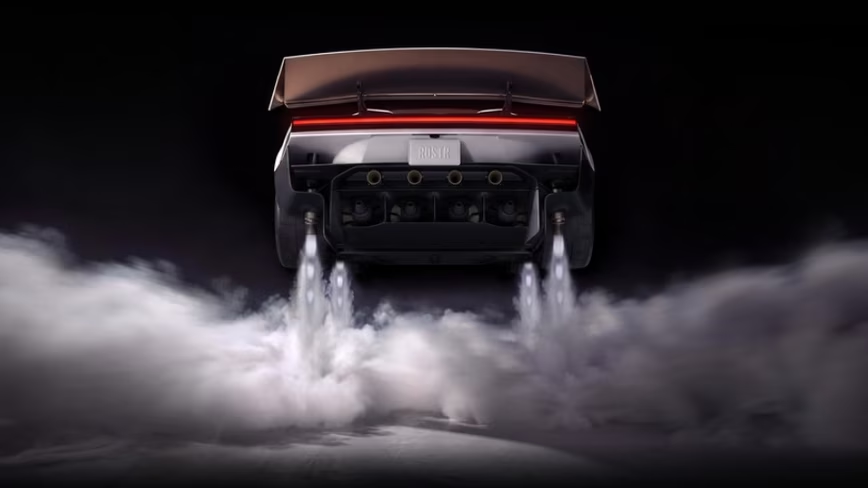
Tesla Unveils Thruster-Equipped Roadster, 2028 Production Targeted
Tesla has unveiled its second-generation Roadster, featuring cold-gas thrusters co-developed with SpaceX, enabling it to jump and flip. The electric sports car demonstrated 0-60mph in an astonishing 0.81 seconds, with production targeted for 2028. This highly anticipated reveal also serves as a key recruitment tool for Tesla's ambitious AI and robotics initiatives.