
Soaring Gas Prices Drive Renewed Interest in Electric Vehicles
Amidst surging gasoline prices caused by war in Iran disrupting global oil supplies, consumer interest in electric vehicles (EVs) is skyrocketing as of March 21, 2026. Car shoppers are increasingly exploring EVs to escape volatile fuel costs, with market research showing a significant uptick in inquiries. While new EVs still carry a higher upfront cost, the long-term financial and psychological benefits of energy independence are becoming more appealing.
As global oil supplies face significant disruption amidst an ongoing war in Iran, gasoline prices are escalating, prompting a noticeable surge in consumer interest toward electric vehicles (EVs). Reports on March 21, 2026, indicate a growing number of car shoppers are actively seeking alternatives to conventional combustion engine cars, aiming to detach themselves from the volatile "gas-price roller coaster." This geopolitical instability has amplified the financial and psychological arguments for transitioning to an EV.
The Rising Appeal of Electric Vehicles
For current electric vehicle owners, the current geopolitical climate offers a sense of relief, as they remain unaffected by the sharp increases at the pump. This peace of mind, free from the influence of global events on daily commuting costs, is becoming an increasingly powerful, albeit unquantifiable, benefit of EV ownership. The conflict in the Middle East has undeniably strengthened the case for electric transportation.
Weighing the Financials: EV vs. Gas
While the appeal of bypassing gas stations is strong, the financial decision to purchase an EV still involves several considerations. Data from Cox Automotive reveals that new electric vehicles, despite recent price reductions, still carry an average price tag approximately $6,500 higher than their fossil-fuel-powered counterparts. For an EV to be financially sensible, owners must anticipate saving at least this amount through reduced fuel and maintenance costs over their period of ownership.
Factors such as local electricity rates, personal driving habits, and access to charging infrastructure play crucial roles in this calculation. The New York Times offers a dedicated interactive tool designed to help prospective buyers assess their potential savings, providing a personalized financial outlook based on these variables. Beyond the raw numbers, the intangible benefit of energy independence from global oil markets adds significant value.
Shifting Consumer Sentiments
Tentative but clear signs indicate a shift in consumer behavior. Jessica Caldwell, head of insights at Edmunds, observed that "people want to be taken off the gas-price roller coaster." Her analysis of Edmunds' online car shopping platform revealed a notable increase in electric vehicle research. The share of individuals exploring EVs rose from 21 percent in early February to 24 percent by early March, signaling a growing public inclination towards electric mobility in response to fuel price volatility. This trend suggests that higher gas prices are directly translating into heightened curiosity and serious consideration for EVs among a broader segment of the population.
The Road Ahead for Electric Mobility
The duration and full impact of the conflict in Iran on global oil prices remain uncertain. However, the current environment underscores a pivotal moment for the electric vehicle market. The economic pressures created by surging gas prices are accelerating a conversation that has long been driven by environmental concerns and technological advancement. As consumers increasingly seek stability and predictability in their transportation costs, the adoption rate of electric vehicles could see a sustained upward trajectory, reshaping the automotive landscape for years to come. This period highlights not just a temporary spike in interest, but potentially a long-term recalibration of consumer priorities towards energy independence.
FAQ
Q: Why are gas prices surging currently?
A: Gas prices are surging due to the ongoing war in Iran, which has caused significant disruptions to global oil supplies.
Q: Are electric vehicles a financially sound alternative to gasoline cars?
A: New electric vehicles generally cost about $6,500 more upfront than gasoline cars. However, they can become financially sound if the owner saves at least that amount on fuel and maintenance costs over the vehicle's lifespan, depending on factors like local electricity prices and driving habits.
Q: How can I determine if an electric vehicle is the right choice for my specific situation?
A: To assess if an EV is right for you, consider your personal driving habits, your access to charging facilities, and the cost of electricity in your area. Tools, such as the one provided by The New York Times, can help calculate potential savings.
Related articles

Apple Unveils iPhone Duo: Pricey Foldable Sees Soaring Demand
Apple has officially entered the foldable smartphone arena with the long-anticipated launch of the iPhone Duo. Priced starting at a hefty $1,999, the device features a 5.4-inch outer display and a larger 7.6-inch inner

in-depth: Chicago-Area Cops Helped HSI Spy on Minnesota Anti-ICE
Chicago-area law enforcement, including local police and HSI agents, conducted undercover surveillance on Minnesota anti-ICE activists at an April 2, 2022, talk in Chicago. This operation was part of a federal conspiracy probe into 15 Minnesota activists facing felony charges related to immigration enforcement resistance. Civil liberties advocates have condemned the surveillance as a troubling intrusion into protected political activity.

Mark Wahlberg on using AI in film ‘the right way’ and being open to
Actor Mark Wahlberg believes AI has a place in filmmaking if used responsibly for enhancement, not script generation or actor replacement. At TechCrunch Disrupt, he expressed openness to an AI likeness carrying on his legacy, managed by his family, and emphasized storytelling.
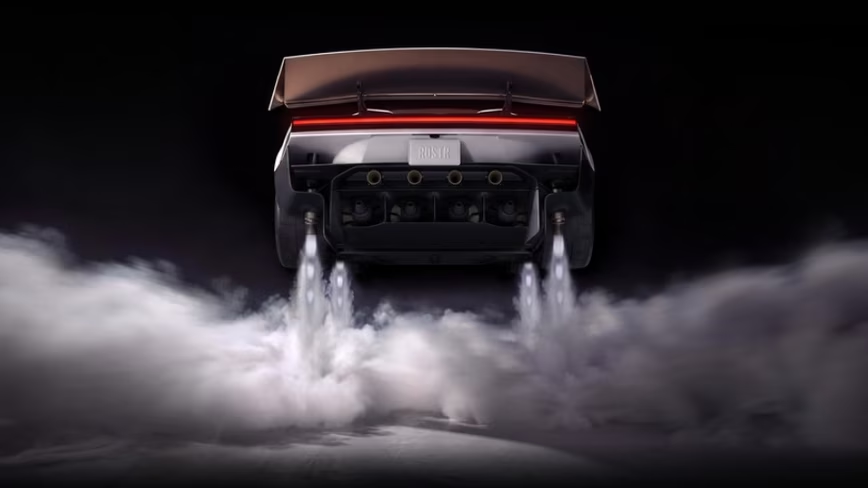
Tesla Unveils Thruster-Equipped Roadster, 2028 Production Targeted
Tesla has unveiled its second-generation Roadster, featuring cold-gas thrusters co-developed with SpaceX, enabling it to jump and flip. The electric sports car demonstrated 0-60mph in an astonishing 0.81 seconds, with production targeted for 2028. This highly anticipated reveal also serves as a key recruitment tool for Tesla's ambitious AI and robotics initiatives.

Amazon Prime Video Launches AI-Powered Prime 360 for NBA Coverage
Amazon Prime Video is elevating its NBA coverage with the introduction of Prime 360, an AI-powered replay system offering immersive, 'fly through' views of the action. Kicking off its second season, Prime Video also adds Yahoo fantasy integration and gains exclusive Eastern Conference Finals rights, expanding its tech-driven sports broadcast. The new features aim to deliver a unique and interactive viewing experience for basketball fans.

regional: A two-person Seattle startup lands $1M to reinvent
Seattle startup TriMagnetix has secured $1 million to develop semiconductor chips that consume 800 times less energy and are radiation-resistant. The two-person company, leveraging nanomagnetic technology, is targeting space applications and data centers. With new funding and key partnerships, TriMagnetix aims for commercial sales within a year.