
Samsung Galaxy Z Fold 8: A Revived Foldable Experience
I’ve spent considerable time evaluating the best foldable phones, yet none have convinced me to make the leap to a main handset – until now. The Samsung Galaxy Z Fold 8, with its distinctly “passport-shaped” design, has
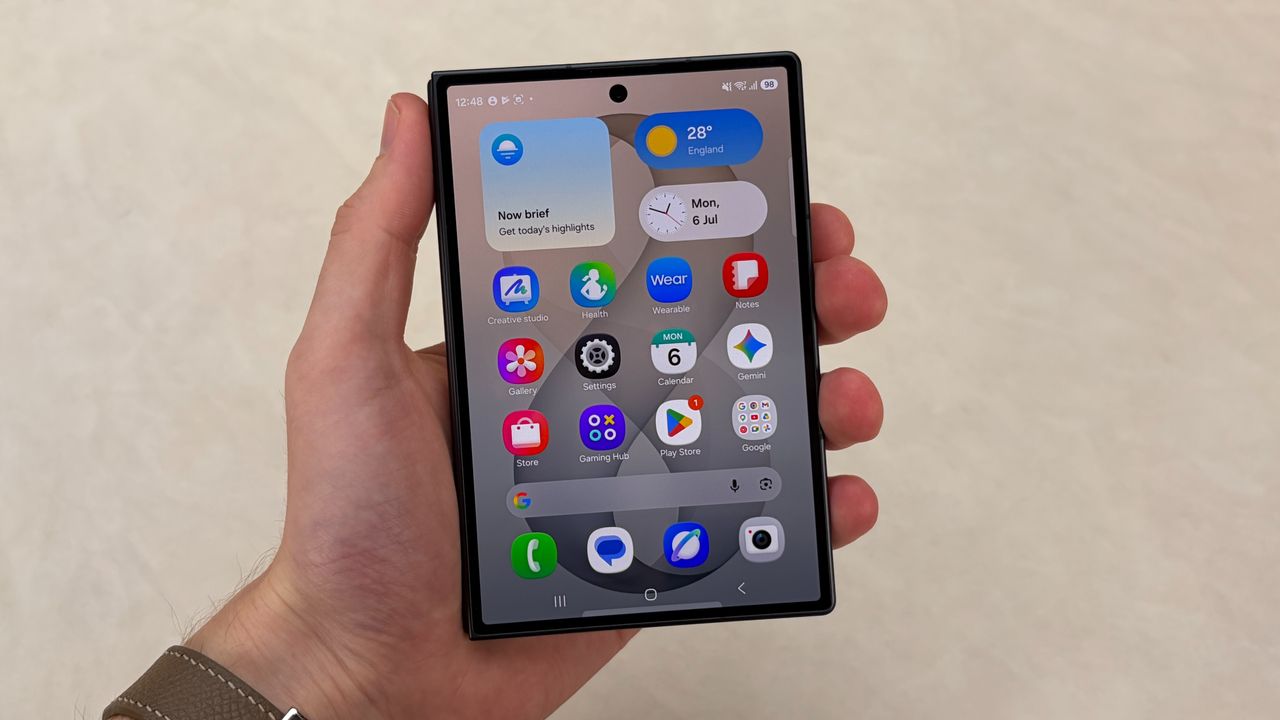
I’ve spent considerable time evaluating the best foldable phones, yet none have convinced me to make the leap to a main handset – until now. The Samsung Galaxy Z Fold 8, with its distinctly “passport-shaped” design, has genuinely rekindled my interest in the foldable form factor. It’s a compelling shift from the elongated, narrow external displays and near-square internal screens we’ve grown accustomed to.
Quick Verdict
The Samsung Galaxy Z Fold 8 delivers a much-needed design overhaul, offering significantly improved ergonomics for one-handed use when closed and a vastly superior media consumption experience when unfolded. While it retains the premium display technology of its pricier sibling, the Z Fold 8 Ultra, its reconfigured aspect ratios make it a more versatile and consumer-friendly device, especially for those who prioritize video, social media, and reading.
Design Reimagined: Shorter, Wider, and Wiser
Previous book-style foldables, including the Samsung Galaxy Z Fold 7 and the new Galaxy Z Fold 8 Ultra, featured a tall and narrow cover screen that often felt awkward for everyday smartphone tasks. The internal display, while large, was almost square, leading to significant black bars when watching widescreen video content. The Z Fold 8 fundamentally addresses these issues with its new dimensions.
Measuring in with a 5.5-inch cover display and a 7.6-inch main display, the Z Fold 8 adopts a shorter and wider profile. When closed, its 3:4 portrait aspect ratio on the cover screen means your thumb can comfortably reach the top of the display, making one-handed navigation genuinely practical. This is a noticeable improvement for tasks like scrolling through apps or quickly checking notifications. In landscape, the cover display maintains a 4:3 ratio. Unfolding the device reveals a 10:16 aspect ratio on the main screen, specifically optimized for widescreen content. This thoughtful re-engineering makes it feel less like a bulky novelty and more like a refined, dual-purpose device. It’s a ‘Galaxy Z Fold 7.5’ in spirit, focusing on practical usability.
The Media Consumption Advantage
For many users, a smartphone is primarily a media consumption device – a portable window for videos, social media feeds, and e-books. This is where the Galaxy Z Fold 8 truly shines and diverges from its predecessors. My main grievance with earlier Folds was the inefficient use of screen real estate for video playback due to the nearly square inner display. Watching a YouTube video on a Z Fold 7 or Z Fold 8 Ultra meant enduring substantial black letterboxing above and below the content.
The Z Fold 8's 10:16 unfolded display dramatically reduces these unsightly bars. While they aren't entirely eliminated, the difference is stark and immediately noticeable, providing a much more immersive viewing experience. Even the outer display, with its new aspect ratios, offers a significantly better platform for casual video viewing compared to the Ultra's more restrictive 21:9 cover screen. Samsung itself acknowledges this shift, stating they’ve identified a segment of consumers who are “very heavy on media” and will find the Z Fold 8’s form factor ideal for videos, games, and reading. The company has even dubbed its unfolded screen size as “the new standard for viewing content,” a sentiment echoed by rumors of a similarly sized foldable iPhone from Apple.
Core Specifications
Beyond its transformative design, the Galaxy Z Fold 8 doesn't skimp on core display technology. Both its 5.5-inch cover screen and 7.6-inch main display boast a fluid 120Hz refresh rate, ensuring smooth scrolling and responsive interactions. Furthermore, both screens achieve an impressive 3,000-nit peak brightness, offering excellent visibility even in bright outdoor conditions. These display specifications are on par with the premium Galaxy Z Fold 8 Ultra, ensuring that users get a top-tier visual experience regardless of their preferred orientation or display choice.
Pros and Cons
Pros:
- Improved Ergonomics: The shorter, wider design significantly enhances one-handed usability of the cover screen.
- Superior Media Viewing: Optimized aspect ratios drastically reduce letterboxing for videos, both on the cover and main displays.
- Better for Scrolling and Social Media: The more conventional screen proportions make daily scrolling and social app usage more comfortable.
- High-Quality Displays: Both screens feature a 120Hz refresh rate and 3,000-nit peak brightness for a premium visual experience.
- Revived Foldable Appeal: Addresses key pain points of previous foldable designs, making the technology more accessible and practical for a wider audience.
Cons:
- Lingering Letterboxing: While significantly reduced, some black bars are still visible when viewing widescreen content on the unfolded display.
- Still a Niche Product: Despite improvements, foldable phones remain a premium category, and some may prefer traditional slab phones for simplicity.
Comparison Table: Z Fold 8 vs. Z Fold 8 Ultra
| Feature | Samsung Galaxy Z Fold 8 | Samsung Galaxy Z Fold 8 Ultra |
|---|---|---|
| Cover Display Size | 5.5 inches | (Similar to Z Fold 7) |
| Inner Display Size | 7.6 inches | (Similar to Z Fold 7) |
| Cover Display Aspect | 3:4 (portrait), 4:3 (landscape) | 21:9 |
| Inner Display Aspect | 10:16 | 1.11:1 (nearly square) |
| Primary Use Case | Media consumption, one-handed ease, reading, gaming | Productivity, spreadsheets, multitasking |
| Video Viewing | Significantly less letterboxing | Substantial letterboxing |
| Refresh Rate | 120Hz | 120Hz |
| Peak Brightness | 3,000 nits | 3,000 nits |
Buying Recommendation
The Samsung Galaxy Z Fold 8 stands out as a strong recommendation for anyone who has been intrigued by foldable technology but put off by the awkward aspect ratios of previous iterations. If your phone usage primarily involves watching videos, scrolling through social media, casual gaming, or reading e-books, the Z Fold 8’s optimized displays will offer a vastly superior experience. It strikes a better balance between a traditional smartphone and a tablet, making it a more practical daily driver for media-centric users. If, however, your primary use case involves heavy multitasking with spreadsheets and productivity apps, and you don’t mind the pronounced letterboxing for video, the Z Fold 8 Ultra (or even previous Fold models) might still appeal to your specific workflow. For the vast majority, the Z Fold 8’s design evolution is a game-changer, making foldables a genuinely more attractive proposition.
FAQ
Q: How does the Z Fold 8 improve over previous Fold models for general use?
A: The Z Fold 8 features a shorter, wider design with a 3:4 aspect ratio on its cover display, making it much easier to use one-handed. Its unfolded inner screen (10:16 aspect ratio) is also optimized for widescreen content, significantly improving the video-watching and general media consumption experience compared to the squarer inner displays of past Folds.
Q: Is the Z Fold 8 good for productivity?
A: While the Z Fold 8 still offers a large internal screen, its new aspect ratio of 10:16 is optimized for widescreen content and media consumption rather than the more square 1.11:1 aspect ratio found in models like the Z Fold 8 Ultra, which is better suited for spreadsheets and intensive multitasking.
Q: What are the key display specifications?
A: Both the cover and main displays on the Samsung Galaxy Z Fold 8 feature a smooth 120Hz refresh rate and boast an impressive 3,000-nit peak brightness for excellent clarity and visibility.
Related articles

Seattle Warned on Big Tech Reliance; Microsoft/OpenAI Sued; Apple's
A new City of Seattle study warns of the city's risky economic over-reliance on a few dominant tech companies. Simultaneously, the Seattle Times and Newsday are suing Microsoft and OpenAI for alleged AI training data theft, while Apple's new foldable iPhone Duo evokes memories of Microsoft's defunct Surface Duo.
Google's AI Branding Fix: A Clearer Vision for Gemini
This article critiques Google's fragmented AI branding, proposing a unified 'Gemini Intelligence' system to simplify user experience and strengthen Gemini's identity.

Chuwi UniBox AI495 Pro Review: A Mini AI Powerhouse
Chuwi's UniBox AI495 Pro review: A powerful mini workstation with 192GB RAM and an AMD Ryzen AI chip for local LLM processing, packed into a compact, Mac Pro-esque design.

Nscale Adds Former OpenAI Exec Fidji Simo to Board Ahead of IPO
Nscale, the U.K.-based AI data center startup, has appointed former OpenAI, Meta, and Instacart executive Fidji Simo to its board of directors. This high-profile addition comes as Nscale prepares for a potential IPO this fall, leveraging Simo's extensive experience in scaling major tech platforms and guiding a company through a successful public offering.
Pixel Connectivity: Battery Drain, Not Data Speed, Is the Real
Google's Pixel series has consistently offered a compelling Android experience, often earning a spot on recommendation lists for its clean software and camera prowess. However, a recurring shadow has loomed over the

CNET's NYT Connections: Sports Edition Hints & Answers - Daily Puzzle
CNET's daily guide for NYT Connections: Sports Edition offers clear, spoiler-protected hints and answers, making it an efficient and reliable resource for sports puzzle enthusiasts.