
Sculpture Re-creates Lycurgus Cup Effect: A Glimmering Triumph of Art
The University of Sheffield successfully re-creates the 1,600-year-old dichroic glass recipe of the Lycurgus Cup. A new sculpture by artist Elliott Walker displays the stunning green-to-red optical effect, blending ancient tech with modern art. A significant scientific and artistic achievement.
Verdict: A Glimmering Triumph of Ancient Tech Reborn
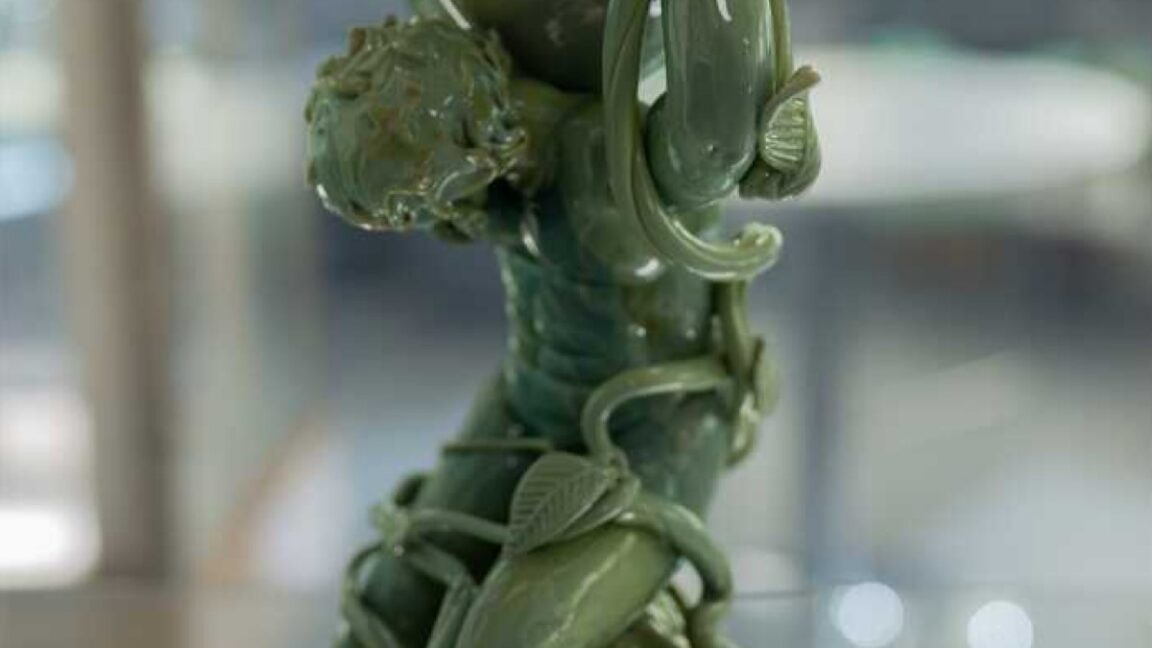
The University of Sheffield's latest achievement isn't just a sculpture; it's a meticulously engineered re-creation of a 1,600-year-old optical marvel, the famed Lycurgus Cup. This contemporary glass piece, brought to life by UK artist Elliott Walker, masterfully reproduces the original cup's captivating dichroic effect—appearing green in reflected light and a deep red when backlit. It’s a profound testament to ancient nanotechnology and a significant step in modern materials science, offering a rare glimpse into sophisticated Roman craftsmanship. While not a consumer product in the traditional sense, its significance for art, science, and historical understanding is immense, making it a must-see for anyone fascinated by the intersection of innovation and antiquity.
Unveiling the Enigma: The Lycurgus Cup's Legacy
To appreciate the modern re-creation, one must first understand its inspiration. The Lycurgus Cup, dating back to approximately 400 CE, stands as one of the mere 40 surviving glass cage cups and is revered as one of the seven glass wonders of the world. Its namesake derives from the mythological scene intricately carved into its surface. However, its true wonder lies in its dynamic coloration: a verdant green when light hits its front, transitioning to a rich, glowing red when illuminated from behind.
For centuries, the mechanism behind this astonishing optical shift remained a profound mystery. It wasn't until 2007 that scientific analysis finally cracked the code, revealing the presence of incredibly fine gold and silver nanoparticles embedded within the glass matrix. These metallic particles, introduced by Roman artisans through the addition of salts containing gold atoms during the glass-making process, are responsible for altering how electrons within the cup vibrate in response to light. This effect causes light scattering that changes depending on the observer's vantage point, resulting in the striking dichroic display. This phenomenon, we now understand, is similar in principle to the color shifts seen in 19th-century daguerreotypes and even the iridescent hues of natural photonic crystals like butterfly wings or opals, albeit with key differences in particle placement and substrate interaction.
The Engineering Feat: Re-creating an Elusive Recipe
Modern science had previously made strides in understanding and even simulating the Lycurgus Cup's effect. In 2020, Dutch researchers successfully reproduced the green/red dichroic property using a 3D-printable nanocomposite material. However, no one had yet managed to devise a consistent, replicable recipe for the glass itself that mirrored the Roman technique. This challenge was taken up by University of Sheffield scientists Lisa Hollands, a glass expert, and Caroline Jackson, a specialist in Roman glass.
Their journey was one of meticulous experimentation, involving various furnace types, distinct materials, controlled oxygen levels, and even unconventional additions like sugar at one point. Hollands, with over 25 years of experience in glasswork, leveraged both her practical knowledge and contemporary scientific understanding to navigate the complexities. The goal wasn't merely to add nanoparticles to glass but to achieve the precise aggregation and distribution of these particles that the Romans had mastered. Their persistence paid off, yielding a glass composition that flawlessly exhibits the desired green-to-red optical transformation.
Design and User Experience: A Modern Homage
With the ancient recipe effectively deciphered, the project moved from scientific replication to artistic expression. The newly created dichroic glass was then entrusted to acclaimed UK glass artist Elliott Walker, the Season 2 winner of Netflix’s “Blown Away” competition. Walker was commissioned to craft a contemporary sculpture that not only showcased the re-created glass but also paid homage to the original Lycurgus Cup.
Walker approached the design with a blend of classical inspiration and modern technique. He aimed for a classical form, intricately weaving in the original Lycurgus narrative from the ancient cup. He also incorporated elements from the Farnese Atlas sculpture, ingeniously replacing the globe with a blown glass cup to highlight the dichroic material. This artistic fusion ensures the sculpture is both a scientific demonstration and a compelling work of art, allowing viewers to appreciate the historical narrative through a contemporary lens. The initial glass piece from Hollands' experimentation was first exhibited at LightFest, part of a UK project focused on sustainable light technologies. Walker's completed sculpture will be publicly unveiled at the Millennium Gallery during the University of Sheffield’s Festival of the Mind, before taking its permanent place at the university's Turner Museum of Glass.
Pros and Cons
Pros:
- Historical & Scientific Breakthrough: Successfully re-creates a 1,600-year-old complex glass recipe, demonstrating a profound understanding of ancient nanotechnology and advanced materials science.
- Stunning Visual Effects: The sculpture beautifully showcases the captivating green-to-red dichroic shift, offering an engaging visual experience that changes with light and perspective.
- Exceptional Artistic Merit: Crafted by a renowned artist, the sculpture blends classical themes with contemporary glassblowing, resulting in a unique and culturally significant art piece.
- Educational Value: Serves as an excellent example for studying Roman craftsmanship, the physics of light scattering, and modern materials research.
- Cultural Homage: Preserves and celebrates the ingenuity of ancient artisans, bringing a piece of world history into contemporary focus.
Cons:
- Limited Accessibility: As a unique art and museum piece, it is not a commercially available product for personal ownership, limiting direct consumer interaction.
- Not Scalable for Mass Production: The intricate process, involving specific furnace conditions, precise material composition (including precious metals), and expert craftsmanship, makes mass production impractical.
- Primary Focus on Demonstration: Its main purpose is to demonstrate a scientific achievement and artistic interpretation, rather than offering a functional utility to a general consumer.
Comparison to Alternatives
While the Lycurgus Cup's optical effect has intrigued scientists for decades, the University of Sheffield team's work stands out for its faithful re-creation of the glass recipe. Here’s how it compares to other efforts to replicate or understand this unique phenomenon:
| Feature | Original Lycurgus Cup | Sheffield Recreation Sculpture | Dutch 3D-Printable Nanocomposite | Daguerreotypes (Nanoparticles) |
|---|---|---|---|---|
| Material | Dichroic Glass | Dichroic Glass (re-created recipe) | Nanocomposite material | Silver/Gold on substrate |
| Nanoparticles | Gold & Silver (embedded) | Gold & Silver (embedded) | Silver & Gold (embedded) | Silver/Gold (surface) |
| Form | Ancient Cup | Contemporary Sculpture | 3D-printable material effect | Photographic Plate |
| Primary Purpose | Functional/Artistic | Artistic/Scientific Demo | Material Science Research | Image Capture |
| Key Distinction | Original Ancient Glass | Faithful Glass Recipe Replication | Non-Glass Material Replication | Surface-level effect, not embedded |
The Sheffield sculpture is distinguished by its direct replication of the glass itself, making it a truer homage to the original Roman artifact compared to reproductions using different material bases.
Buying Recommendation
Given that the contemporary sculpture is a unique art piece and a scientific demonstration destined for museum display, a traditional “buying recommendation” isn't applicable. Instead, we highly recommend experiencing this magnificent achievement. For those with an interest in materials science, ancient history, art, or simply astonishing visual effects, a visit to the Millennium Gallery next month, and subsequently the University of Sheffield’s Turner Museum of Glass, is an absolute must. It’s an unparalleled opportunity to witness the convergence of ancient ingenuity and modern scientific prowess, beautifully encapsulated in glass.
FAQ
Q: Is the contemporary sculpture an exact replica of the Lycurgus Cup?
A: Not an exact replica in form. While it re-creates the precise optical effects and uses the deciphered ancient glass recipe, the sculpture itself is a new artistic interpretation by Elliott Walker, blending elements of the Lycurgus story with the Farnese Atlas sculpture, resulting in a unique contemporary piece.
Q: What makes the re-created glass so special compared to other color-changing materials?
A: Its uniqueness lies in the successful replication of the original Roman glass recipe, including the precise embedding of gold and silver nanoparticles within the glass matrix, which drives the striking dichroic green-to-red color shift. Many other color-changing materials or nanoparticle applications may achieve similar effects but often use different compositions or application methods.
Q: Where can I see this sculpture?
A: The sculpture will first be unveiled at the Millennium Gallery during the University of Sheffield’s Festival of the Mind next month. Following this, it will have a permanent display at the University of Sheffield’s Turner Museum of Glass.
Related articles

Nothing CMF Clip Pro Review: Open-Ear Awareness at a Steal
The Nothing CMF Clip Pro offers a unique open-ear listening experience, designed for situational awareness and comfort. Now $30 off at $69, it's an appealing option for those seeking spacious sound without sealing off the world.

Apple's Touchscreen MacBook Pro: A Long-Awaited Touch
The Verdict Apple's rumored touchscreen MacBook Pro represents a long-overdue evolution, promising to blend the convenience of direct screen interaction with the powerful macOS laptop experience. While not an essential

CMF Watch 3 Pro: Affordable Style Meets Solid Performance
CMF Watch 3 Pro: Affordable Style Meets Solid Performance In the crowded market of smartwatches, finding a device that balances features, design, and affordability can be a challenge. Enter the CMF Watch 3 Pro, a

Love Island Australia S8 Guide: Navigating the Stream, Mostly Free
Love Island Australia Season 8 Streaming Guide: Navigating the Digital Waters Verdict: TechRadar's guide to watching Love Island Australia Season 8 is a generally useful, if somewhat navigationally challenged, resource

OpenAI's Deepfake Defense: A Timely, Imperfect Solution
Quick Verdict OpenAI's new safeguard against political deepfakes, by forcing politically sensitive image generations into a cartoon style, is a practical and timely step to protect election integrity. While not a

Entire: An Agent-First Revolution for AI-Driven Code Development
Quick Verdict Entire, a new developer platform from former GitHub CEO Thomas Dohmke, makes a bold entry into the code hosting and collaboration space with an "agent-first" philosophy. Designed specifically for the age