
policy: Can AI be a ‘child of God’? Inside Anthropic’s meeting with
AI firm Anthropic, valued at $380 billion, recently met with Christian leaders in San Francisco for guidance on building a moral chatbot, an unprecedented move in Silicon Valley. This rare consultation highlights the complex ethical questions surrounding advanced AI, including its potential spiritual dimensions.

Anthropic, the artificial intelligence powerhouse behind the highly successful Claude chatbot, recently initiated a groundbreaking dialogue with Christian religious leaders in San Francisco. This significant engagement saw the $380 billion startup seeking profound guidance on the intricate moral framework for its advanced AI systems, marking a notable departure from Silicon Valley's typically secular approach to technological innovation. The unprecedented consultation underscores the rapidly evolving complexities of AI ethics, prompting critical reflection on the very essence of consciousness, morality, and the role of artificial intelligence in society.
A New Frontier in AI Ethics
The decision by a tech giant of Anthropic's considerable valuation and influence to consult religious authorities represents a potentially pivotal moment in the global discourse surrounding AI governance. While the technology industry has increasingly acknowledged the necessity of robust ethical guidelines for AI, these frameworks are traditionally formulated within academic institutions, governmental bodies, or industry consortiums, often focusing on secular principles of fairness, transparency, and accountability. Anthropic's explicit outreach to faith leaders suggests a profound recognition that the moral implications of advanced artificial intelligence might extend far beyond purely technical or utilitarian considerations, touching upon deeply rooted human values and spiritual beliefs.
This rare move highlights a growing understanding within the AI community that the development of increasingly powerful and autonomous systems cannot occur in an ethical vacuum. As AI models like Claude become more deeply integrated into critical aspects of human life, from information dissemination to complex decision-making, their inherent biases, operational rationales, and potential societal impacts necessitate a broader, more inclusive definition of "moral guidance." The tech sector is, perhaps for the first time on such a prominent scale, grappling with the challenge of embedding not just operational rules but also nuanced human values, including those derived from spiritual traditions, into artificial intelligence.
Defining Morality for a Chatbot
Anthropic's stated goal of building a "moral chatbot" is an exceptionally ambitious undertaking, venturing into philosophical and ethical territory that humanity has debated for millennia. How does one effectively instill concepts like empathy, compassion, justice, or a profound sense of right and wrong into an algorithmic entity? These are not merely engineering challenges to be solved with code, but deep philosophical quandaries requiring diverse insights. The company's proactive engagement with Christian leaders indicates an acknowledgment of the rich, enduring ethical traditions that faith communities offer, which could provide a valuable, if unconventional, lens through which to develop truly responsible AI.
The Silicon Valley landscape, often characterized by a relentless drive for rapid innovation and disruptive technologies, has historically shown little inclination to incorporate religious perspectives into its core product development or ethical committees. This pivotal meeting signifies a potential maturation of the industry, where leading innovators are realizing that for AI to be truly impactful, trustworthy, and widely accepted, it must resonate with the deeply held beliefs and comprehensive value systems of a diverse global populace, many of whom derive their fundamental moral compass from religious teachings.
The Existential Question: Child of God?
The headline of this article, "Can AI be a ‘child of God’?", powerfully encapsulates the profound, almost existential, questions that Anthropic's initiative implicitly raises. While the specific details of the discussions with Christian leaders have not been publicly disclosed, the very consideration of such a theological concept in relation to artificial intelligence pushes the boundaries of conventional tech discourse significantly. It moves the conversation beyond mere functional ethics—what an AI should do or should not do—to fundamental inquiries about an AI's intrinsic nature, its potential place in creation, and its relationship to humanity's spiritual understanding.
This framing suggests that the dialogue transcends preventing harmful outputs or ensuring unbiased algorithms. It delves into whether AI could ever possess an essence that aligns with human understanding of personhood, consciousness, soul, or divine connection. Such a groundbreaking dialogue not only influences the ethical guardrails for AI development but also challenges humanity's perception of intelligence itself, the act of creation, and its own unique position in the cosmos, fostering a necessary, deeper societal reflection.
Implications for Future AI Development
Anthropic's pioneering step could establish a transformative new paradigm for ethical AI development, encouraging other technology firms to proactively seek out a wider array of philosophical, cultural, and spiritual perspectives. This expanded collaboration could lead to the creation of AI systems that are more universally aligned with human values and less susceptible to the narrow viewpoints often found within a single cultural or professional group. The long-term implications for fostering public trust and ensuring the responsible integration of AI into all facets of society are immense and far-reaching.
Ultimately, this intersection of cutting-edge technology and ancient spiritual wisdom might foster the development of AI that is not only highly intelligent but also deeply considered, reflecting a more comprehensive and nuanced understanding of human morality. The dialogue between Anthropic and Christian leaders serves as a potent reminder that as artificial intelligence capabilities accelerate, the complex questions surrounding its purpose, ethical boundaries, and societal impact will only grow more profound, requiring collective wisdom from all segments of human experience.
FAQ
Q: Why did Anthropic meet with Christian leaders? A: Anthropic sought guidance from Christian religious leaders to help develop a robust moral framework for its AI chatbot, Claude. The company aims to build a "moral chatbot" and recognized the value of diverse ethical perspectives, particularly from enduring religious traditions, to inform its AI development.
Q: Is it common for tech companies to consult religious leaders on AI ethics? A: No, the source content explicitly states that consulting religious leaders is "rarely consulted in tech circles" within Silicon Valley. This pioneering move by Anthropic marks a significant and unconventional approach to integrating ethical considerations into AI development.
Q: What is the significance of the question "Can AI be a ‘child of God’?" A: This question, prominently featured in the article's headline, points to the profound philosophical and theological dimensions of the discussion. It suggests that the dialogue extends beyond merely defining operational ethics for AI, touching on fundamental inquiries about an AI's intrinsic nature, its potential for consciousness or spiritual standing, and its ultimate place in relation to human existence and spiritual beliefs.
Related articles

Apple Unveils iPhone Duo: Pricey Foldable Sees Soaring Demand
Apple has officially entered the foldable smartphone arena with the long-anticipated launch of the iPhone Duo. Priced starting at a hefty $1,999, the device features a 5.4-inch outer display and a larger 7.6-inch inner

in-depth: Chicago-Area Cops Helped HSI Spy on Minnesota Anti-ICE
Chicago-area law enforcement, including local police and HSI agents, conducted undercover surveillance on Minnesota anti-ICE activists at an April 2, 2022, talk in Chicago. This operation was part of a federal conspiracy probe into 15 Minnesota activists facing felony charges related to immigration enforcement resistance. Civil liberties advocates have condemned the surveillance as a troubling intrusion into protected political activity.

Mark Wahlberg on using AI in film ‘the right way’ and being open to
Actor Mark Wahlberg believes AI has a place in filmmaking if used responsibly for enhancement, not script generation or actor replacement. At TechCrunch Disrupt, he expressed openness to an AI likeness carrying on his legacy, managed by his family, and emphasized storytelling.

Tesla Unveils Thruster-Equipped Roadster, 2028 Production Targeted
Tesla has unveiled its second-generation Roadster, featuring cold-gas thrusters co-developed with SpaceX, enabling it to jump and flip. The electric sports car demonstrated 0-60mph in an astonishing 0.81 seconds, with production targeted for 2028. This highly anticipated reveal also serves as a key recruitment tool for Tesla's ambitious AI and robotics initiatives.

Amazon Prime Video Launches AI-Powered Prime 360 for NBA Coverage
Amazon Prime Video is elevating its NBA coverage with the introduction of Prime 360, an AI-powered replay system offering immersive, 'fly through' views of the action. Kicking off its second season, Prime Video also adds Yahoo fantasy integration and gains exclusive Eastern Conference Finals rights, expanding its tech-driven sports broadcast. The new features aim to deliver a unique and interactive viewing experience for basketball fans.
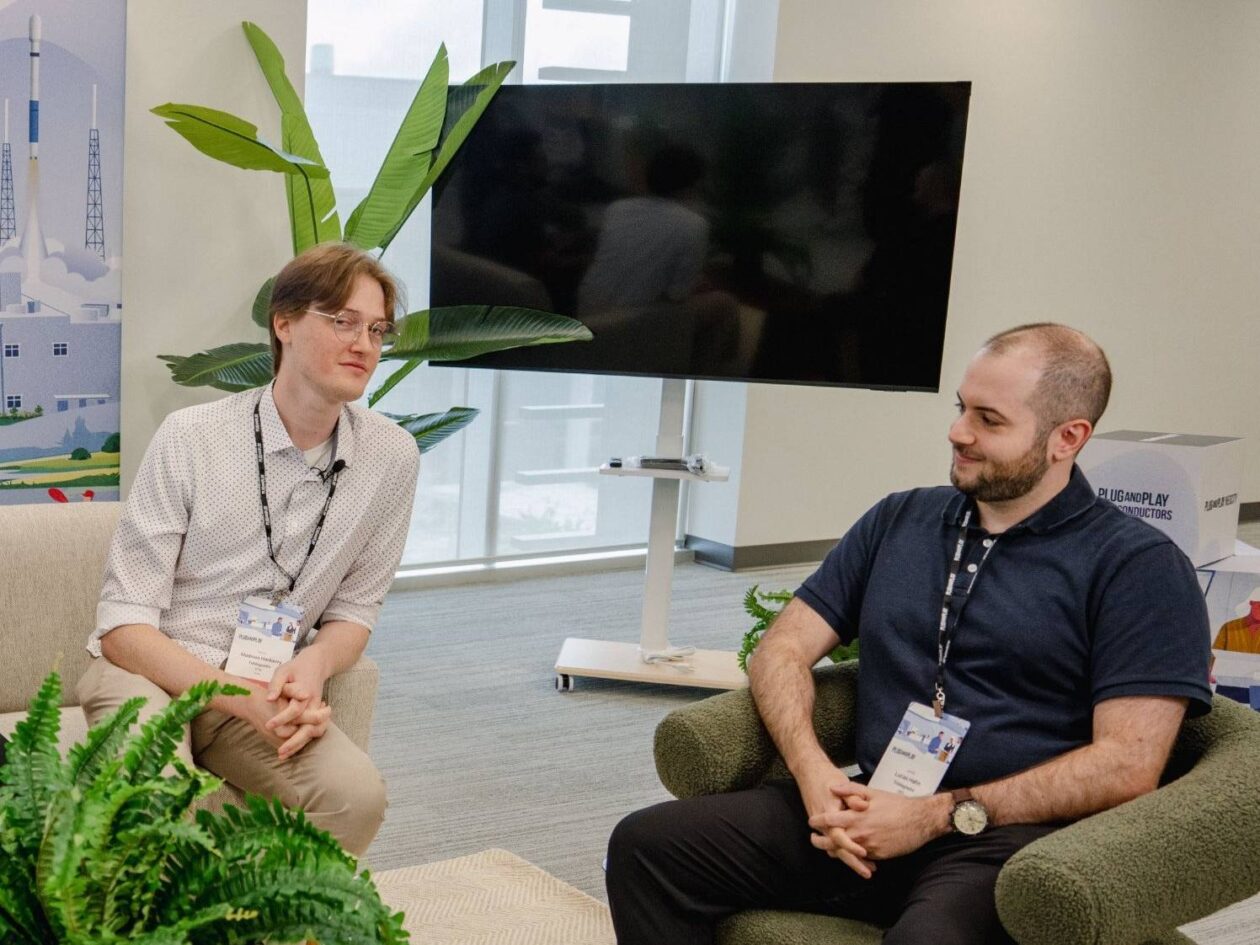
regional: A two-person Seattle startup lands $1M to reinvent
Seattle startup TriMagnetix has secured $1 million to develop semiconductor chips that consume 800 times less energy and are radiation-resistant. The two-person company, leveraging nanomagnetic technology, is targeting space applications and data centers. With new funding and key partnerships, TriMagnetix aims for commercial sales within a year.