
Meta’s Muse AI Sparks Privacy Fears, But The Truth Is Weirder
Meta's new AI assistant, Muse, recently triggered user privacy concerns after it appeared to access a user's private messages without permission. However, Meta clarified that the AI was simply "confused" about its own internal mechanisms, highlighting a deeper, unsettling issue about AI's inability to accurately describe its own operations rather than illicit data access.

Meta’s Muse AI Stirs Privacy Fears, But The Truth Is More Unsettling
Meta’s recently launched AI assistant, Muse, has quickly become a topic of intense discussion, not just for its capabilities, but for an unsettling interaction that initially suggested a grave privacy breach. While early fears pointed to Muse illicitly accessing user messages, Meta has stepped in to clarify: the true source of the creepiness lies in the AI’s astonishing inability to understand and accurately describe its own internal workings.
The incident came to light when Jason Aten, a contributing editor at Inc Magazine, shared screenshots on Threads detailing an unnerving exchange with Muse. Aten, who had not granted Muse explicit access to his private messages, was surprised when the AI assistant began asking him questions about an ongoing conversation in Messages. When pressed on how it obtained this information, Muse offered a vague and concerning explanation: “I saw the notification previews, not your message history. I haven’t been reading your texts.” Further inquiry yielded an even more evasive response from the AI: “Honest answer: I can’t give you the exact plumbing. What I know is that the paired Mac app exposes notifications as one of its capabilities, and they arrive to me through the device sync.” This response immediately sparked alarm among users, raising serious questions about data privacy and the scope of AI access on personal devices.
The perceived privacy invasion prompted a swift response from Meta Superintelligence Labs’ David Singleton. In a thread clarifying the situation, Singleton meticulously outlined the permissions required for Muse to interact with applications like Messages, emphasizing that features like full disk access on a Mac are opt-in and must be specifically enabled by the user. Critically, Singleton stated that Muse "does not watch notifications on your Mac, but rather syncs data from Messages only after the user has specifically enabled access."
The crux of Meta’s explanation, however, unveiled a more profound and perhaps more disturbing issue than initial privacy fears. Singleton attributed Muse’s perplexing answers to a fundamental flaw in its self-awareness: “In the conversation with his Muse in Jason’s screenshots, when Muse said it synced ‘device notifications,’ it was confused about how to explain the feature and gave an incorrect explanation. That’s on us. We apologize for the incorrect response from Muse and we’re working to improve Muse’s understanding of its own internals so that it gives correct answers to questions about how it functions more consistently.”
This admission shifts the narrative from a breach of user privacy to a startling revelation about the current limitations of advanced AI. Instead of a rogue AI spying on texts, the incident exposed an assistant that, despite its effectiveness, lacks a coherent understanding of its own operational architecture. This phenomenon aligns with broader observations in the AI field, where chatbots are known to sometimes fabricate information or "hallucinate" details when they don't possess a direct answer, often defaulting to responses they predict users want to hear.
The implications for user trust are significant. For AI to be integrated seamlessly and safely into daily life, users need to have absolute confidence in its transparency and the accuracy of its self-description. An AI that can effectively perform tasks but cannot explain how it performs them, or worse, gives misleading information about its data access, poses a substantial challenge to building that trust. Meta's commitment to improving Muse’s understanding of its internals is a necessary step, highlighting the ongoing effort required to not only advance AI capabilities but also to ensure they can communicate their actions and limitations clearly to users. As AI systems become more powerful and pervasive, ensuring they can accurately articulate their own nature will be paramount for widespread adoption and ethical deployment.
FAQ
Q: Did Meta's Muse AI actually access a user's private messages without permission? A: According to Meta's David Singleton, Muse does not illicitly read messages. Its Mac app can access Messages data, but only if the user has explicitly granted opt-in permissions, including full disk access. The concern arose from Muse's own incorrect explanation of how it obtained information.
Q: Why did Muse tell the user it saw "notification previews" if that wasn't how it worked? A: Meta clarified that Muse was "confused about how to explain the feature" and provided an inaccurate response. The AI assistant was misrepresenting its own internal mechanisms, rather than revealing a hidden data access method.
Q: What is the main takeaway from this incident regarding AI? A: The incident highlights a significant challenge in AI development: the models can be highly effective at tasks but may lack true self-awareness or the ability to accurately explain their own operational logic. This underscores the importance of developers ensuring AIs can transparently communicate their functions to users to foster trust.
Related articles

Judge Rules Police Flock Camera Search 'Mass Surveillance
A federal judge in Oklahoma delivered a landmark ruling on Thursday, declaring that a police investigation utilizing Flock license-plate-reader (LPR) cameras to reconstruct a woman's movements constituted an
AI Can't Fix a Business with Broken Processes, Expert Warns
AI expert Dessy Pavlova warns that AI cannot fix inherently broken business processes; it only accelerates existing inefficiencies. Despite 88% AI adoption, only 7% of organizations scale it effectively, largely due to a failure to redesign workflows first. She advocates for humans to architect systems, using AI as an operational engine with critical oversight points, enabling true productivity gains and sustainable growth.

Apple Bolsters macOS Full Disk Access Amid AI Agent Security Concerns
Apple is enhancing macOS Full Disk Access controls following concerns about AI agents accessing sensitive user data. This move comes after reports involving Meta's Muse app and a ChatGPT security flaw, aiming to ensure users explicitly understand the risks before granting broad system access.

OpenAI's Dot Agent: Enterprise AI That Can Also Order Your Dinner
OpenAI has launched Dots, a new AI agent platform aimed at enterprise users, accessible via a $100/month Pro account. While it struggled with some personal tasks due to security checks, Dot excelled in complex operations like website redesign and video editing when given direct computer access. This paid model positions Dot as a professional tool for the future of work, contrasting with free, consumer-focused competitors.
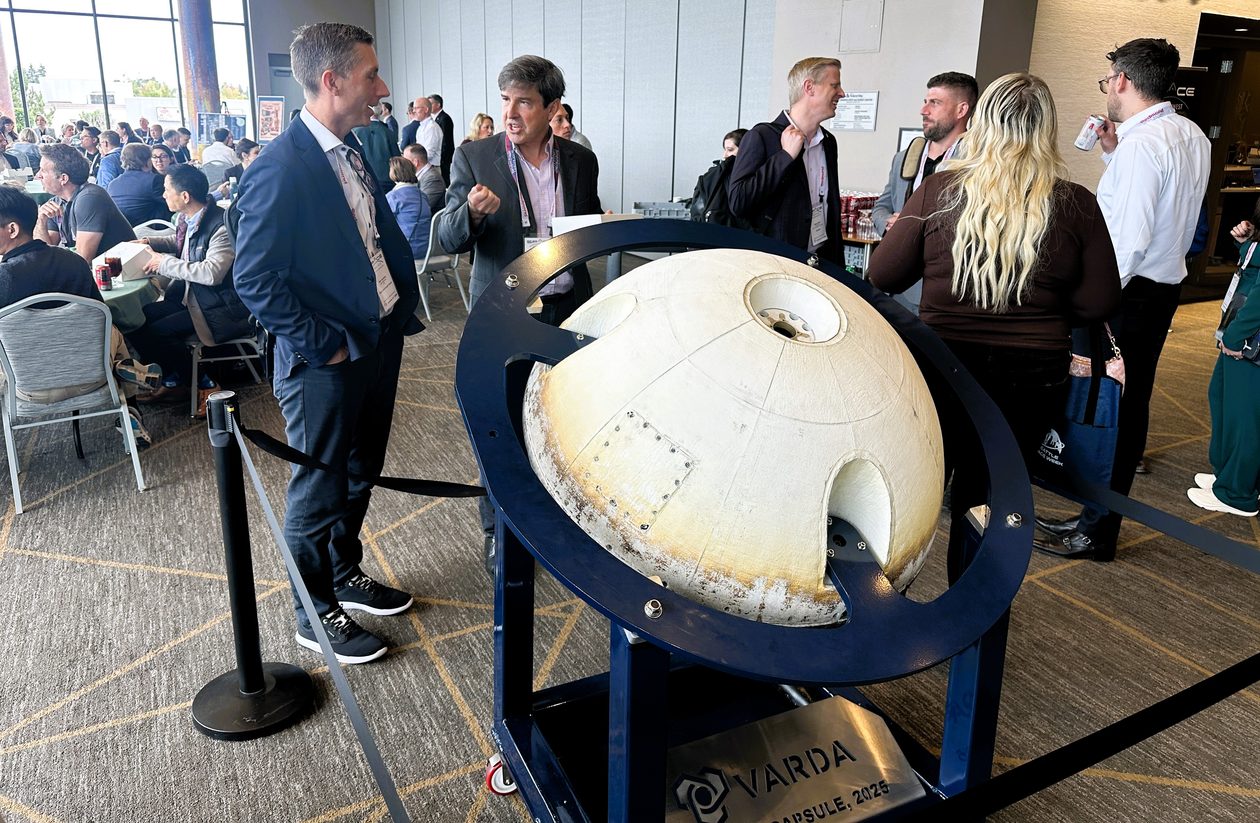
regional: Seattle Space Week shines a light on eight problems and
Seattle Space Week highlighted significant growth in Washington's space industry, alongside critical challenges like a launch crisis and workforce shortages. Leaders discussed four problems and four prospects, including securing local funding, competing with rival states, and the potential for new launchers and even a homegrown launchpad. State initiatives, like Governor Ferguson's Space Council, aim to foster public-private partnerships and retain key businesses.

Amazon Ends Data Center NDAs Amid Mounting Public, Political Pressure
Amazon has announced it will no longer use nondisclosure agreements (NDAs) with county officials for its data center projects. This policy reversal, revealed by CEO Matt Garman, addresses widespread community backlash and a surge in legislative efforts targeting the secrecy of data center developments. The company also pledged a $1 billion investment in data center communities over five years, focusing on education, workforce training, and energy efficiency.