
regional: Seattle Space Week shines a light on eight problems and
Seattle Space Week highlighted significant growth in Washington's space industry, alongside critical challenges like a launch crisis and workforce shortages. Leaders discussed four problems and four prospects, including securing local funding, competing with rival states, and the potential for new launchers and even a homegrown launchpad. State initiatives, like Governor Ferguson's Space Council, aim to foster public-private partnerships and retain key businesses.
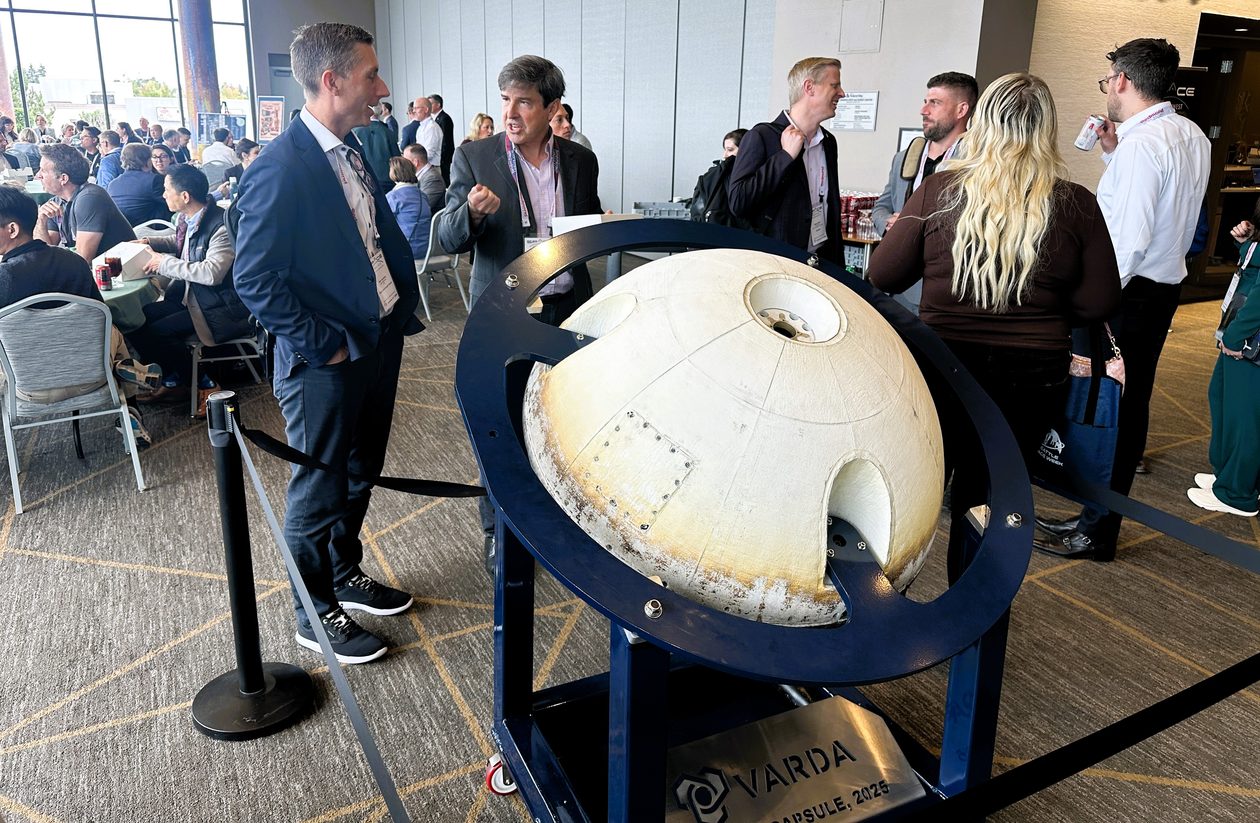
Seattle Space Week recently convened industry leaders, investors, and policymakers to discuss the remarkable growth and looming challenges facing Washington state's burgeoning space sector. While preliminary findings indicate a doubling of the state's economic impact from space between 2018 and 2022, with nearly another doubling since, key figures are openly questioning whether the Pacific Northwest can sustain its momentum against aggressive regional rivals.
The week-long event, highlighted by the Space Northwest Symposium in Federal Way, brought into sharp focus four critical problems and four promising prospects for companies operating on the final frontier. These discussions underscore a pivotal moment for Washington, as Governor Bob Ferguson's newly formed Washington Space Council and local leaders like Kent Mayor Dana Ralph signal renewed commitment to supporting the industry.
Pressures on the "Space State"
Despite its robust growth, the Washington space industry faces significant headwinds, from logistical bottlenecks to intense competition for resources.
Navigating the Launch Crisis
The availability of launch opportunities has dwindled, creating what Stoke Space CFO Tim Beard describes as a "crisis" due to a supply-demand mismatch. Surging demand from satellite constellations for broadband and future AI data processing (like Starlink, Amazon Leo, Starcloud) meets a constrained supply as Blue Origin and United Launch Alliance experience setbacks, and SpaceX transitions away from its Falcon 9 workhorse. This crunch disproportionately affects Seattle's satellite ventures.
Addressing the Workforce Gap
A critical shortage of skilled technicians and engineers presents a formidable barrier to growth. Bill Bruner, CEO of New Frontier Aerospace, identifies this as his top challenge, emphasizing the need for both advanced engineering and graduate-level technical expertise. Kent Mayor Dana Ralph advocated for state and local partnerships to simplify investments in apprenticeships and on-the-job training, ensuring the workforce system evolves with industry needs.
Securing Local Funding
Many of Seattle's space ventures primarily rely on out-of-state capital. Mike Reilly, Chief Strategy Officer at Varda Space Industries, notes that while Seattle has many VCs, "space money" often originates from Los Angeles and San Francisco. Brian Monnin, co-founder of Sophia Space, suggested alternative financing solutions like debt financing and public-private combinations to bridge funding gaps for midsize companies.
Competing with National Incentives
Washington faces aggressive courtship of its space companies by other states offering substantial incentives. Executives from Stoke Space highlighted active recruitment efforts from Colorado, Texas, and Florida, with Monnin noting that sovereign funds in New Mexico and Louisiana offer more attractive packages for manufacturing facilities. Stoke Space leaders voiced a desire to remain in Washington, urging state policymakers for support.
Prospects on the Horizon
Amidst these challenges, Seattle Space Week also illuminated several opportunities and strategic pathways for the region's space industry.
Fostering Public-Private Collaboration
Governor Ferguson's Washington Space Council offers a forum for executives and government officials to develop strategies for industry growth. While not immediately establishing a multi-billion-dollar fund, past grants, such as the $350,000 awarded to Portal Space Systems for expansion, could serve as models for future financial incentives, signaling a commitment to tangible support.
Attracting Out-of-State Investment
Washington's strong fundamentals – a deep talent pool, robust supply chain, industrial capacity, and a culture of innovation – continue to draw outside investment. Companies like California-based Cowboy Space and Virginia-based BlackSky have established significant manufacturing or design facilities in Kent and Tukwila, respectively. SpaceX also maintains major satellite production facilities in Redmond and Woodinville, demonstrating that a physical presence in the state remains highly desirable.
The Next Generation of Launchers
The current launch crisis contains a silver lining, as it spurs the development of new commercial launch solutions, including Stoke Space's Nova. SpaceX's Starship, following its recent orbital flight, is poised to significantly increase launch capacity. Ron Faith, CEO of RBC Signals, noted this milestone, also pointing to a wave of new launchers coming online, such as Blue Origin's New Glenn, ULA's Vulcan, and Rocket Lab's Neutron.
A Homegrown Launchpad?
While a nearby NASA center remains unlikely, as confirmed by NASA Administrator Jared Isaacman, the prospect of a Washington-based commercial launch capability is being explored by the Washington Space Council. Though geographic challenges exist for safety, Stoke Space's CFO Tim Beard suggested that a launchpad on the Washington coast would be "fantastic" and offer shipping advantages. Additionally, tapping into military installations like Fort Lewis-McChord and the Bremerton naval base for orbital computing and defense needs represents a missed opportunity, according to Monnin.
FAQ
Q: What are the biggest challenges facing Washington's space industry?
A: Key challenges include a severe launch availability crisis, a shortage of skilled technicians and engineers, difficulty in securing local venture capital, and intense competition from other states offering strong incentives to attract space companies.
Q: What is the Washington Space Council and what is its purpose?
A: The Washington Space Council is a new initiative by Governor Bob Ferguson designed to serve as a forum for business executives and government officials. Its goal is to collaboratively develop realistic strategies and foster the growth of the state's space industry, potentially through public-private partnerships and incentives.
Q: Why are other states actively trying to lure Washington's space companies?
A: States like Colorado, Texas, Florida, New Mexico, and Louisiana are aggressively courting space ventures by offering substantial financial incentives and sovereign funds. These incentives aim to attract companies for manufacturing facilities and headquarters, recognizing the economic and strategic value of a thriving space sector.
Related articles
Apple Bolsters macOS Full Disk Access Amid AI Agent Security Concerns
Apple is enhancing macOS Full Disk Access controls following concerns about AI agents accessing sensitive user data. This move comes after reports involving Meta's Muse app and a ChatGPT security flaw, aiming to ensure users explicitly understand the risks before granting broad system access.

OpenAI's Dot Agent: Enterprise AI That Can Also Order Your Dinner
OpenAI has launched Dots, a new AI agent platform aimed at enterprise users, accessible via a $100/month Pro account. While it struggled with some personal tasks due to security checks, Dot excelled in complex operations like website redesign and video editing when given direct computer access. This paid model positions Dot as a professional tool for the future of work, contrasting with free, consumer-focused competitors.

Not Ready For Orbit: Why Lanterns S1 Ending Hits So Hard
HBO Max's *Lanterns* Season 1 is wrapping up this weekend after eight incredible episodes, and I'm genuinely not ready for it to end. The show has surpassed all expectations, becoming a standout superhero series and one of HBO's strongest recent productions. While a second season isn't confirmed, strong viewership and industry buzz offer hope.

Amazon Ends Data Center NDAs Amid Mounting Public, Political Pressure
Amazon has announced it will no longer use nondisclosure agreements (NDAs) with county officials for its data center projects. This policy reversal, revealed by CEO Matt Garman, addresses widespread community backlash and a surge in legislative efforts targeting the secrecy of data center developments. The company also pledged a $1 billion investment in data center communities over five years, focusing on education, workforce training, and energy efficiency.

Agentic AI in Financial Services: Unseen Workflow Risks
This review analyzes the risks of agentic AI in financial services, highlighting the 'black-box journey flow' problem and lack of accountability. It stresses the need for robust governance, end-to-end visibility, and effective human oversight to scale AI responsibly.
Lyft Pays $272.5M to Settle California Driver Classification Lawsuit
Lyft has agreed to pay $272.5 million to settle a California lawsuit over the misclassification of its drivers as independent contractors instead of employees. The settlement covers the period from April 2016 to December 2020, predating the passage of Proposition 22 which solidified drivers' contractor status. This resolves a significant legal chapter for Lyft, though similar cases against other gig companies persist.