
iOS 26.4.2 Fix: A Crucial Security Patch for Your iPhone
Quick Verdict Apple's latest minor update, iOS/iPadOS 26.4.2, isn't just another incremental patch; it's a critical security fix addressing a significant privacy vulnerability. This update mends a flaw that allowed for

Quick Verdict
Apple's latest minor update, iOS/iPadOS 26.4.2, isn't just another incremental patch; it's a critical security fix addressing a significant privacy vulnerability. This update mends a flaw that allowed for the retention of supposedly deleted text message notifications, specifically exploited by the FBI to access Signal messages. While the incident is concerning, the swift patch, which also protects other messaging apps, is a welcome and essential step towards shoring up device security. Updating immediately is highly recommended for all iPhone and iPad users, especially those who prioritize private communication.
The Unveiling of a Hidden Flaw
For many, apps like Signal represent the pinnacle of private, secure messaging, offering end-to-end encryption and features like disappearing messages. These protections, however, are only as strong as the underlying operating system. This recently discovered weakness within iOS exposed how even the most secure messaging apps can be undermined by system-level vulnerabilities. The issue, which Apple addressed in its iOS 26.4.2 update, revolved around the device's notification service, where notifications marked for deletion could be unexpectedly retained on the device.
Apple's release notes for iOS/iPadOS 26.4.2, in typical fashion, were succinct, stating only that a vulnerability impacting the notifications service had been patched. This brief explanation initially left users with more questions than answers. The full scope and impact of this flaw only became clear through details emerging from a federal trial that concluded last month.
The FBI's Exploitation: A Case Study
The vulnerability came to light during a federal trial where individuals were charged and found guilty of various offenses related to an ICE detention facility. One of the defendants, Lynette Sharp, had been using Signal on her iPhone. Despite later deleting the app, the FBI was reportedly able to access her incoming Signal messages. This access wasn't achieved by breaking Signal's encryption directly but rather by exploiting the underlying iOS flaw.
An FBI agent testified that copies of incoming Signal message content were retained and accessible in Sharp's phone's push notification database. Normally, a Signal message triggers a push notification, displaying the sender's name and some message content by default. While Signal allows users to customize these settings to hide sender names or message content, Sharp had reportedly left her default Signal notification settings unchanged. This meant that the names and partial contents of messages she received – though crucially, not those she sent – remained stored and accessible on her device due to this iOS weakness.
According to a supporter of the defendants present at the trial, it was learned that specifically on iPhones, if Signal's settings allowed for message notifications and previews to show up on the lock screen, the iPhone would internally store these notifications and message previews in its internal memory. This internal retention, even after messages were supposedly deleted or the app was removed, proved to be the Achilles' heel.
Apple's Response: iOS 26.4.2
Apple, without explicitly acknowledging the Signal incident as the direct trigger for the update, released iOS 26.4.2 (and iPadOS 26.4.2) to address this specific vulnerability. The fact that Signal itself publicly thanked Apple for the patch on X, specifically citing the FBI's access to message notification content even after the app's deletion, strongly links the update to this high-profile security breach.
Signal's post confirmed that “Apple's advisory confirmed that the bugs that allowed this to happen have been fixed in the latest iOS release.” This acknowledgment from a leading secure messaging provider underscores the gravity of the flaw and the importance of its resolution. The update is designed to prevent similar exploits moving forward, not just for Signal but presumably for other messaging apps that utilize iOS's notification service.
User Experience, Security, and Peace of Mind
From a user perspective, this incident highlights the complex interplay between app-level security and operating system integrity. While Signal offers robust encryption, the OS itself can become an unexpected weak point if not meticulously secured. The good news is that Apple's response was swift, and the fix is comprehensive.
One of the most reassuring aspects of this update is that "no user action is needed for this fix to protect Signal users on iOS." Once iOS 26.4.2 is installed, all inadvertently preserved notifications will be deleted from the device, and no future notifications from deleted applications will be retained. This automatic cleanup and future-proofing simplifies the user's responsibility, ensuring that simply updating their device provides immediate and ongoing protection.
However, this incident serves as a stark reminder for users to review their default notification settings for all privacy-sensitive applications. While the OS flaw is patched, understanding how your notifications behave – especially what content is previewed on your lock screen or stored temporarily – remains crucial for maintaining personal privacy. Users should regularly check their app notification settings and consider limiting previews for sensitive information.
Pros and Cons of the iOS 26.4.2 Fix
Pros:
- Critical Security Patch: Directly addresses a serious privacy vulnerability that allowed access to sensitive information.
- Automatic Remediation: The update not only prevents future retention but also automatically deletes previously inadvertently preserved notifications.
- Broad Protection: The fix is expected to protect other messaging apps from similar notification retention weaknesses, extending its benefit beyond just Signal.
- Swift Action: Apple's relatively quick response to patch such a significant flaw is commendable.
Cons:
- Existence of the Flaw: The fact that such a fundamental privacy vulnerability existed within the notification service for an undisclosed period is concerning.
- Default Settings Risk: The incident underscores how default notification settings, even in secure apps, can inadvertently create exposure if an underlying OS flaw is present.
- Implicit Acknowledgment: While fixed, Apple's typically opaque explanation of security vulnerabilities can leave users wanting more transparency about potential past exposures.
Buying Recommendation (Update Recommendation)
Given the critical nature of the privacy flaw addressed by iOS 26.4.2, the recommendation is unequivocally clear: update your iPhone and iPad immediately. This isn't a feature update you can afford to postpone; it's an essential security measure. The fix automatically cleans up past vulnerabilities and secures your device against future exploitation of this specific type of flaw.
To update your device:
- Go to Settings.
- Select General.
- Tap Software Updates.
- Tap the button to Update Now.
- After the update is installed, restart your iPhone or iPad.
While this update closes a major security gap, it also serves as a valuable reminder to regularly review your privacy settings within individual applications, particularly concerning notification previews. Combining Apple's commitment to security with vigilant user practices offers the best defense against evolving digital threats.
FAQ
Q: What exactly did iOS 26.4.2 fix? A: iOS 26.4.2 fixed a vulnerability in the notifications service that allowed notifications, specifically message previews, to be unexpectedly retained on the device even after the associated messages were deleted or the app was removed. This flaw was exploited by the FBI to access Signal messages.
Q: Do I need to do anything specific in my apps like Signal after updating? A: No, Signal has confirmed that no user action is needed for this fix to protect users once iOS 26.4.2 is installed. The update automatically deletes any inadvertently preserved notifications and prevents future retention. However, it's always a good practice to review your notification settings within all privacy-sensitive apps to ensure they align with your comfort level regarding content previews.
Q: Does this fix protect other messaging apps besides Signal? A: Yes, while the incident that brought the flaw to light involved Signal, the patch addresses a weakness in the core iOS notifications service. Therefore, it is presumed that this update will prevent similar notification retention flaws from affecting other messaging applications on your iPhone or iPad.
Related articles
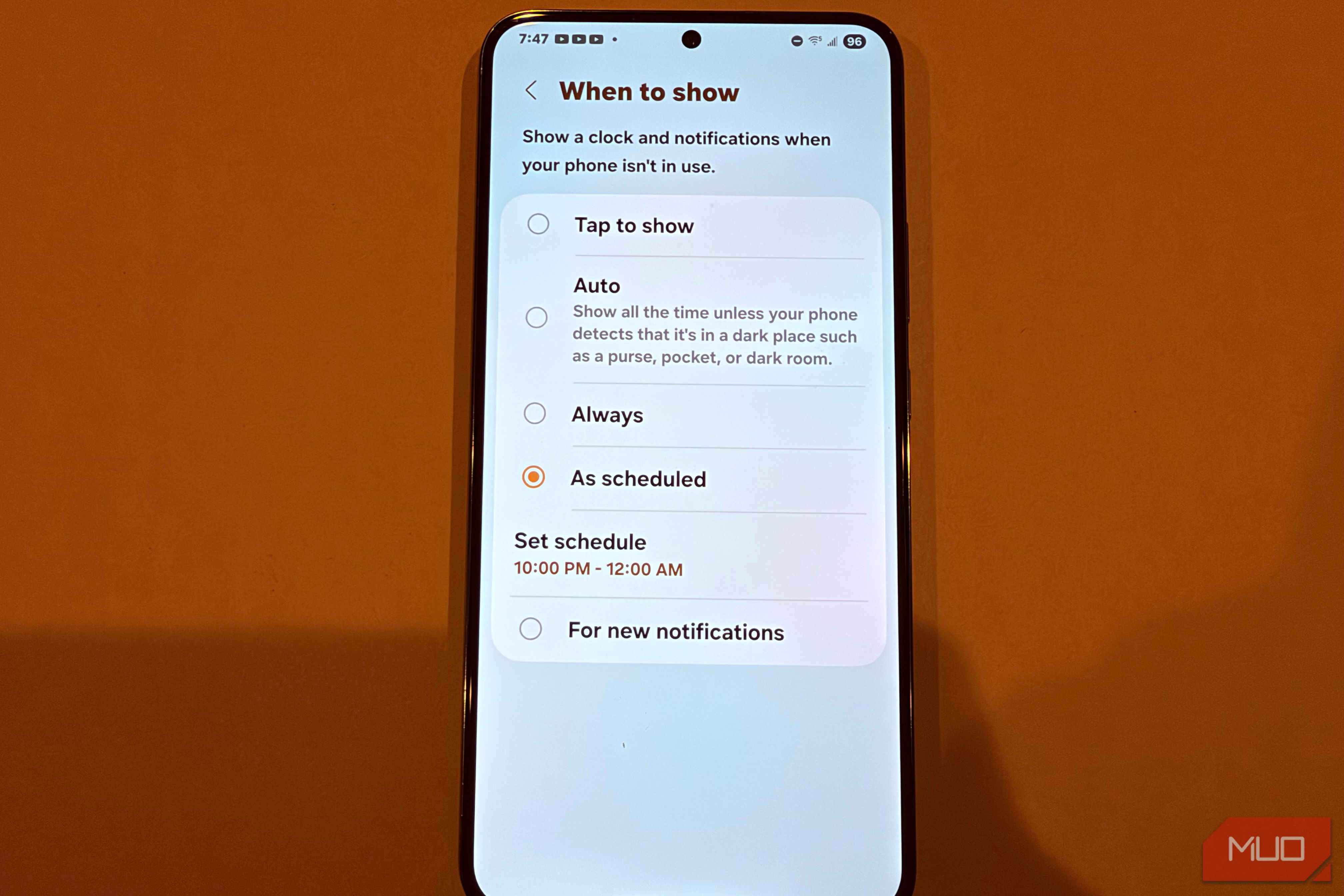
Your Galaxy's Always-On Display Draining Battery? Schedule a Hidden
Reclaim Your Battery: Schedule Your Galaxy's Always-On Display Your Samsung Galaxy's Always-On Display (AOD) is a handy feature, showing you the time and notifications at a glance. However, keeping it active all day can
Community Fibre 8.5Gbps: UK's Fastest, But Pricey Fibre
Quick Verdict Community Fibre has just launched the UK's fastest residential internet connection, boasting an incredible 8.5Gbps (8,200Mbps) symmetrical full fibre service. It's a technical marvel, delivering speeds
Turn Filament Packaging into Free 3D Printer Upgrades
Repurpose empty filament spools, boxes, and silica packets into free 3D printer upgrades and storage solutions in a few simple steps. Organize your workshop and protect your filament.

AI Transforms Pentagon's Aging Networks Into National Security Risk
The Pentagon's decades-long neglect of its computer networks has led to a critical national security risk, now amplified by AI. Adversaries are using advanced AI to exploit these aging systems, leading to a tenfold increase in zero-day vulnerabilities. Military leaders acknowledge the peril, signaling an urgent shift in priorities.
Turn Your Old PC into a Homelab: 6 Beginner Self-Hosting Projects
Breathe New Life into Your Old PC with Self-Hosting Don't let that dusty old laptop or desktop gather cobwebs! While it might not keep up with today's demanding software, an older PC often has more than enough power to

How to Choose the Best Smart Speaker in 2026 - Find Your Perfect Match
This guide helps you choose the best smart speaker in 2026 by evaluating your ecosystem, prioritizing features, and reviewing top Amazon, Google, Apple, and portable options. Learn to pick a device that integrates seamlessly and enhances your smart home.