
Boost Your Self-Hosted Services: Switch from Ubuntu to Alpine Linux
Optimize your homelab by switching from Ubuntu to Alpine Linux for self-hosting. This guide covers how Alpine's tiny footprint saves storage and RAM, step-by-step instructions for creating Alpine LXC containers in Proxmox, and practical solutions for common compatibility issues, enabling greater efficiency and cost savings.
Are you running numerous self-hosted services and finding your hardware stretched thin? Many homelab enthusiasts, like myself, have relied on Ubuntu for years. However, as resource costs rise and the demand for more efficient setups grows, a shift to lighter alternatives becomes increasingly appealing. This guide will walk you through transitioning from resource-heavy Ubuntu to the minimalist Alpine Linux for your self-hosting needs, particularly within a Proxmox environment, to significantly reduce your storage and RAM footprint.
By the end of this guide, you will understand the compelling reasons to switch to Alpine Linux, how to set up Alpine-based containers in Proxmox, and how to navigate common compatibility challenges. This move will enable you to host more services on existing hardware, save on potential upgrade costs, and optimize the performance of your homelab.
Why Alpine Linux Stands Out for Self-Hosting
Alpine Linux is engineered for extreme minimalism, making it an ideal candidate for resource-constrained environments. Unlike general-purpose distributions that come with a large set of libraries and utilities, Alpine strips down to the essentials.
Leaner Core Components
Alpine replaces the standard GNU toolchain (glibc, GNU coreutils, systemd) with lighter alternatives like musl, BusyBox, and OpenRC. This fundamental change dramatically reduces the operating system's size and resource consumption. The base image of Alpine is incredibly small, around 5MB, and a full installation typically occupies only 50MB to 150MB of disk space. In stark contrast, an Ubuntu Server image is approximately 3GB, requiring about 5GB of disk for installation, and even an optimized Ubuntu container often consumes around 1GB. This makes Alpine several orders of magnitude smaller than Ubuntu.
Significant Storage Savings
For homelab operators managing a multitude of services, storage costs can quickly accumulate. With Ubuntu, running 12-15 containers could easily consume 20GB or more of storage. Factoring in current storage prices, this could translate to a notable investment just for the operating systems. Alpine Linux, with its 50MB footprint, allows you to host hundreds of containers for a fraction of the cost, making it an excellent choice for expanding homelabs without significant financial outlay.
Drastic RAM Reduction
Beyond storage, Alpine Linux offers substantial memory savings. A base Alpine container typically idles at less than 10MB of RAM, often even below 2MB. Compare this to Ubuntu Server's typical idle usage of around 100MB. This difference is critical, especially for devices with limited RAM, such as a Raspberry Pi Zero 2 W with only 512MB. Reducing OS memory usage by 90% can transform a system's capacity, allowing you to run dozens of services instead of just a few.
Optimal for RAM-Based Operations
For users repurposing older PCs with slower mechanical hard drives, Alpine's ability to run entirely from RAM is a game-changer. Booting the OS directly into memory bypasses the performance bottleneck of slow storage. While a 4GB or 8GB RAM system might struggle to accommodate Ubuntu in RAM, Alpine's minuscule size makes this a viable and performant option, leveraging the speed of DDR3 or newer RAM over traditional HDDs.
Prerequisites
Before you begin the transition to Alpine Linux, ensure you have the following:
- Existing Homelab Setup: You should already have a functional self-hosting environment, preferably managed with Proxmox VE for containerization (LXC).
- Command Line Familiarity: Comfort with Linux command-line interfaces is essential, as Alpine is a minimalist distro often managed through the terminal.
- Understanding of Virtualization/Containerization: Basic knowledge of how VMs and containers (LXC) work will be beneficial.
- Network Access: Your Proxmox host needs internet access to download Alpine templates.
Step-by-Step: Migrating to Alpine Linux on Proxmox
This section outlines the process of replacing Ubuntu containers with Alpine Linux containers within a Proxmox environment.
1. Download Alpine Linux Templates in Proxmox
Proxmox simplifies container creation by allowing you to download OS templates directly. To get started with Alpine:
- Log into your Proxmox web interface.
- Navigate to your storage (e.g.,
local) under your Proxmox node. - Select "CT Templates" from the content menu.
- Click "Templates" and search for "Alpine." Download the latest stable Alpine Linux template (e.g.,
alpine-3.x-default-YYYYMMDD-amd64.tar.xz).
Observe the template size. You'll notice the Alpine template is significantly smaller than Ubuntu templates, confirming its lightweight nature.
2. Create a New LXC Container with Alpine
Once the template is downloaded, you can create a new container:
- Click "Create CT" in the top right corner of the Proxmox interface.
- General: Assign a unique Hostname and a strong password for your root user.
- Template: Select the Alpine Linux template you just downloaded from your storage.
- Disks: Allocate disk space. While Alpine is tiny, a few gigabytes for the root disk is a good starting point for applications and logs.
- CPU: Assign CPU cores as needed for your service.
- Memory: Allocate RAM. This is where Alpine truly shines. You can often start with as little as 64MB or 128MB for many basic services, dramatically less than what Ubuntu requires.
- Network: Configure network settings (DHCP or static IP).
- DNS: Set your DNS server if not using your host's default.
- Review the summary and click "Finish" to create the container.
3. Deploy and Configure Your Services
After creating the Alpine container, you can now proceed to install and configure your desired self-hosted applications. Connect to your new Alpine container via SSH or the Proxmox console. You'll use apk (Alpine Package Keeper) to install software, which is Alpine's package manager. For example, apk update && apk add nano to update and install a text editor.
Overcoming Compatibility Challenges
The primary hurdle when adopting Alpine Linux is its use of musl libc instead of glibc, which is standard on many other Linux distributions, including Ubuntu. Software compiled against glibc will not run directly on Alpine unless specific provisions are made.
Understanding the glibc vs. musl Issue
Many proprietary applications, some Python packages, and certain Java projects are built with the assumption that glibc is present. When these applications encounter Alpine's musl library, they fail to execute. Issues with locale handling for non-ASCII text can also arise.
Practical Workarounds
Fortunately, there are several effective solutions:
- Seek Official Alpine Builds: Many software projects offer official Alpine Linux builds, especially for Docker images or server applications. Always check for these first, as they are typically optimized for Alpine's environment.
- Utilize
gcompat: If an official Alpine build isn't available, installing thegcompatpackage can provide API compatibility for manyglibc-linked binaries. Install it usingapk add gcompat. This covers a surprisingly wide range of software.
While this compatibility difference presents a recurring challenge, it's a predictable one. Knowing that musl is the root cause allows for targeted troubleshooting during setup, rather than dealing with random, unforeseen bugs.
Tips for a Successful Transition
- Start Small: Begin by migrating less critical services or setting up new services on Alpine to gain familiarity.
- Document Everything: Keep a record of the steps you take and any workarounds applied for specific applications.
- Assess Your Software: If your self-hosted applications are heavily reliant on vendor-packaged binaries that don't offer Alpine support or have deep
systemddependencies, Ubuntu might still be a more straightforward choice. However, for most command-line driven services, Alpine is a strong contender. - Embrace Efficiency: The core principle of using Alpine is to be efficient with resources. This mindset extends beyond the OS to the applications you choose and how you configure them.
Next Steps
Once you have your Alpine Linux containers running, you can begin deploying your self-hosted applications. Explore Alpine's rich package repositories with apk search <package-name> to find the software you need. Consider using Docker within Alpine containers for even greater isolation and easier deployment of complex applications.
FAQ
Q: Is Alpine Linux suitable for all self-hosting scenarios?
A: Alpine Linux excels in environments where resource efficiency (storage, RAM) is paramount, and you are comfortable with command-line management. It's ideal for running many small, job-oriented services, especially on hardware with limited resources like Raspberry Pis or older PCs. However, if your software has strict glibc or systemd dependencies and no alternative builds or gcompat support, Ubuntu might be a better fit.
Q: How does Alpine Linux's security compare to Ubuntu?
A: Alpine Linux is often considered more secure due to its minimalist design, which reduces the attack surface. It uses musl libc, which is designed with security in mind, and its small footprint means fewer packages and services running by default. This makes it a strong choice for security-conscious users.
Q: Can I use Alpine Linux for a desktop environment?
A: While technically possible, Alpine Linux is primarily designed for servers and embedded systems. Its minimalist nature means it lacks many features expected in a typical desktop environment out-of-the-box. For a desktop, you would need to manually install a desktop environment and all desired applications, which can be a significant undertaking compared to general-purpose desktop distributions.
Related articles
Ditch Merge & Center: The Better Way to Align Text in Excel
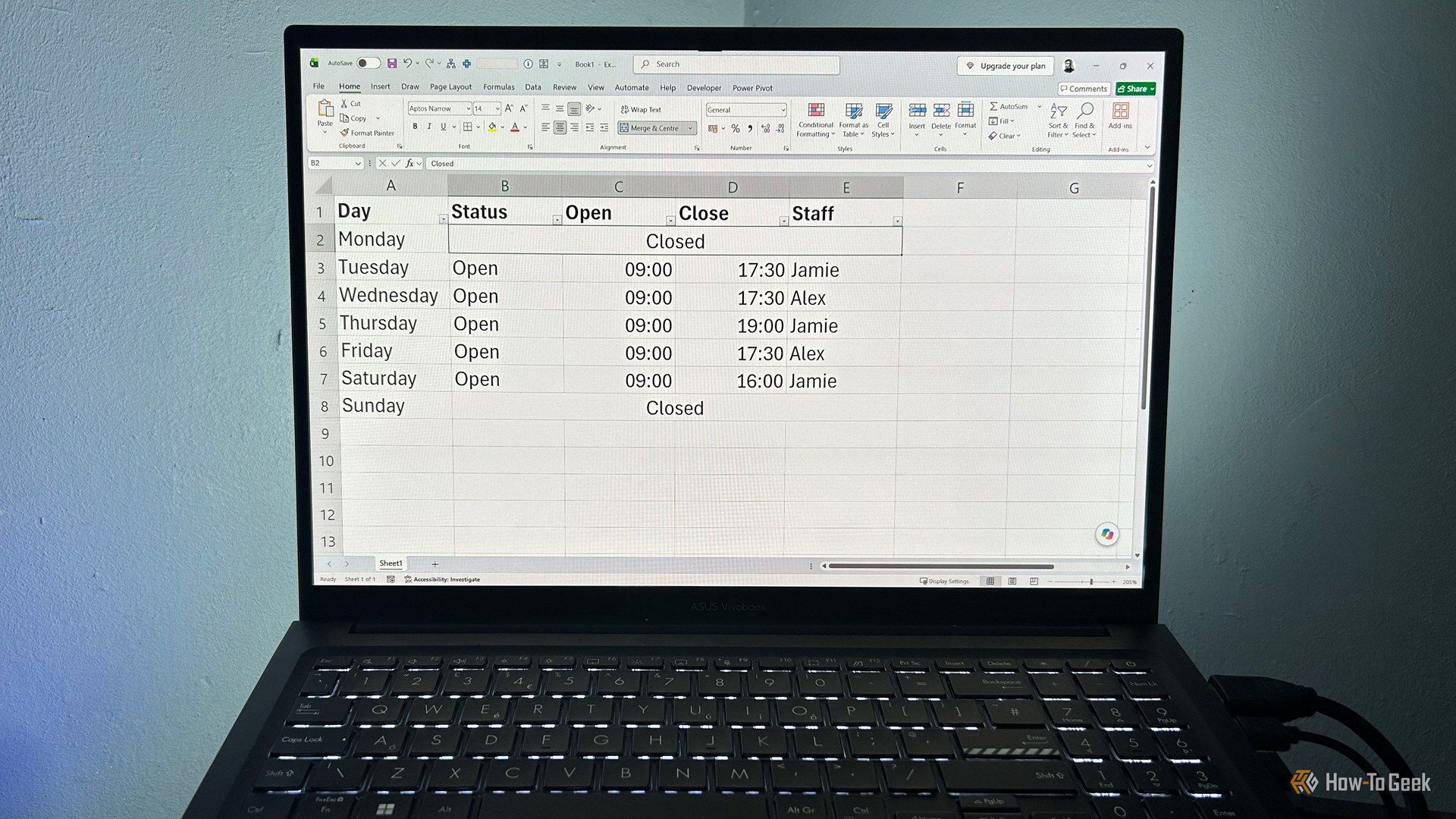
Learn to use Excel's "Center Across Selection" to align text across cells without merging, avoiding common data manipulation issues. This guide provides steps to utilize this newly accessible feature and add it to your Quick Access Toolbar.

Ars Technica's Rocket Report: Your Essential Space Industry Briefing
Quick Verdict Ars Technica's Rocket Report, presented by veteran space reporter Stephen Clark, offers an invaluable and meticulously organized weekly (or similar frequency, implied by "Edition 9.15") digest of the most

Stop Android Auto Battery Drain: Essential Features to Disable and
Android Auto offers unparalleled convenience, bringing your phone's most useful features directly to your car's display. From navigation and calls to messages and music, it keeps you connected without distracting you
Turn Your Android Phone into a Powerful Desktop Replacement
Learn how to transform your Android phone into a full-fledged desktop computer using external displays and accessories, providing a cost-effective and integrated alternative to new Googlebooks.

howto: Four Ways the Fitbit Edge Is Better Than the Charge 6, and Two
Learn the key differences between the Fitbit Edge and Charge 6, including four advantages of the Edge and two areas where it falls short, to help you choose the best fitness tracker for your needs.

How to Connect Your Googlebook to a Printer - Print Documents with
Learn to quickly connect your Googlebook to a printer via Wi-Fi, USB, or Bluetooth and print documents in minutes. This guide covers direct printing, app-specific connections, troubleshooting, and even printing screenshots as a workaround.