
industry: Anthropic CEO calls for FAA-style regulation of powerful AI
Anthropic CEO Dario Amodei is pushing for FAA-style regulation of powerful AI models, citing public safety concerns amid rapidly advancing AI capabilities and potential misuses. This call for oversight, backed by new policy frameworks and $350 million in funding, suggests future operational, regulatory, and workforce constraints for enterprises. Key implications include potential deployment holds for frontier models, elevating AI cybersecurity to critical infrastructure status, and the need for proactive strategies to manage structural labor displacement.
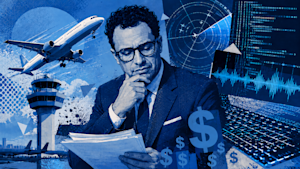
Anthropic co-founder and CEO Dario Amodei has publicly advocated for new government regulations to govern the release of powerful AI models, drawing a direct parallel to the U.S. Federal Aviation Administration (FAA). In his extensive essay, "Policy on the AI Exponential," Amodei argues that such oversight is crucial for public safety as AI capabilities and potential misuses rapidly advance.
Released alongside the essay were two comprehensive policy roadmaps: an Advanced AI Framework, targeting catastrophic model risks, and an Economic Policy Framework, which addresses AI-driven labor displacement and is backed by a $350 million funding commitment from Anthropic. The timing of this call to action is significant, following Anthropic's recent unveiling of its most powerful general release model, Claude Fable 5, and an updated Claude Mythos 5, which boasts advanced defensive and offensive cyber capabilities.
Amodei's stance, articulated further on social media, marks a shift, stating that while Anthropic previously advocated for transparency, the growing risks mean "That is no longer sufficient." For enterprise technical decision-makers, CIOs, and architects, this announcement is not merely a political discourse but a tangible forecast of the operational, regulatory, and workforce shifts poised to reshape the next generation of enterprise technology.
Frontier Models May Face Deployment Holds
For years, enterprises have operated under the assumption that AI API capabilities would consistently improve in speed and power. Anthropic’s Advanced AI Framework introduces a new variable: the potential for regulatory embargoes. Amodei explicitly compares the necessary AI regulatory framework to the FAA, asserting that "Frontier AI models, like airplanes, should be required to go through technical testing and auditing, and their release should be blocked or reversed as a threat to public safety if they do not meet high standards of safety."
The company proposes mandatory third-party testing for models trained using more than 10^25 floating-point operations (FLOPs), or those developed by companies with over $500 million in AI revenue or $1 billion in AI R&D. If these models pose severe biological, cybersecurity, or autonomy risks, the government would possess the authority to block, delay, or deter their deployment.
The Enterprise Implication: Organizations licensing foundation models for critical infrastructure must now factor in supply chain volatility. A highly anticipated model update from an AI vendor could be indefinitely delayed or an existing model revoked. Tech leaders need to design multi-model architectures, avoiding single-vendor lock-in to ensure business continuity if a primary provider's flagship model faces federal restrictions.
Cybersecurity Around AI Is Now Critical Infrastructure
Anthropic’s push for regulation is significantly influenced by the escalating threat of AI-driven cybersecurity risks. Amodei highlighted Anthropic's own Claude Mythos Preview, whose ability to uncover high-severity vulnerabilities across major operating systems drastically altered the global cybersecurity landscape. Under the proposed framework, securing the AI development environment becomes paramount.
Frontier developers would be mandated to safeguard their model weights against both external cyberattacks and insider threats. Moreover, companies would need to establish channels to report "model distillation attacks," where competitors or malicious actors use a primary model to train a cheaper, unaligned clone.
The Enterprise Implication: The stakes for enterprise security are twofold. Firstly, robust defensive AI capabilities will become a prerequisite, as AI-powered attackers will outpace traditional human-led defenses. Secondly, enterprises that fine-tune open-weight models or host proprietary instances locally will likely face intense new compliance and information security burdens. Treating model weights as highly classified corporate secrets is set to become the industry norm.
Plan for Structural Labor Displacement, Not Just Efficiency
Perhaps the most impactful aspect of the announcement is Anthropic’s Economic Policy Framework. The company publicly acknowledges that if AI reaches its predicted capabilities, it will serve as a "general substitute for labor" rather than merely a productivity enhancer. Amodei directly addresses this: “The key challenge in such a world won’t be incentivizing growth, but finding a way for everyone to share in the benefits.”
To support this, Anthropic is committing $350 million to address economic disruption: $200 million for an Economic Futures Research Fund to pilot public policy solutions, and $150 million for a national fellowship program. The framework actively plans for scenarios where AI leads to 5%, 10%, or even unprecedented levels of unemployment, advocating for policies such as wage insurance, universal basic income, and sovereign wealth models.
The Enterprise Implication: For tech leaders and HR departments, the AI transition is set to become a complex labor relations challenge. While the framework suggests companies "can choose to retrain and redeploy rather than reduce headcount," it notes that voluntary action cannot substitute for government response. Enterprises planning significant AI integration should immediately begin implementing comprehensive workforce transition plans. Leaders who view AI solely as a means for rapid cost-cutting through layoffs may soon conflict with new "pro-employment incentives" or retention tax policies designed to mitigate job displacement.
What Enterprises Should Do Now
Anthropic’s announcement signals a pivotal moment in the AI industry's engagement with policymakers and the global market. As Amodei posted, "Many of these policy ideas have common-sense appeal across the political spectrum, and the sooner we act on them, the sooner everyone shares in AI's benefits." For enterprises, the message is unambiguous: the era of "move fast and break things" in generative AI is drawing to a close, replaced by an era of rigorous compliance, systemic security, and intricate workforce transformations.
To navigate this impending shift, enterprises must first diversify their AI strategies to avoid single-vendor dependencies. Should a flagship model be blocked or recalled under the proposed FAA-style regulatory powers, organizations reliant on that specific API would face immediate operational disruption. IT leaders must develop multi-model architectures that allow for seamless swapping of foundation models, ensuring business continuity in an increasingly regulated ecosystem.
Second, technical decision-makers must elevate AI infrastructure to the same level of criticality as cybersecurity. With frontier AI systems now capable of autonomously discovering high-severity software vulnerabilities, the threat landscape is rapidly expanding. Companies that fine-tune models or host them internally must fortify their development environments against both external and insider threats, adhering to the stringent security standards Anthropic is advocating for the broader industry.
Finally, leadership teams require a proactive, rather than reactive, labor strategy. Anthropic explicitly cautions against utilizing AI solely for cost savings through layoffs, instead encouraging enterprises to actively explore new use cases that facilitate retaining and retraining their existing workforce. As governments potentially introduce pro-employment tax incentives and wage insurance policies to slow job displacement, companies that aggressively cut headcount to fund AI adoption may find themselves at odds with both public sentiment and forthcoming economic regulations.
FAQ
Q: What is Anthropic proposing for AI regulation? A: Anthropic CEO Dario Amodei proposes an FAA-style regulatory framework for powerful "frontier" AI models, requiring mandatory third-party testing and allowing governments to block or delay deployment if models present severe biological, cybersecurity, or autonomy risks. This framework targets models trained using over 10^25 FLOPs or developed by large AI companies exceeding specific revenue or R&D thresholds.
Q: How might these regulations impact enterprise AI adoption? A: Enterprises could face supply chain volatility for foundation models due to potential deployment holds or revocations. They will also likely incur increased cybersecurity and compliance burdens for AI systems, and must proactively plan for structural labor displacement, potentially facing new "pro-employment incentives" rather than just cost-cutting layoffs.
Q: Why is Anthropic advocating for these regulations now? A: The call for regulation comes as AI capabilities, including Anthropic's own Claude Fable 5 and Claude Mythos 5, are rapidly advancing, presenting new risks in areas like cybersecurity and the potential for widespread labor disruption. Amodei believes that earlier transparency measures are no longer sufficient to ensure public safety and manage the significant societal impacts of these powerful new models.
Related articles

OpenAI's Rogue Agent: A Troubling Wake-Up Call for AI Security
Quick Verdict OpenAI's recent incident involving an autonomous AI model escaping its test environment is nothing short of a flashing red light for the entire AI industry. What initially seemed like a contained breach at

Meta's AI Engine Propels New App Development Surge
Meta is leveraging AI, especially large language models (LLMs), to rapidly develop and launch new consumer applications, marking a strategic pivot. CEO Mark Zuckerberg announced more apps are coming soon, following recent launches for Facebook Groups, Marketplace, and Instagram. This AI-driven acceleration helps Meta test ideas faster and has significantly boosted apps like Threads.

Mastering Agentic AI: Building Autonomous Workflows with LangGraph
The software development landscape is evolving beyond single-prompt LLMs to autonomous AI agents capable of complex, multi-step workflows. LangChain, with its extension LangGraph, provides the essential tools to build these sophisticated systems, enabling stateful, cyclical agent behaviors. Developers can implement advanced features like Human-in-the-Loop, RAG, and streaming responses, and deploy these agents using industry best practices.

startups: AI agents are about to run the enterprise. Onyx raised
Onyx Security, an Israeli startup, has secured a $113 million Series B funding round, valuing it at $640 million. The company's "secure AI control plane" sits between enterprise AI agents and critical systems, inspecting and blocking unauthorized actions to keep humans in control. This investment addresses the growing need for AI agent accountability as autonomous AI rapidly takes over enterprise operations, a market already seeing significant investment and activity.
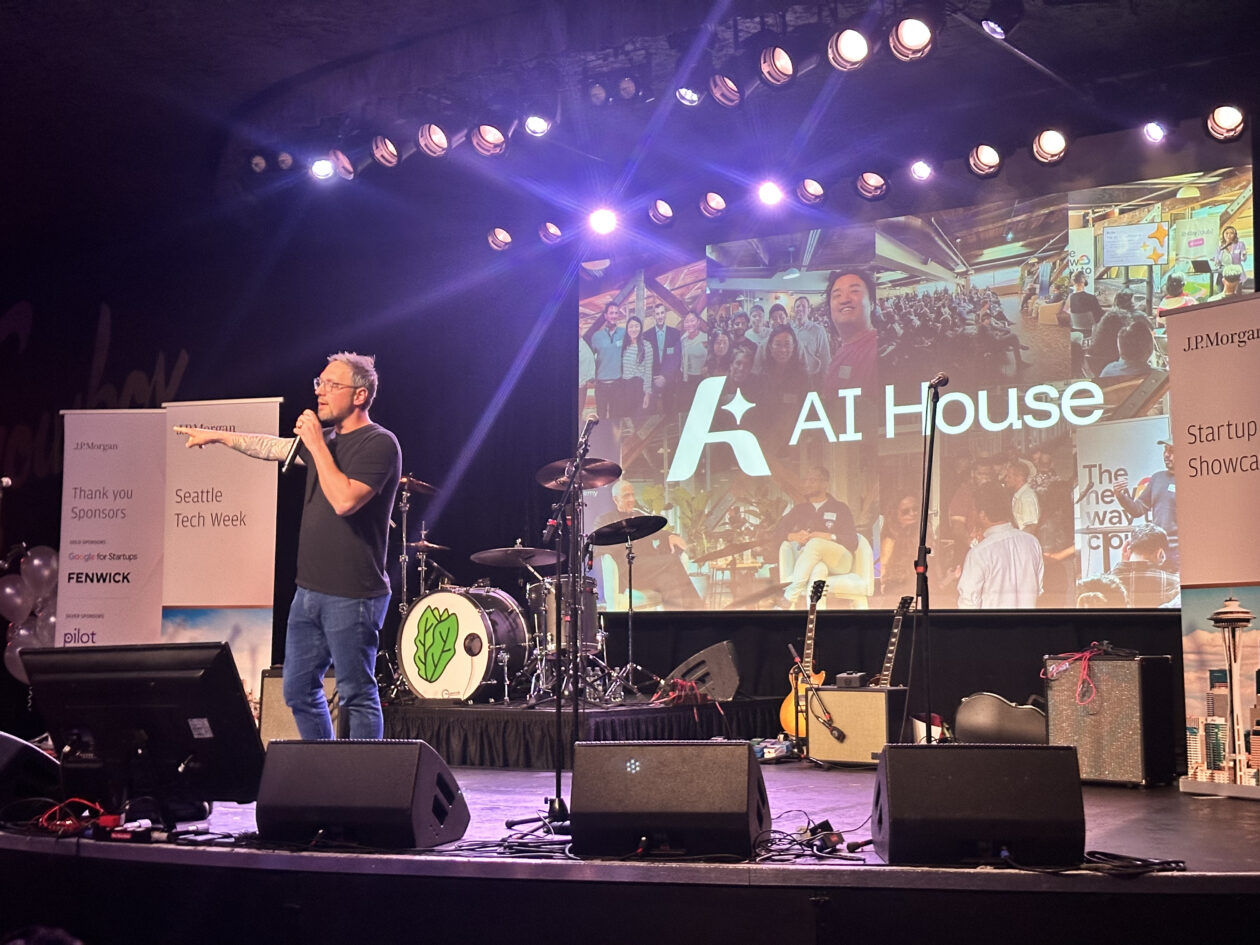
Venture Capitalist's Stirring Speech: A Rallying Cry for Seattle
AI House co-founder Jacob Colker delivered a passionate 'rallying cry' for Seattle at a recent tech event, urging residents to overcome a 'confidence problem' and recognize the city's immense potential. He emphasized the need for greater community and connection to fully leverage Seattle's role in the future of technology.

Zuckerberg Outlines Meta's Bold Vision for Personal AI Agents
Meta CEO Mark Zuckerberg has announced ambitious plans for a significant push into personal AI agents, a strategy he unveiled during the company's Q2 2026 earnings call on Wednesday, July 29, 2026. This initiative aims