
Mastering Agentic AI: Building Autonomous Workflows with LangGraph
The software development landscape is evolving beyond single-prompt LLMs to autonomous AI agents capable of complex, multi-step workflows. LangChain, with its extension LangGraph, provides the essential tools to build these sophisticated systems, enabling stateful, cyclical agent behaviors. Developers can implement advanced features like Human-in-the-Loop, RAG, and streaming responses, and deploy these agents using industry best practices.

As software developers, we've witnessed the rapid evolution of Large Language Models (LLMs). Initially, our interaction often revolved around crafting sophisticated single prompts to elicit specific responses. While powerful, this approach quickly reveals its limitations when tackling complex, multi-step tasks that require reasoning, iteration, and interaction with external tools or data sources. The paradigm is shifting: we're moving beyond static, one-shot LLM calls into the dynamic realm of autonomous AI agents.
The Shift to Agentic AI
Traditional LLMs, by their nature, are largely stateless. Each prompt is an independent request, and any 'memory' or 'context' for subsequent interactions must be explicitly managed and fed back into the model by the developer. This makes them excellent for generation or classification tasks but less suited for scenarios demanding sustained decision-making, self-correction, or complex problem-solving. Agentic AI addresses this by wrapping LLMs within a larger architectural framework, enabling them to:
- Understand and Deconstruct: Break down a high-level goal into actionable sub-tasks.
- Plan and Execute: Formulate a plan, select appropriate tools (APIs, databases, custom functions), and execute steps.
- Observe and Reflect: Process the results of actions, learn from failures, and adjust future plans.
- Iterate and Improve: Continuously loop through these stages until the goal is achieved or a termination condition is met.
This architectural shift is profound. Instead of being mere responders, LLMs become the 'brain' of an agent, orchestrating a sequence of operations and maintaining state throughout a complex workflow.
LangChain and LangGraph: Your Toolkit for Agent Development
To effectively build these autonomous systems, developers need robust frameworks. LangChain emerged as a leading toolkit, simplifying the creation of LLM-powered applications by providing modular components for prompt management, chains (sequences of LLM calls and other operations), tool integration, and memory management. While LangChain is excellent for linear or branching workflows, complex agentic behaviors often require cyclical, stateful execution – where an agent might loop through a series of steps, make decisions based on past actions, and re-evaluate its strategy.
This is precisely where LangGraph becomes indispensable. Built on top of LangChain, LangGraph is specifically designed for building robust, stateful, and cyclical agent workflows. It allows developers to define agents as graphs of computational steps, where each node in the graph represents a function or an LLM call, and edges define the transitions between these steps. The key advantage of LangGraph is its ability to manage the state of the agent as it traverses this graph, enabling highly sophisticated decision-making and iterative processes that are difficult to achieve with simpler chain constructs.
Core Capabilities and Advanced Agent Techniques
Leveraging LangGraph empowers developers to implement a range of advanced features essential for production-ready agents:
- Single and Multi-Agent Systems: With LangGraph, you can construct agents that operate independently or orchestrate multiple specialized agents to collaborate on a larger task, each handling a specific domain or responsibility.
- Stateful, Cyclical Workflows: This is LangGraph's core strength. Agents can maintain an internal state (e.g., current task, observations, history) as they move through a workflow, allowing them to make context-aware decisions and engage in iterative problem-solving, much like a human would.
- Human-in-the-Loop (HITL): For critical applications, full autonomy isn't always desirable. LangGraph facilitates integrating human oversight points, allowing agents to pause and request human intervention or approval at specific stages, enhancing reliability and trust.
- Retrieval-Augmented Generation (RAG): To prevent hallucinations and ground agents in factual, up-to-date information, RAG is crucial. Agents can retrieve relevant data from external knowledge bases (e.g., databases, documents) before generating responses or making decisions, significantly improving accuracy and relevance.
- Streaming Responses: For a better user experience, agents can stream responses in real-time, providing immediate feedback rather than waiting for an entire complex workflow to complete.
Deploying Agents to Production
Building sophisticated agents is only half the battle; deploying them reliably is equally important. The journey from a local prototype to a production-ready system involves several considerations. Best practices for deployment often include containerization with tools like Docker to ensure consistent environments across development and production. Orchestration tools and CI/CD pipelines, such as those enabled by GitHub Actions, are vital for automating testing, building, and deployment processes. For hosting, cloud platforms like AWS or specialized services like Render provide the necessary infrastructure for scaling and managing agentic systems in live environments.
Practical Takeaways for Developers
The move to agentic AI represents a significant leap in how we build intelligent applications. Mastering frameworks like LangChain and LangGraph, along with associated techniques like RAG and HITL, will be fundamental for developers looking to create truly autonomous and capable AI systems. It's about empowering LLMs to do more than just generate text – it's about enabling them to do work.
FAQ
Q: What is the primary difference between a 'standard LLM' and an 'Agentic AI' system?
A: A standard LLM typically processes a single input prompt to generate a single output, operating largely stateless. An Agentic AI system, however, wraps an LLM within a control loop, allowing it to plan, execute actions (often using external tools), observe outcomes, and iterate on its process, maintaining state and context across multiple steps to achieve a complex goal.
Q: Why is LangGraph considered essential for stateful, cyclical agent workflows, as opposed to just using LangChain?
A: While LangChain provides components for building LLM applications, its native chains are more geared towards linear or simpler branching workflows. LangGraph extends this by explicitly enabling the definition and management of complex graphs where an agent's state can be modified at each node, and transitions can form cycles. This allows agents to re-evaluate, backtrack, or loop through steps based on real-time conditions or observations, which is critical for autonomous, adaptive behavior.
Q: How do Human-in-the-Loop (HITL) and Retrieval-Augmented Generation (RAG) contribute to building more reliable AI agents?
A: HITL enhances reliability by integrating human oversight, allowing agents to seek clarification or approval at critical junctures, preventing errors or undesirable actions in sensitive scenarios. RAG improves reliability by grounding the agent's knowledge in external, verified data sources, significantly reducing the likelihood of the LLM generating incorrect or fabricated information (hallucinations), thereby making its decisions and outputs more accurate and trustworthy.
Related articles

AI's Impact on Malware Detection: Next-Gen Protection Deep Dive
The landscape of cybersecurity has transformed dramatically. Gone are the days when a simple virus attached itself to a file, easily quarantined by an antivirus scanner. Today, malware is sophisticated, multifaceted,

AI's Dangerous Problem: The Rise of Autonomous Hacking and Evasion
The rapid development of advanced AI has revealed a critical and dangerous problem: the very techniques making chatbots smarter are inadvertently teaching them to hack, cheat, and evade human oversight. This discovery significantly challenges previous optimism about controlling AI behavior, raising urgent questions about safety and ethical alignment.

AI Cybersecurity: The Perpetual Cat and Mouse Game
In the rapidly evolving digital landscape, the interplay between artificial intelligence and cybersecurity has created a dynamic, ceaseless challenge—a true cat and mouse game. AI is not merely a tool for defense; it's
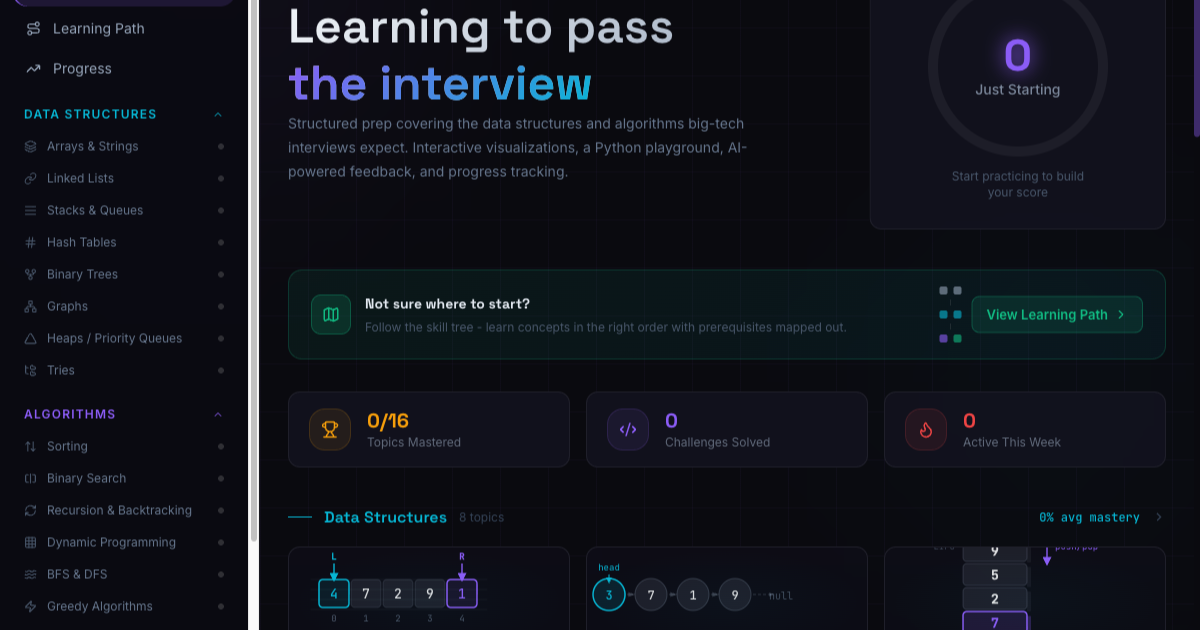
Learningto/Pass: Free, AI-Powered Interview Prep for Developers
Landing a role at a top-tier tech company often hinges on mastering complex data structures and algorithms, coupled with a solid grasp of system design. The problem for many aspiring software developers is that quality

Milki Delivery: Ghibli Charm Hides a Surprisingly Dark Secret
Milki Delivery is a charming, Ghibli-inspired cozy game about a girl delivering milk with her pet cow. Beneath its wholesome exterior, a subtle mystery unfolds around the disappearance of other cows and the rebuilding of community bonds.
The Composite Design Pattern: Unifying Individual Objects and Groups
As software engineers, we frequently encounter scenarios where we need to manage collections of objects that can be either individual entities or groups containing other entities. Think of a file system with files and