
Enterprise Software Upgrades: A Costly Trap for IT Budgets
A recent survey reveals enterprises are sinking nearly a third of their software budget into unwanted upgrades, migrations, and licensing changes that IT leaders themselves believe will degrade performance and reliability. This review unpacks the "Software Tax" and its staggering implications.

Quick Verdict: The "Software Tax" Is Real and Damaging
Enterprise software upgrades are often pitched as essential for progress, security, and enhanced capabilities. However, a recent deep dive into the state of large-scale IT spending reveals a far more cynical reality: enterprises are sinking a staggering 28 percent of their software budgets into upgrades, migrations, and licensing changes that their own IT leaders believe will actively make things worse. This isn't just an inefficiency; it's a systemic problem, aptly dubbed "The Software Tax," eating away at potential innovation, security, and customer-facing investments. For any organization grappling with its IT expenditures, this report serves as a stark warning and a call to action.
Unpacking the Problem: A Staggering Waste of Resources
The findings, stemming from a survey of 2,018 chief information officers (CIOs) and senior IT decision-makers at companies with at least 10,000 employees and over $1 billion in annual revenue, paint a grim picture. Conducted by Censuswide for Origina's report, "The Software Tax," the study highlights how prevalent this issue is across major corporations in the US and UK. The most alarming statistic? A shocking 95 percent of respondents confirmed that their organizations have shelled out for vendor-driven changes within the last three years that they anticipated would reduce performance, reliability, or overall business value. More than half of those surveyed (53 percent) admitted to having done so multiple times. This isn't a rare occurrence; it’s a recurring, costly pattern.
While the report itself is commissioned by Origina, a company offering independent software maintenance (which naturally frames its services as a solution), the underlying data from 2,018 IT heads provides a compelling, if self-serving, argument about vendor practices. The sheer scale of agreement among such a large and senior group of IT professionals lends significant weight to the claim that vendor-mandated upgrades are often detrimental, rather than beneficial, to the purchasing organization.
The IT Experience: Powerless and Pushed Back
The core of the problem lies in a severe power imbalance. The survey indicates that a dominant 76 percent of organizations perceive they have "very little real leverage" when negotiating with major software vendors. Adding to this dilemma, 80 percent of respondents believe that trying to move away from these dominant vendors would lead to "significant disruption." As Tomás O’Leary, CEO and founder of Origina, points out, when the alternative to an unwanted upgrade is losing critical support for systems the business relies upon, acquiescing often becomes the only "rational response." This vendor lock-in creates a captive market where enterprises are forced into costly, unbeneficial, or even harmful updates just to maintain operational continuity.
This lack of agency effectively corners IT departments, compelling them to allocate valuable resources to what they know to be subpar solutions. It's an unenviable position that pits strategic IT planning against immediate operational necessity, with vendors holding most of the cards.
Beyond the Budget: Sacrificing Innovation and Growth
The impact of this "Software Tax" extends far beyond just wasted financial resources. James McGlennon, CIO of Liberty Mutual, highlights a critical hidden cost: the diversion of top technical talent. He notes that an upgrade cycle can engross skilled workers for a significant portion of a year. This isn't a one-time expense but "a recurring drag on capacity," meaning those highly capable individuals are tied up maintaining or migrating systems instead of working on initiatives that truly differentiate the business or drive innovation. The report quantifies this opportunity cost, showing that diverted funds and talent lead to less investment in crucial areas:
- Innovation: 36 percent of respondents cited less funding.
- Human Resources: 32 percent.
- Security: 31 percent.
- Customer-facing Investment: 31 percent.
Essentially, the forced upgrade cycle acts as an anchor, preventing enterprises from agilely responding to market changes, enhancing security postures, or improving customer experiences. The money and time spent mitigating the downsides of a forced upgrade are resources that could otherwise fuel growth and competitive advantage.
Seeking a Way Out: Strategies for Regaining Control
Given the pervasive nature of this issue, what can enterprises do? The survey itself provides some pathways forward. A vast majority (91 percent) of IT leaders would support legislation that grants enterprises protections similar to those enjoyed by long-term residential tenants, suggesting a desire for more balanced contractual relationships.
More immediately, the report offers actionable advice: "negotiate the exit before the entry." Marshall Van Alstyne, an information sciences professor at Boston University and co-author of the report, champions this proactive approach. This involves establishing clear terms during initial negotiations with software vendors, such as:
- Fixed pricing for migration assistance: Preventing vendors from leveraging exit costs.
- Caps on renewal and expansion prices: Guarding against escalating costs over time.
- Considering independent software maintenance: Services like those offered by Origina provide support for existing software versions, removing the pressure to upgrade immediately or unnecessarily.
By laying out these terms upfront, organizations can create a strategic escape route, reducing their vulnerability to vendor lock-in and allowing them greater control over their software lifecycle and budget. While the report doesn't name specific culprits, it notes that all respondents run at least one of IBM, HCL, VMware/Broadcom, or SAP at "meaningful scale," hinting at the major players in this ecosystem.
The Bottom Line: Don't Just Say Yes
The "Software Tax" isn't a minor annoyance; it's a significant drain on enterprise resources, stifling innovation and empowering vendors at the expense of their customers. The findings unequivocally show that IT leaders are aware of the problem, feel powerless, and are eager for solutions. The recommendation is clear: enterprises must shift from a reactive stance to a proactive one. Challenge vendor-driven narratives, scrutinize the true value of proposed upgrades, and, most importantly, embed exit strategies into every new software agreement. The cost of inaction, or rather, unwilling compliance, is simply too high.
FAQ
Q: What is the primary financial impact of the "Software Tax" on enterprises? A: Enterprises are, on average, wasting 28 percent of their software budgets on upgrades, migrations, and licensing changes that their own IT heads believe will be detrimental to performance, reliability, or business value.
Q: Why do enterprises continue to pay for upgrades they believe are harmful? A: The primary reason is a lack of leverage in negotiations with major software vendors. Enterprises often face the choice between accepting an unwanted upgrade or losing critical support for essential systems, with moving away from major vendors causing significant disruption.
Q: What actions can enterprises take to mitigate the effects of the "Software Tax"? A: Enterprises should "negotiate the exit before the entry" by establishing clear terms in initial contracts, such as agreed-upon prices for migration assistance and caps on future renewal and expansion costs. Exploring independent software maintenance as an alternative to forced vendor upgrades can also help regain control.
Related articles

GridCraft: A Blazingly Fast, Near-Perfect Excel Clone for Linux
Verdict GridCraft emerges as a remarkably fast, open-source spreadsheet application that faithfully mimics Microsoft Excel's core functionalities and user interface across multiple operating systems. While it's still in

YouTube Dislike Button Test: A Step Backward
YouTube's latest experiment to tuck away the dislike button on regular videos is a concerning move, further eroding a vital feedback mechanism for viewers and potentially allowing low-quality content to thrive unchecked.

Chrome's New Scam Protection: Essential for Online Safety
Google Chrome is stepping up its game against online scams with a new suite of security features. These enhancements offer more robust protection against suspicious websites, advanced social engineering tactics, and
UGREEN 25W MagFlow: Portable 2-in-1 Charger Hits Record Low
The UGREEN 25W MagFlow, a foldable 2-in-1 magnetic wireless charger for iPhones and earbuds, is back to its record-low Prime Day price. Offering Qi2 25W charging and a compact design, it's ideal for travelers and minimalists.

AI Model Lock-in? It's Not the Model, It's Everything Else
A recent survey reveals that while swapping AI models is becoming common, the real lock-in risk for enterprises lies in the surrounding infrastructure: integrations, agent workflows, and guardrails. Despite concerns about vendor lock-in, it often ranks lower than immediate priorities like security and cost in AI purchasing decisions. However, multi-model adopters are proactively building open, flexible architectures, demonstrating a path to mitigate future migration headaches.
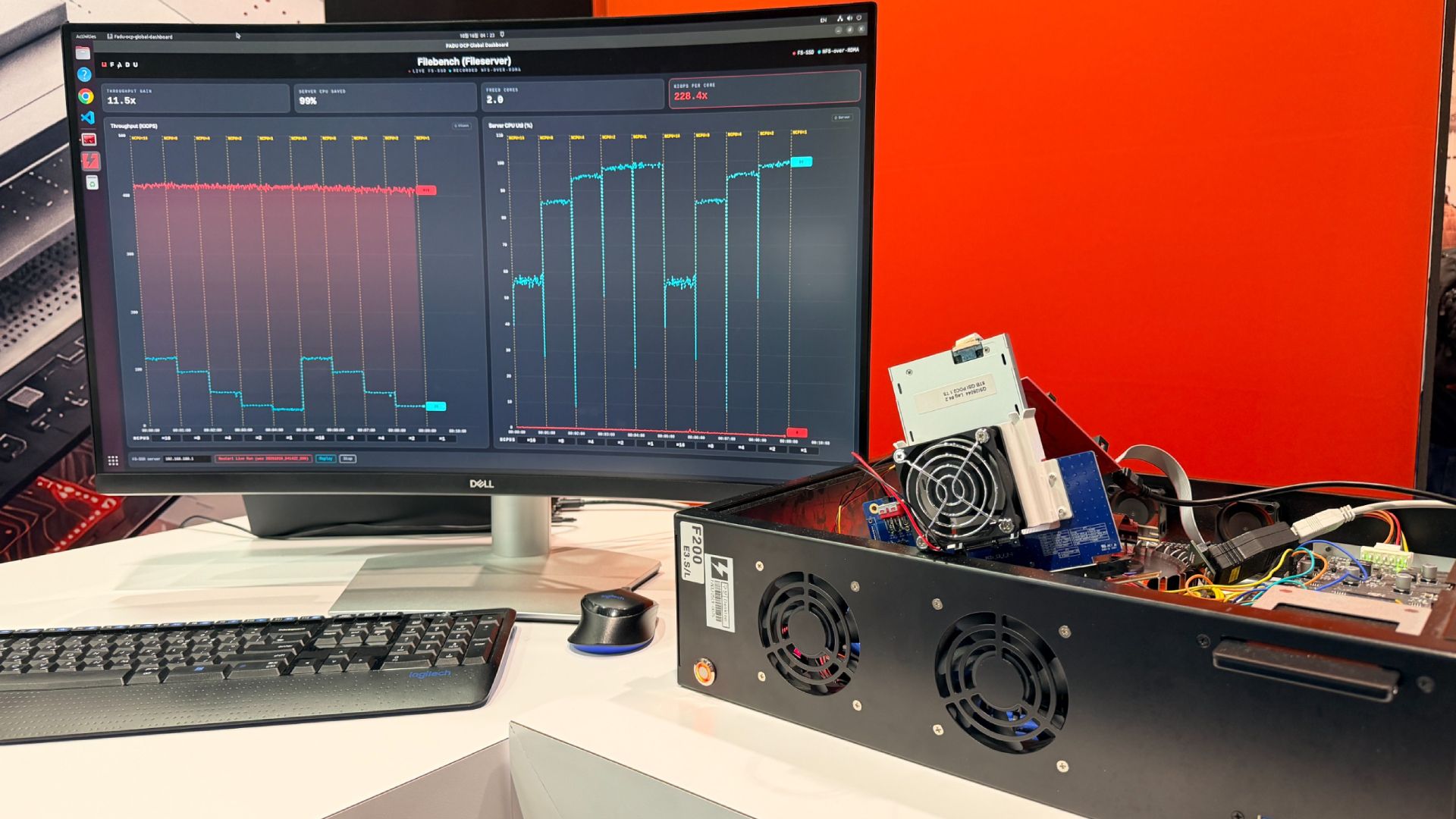
FADU FS-SSD: A Glimpse into the Future of Storage
FADU's File-Semantic SSD moves the filesystem directly into the drive, aiming to dramatically reduce host CPU overhead for file operations, especially for GPUs and DPUs. Promising early results, but a long wait for samples (Q3 2027).