
Why Your 'Simple Deploy' Demands a Week of Infra Work
Every developer has heard the promise: push your code, watch it go live. Modern stacks often boast about easy, automated deployments with infrastructure abstracted away. This vision holds true until it doesn't. When the

Every developer has heard the promise: push your code, watch it go live. Modern stacks often boast about easy, automated deployments with infrastructure abstracted away. This vision holds true until it doesn't. When the illusion shatters, a 'simple deploy' can morph into days of troubleshooting across systems you never intended to manage. This isn't due to negligence but stems from a deployment model that implicitly offloads significant responsibilities onto application teams.
This guide is for those running production workloads—systems with real users, uptime demands, and release pressures. At this stage, your deployment process is no longer a mere convenience; it's a critical component of your product. Yet, for many teams, it's often the weakest link.
The Hidden Burden of Modern Deployments
When you initiate a deploy today, you're not just deploying code; you're effectively committing to operating a complex distributed system of tools. You become responsible for orchestrating the build pipeline, managing the container lifecycle, configuring runtime environments, establishing network rules, securing secrets, defining scaling logic, and maintaining the observability stack. Each of these components is presented as a distinct concern, but in reality, they are deeply interconnected, and your team often serves as the sole layer responsible for their cohesion. This is the unspoken agreement—the hidden contract—under which you operate.
You're Already a Platform Team
If your deployment workflow involves CI pipelines, container registries, various cloud services, environment variables, and monitoring tools, your team is already performing platform engineering work. You're defining the journey of code from commit to production, dictating how failures are handled, and shaping inter-service communication. The challenge isn't the existence of this work, but rather that most teams undertake it unintentionally, lacking the dedicated structure, specialized tooling, or clear ownership that a true platform team would possess.
The True Cost: Time Over Complexity
While it's tempting to label this problem as mere 'complexity,' that term understates the actual impact. The real cost manifests in how your engineering team allocates its time. Deployments that should conclude in minutes can stretch into hours, or even days. Engineers are constantly context-switching from developing product features to debugging obscure CI cache issues, rectifying misconfigured secrets, or tracing network failures across disparate services.
This overhead inevitably decelerates release cycles. It's not that your team lacks the ability to build new features; it's that the act of shipping them becomes unpredictable and resource-intensive. Onboarding new engineers also becomes more arduous, as they must grasp not only the codebase but also the intricate nuances of your bespoke deployment system. These unseen tasks, while absent from any roadmap, directly impede your team's agility and pace.
Why 'It Works on My Machine' Lingers
Despite advancements like containers and infrastructure as code, the chasm between local development environments and production persists. The core issue isn't just environment parity; it's system parity. Your local setup cannot fully replicate the exact limits, permissions, network paths, or scaling behaviors present in production. These critical differences often surface precisely when all components are integrated and deployed, turning a 'simple deploy' into a diagnostic nightmare.
Fragmentation: The Core Challenge
Modern tooling hasn't eliminated infrastructure complexity; it has merely redistributed it. Instead of managing monolithic servers, you're now managing intricate integrations between numerous services. This shifts your failure domains from a single point to many. A deployment can halt due to a CI system glitch, a container registry timeout, a secret misconfiguration, a network policy violation, or a scaling limit being hit. Each issue resides in a different system, demanding unique context and expertise to resolve. Individually, these tools are often well-engineered; collectively, they form a distributed system that is exceptionally challenging to reason about, especially under pressure.
The Breaking Point: Scaling and the Shift to Platforms
This fragmented model is sustainable only while your system remains small. As production systems grow, so do the number of services, pipelines, configurations, and potential failure points. Over time, the effort required to maintain this self-assembled deployment system begins to outpace the growth of the product itself. This is the critical inflection point where engineering time diverts from building features to merely sustaining the machinery that ships them. If your team is experiencing this shift, it's likely a structural problem, not a temporary blip.
The Shift Toward Platform as a Service (PaaS)
This is where Platform as a Service (PaaS) offers a different paradigm. Instead of introducing more tools, PaaS takes ownership of the entire system that those tools collectively form. A PaaS provides an opinionated, constrained, and consistent path from code to production. These constraints are not arbitrary limitations but deliberate design choices that eliminate entire categories of deployment failures.
Adopting a PaaS means you stop spending valuable time deciding how builds execute, how services are exposed, how scaling is configured, and how logs are collected. More importantly, you stop debugging the integration points between these critical decisions. The fundamental trade-off is flexibility for predictability. For most production teams, predictability is the more valuable commodity. Platforms like Sevalla, Railway, and Render aim to consolidate the stack, integrating build, deploy, runtime, and observability into a single, cohesive system, thereby reducing the number of layers and decision points developers need to manage.
The Real Trade-Off: Control vs. Reliability
The common apprehension with PaaS is the perceived loss of control. While it's true you relinquish the ability to customize every layer of your infrastructure, for many teams, this granular control isn't used for strategic differentiation but rather to maintain an inherently fragile system. Every custom configuration introduces another potential failure point, another dependency, and another element to manage under duress. The actual trade-off isn't between control and convenience; it's between extensive control and robust reliability.
When the Shift Becomes Urgent
It doesn't take a catastrophic outage to signal the need for change. Earlier indicators are usually present: unpredictable deploys, decelerated release schedules, engineers spending disproportionate time on pipelines rather than product logic, and excessively long onboarding processes. These aren't isolated incidents; they signify that your current deployment model is not scaling effectively with your system.
When Managing Infrastructure is Still the Right Choice
A PaaS solution isn't universally appropriate. For very small applications with smooth deployments where infrastructure work is minimal, a PaaS might be overkill. Conversely, some large enterprises opt to build and manage their own internal platforms, viewing infrastructure management as a core business differentiator. The key is making this choice intentionally. The problem arises when application teams gradually assume platform engineering responsibilities without adequate staffing, clear ownership, or the necessary expertise.
What a Truly 'Simple Deploy' Means
Ultimately, a simple deploy isn't one that feels easy when everything is working perfectly. It's a deployment process that remains predictable and robust as your system evolves. Failures are rare, and when they do occur, they are straightforward to diagnose. Most crucially, it allows your engineers to ship code without needing to delve into infrastructure complexities. This outcome is achieved not by accumulating more tools, but by strategically reducing the overall system you are compelled to manage.
FAQ
Q: What is the primary reason a 'simple deploy' turns into extensive infrastructure work for production teams?
A: The primary reason is that modern tooling, while offering individual efficiencies, collectively imposes a 'hidden contract' on application teams. This contract requires them to act as unintentional platform engineers, managing a distributed system of tightly coupled tools for builds, containers, runtime, networking, secrets, scaling, and observability. As systems scale, the effort to integrate and maintain these fragmented components grows disproportionately.
Q: How does a PaaS address the issues of fragmentation and the 'hidden contract'?
A: A PaaS addresses these by consolidating the stack and taking ownership of the deployment system. Instead of teams assembling and debugging integrations between disparate tools, a PaaS provides an opinionated, consistent, and integrated path from code to production. This reduces the number of systems developers need to understand and manage, shifting the burden of infrastructure maintenance from the application team to the platform provider, thereby improving predictability and reducing time spent on non-product work.
Q: When might managing infrastructure directly still be a sensible approach for a company?
A: Managing infrastructure directly can still make sense for very small applications with minimal deployment issues, or for large companies where infrastructure is considered a core business differentiator and they have the dedicated resources, expertise, and clear ownership to build and maintain their own robust internal platforms. The critical factor is making this choice intentionally and with adequate support, rather than passively accumulating infrastructure responsibilities.
Related articles

TCG Pocket Responds: A Much-Needed Pace Shift for Pokémon Fans
Pokémon TCG Pocket is rolling out a major update for its second anniversary, primarily addressing player concerns about overwhelming content releases by shifting to a six-week set schedule. This aims to curb player decline and improve overall engagement by giving trainers more time to collect and strategize. The update also adds new collection methods, improved deck-building features, and enhanced trading functionality.
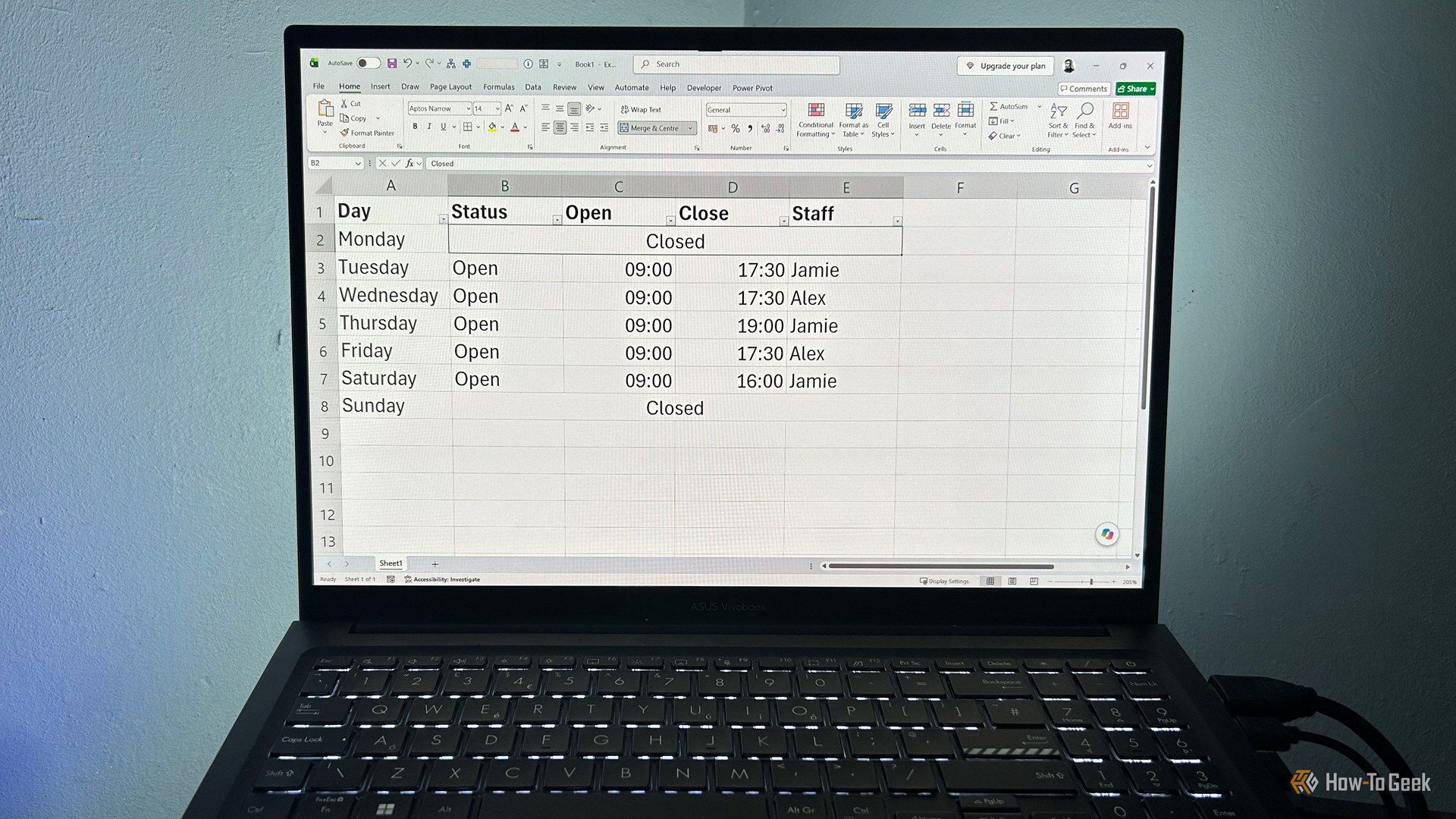
Ditch Merge & Center: The Better Way to Align Text in Excel
Learn to use Excel's "Center Across Selection" to align text across cells without merging, avoiding common data manipulation issues. This guide provides steps to utilize this newly accessible feature and add it to your Quick Access Toolbar.

Ars Technica's Rocket Report: Your Essential Space Industry Briefing
Quick Verdict Ars Technica's Rocket Report, presented by veteran space reporter Stephen Clark, offers an invaluable and meticulously organized weekly (or similar frequency, implied by "Edition 9.15") digest of the most

AI's Confidence vs. Formal Methods' Rigor: Design Flaws & Verification
While AI accelerates code generation, formal methods remain critical for ensuring system correctness. Languages like TLA+ and tools like Quint enable developers to model and verify system designs before coding, catching subtle flaws. Quint makes formal methods more accessible with developer-friendly syntax and executability. This approach is vital for verifying AI-generated code through trace validation and model-based testing, ensuring reliability against real-world data.
Ephemeral PR Preview Environments on GKE: A Deep Dive
Every development team eventually grapples with the limitations of shared staging environments. The familiar scenario: multiple features deployed simultaneously, database migrations clashing, and the phrase "it works on
Secure Internal API Access for AI Agents with MCP
AI agents accessing internal APIs directly pose significant risks, including identity loss, unrestricted queries, and security bypasses. The Model Context Protocol (MCP) offers a solution by defining explicit tools. A secure architecture involves an MCP server wrapping the API with strict input validation, coupled with a gateway that handles authentication, rate limiting, and audit logging, ensuring safe and accountable access.