
Webb Telescope's Stellar Revelation: Bulge Fossil Fragment Uncovered
The James Webb Space Telescope, in collaboration with Hubble, has revealed Terzan 5 as a "bulge fossil fragment," challenging previous classifications and offering profound new insights into galaxy formation. This discovery showcases Webb's unparalleled capabilities in exploring the universe's most elusive secrets.
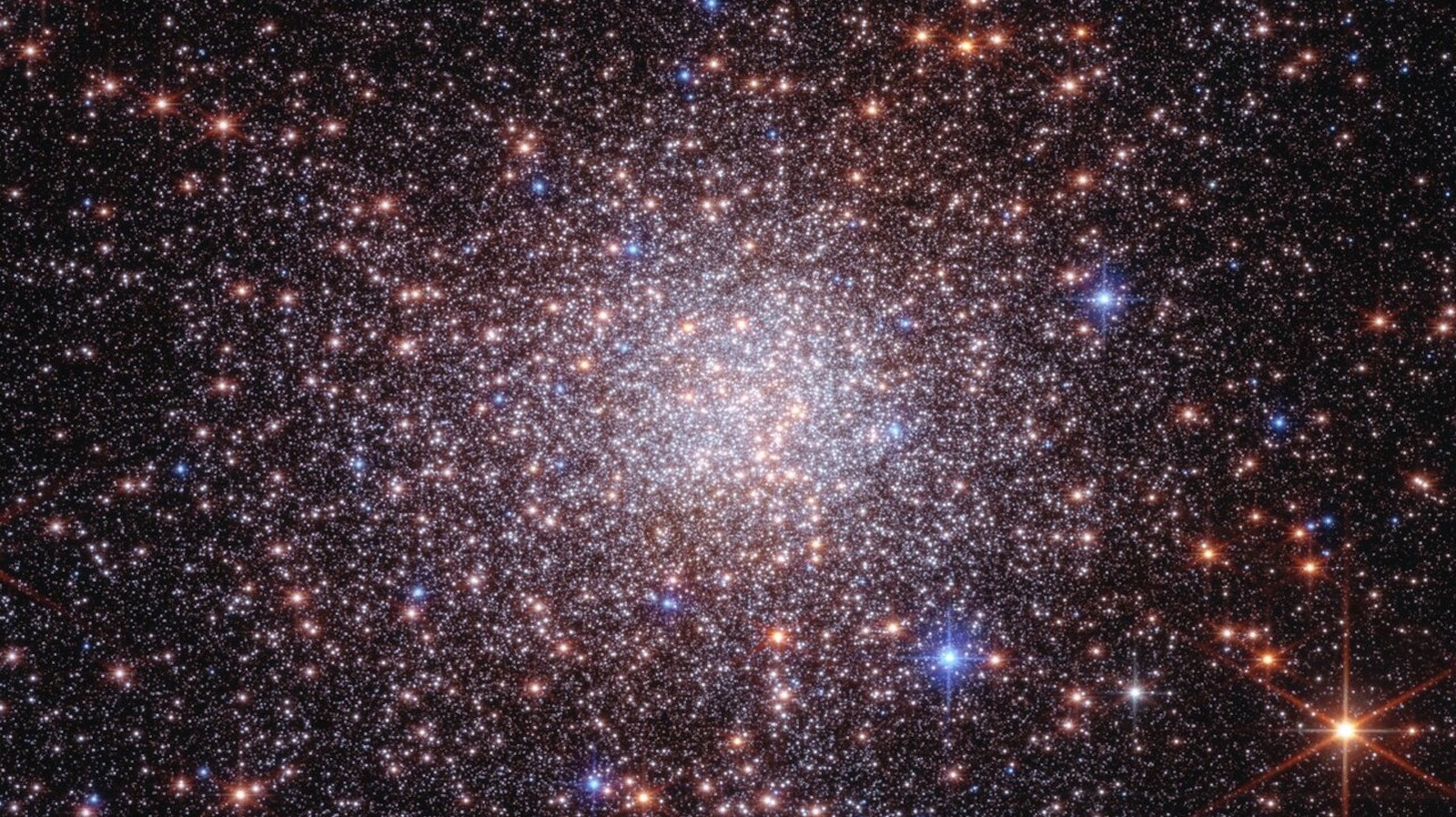
Webb Telescope Uncovers Cosmic Time Capsule: A New Look at Galaxy Formation
Verdict: The James Webb Space Telescope (JWST) continues to redefine our understanding of the universe, with its latest revelation of a 'bulge fossil fragment' offering unprecedented clarity into how galaxies, including our own Milky Way, came to be. This isn't just another pretty picture; it's a profound scientific leap, showcasing Webb's unparalleled observational power and its collaborative synergy with previous generations of space instruments.
The search for answers to fundamental cosmic questions drives much of the James Webb Space Telescope's mission, and its latest achievement is a testament to its groundbreaking capabilities. Astronomers, leveraging both Webb's cutting-edge observations and historical data from the Hubble Space Telescope, have confirmed the existence of what they've dubbed a 'bulge fossil fragment.' This intriguing discovery, centered on a region known as Terzan 5, promises to reshape our models of galactic formation. What was once considered a relatively simple globular star cluster has been unveiled as a complex entity with a multi-billion-year history, fundamentally altering its classification and, by extension, our understanding of the early universe.
Unpacking the Discovery: Terzan 5's Hidden Past
At the heart of this revelation lies Terzan 5, an area within the galaxy's bustling center, often referred to as 'the bulge.' Historically, studying this region has presented immense challenges due to the sheer density of stars and obscuring dust, making detailed observation difficult. This complexity previously led astronomers to classify Terzan 5 as a globular star cluster, which typically hosts a single, ancient population of stars.
However, the combined might of the Webb telescope's advanced instruments and archival data from the Hubble Space Telescope allowed researchers to pierce through the cosmic veil. Their meticulous analysis revealed that Terzan 5 is far more intricate than previously thought. Instead of one star population, it has experienced at least four distinct episodes of star formation. The team identified two ancient star populations, one forming approximately 12.5 billion years ago and another 4.7 billion years ago. Adding to its complexity, two more contemporary populations were found, dating back 3.8 billion and 2.5 billion years ago.
This multi-generational star formation history is the critical clue. University of Bologna professor Francesco R. Ferraro, the principal investigator for the Webb observations, clarified the significance: "For some reason, this peculiar clump of stars formed separately from the bulge and was not destroyed as the bulge itself formed. Terzan 5 is what we now call a bulge fossil fragment because it resembles the primordial clumps that contributed to the formation of the bulge."
Co-author and University of Bologna associate professor Barbara Lanzoni further elaborated on the theoretical implications: "Based on observations and in-depth simulations, we think that galaxies in the early Universe had huge discs of gas that fragmented into clumps and formed stars. These clumps migrated to the center of the galaxies, and many merged to form their bulges." Terzan 5, therefore, serves as a tangible remnant of these early galactic building blocks.
The Webb Telescope's Performance: Seeing Beyond the Dust
For a 'product' like the James Webb Space Telescope, evaluating its 'design and user experience' translates to assessing its scientific capabilities and operational effectiveness. In this regard, Webb performs exceptionally. The ability to peer through dense stellar populations and dust-obscured regions is a hallmark of its infrared vision, a capability crucial for this discovery. While the source content doesn't delve into specific instrument names, the success of the observation inherently speaks to the precision and sensitivity of Webb's suite of instruments. The 'user experience' for the astronomers involved is clearly one of gaining unprecedented clarity in environments that previously defied detailed analysis.
The synergy demonstrated between Webb and Hubble is particularly noteworthy. While Webb provided the crucial, high-resolution infrared data needed for detailed stellar population analysis, Hubble's archival observations played a vital complementary role. This collaborative approach maximizes scientific return, showing that new technology doesn't always replace its predecessors but often enhances their legacy, building a more complete cosmic picture.
The Upsides and Unique Strengths
- Unprecedented Clarity in Dense Regions: Webb's ability to penetrate the dusty, star-packed core of the galaxy is a significant advantage, allowing for detailed analysis previously impossible.
- Revolutionary Insights into Galaxy Formation: The identification of a 'bulge fossil fragment' provides direct evidence supporting theories of how galactic bulges, including our Milky Way's, initially formed from migrating primordial clumps.
- Refined Cosmic History: By reclassifying Terzan 5 from a simple globular cluster to a complex, multi-phase star formation site, Webb has added critical detail to our understanding of stellar and galactic evolution.
- Synergistic Science: The successful integration of Webb's cutting-edge observations with Hubble's extensive archival data demonstrates the power of collaborative space astronomy, maximizing scientific output.
- Validating Theories: This discovery offers empirical support for theoretical models of early galactic evolution, moving from hypothesis to observationally confirmed fact.
Considerations and Ongoing Challenges
While traditional 'cons' don't apply to a scientific instrument of this caliber, it's important to acknowledge the inherent complexities and ongoing work. The data collected by Webb requires sophisticated analysis and interpretation by expert teams, underscoring that while the telescope provides the raw material, human ingenuity remains critical.
Furthermore, while this discovery answers significant questions, it inevitably opens new avenues for research. Understanding precisely why Terzan 5 survived intact while other clumps merged, or how these star formation phases were triggered, are questions that will likely drive future Webb observations and theoretical work. The universe continues to hold many secrets, and while Webb is an unparalleled key, unlocking them is a continuous process.
Comparing Webb and Hubble's Roles
| Feature | James Webb Space Telescope (in this context) | Hubble Space Telescope (in this context) |
|---|---|---|
| Primary Role | Detailed stellar population analysis in dense regions | Archival observations, historical data complement |
| Key Strength | Penetrating dust/density (implied infrared capability) | Long-term observational record, visible light (implied) |
| Contribution | Revealed multi-phase star formation, reclassified Terzan 5 | Provided baseline data for comparative analysis |
| Overall Impact | Unprecedented new insights into galaxy formation | Established initial classification, supported re-evaluation |
In this particular study, Webb and Hubble functioned not as alternatives, but as complementary instruments. Hubble's long operational history and archival data provided the initial context and previous classification of Terzan 5. However, it was Webb's specific capabilities, allowing for detailed examination of individual star populations within a previously impenetrable, dusty environment, that enabled the profound re-evaluation of Terzan 5's nature. This collaboration exemplifies the best of space science, where new technology builds upon and enhances the legacy of its predecessors.
Recommendation: A Worthwhile Investment in Discovery
The James Webb Space Telescope isn't a consumer product in the traditional sense, but its output is a product of immense scientific value to humanity. This discovery of the 'bulge fossil fragment' in Terzan 5 is a compelling demonstration of its return on investment. For anyone interested in the origins of our universe, the formation of galaxies, and the incredible capabilities of human engineering, the Webb telescope continues to deliver awe-inspiring and scientifically robust findings. Its ongoing mission is a critical endeavor, pushing the boundaries of knowledge and providing tangible evidence that allows us to piece together the cosmic narrative. Supporting such ventures means investing in a deeper understanding of where we come from.
FAQ
Q: What exactly is a "bulge fossil fragment"?
A: According to researchers, it's a peculiar clump of stars that formed independently of a galaxy's central bulge and survived its formation. It represents primordial clumps that contributed to building the bulge in the early universe, effectively acting as a historical relic.
Q: How did the Webb telescope help identify Terzan 5 as a bulge fossil fragment?
A: Webb's observations, combined with archival data from the Hubble Space Telescope, allowed astronomers to determine that Terzan 5 has experienced at least four distinct phases of star formation over billions of years (12.5, 4.7, 3.8, and 2.5 billion years ago), rather than just one ancient population, which is characteristic of a globular cluster. This detailed stellar population analysis revealed its unique and complex history, leading to its reclassification.
Q: Why is this discovery significant for understanding our galaxy, the Milky Way?
A: This finding offers new insights into how galaxies, including our own Milky Way, formed. It supports the theory that early galaxies had massive gas discs that fragmented into star-forming clumps. These clumps then migrated to galactic centers, merging to create the central bulges we see today. Terzan 5 provides a direct, preserved example of these early building blocks, giving us a clearer picture of the Milky Way's primordial past and evolution.
Related articles

CNET's NYT Connections: Sports Edition Hints & Answers (Sept. 18)
CNET's NYT Connections: Sports Edition Hints & Answers (Sept. 18) Review: A Clear Victory Quick Verdict: CNET's daily guide for the NYT Connections: Sports Edition puzzle offers a clear, well-structured, and invaluable
Community Fibre 8.5Gbps: UK's Fastest, But Pricey Fibre
Quick Verdict Community Fibre has just launched the UK's fastest residential internet connection, boasting an incredible 8.5Gbps (8,200Mbps) symmetrical full fibre service. It's a technical marvel, delivering speeds

Anthropic Claude Merger: Unified AI for Enhanced Productivity
Anthropic Claude Merger: The Verdict Anthropic is making a bold move, consolidating its previously distinct AI tools — Claude chat and Claude Cowork — into a single, more intuitive “all-powerful Claude.” This strategic

September Pixel Drop: Small Update, Big Convenience
Google's September 2026 Pixel Drop brings enhanced one-tap calling/messaging via VIPs widget and expanded on-device scam protection for text messages, making communication safer and faster for Pixel 6 and newer users.
Pixel 11 Pro: A Hidden Camera Gem Elevates Mobile Photography
The Pixel 11 Pro ($1,099) introduces redesigned Quick Access camera controls, offering intuitive, customizable on-the-fly adjustments like exposure and "Camera Looks." While powerful and user-friendly once enabled, Google hides them deep in settings and disables them by default, hindering discoverability. Despite this flaw, it's a significant upgrade for mobile photography enthusiasts.

Pennsylvania Measles Outbreak: A Grim Warning on Vaccine Hesitancy
This detailed analysis of the alarming Pennsylvania measles outbreak highlights four tragic fatalities, including an 18-year-old from severe neurological complications. It underscores critical public health challenges, including declining vaccination rates and federal data reporting controversies, while emphasizing the urgent need for reliable information and widespread vaccination.