
Framework Laptop 13 Pro review: Premium, but RAM Troubles Tarnish
Quick Verdict The Framework Laptop 13 Pro is a masterclass in evolving modular design, delivering a genuinely premium user experience with exceptional performance and battery life. Its sleek new chassis, fantastic

Quick Verdict
The Framework Laptop 13 Pro is a masterclass in evolving modular design, delivering a genuinely premium user experience with exceptional performance and battery life. Its sleek new chassis, fantastic haptic touchpad, and robust build quality place it squarely among top-tier laptops. However, a significant RAM shortage has driven up prices and even forced configuration downgrades for pre-orders, severely impacting its value proposition. While a standout for dedicated modularity enthusiasts and Linux users, its current pricing makes it a difficult recommendation for the broader market.
Introduction: A Maturing Vision
Framework's journey has been one of continuous refinement, and the Laptop 13 Pro represents a significant leap forward in the brand's design philosophy. Initially touted as the "MacBook Pro for Linux users" by CEO Nirav Patel, this device aims to blend high performance with an ultraportable form factor, all while maintaining Framework's signature commitment to repairability and modularity. Beyond its appeal to power users, the 13 Pro boasts a dramatically sleeker build, a larger 74Wh battery, a sophisticated haptic touchpad, and the latest Intel Series 3 processors, widening its appeal to a more mainstream audience looking for a premium computing experience. Yet, despite its advancements, the product faces a formidable challenge: an unforeseen RAM crisis that has inflated prices and caused considerable customer dissatisfaction.
Design and Build: A Premium Evolution
The physical engineering of the Framework Laptop 13 Pro is arguably its most compelling feature, marking a clear maturation from previous iterations. Unlike earlier models that might have shown minor aesthetic inconsistencies inherent to DIY designs, the 13 Pro presents a seamless, airtight build. The refined CNC aluminum chassis feels incredibly solid, exhibiting no flex, and the unibody keyboard input cover magnetically snaps into place, secured by just five screws on the underside. This results in a laptop that feels every bit as premium as established rivals like ThinkPads, MacBooks, or Dell XPS lines, without betraying its modular nature.
Measuring a mere 0.6 inches at its thickest point and weighing 3.1 pounds, it’s commendably thin and light for its capabilities. Crucially, it upholds Framework's ethos of upgradeability, offering backward compatibility with the original Laptop 13. Users can swap out the mainboard, allowing for future-proofing and component upgrades, a testament to its forward-thinking design.
Performance and Endurance: Powering Through
Under the hood, the Laptop 13 Pro is a formidable machine, powered by Intel Core Ultra 5, X7, or X9 Series 3 "Panther Lake" processors. These chips are specifically chosen for their improved performance and enhanced battery efficiency, addressing a key area of feedback from earlier Framework models. In practice, the battery life is excellent; the laptop comfortably lasts an entire workday. Framework's detailed battery metrics suggest up to 20 hours for video streaming, 17 hours for web browsing, and 11 hours for video conferencing. My own testing, which involved intermittent periods of intense use, video calls, and idle time, yielded over nine hours on a single charge.
My review unit, configured with an Intel Core Ultra X7 358H, 32GB of RAM, and 1TB of storage, represents a solid baseline for professionals and power users. This setup ensures snappy and responsive performance, adeptly handling demanding workloads such as programming, data science, software development, and various creative tasks without breaking a sweat.
Display, Input, and Modularity
The visual experience on the 13 Pro is a significant upgrade. The display boasts a vibrant 2.8K resolution, 600-nit brightness, a 120Hz variable refresh rate, and covers 100% of the sRGB color gamut, delivering rich and accurate visuals. While the touchscreen functionality works as expected, the panel itself exhibits a noticeable wobble, which can detract from the touch interaction. For this reason, I found myself leaning on the exceptional haptic touchpad.
The piezo-based haptic touchpad is a highlight: sensitive, responsive, and offering a premium feel with just the right amount of tactile depth for precise navigation and fluid multitasking. The keyboard is equally impressive, featuring 1.5mm key travel and effective backlighting, contributing to a comfortable typing experience. Framework has also maintained its signature black, gray, and orange aesthetic, crafting a unique design language that feels both premium and distinctly DIY. Modularity extends to its internal components with modular LPCAMM2 LPDDR5X memory, easily accessible and upgradeable with just three screws. It also supports PCIe Gen 5 NVMe storage through an M.2 2280 slot, allowing for up to 8TB of storage expansion.
The Elephant in the Room: RAM and Pricing
Despite its many virtues, the Framework Laptop 13 Pro's biggest hurdle is its cost, dramatically exacerbated by an ongoing RAM shortage. Framework’s CEO, Nirav Patel, openly acknowledged the severe price increases for LPCAMM2 RAM, stating they went "far beyond anything we had predicted." This situation has led to Framework downgrading RAM amounts on existing customer orders and significantly increasing prices. Understandably, this has caused considerable dissatisfaction within the community, with customers expressing their concerns on platforms like Reddit.
To illustrate the impact: the DIY version of the Framework Laptop 13 Pro starts at $1,199, but this is before adding a CPU, RAM, or SSD. Even a modest configuration with an Intel Core Ultra 5 325, 16GB of RAM, and 500GB of storage pushes the price to around $1,700. For a pre-built model, prices begin at $1,599 and quickly escalate. A higher-end configuration with the Intel Core Ultra X7 processor, Windows, and expansion ports can easily exceed $3,000. At these price points, the Framework Laptop 13 Pro enters the realm of top-tier workstations, where competitors like the MacBook Pro offer compelling, pre-integrated solutions with established ecosystems. While bringing your own OS, memory, or SSD can mitigate costs, the current market volatility for components erodes some of the DIY appeal and value proposition.
Buying Recommendation
The Framework Laptop 13 Pro is a testament to what thoughtful engineering and a commitment to modularity can achieve. It's an exceptionally well-built, high-performing, and battery-efficient laptop with a fantastic haptic touchpad and keyboard. Its design maturity and user experience stand out, even independent of its DIY nature. However, the current RAM crisis and resulting price hikes are a significant drawback. The value proposition, especially for higher-end configurations, is challenging, making direct comparisons to established premium laptops like the MacBook Pro less favorable on cost alone.
Therefore, I can only wholeheartedly recommend the Framework Laptop 13 Pro to users who are deeply committed to the modularity and repairability aspects, and particularly to the Linux community, for whom Framework has tailored a superb experience. For these users, the ability to upgrade, repair, and customize their machine outweighs the current pricing disadvantages. For a casual user or someone simply seeking raw performance at a competitive price, the current market conditions might make alternative pre-built options more appealing.
FAQ
Q: Is the Framework Laptop 13 Pro good for general users, or only power users?
A: While it offers high-end performance suitable for power users, its premium design, excellent keyboard, and trackpad also make it appealing to general users. However, the current pricing, heavily affected by the RAM crisis, makes it a less cost-effective choice for general users compared to alternatives, unless modularity is a top priority.
Q: How does the RAM shortage affect the Framework Laptop 13 Pro's value?
A: The ongoing RAM shortage has significantly driven up the cost of LPCAMM2 RAM, leading Framework to raise prices and even downgrade RAM configurations for existing orders. This means customers pay more for less memory or face substantially higher overall costs, diminishing the laptop's value proposition, especially for pre-built configurations that can exceed $3,000.
Q: Can I still benefit from the DIY aspect if I'm not technically savvy?
A: Absolutely. Framework provides extensive, user-friendly guides (both text and video) that simplify the assembly and upgrade process, making it accessible even for those with no prior experience. The modular design, including easily accessible RAM and storage slots, is designed for straightforward user upgrades.
Related articles
Android 17 QPR2 Beta 7.1: The Performance Relief You've Been Waiting
Android 17 QPR2 Beta 7.1: Finally Fixing the QPR1 Performance Woes Verdict: Android 17 QPR2 Beta 7.1 is a crucial and highly anticipated software update for Google Pixel users, specifically targeting and resolving the

DJI Solo Video Setups: Smart Choices for Lone Creators
This review delves into DJI's recommended solo video setups, highlighting the Osmo Pocket 3 Creator Combo as a top pick for its integrated camera, gimbal, and mic. It also covers stabilizers like the Osmo Mobile 8 and RS 4, and the DJI Mic Mini series for enhanced audio, providing honest pros, cons, and clear buying advice.

Ars Technica's Rocket Report: Your Essential Space Industry Briefing
Quick Verdict Ars Technica's Rocket Report, presented by veteran space reporter Stephen Clark, offers an invaluable and meticulously organized weekly (or similar frequency, implied by "Edition 9.15") digest of the most

Apple iPhone Duo: A Daring Debut with Notable Compromises
Apple's highly anticipated iPhone Duo, priced at $2,000, has gone on pre-order. While hailed as "Apple's most exciting device in a decade" for its innovative foldable design and immersive display, it comes with significant drawbacks like the absence of FaceID and a premium camera.
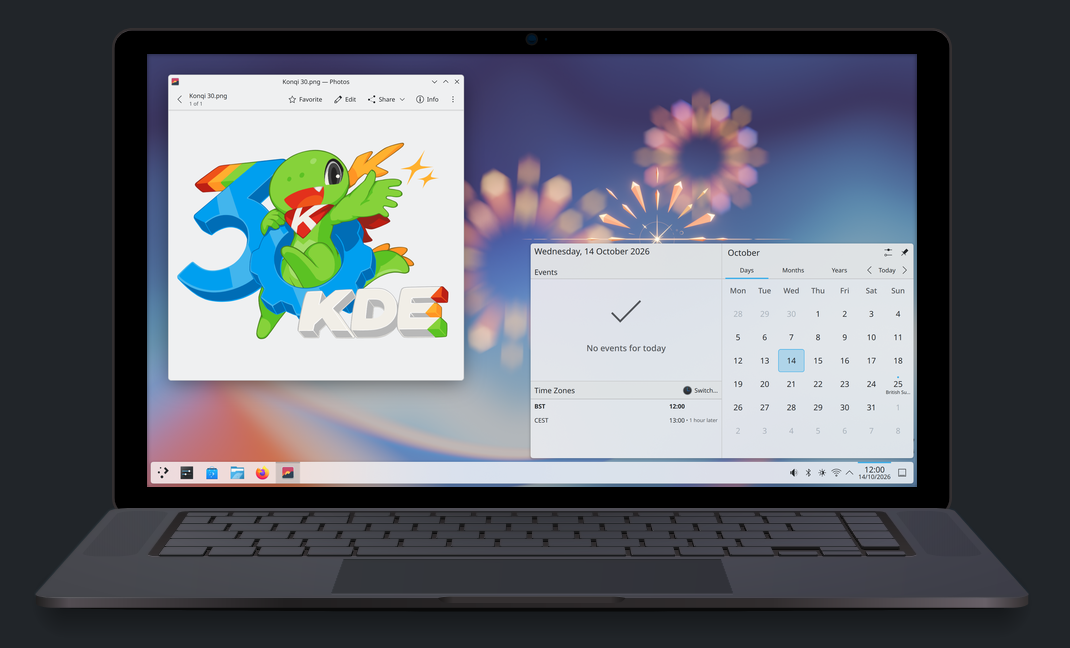
KDE Plasma 6.8: A Future-Focused 30th Anniversary Update
Quick Verdict KDE Plasma 6.8, arriving as the "30th Anniversary Edition," is a pivotal release that decisively pushes the desktop environment into the future. With a definitive farewell to native X11 sessions and a

Ephemeral PR Preview Environments on GKE: A Deep Dive
Every development team eventually grapples with the limitations of shared staging environments. The familiar scenario: multiple features deployed simultaneously, database migrations clashing, and the phrase "it works on