
VW Group's Restructuring Plan: A Bold Strategy, But Not Yet Road-Ready
VW Group's Restructuring Plan: A Bold Strategy, But Not Yet Road-Ready Quick Verdict Volkswagen Group's latest attempt to streamline its vast automotive empire, presenting a restructuring plan to its supervisory board,
VW Group's Restructuring Plan: A Bold Strategy, But Not Yet Road-Ready
Quick Verdict
Volkswagen Group's latest attempt to streamline its vast automotive empire, presenting a restructuring plan to its supervisory board, has stalled. Designed to tackle eroding profit margins and competitive pressures, the plan focused on a drastically simplified product lineup and reduced manufacturing complexity. However, by omitting explicit mentions of job cuts and factory closures – measures widely anticipated – it seemingly failed to garner the necessary support, particularly from the powerful worker unions. The plan was rejected, underscoring the unique governance challenges at VW Group and signaling a return to the drawing board for management.
The Road Ahead: Key Details of the Proposed Plan
Facing headwinds from costly international tariffs, a shrinking market share in crucial regions like China and North America, and the high investment costs associated with the transition to electric vehicles (despite good EV sales in its home European market), Volkswagen Group desperately needed a strategic overhaul. The plan presented to the supervisory board was an attempt to address these multifaceted challenges, aiming to bolster the company's financial health and global competitiveness.
At its core, the proposal sought to drastically rationalize VW Group's extensive product portfolio, which spans ten distinct brands including Audi, Porsche, Skoda, and Lamborghini. The vision was to halve the number of vehicle models offered across all these brands, focusing exclusively on what VW Group termed “the most attractive market segments.” While not explicitly stated, this strongly implies a concentration on high-demand categories such as crossovers and SUVs, which have become increasingly popular with car buyers globally.
Beyond just fewer models, the plan also targeted a significant reduction in “offering complexity.” This translates to simplifying the myriad of equipment options and customizable features available to consumers, with a stated goal of cutting these by up to 75 percent. The rationale behind this was clear: fewer variations mean more streamlined production processes, reduced inventory, and ultimately, lower manufacturing costs.
The proposal also candidly addressed the discrepancy between the company's current production capacity and actual global demand. VW Group currently possesses the capacity to build 10 million vehicles annually, a figure already reduced by 2 million units since the COVID-19 pandemic. However, global demand for its products stands at approximately 9 million vehicles per year. This 1 million unit overcapacity highlights an inefficiency that the plan aimed to rectify, albeit without explicitly outlining how. Though the public statement made no direct mention of factory closures or job losses, the implication of building fewer, less differentiated cars naturally suggests a less labor-intensive operation, a point that did not go unnoticed by stakeholders.
Strategic Design & Stakeholder Experience
From management's perspective, this plan represented a pragmatic, market-driven approach to regain profitability and efficiency. By narrowing the focus to high-demand segments and standardizing production, the aim was to cut costs, accelerate development cycles, and improve the overall competitiveness of VW Group's offerings. The decision to omit explicit announcements of redundancies or factory closures in the public statement could be seen as an attempt to soften the blow or navigate the historically strong opposition from worker representatives.
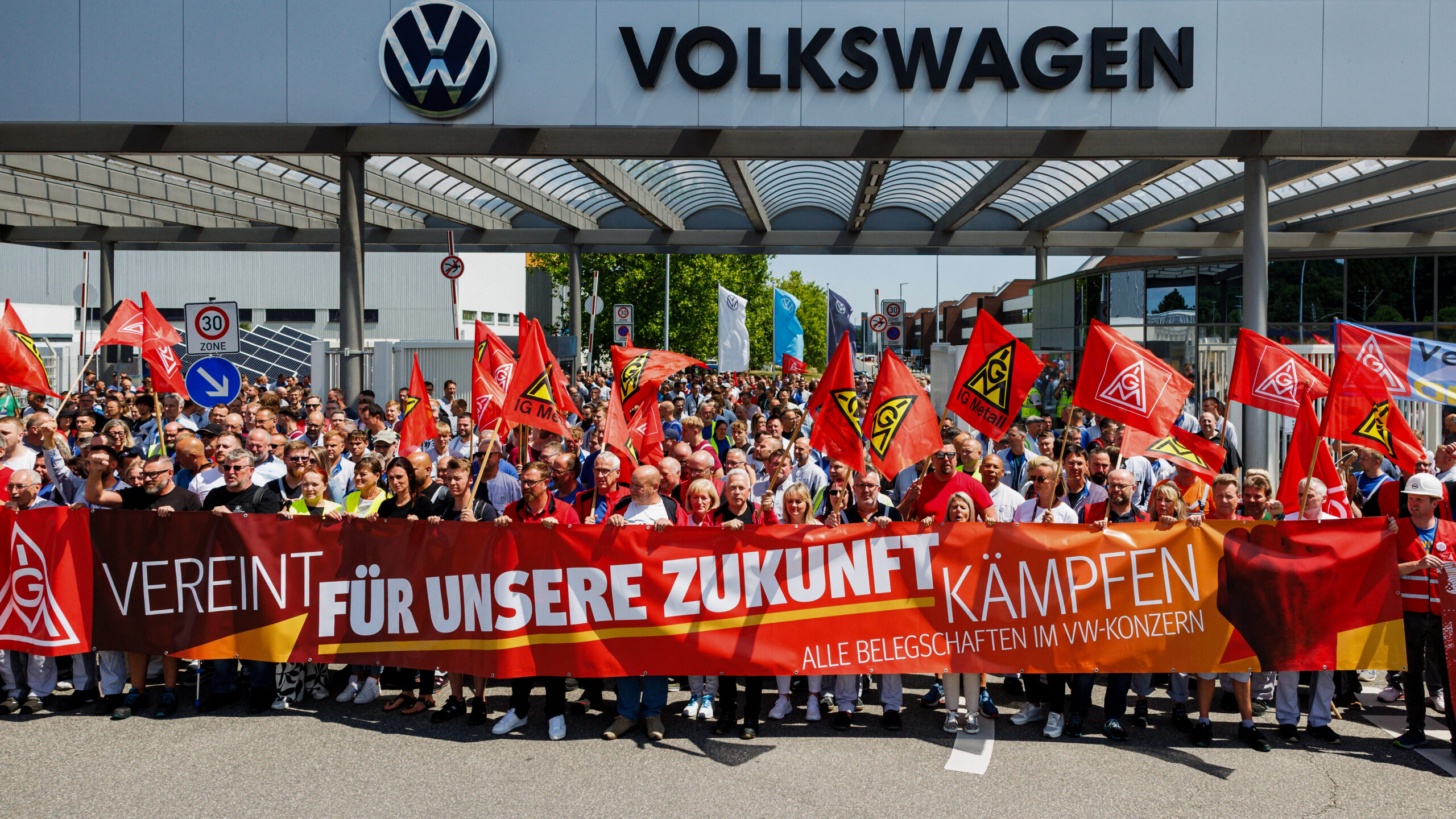
However, this cautious approach ultimately failed to win over the crucial stakeholders: the unions. Volkswagen Group operates under a unique governance structure where worker unions wield significant power. Half of the 20 seats on the supervisory board are occupied by worker council appointees. Furthermore, the German state of Lower Saxony, a partial owner, holds another two seats, typically aligning with worker interests. This unique arrangement ensures that social and employment considerations are weighed heavily alongside purely financial objectives. The unions, represented by IG Metall, have a long history of fiercely defending jobs and have previously negotiated agreements, such as the 2024 plan to cut 35,000 jobs by 2030, which later scaled to 50,000 by March 2026. Reports suggesting far larger cuts (100,000 jobs and four factory closures) in late June 2026 likely heightened worker anxieties, making any plan that implicitly threatened jobs a non-starter.
For consumers, a streamlined lineup could eventually lead to more focused, perhaps higher-quality, vehicles that better meet market trends. However, it also means less choice and potentially fewer niche models. The immediate “user experience” for the company's internal stakeholders, particularly its workforce, is one of continued uncertainty and unresolved tension, especially now that the proposed plan has been rejected.
Pros and Cons: A Divided Road
Pros (Potential for VW Group if implemented):
- Enhanced Efficiency: Drastically reducing model variants and options could significantly simplify manufacturing, supply chains, and inventory management, leading to substantial cost savings.
- Market Alignment: Focusing on "attractive market segments" directly addresses shifts in consumer demand, potentially improving sales volumes and market share in profitable niches.
- Improved Profitability: Streamlined operations and cost reductions are direct pathways to bolstering VW Group's eroding profit margins.
- Brand Clarity: Fewer overlapping models and clearer differentiation between brands could strengthen individual brand identities.
Cons (As evidenced by its rejection):
- Lack of Stakeholder Buy-in: The most significant drawback is the plan's inability to secure approval from the supervisory board, primarily due to union opposition. This indicates a fundamental disagreement on the proposed strategy and its implications for the workforce.
- Ambiguity vs. Transparency: The omission of explicit job cuts or factory closures in the public statement, while perhaps intended to ease tensions, likely fueled suspicion and made it harder for unions to trust the long-term implications, contributing to its rejection.
- Delayed Action: The failure of this plan means VW Group must now invest more time and resources into developing an alternative, delaying urgent restructuring efforts needed to address current financial pressures.
- Continued Uncertainty: For the hundreds of thousands of employees across the VW Group, the rejection of the plan means ongoing uncertainty regarding their future employment and the company's strategic direction.
- Political Complexity: The strong influence of worker councils and state ownership means that any significant restructuring plan must navigate a complex political landscape, making purely economic solutions difficult to implement.
Comparison to Alternatives: The Path Not Taken
The current plan, characterized by its subtle approach to potential job reductions, stands in contrast to earlier, more explicit discussions. For instance, negotiations in 2024 resulted in an agreement to cut 35,000 jobs by 2030, a figure that reportedly escalated to 50,000 by March 2026. Furthermore, reports emerged in late June 2026 suggesting a far more drastic proposal of 100,000 job cuts and the closure of four German factories—an unprecedented move for VW. These earlier alternatives were more direct in their proposed labor reductions but likely faced immense internal resistance, explaining why the current, more veiled plan was put forward.
From the unions' perspective, the alternative to the proposed plan is a strategy that prioritizes job security, invests in reskilling, and ensures fair transitions for employees. Their 12-7 vote against the proposal signals that, for them, the costs to labor (implied or otherwise) outweighed the benefits to corporate efficiency. The immediate "alternative" now is for management to "think of something else," indicating a need for a fundamentally different approach that can gain board approval.
Recommendation: Back to the Drawing Board
As a crucial strategic blueprint for one of the world's largest automakers, Volkswagen Group's restructuring plan, in its currently proposed form, is not viable. While its objectives of improving efficiency, streamlining production, and aligning with market demands are sound and necessary, its failure to secure internal stakeholder consensus renders it ineffective. The unique power dynamics within VW Group necessitate a more inclusive and perhaps more transparent approach to restructuring, one that directly addresses the concerns of its workforce and supervisory board.
Management must now develop a revised strategy that either explicitly integrates worker protection measures or offers compelling alternatives that win over union representatives and the state's delegates. Without such broad internal support, even the most strategically brilliant plan will fail to launch. For the VW Group to navigate its current challenges successfully, it needs a plan that not only makes economic sense but also achieves political and social buy-in from all its powerful stakeholders.
FAQ
Q: Why did Volkswagen Group need this restructuring plan?
A: Volkswagen Group faced significant financial pressures, including costly international tariffs, eroding market share in China and North America, and declining profit margins, despite strong electric vehicle sales in Europe. The plan aimed to improve efficiency and profitability.
Q: What were the key elements of the proposed plan?
A: The plan focused on a heavily edited model lineup, reducing the number of vehicles offered across its brands by half and concentrating on attractive market segments. It also aimed to cut the number of available equipment options by up to 75 percent to reduce manufacturing complexity.
Q: Why did the plan fail to pass the supervisory board?
A: The plan failed due to strong opposition, primarily from powerful worker unions and representatives from the state of Lower Saxony, who collectively hold a majority of seats on the supervisory board. Despite not explicitly mentioning job cuts, the plan's implications for reduced labor intensity likely sparked concerns over job security, leading to its rejection.
Related articles
Android 17 QPR2 Beta 7.1: The Performance Relief You've Been Waiting
Android 17 QPR2 Beta 7.1: Finally Fixing the QPR1 Performance Woes Verdict: Android 17 QPR2 Beta 7.1 is a crucial and highly anticipated software update for Google Pixel users, specifically targeting and resolving the

DJI Solo Video Setups: Smart Choices for Lone Creators
This review delves into DJI's recommended solo video setups, highlighting the Osmo Pocket 3 Creator Combo as a top pick for its integrated camera, gimbal, and mic. It also covers stabilizers like the Osmo Mobile 8 and RS 4, and the DJI Mic Mini series for enhanced audio, providing honest pros, cons, and clear buying advice.

Ars Technica's Rocket Report: Your Essential Space Industry Briefing
Quick Verdict Ars Technica's Rocket Report, presented by veteran space reporter Stephen Clark, offers an invaluable and meticulously organized weekly (or similar frequency, implied by "Edition 9.15") digest of the most

Apple iPhone Duo: A Daring Debut with Notable Compromises
Apple's highly anticipated iPhone Duo, priced at $2,000, has gone on pre-order. While hailed as "Apple's most exciting device in a decade" for its innovative foldable design and immersive display, it comes with significant drawbacks like the absence of FaceID and a premium camera.
KDE Plasma 6.8: A Future-Focused 30th Anniversary Update
Quick Verdict KDE Plasma 6.8, arriving as the "30th Anniversary Edition," is a pivotal release that decisively pushes the desktop environment into the future. With a definitive farewell to native X11 sessions and a
Galaxy Watch One UI 9 Beta: Promising Progress, But Patience Needed
Galaxy Watch 8, Watch Ultra, and Watch 7 are receiving a new One UI 9 Watch beta build with bug fixes and a security patch. Active development signals progress, but a stable release date remains elusive.