
Toyota's Woven City: A $10 Billion Utopia or Privacy Paradox
Toyota's Woven City: A $10 Billion Utopia or Privacy Paradox? Verdict: Toyota's Woven City is an ambitious, multi-billion-dollar experiment positioning the automotive giant as a leader in future mobility and smart urban
Toyota's Woven City: A $10 Billion Utopia or Privacy Paradox?
Verdict: Toyota's Woven City is an ambitious, multi-billion-dollar experiment positioning the automotive giant as a leader in future mobility and smart urban living. While it showcases impressive technological integration, particularly in safety and energy management, its pervasive surveillance raises significant privacy alarms. Currently a tiny, curated testing ground, its real-world applicability and public acceptance remain unproven.
What is Woven City?
Conceived at CES 2020 by Toyota CEO Akio Toyoda, Woven City is a grand vision: a "city of the future" built on a disused factory site. With an estimated $10 billion investment, it's designed as a living laboratory where researchers, engineers, and scientists (dubbed "Weavers") can live and work, collaboratively developing and testing next-generation technologies. The overarching goal is to transform Toyota into a comprehensive mobility company, fostering a "society with zero accidents" through advanced vehicle-to-everything (V2X) communications and integrated urban intelligence.
After six months, 100 handpicked Weavers have settled into this sensor-laden mini-metropolis. While the scale is currently small – only about 10 percent of its eventual 175-acre footprint is complete, roughly the size of three New York City blocks – the ambition behind Woven City is immense.
Design, Features, and User Experience
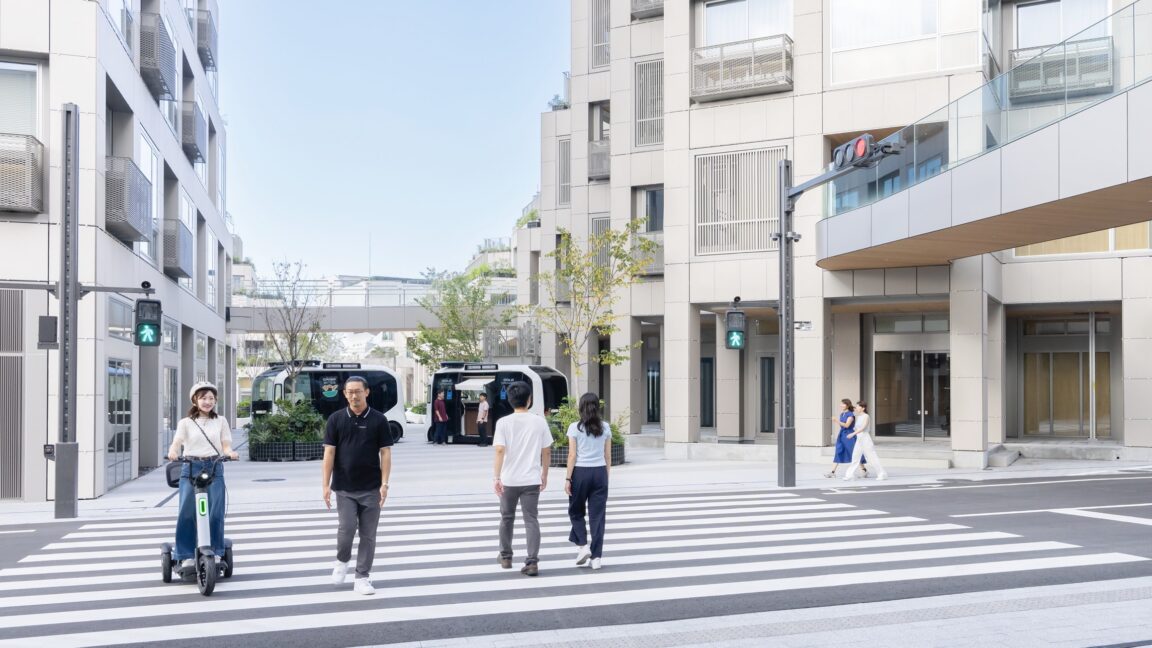
Woven City's design emphasizes connectivity, safety, and innovation. Streets are optimized for various modes of transport, from pedestrians to unique three-wheeled "Swakes" and e-Palatte buses. The environment is meticulously monitored, with cameras embedded in nearly every public space, from intersections to coffee shops, feeding into the "Woven City AI Vision Engine." This system is designed to identify hazards, track movement (by clothing, not facial recognition), and improve urban safety, aiming for a level of awareness beyond what even advanced onboard vehicle sensors can provide.
For residents, the experience is highly curated. Weavers act as alpha and beta testers for a wide array of experimental technologies. This includes practical innovations like an HVAC system designed to eliminate 95 percent of pollen (a significant benefit in hay fever-prone Japan) and fun concepts like an AI-powered karaoke machine. Coworking spaces and 3D printers encourage rapid prototyping and collaboration, with residents actively engaging in "digital matchmaking" events to spark new ideas.
Robotics, or "Physical AI," are a significant aspect of Woven City. While many showcased robots are still in conceptual stages (e.g., single-gripper household helpers), more practical applications include package and grocery delivery bots. A notable innovation is the "Guide Mobi," a specialized robot that autonomously tugs Toyota bZ4X EVs from a parking garage to a pickup point. This system uses its own lidar and imaging sensors to guide cars that lack the necessary onboard autonomy, highlighting Toyota's safety-first approach over simpler, potentially less reliable methods like Tesla's Summon.
Energy management is another core component. The parking garage doubles as a "virtual power plant" (VPP), equipped with solar cells and bidirectional chargers. The EVs stored there can collectively act as a giant battery pack, offsetting Woven City's peak power demand by up to 10 percent. The vision is to scale this service to businesses with large EV fleets.
The Double-Edged Sword: Privacy Concerns
The most striking aspect of Woven City, from a reviewer's perspective, is the sheer density of surveillance. Eight cameras at a single intersection and multiple cameras in a coffee shop are unprecedented. While Toyota states the AI Vision Engine doesn't use facial recognition, its ability to track individuals by clothing across multiple cameras is still a significant privacy concern. The company acknowledges this, noting that Japanese respondents are particularly cautious about data privacy, akin to Europeans.
Toyota's solution, "Data Fabric," allows users to opt into or out of individual services. Management asserts that data is not currently being sold and that Weavers have explicit consent over their information. Impressively, 98 percent of the highly curated Weavers have opted into the 20 ongoing experiments, even allowing camera-equipped robots into their homes. However, it's critical to question whether this opt-in rate is representative of a broader, non-curated population, or if it's influenced by the unique circumstances of living in this experimental community.
Limitations and Real-World Applicability
Despite its grand ambitions, Woven City currently faces practical limitations. Its small size restricts the scope of real-world testing; for instance, the Swake scooters cannot leave the city grounds. Moreover, weather sensitivity emerged as a significant drawback during the reviewer's visit. Rainy conditions rendered the Swakes unusable and reportedly kept many expected robots indoors, calling into question the robustness of these "future" technologies in less-than-ideal environments. The VPP, while innovative, still requires human intervention to plug and unplug vehicles.
Toyota positions Woven City as a financially sustainable business, aiming to refine and commercialize its systems, like the AI Vision Engine, to municipalities worldwide. However, the efficacy and public acceptance of such highly surveilled, controlled environments outside of a dedicated research bubble remain a huge unknown.
The Verdict: A Glimpse into Tomorrow, But With a Catch
Toyota's Woven City is a fascinating and costly endeavor. It represents a bold commitment to redefine the role of an automaker in a rapidly evolving world. The integration of mobility, smart infrastructure, energy management, and collaborative innovation is genuinely impressive.
However, the project's Achilles' heel is its approach to privacy. While framed as a path to a safer future, the pervasive surveillance infrastructure could be a non-starter for many global citizens. The controlled nature of the current environment also means that the true scalability and societal acceptance of Woven City's model are yet to be tested. It's a valuable research hub, demonstrating many promising technologies, but the journey from a contained "utopia" to a widely adopted urban model will require significant reassessment of its privacy implications and resilience to everyday conditions.
For now, Woven City remains a compelling, if somewhat unsettling, peek into one company's vision for the future—a future that is safe, smart, innovative, and incredibly well-documented.
FAQ
Q: Is Woven City a real place residents can live in?
A: Yes, Woven City has accepted its first 100 residents, called "Weavers," who are researchers, engineers, and scientists. However, it is currently a small, experimental environment, not a fully developed public city.
Q: How does Toyota plan to address privacy concerns with so many cameras?
A: Toyota has implemented a system called "Data Fabric" that allows Weavers to opt into or out of individual data collection services. They state that user data is not currently being sold, and they prioritize user consent for data sharing and usage within the experimental environment.
Q: What's the main goal of Woven City for Toyota?
A: Woven City's primary goal is to accelerate Toyota's transformation into a mobility company, moving beyond just car manufacturing. It serves as a living laboratory to test and refine advanced technologies for urban mobility, safety (aiming for "zero accidents"), smart infrastructure, robotics, and sustainable energy, with the ultimate aim of commercializing these innovations.
Related articles
Android 17 QPR2 Beta 7.1: The Performance Relief You've Been Waiting
Android 17 QPR2 Beta 7.1: Finally Fixing the QPR1 Performance Woes Verdict: Android 17 QPR2 Beta 7.1 is a crucial and highly anticipated software update for Google Pixel users, specifically targeting and resolving the

DJI Solo Video Setups: Smart Choices for Lone Creators
This review delves into DJI's recommended solo video setups, highlighting the Osmo Pocket 3 Creator Combo as a top pick for its integrated camera, gimbal, and mic. It also covers stabilizers like the Osmo Mobile 8 and RS 4, and the DJI Mic Mini series for enhanced audio, providing honest pros, cons, and clear buying advice.

Ars Technica's Rocket Report: Your Essential Space Industry Briefing
Quick Verdict Ars Technica's Rocket Report, presented by veteran space reporter Stephen Clark, offers an invaluable and meticulously organized weekly (or similar frequency, implied by "Edition 9.15") digest of the most

Apple iPhone Duo: A Daring Debut with Notable Compromises
Apple's highly anticipated iPhone Duo, priced at $2,000, has gone on pre-order. While hailed as "Apple's most exciting device in a decade" for its innovative foldable design and immersive display, it comes with significant drawbacks like the absence of FaceID and a premium camera.
KDE Plasma 6.8: A Future-Focused 30th Anniversary Update
Quick Verdict KDE Plasma 6.8, arriving as the "30th Anniversary Edition," is a pivotal release that decisively pushes the desktop environment into the future. With a definitive farewell to native X11 sessions and a
Galaxy Watch One UI 9 Beta: Promising Progress, But Patience Needed
Galaxy Watch 8, Watch Ultra, and Watch 7 are receiving a new One UI 9 Watch beta build with bug fixes and a security patch. Active development signals progress, but a stable release date remains elusive.