
Superworm Larvae: A Game-Changer for Skeletal Cleaning
The Verdict For institutions tasked with preparing skeletal remains, the conventional wisdom has long leaned towards dermestid beetles for their unparalleled cleaning efficiency. However, a new study published in PLoS
The Verdict
For institutions tasked with preparing skeletal remains, the conventional wisdom has long leaned towards dermestid beetles for their unparalleled cleaning efficiency. However, a new study published in PLoS One introduces a compelling alternative: superworm larvae (Zophobas morio). Our analysis of this emerging method reveals a practical, bone-safe, and significantly less risky approach that could redefine best practices in museums and forensic laboratories. While not without its own set of operational requirements, the superworm method offers clear advantages in colony management and infestation prevention, making it a highly recommended upgrade for many.
Introduction: The Challenge of Skeletal Preparation
Cleaning skeletal remains is a critical, yet delicate, task for museums, research institutions, and forensic scientists. The goal is always the same: remove all soft tissue without compromising the integrity of the bone itself. Traditional methods, ranging from burial to chemical treatments or digestive enzymes, often come with significant drawbacks, including bone damage, lengthy processing times, high operational costs, or the use of environmentally hazardous substances. Dermestid beetles have emerged as the preferred biological solution due to their tissue-eating prowess and minimal bone impact. However, the risk of infestation in valuable collections has always been a Sword of Damocles hanging over their use. Enter the superworm larvae, promising the efficiency of biological cleaning without the associated containment headaches.
How the Superworm Method Works
Researchers Fatemah Rastekar and her colleagues at Ferdowsi University of Mashhad, Iran, investigated the utility of commercially available superworm larvae for skeletal preparation. The process begins by skinning the animal specimen and removing excess flesh and internal organs. Each specimen is then weighed and placed into appropriately sized containers filled with superworm larvae. The study identified a critical element for success: an optimal ratio of 10 to 15 grams of larvae per gram of the animal specimen. This specific ratio was found to minimize cleaning time while ensuring no damage to the delicate bone structure.
For larger specimens, the cleaning process requires a bit more hands-on management, with the specimen needing to be rotated into fresh containers of larvae every six to eight hours. Maintaining the health and efficiency of the superworm colony is also paramount. The larvae are fed fruit or vegetable peels after their cleaning sessions, as a diet solely of flesh can hinder their molting process or even lead to their demise. Regular removal of waste materials is essential to maintain hygienic conditions within the containers. Once the larvae have completed their work, the cleaned skeletons are removed, rinsed with warm water to eliminate any remaining larvae or tissue. While a brief immersion in a 1% bleach solution was part of the study, the authors caution against this step due to potential bone damage. Finally, for museum display, skeletons receive a clear gloss varnish spray – a step naturally skipped for forensic analysis.
User Experience: Practicality and Peace of Mind
From a practical standpoint, the superworm method presents a significant step forward for institutions. The primary concern with dermestid beetles has always been their propensity for escape and the subsequent risk of infesting priceless collections. Superworms address this directly. The method relies solely on the larval stage of Zophobas morio, which simplifies containment considerably compared to managing a beetle colony through all its life stages. Furthermore, superworm larvae do not pupate when kept in crowded conditions, further reducing the complexity and risk associated with colony management. This translates into easier oversight, reduced labor for containment protocols, and, crucially, a much lower risk of accidental infestations.
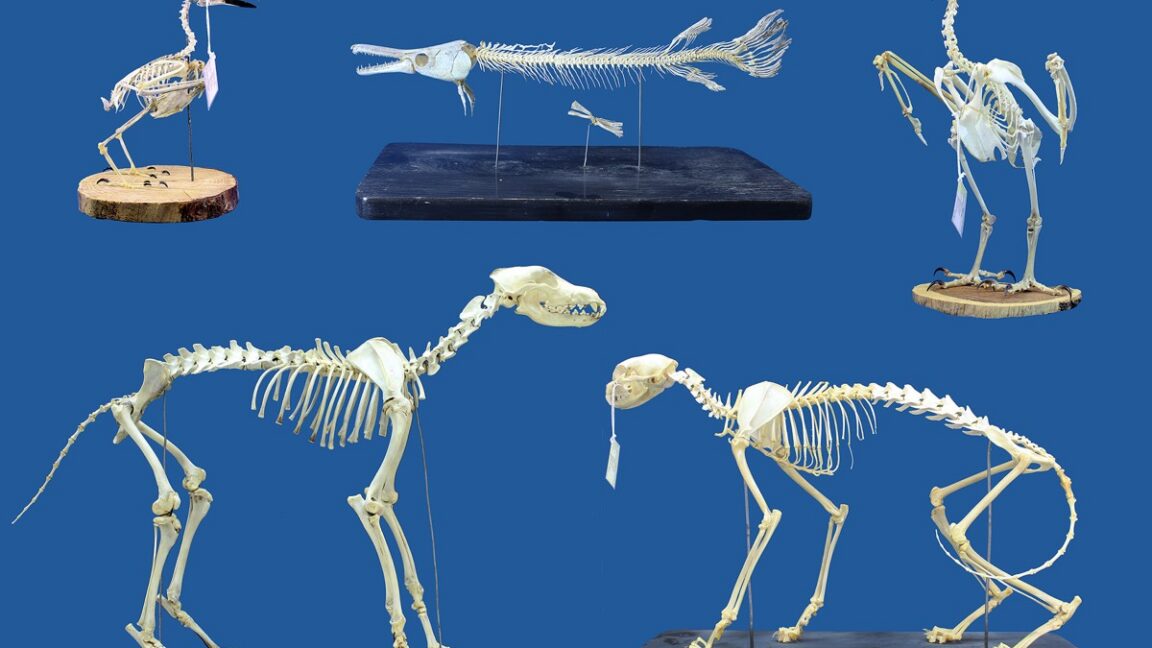
Beyond safety, the method proves highly adaptable. The researchers successfully cleaned a diverse range of specimens, from small bird skulls to a gray wolf, demonstrating the method's versatility. The ability to achieve thorough tissue removal without bone damage, a key advantage of biological cleaning, is fully maintained with superworms. The findings suggest that with careful adherence to the optimal larva-to-specimen ratio and proper maintenance, the method is both highly effective and practical for diverse research and display needs.
Pros and Cons
Pros:
- Exceptional Cleaning: Superworm larvae efficiently remove soft tissue from skeletal remains.
- Bone Integrity: With the optimal larva-to-specimen ratio (10-15g larvae per gram of specimen), the method causes no damage to bones.
- Reduced Infestation Risk: Unlike dermestid beetles, only the larval stage of superworms is required, and they do not pupate in crowded conditions, significantly lowering escape and infestation risks.
- Simplified Containment: Managing only larvae, and without the need for complex multi-stage containment, makes the process much more manageable.
- Adaptable: Effective for a wide range of specimen sizes and species.
- Practical: Offers a viable, effective alternative to existing methods with fewer drawbacks.
- Minimized Cleaning Time: Achieved efficiently when the optimal larvae-to-specimen ratio is applied.
Cons:
- Ratio Dependent: Optimal results require precise adherence to the 10-15g larvae per gram of specimen ratio.
- Manual Rotation: Larger specimens necessitate manual rotation every 6-8 hours, adding a labor component.
- Larvae Maintenance: Consistent feeding of larvae with fruit/vegetable peels is required to prevent health issues.
- Hygiene Requirements: Regular waste removal is critical to maintain hygienic conditions within the cleaning containers.
- Larval Stage Duration: Superworm larval stage (10-12 weeks) is longer than dermestid beetle larvae (5-7 weeks), which might influence scheduling or long-term colony planning, though it also offers a longer working window for the larvae.
Superworms vs. The Competition
To fully appreciate the superworm method, it's essential to compare it against established techniques:
| Feature / Method | Superworm Larvae | Dermestid Beetles | Other Methods (Burial, Enzymes, Chemicals, Boiling) |
|---|---|---|---|
| Cleaning Efficiency | High, thorough tissue removal | High, thorough tissue removal | Varies; often less precise or with significant drawbacks |
| Bone Damage Risk | Minimal/None (with optimal ratio) | Minimal/None | High risk for most (e.g., boiling, strong chemicals) |
| Infestation Risk | Low (only larval stage, no crowded pupation) | High (requires strict containment of all life stages) | N/A (for non-biological methods) |
| Containment Complexity | Simpler (management of larval stage only) | Complex (managing all life stages: eggs, larvae, pupae, adults) | Varies; often hazardous or difficult to control (e.g., burial sites) |
| Operational Cost | Commercially available (pet food), larva management | Colony maintenance, specialized containment equipment | Can be expensive (enzymes, chemicals) or labor-intensive |
| Specimen Cleaning Time | Minimized with optimal larva-to-specimen ratio | Efficient tissue removal | Often very long (burial) or very fast with damage (boiling) |
| Larval Stage Duration (Colony) | 10-12 weeks (longer window for active cleaning) | 5-7 weeks | N/A |
Buying Recommendation
For any museum, university, or forensic laboratory currently utilizing or contemplating biological methods for skeletal preparation, the superworm method presents a compelling and intelligent upgrade. It offers the proven effectiveness of biological cleaning without the pervasive anxiety of infestation that often accompanies dermestid beetle colonies. While it demands attention to detail regarding larval ratios and ongoing maintenance, the benefits in terms of collection safety and simplified management are substantial. We highly recommend exploring and adopting this method for its balance of efficiency, safety, and practicality. It's a forward-thinking approach that protects both the specimens and the integrity of the broader collection.
FAQ
Q: Are superworms truly safe for delicate bones?
A: Yes, the research explicitly states that with an optimal ratio of 10-15 grams of larvae per gram of specimen, the superworm method minimized cleaning time with no observed bone damage, even on delicate structures like bird skulls.
Q: Is the superworm method difficult to implement?
A: While it requires specific operational steps such as precise larva-to-specimen ratios, regular feeding of larvae with non-flesh items, and consistent waste removal, these are manageable processes. The overall containment and management are simpler than those for dermestid beetles due to only requiring the larval stage.
Q: Can superworms escape and cause infestations in other parts of a collection?
A: One of the most significant advantages of the superworm method is the reduced risk of infestation. The cleaning process only utilizes the larval stage, and these larvae do not pupate in crowded conditions. This makes managing and containing the superworm colony much easier, significantly lowering the risk of accidental escape and subsequent infestation compared to dermestid beetles, which require strict containment across all life stages.
Related articles
Android 17 QPR2 Beta 7.1: The Performance Relief You've Been Waiting
Android 17 QPR2 Beta 7.1: Finally Fixing the QPR1 Performance Woes Verdict: Android 17 QPR2 Beta 7.1 is a crucial and highly anticipated software update for Google Pixel users, specifically targeting and resolving the

DJI Solo Video Setups: Smart Choices for Lone Creators
This review delves into DJI's recommended solo video setups, highlighting the Osmo Pocket 3 Creator Combo as a top pick for its integrated camera, gimbal, and mic. It also covers stabilizers like the Osmo Mobile 8 and RS 4, and the DJI Mic Mini series for enhanced audio, providing honest pros, cons, and clear buying advice.

Ars Technica's Rocket Report: Your Essential Space Industry Briefing
Quick Verdict Ars Technica's Rocket Report, presented by veteran space reporter Stephen Clark, offers an invaluable and meticulously organized weekly (or similar frequency, implied by "Edition 9.15") digest of the most

Apple iPhone Duo: A Daring Debut with Notable Compromises
Apple's highly anticipated iPhone Duo, priced at $2,000, has gone on pre-order. While hailed as "Apple's most exciting device in a decade" for its innovative foldable design and immersive display, it comes with significant drawbacks like the absence of FaceID and a premium camera.

KDE Plasma 6.8: A Future-Focused 30th Anniversary Update
Quick Verdict KDE Plasma 6.8, arriving as the "30th Anniversary Edition," is a pivotal release that decisively pushes the desktop environment into the future. With a definitive farewell to native X11 sessions and a
Galaxy Watch One UI 9 Beta: Promising Progress, But Patience Needed
Galaxy Watch 8, Watch Ultra, and Watch 7 are receiving a new One UI 9 Watch beta build with bug fixes and a security patch. Active development signals progress, but a stable release date remains elusive.