
Smart Glasses in Court: A Risky Bet
This review analyzes the growing trend of banning smart glasses in sensitive environments, particularly courtrooms, due to privacy concerns and the potential for misuse. It highlights detection challenges and strong recommendations against their use.
Smart Glasses in Court: A Risky Bet
Quick Verdict: If you're considering sporting smart glasses in any sensitive environment, especially a courtroom, think again. The legal and social landscape is rapidly turning against their use, making them a liability rather than a helpful gadget.
Smart glasses represent a fascinating paradox in the tech world: as their capabilities grow and they integrate more seamlessly into our daily lives, they simultaneously face increasing resistance in contexts where privacy and integrity are paramount. The recent outright ban in Philadelphia’s courts serves as a stark reminder of this evolving scrutiny, signaling a clear trend that users of smart glasses need to acknowledge.
The Problem: When Tech Meets Tradition (and Privacy)
Philadelphia’s First Judicial District recently announced a comprehensive ban on all forms of AI glasses and glasses equipped with cameras, effective immediately. This move, as reported by the Philadelphia Inquirer, stems primarily from concerns over detection difficulty and potential witness intimidation. A court representative explicitly stated the challenge: "Since these glasses are difficult to detect in courtrooms, it was determined they should be banned from the building." The core issue is the potential for discreet recording of jurors, allowing for their identification outside of court – a serious threat to the judicial process, even if no confirmed cases of this specific misuse have yet surfaced.
Beyond theoretical concerns, real-world incidents underscore the immediate risks. Just this month, a man in a London court was caught using smart glasses to receive answers in what was described as semi-real-time during cross-examination. The judge noted his unusual pauses as a giveaway. This directly illustrates how smart glasses can be exploited to gain an unfair advantage, fundamentally undermining the fairness of legal proceedings. It highlights that the influence of such devices on the judicial process isn't just a hypothetical fear; it's already a tangible reality.
Design, Detection, and User Dilemmas
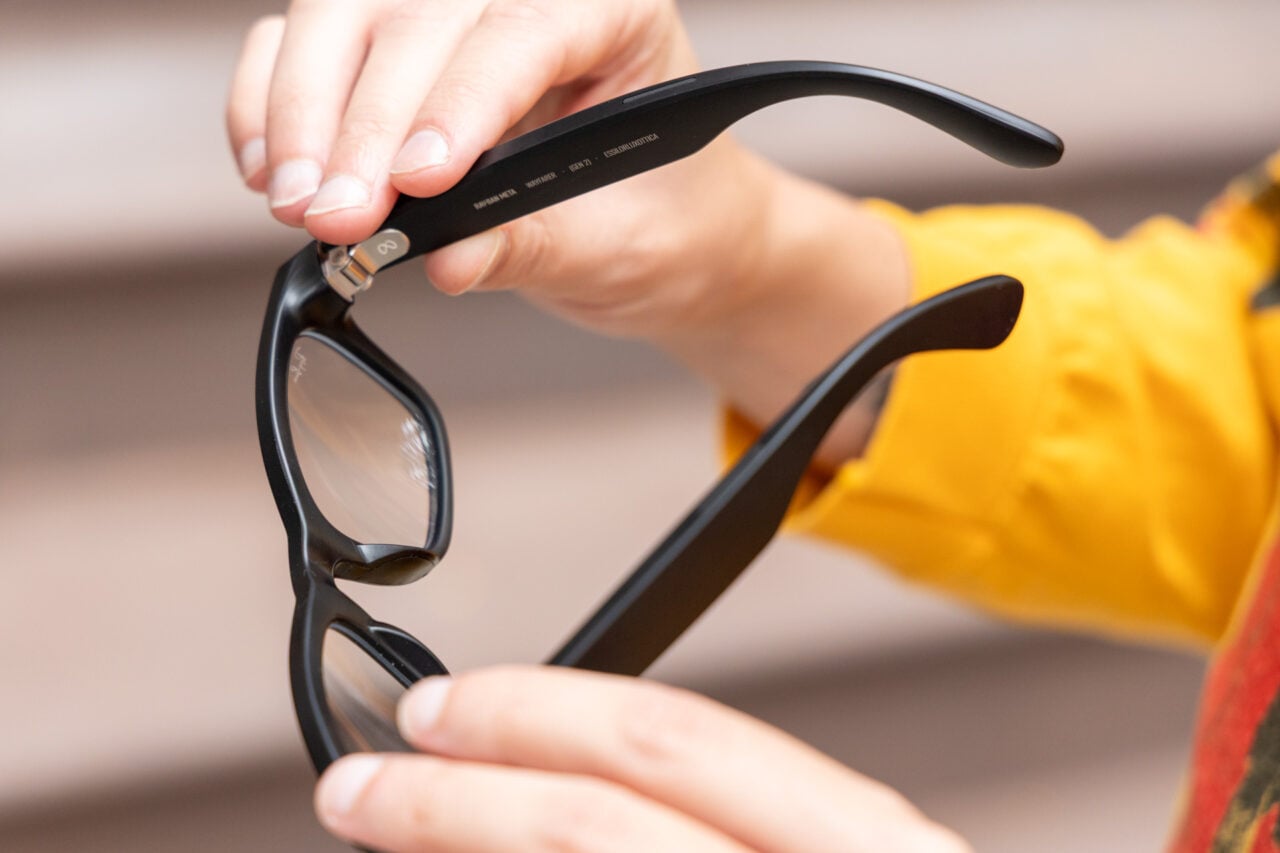
The fundamental challenge with smart glasses, from a regulatory standpoint, lies in their often discreet design and the resulting difficulty in detection. While some models, like the popular Ray-Ban Meta AI glasses, feature visible cameras that might raise immediate suspicion, others are far less conspicuous. Consider the Even Realities’ Even G2 glasses, which incorporate a display but lack speakers or cameras, making their “smart” capabilities far harder to discern by a casual observer.
This variety presents a significant hurdle for enforcement. Court security personnel would require specialized training to differentiate between standard eyewear and various types of smart glasses. Moreover, the potential for concealment further complicates matters. A user could easily cover a camera with a sticker or other discreet material while still benefiting from a hidden screen or receiving audio feeds. This creates a cat-and-mouse game where the technology is often a step ahead of detection methods, making outright bans a more practical, albeit broad, solution.
The Broader Landscape: A Shifting Tide
Philadelphia is by no means an outlier. Hawaii and Wisconsin already have similar prohibitions in place, and Colorado is actively considering its own ban. This pattern isn't confined to courtrooms; scrutiny is intensifying across various sensitive environments. Academic institutions, where integrity and intellectual honesty are paramount, and even places like cruise liners, where individuals have a reasonable expectation of privacy, are starting to raise questions and implement their own policies.
This growing regulatory push, coupled with concerns from "highest levels of public office," suggests a clear direction: policies and laws concerning smart glasses are unlikely to become more permissive anytime soon. Instead, we can anticipate a tightening of restrictions, particularly in public and semi-public spaces where privacy, security, and fairness are critical.
Pros (from a user's perspective, though increasingly risky in sensitive areas):
- Discreet Information Access: In non-regulated environments, smart glasses offer hands-free access to information, navigation, or communication.
- Potential for Assistance: In controlled, approved settings, they could theoretically aid in tasks or provide assistive technology.
Cons (especially in sensitive environments like courts):
- Legal Consequences: Wearing them in banned areas can lead to severe legal repercussions.
- Privacy Violations: Their recording capabilities raise significant privacy concerns for others.
- Ethical Compromise: They can be used to gain unfair advantages, as seen in the London court case.
- Difficulty in Detection: This pro for the user becomes a major regulatory headache, leading to broader bans.
- Public Scrutiny: Increased attention from regulators and public officials points to less permissive environments.
Buying (or Rather, Usage) Recommendation
Given the current climate, my recommendation is unequivocal: do not plan on wearing smart glasses to your next court appearance, or indeed any environment where privacy and integrity are strictly enforced. Whether your intention is to gain an edge, access information, or simply listen to music, the risks far outweigh any potential benefits. The example of Mark Zuckerberg’s entourage being scrutinized for composure in legal proceedings serves as a cultural marker for how one should present themselves. Smart glasses, by their very nature, introduce an element of uncertainty and potential for misuse that institutions are increasingly unwilling to tolerate.
The trajectory is clear: smart glasses, while innovative for personal use, are facing significant headwinds in official and sensitive settings. Users must be acutely aware of this evolving landscape and adjust their habits accordingly to avoid unintended legal or social consequences.
FAQ
Q: Why are smart glasses specifically banned in courts? A: The primary reasons include the difficulty of detecting them, the potential for recording jurors and witnesses (leading to intimidation), and the risk of users receiving real-time information or answers, which undermines the fairness of judicial proceedings.
Q: Are all smart glasses banned, even those without cameras? A: While some bans specifically target glasses with cameras or AI capabilities, the Philadelphia ban explicitly includes "all forms of AI glasses or glasses with cameras." The source also notes the challenge posed by glasses with only displays (like Even G2), implying that even these could fall under broad interpretations of bans due to their potential for discreet information display.
Q: What other environments are restricting smart glasses? A: Beyond courtrooms (Hawaii, Wisconsin, Colorado also have or are considering bans), the source mentions academia and cruise liners as other environments where smart glasses are facing increased scrutiny due to privacy expectations and concerns about integrity.
Related articles

Apple Unveils iPhone Duo: Pricey Foldable Sees Soaring Demand
Apple has officially entered the foldable smartphone arena with the long-anticipated launch of the iPhone Duo. Priced starting at a hefty $1,999, the device features a 5.4-inch outer display and a larger 7.6-inch inner
Android 17 QPR2 Beta 7.1: The Performance Relief You've Been Waiting
Android 17 QPR2 Beta 7.1: Finally Fixing the QPR1 Performance Woes Verdict: Android 17 QPR2 Beta 7.1 is a crucial and highly anticipated software update for Google Pixel users, specifically targeting and resolving the

DJI Solo Video Setups: Smart Choices for Lone Creators
This review delves into DJI's recommended solo video setups, highlighting the Osmo Pocket 3 Creator Combo as a top pick for its integrated camera, gimbal, and mic. It also covers stabilizers like the Osmo Mobile 8 and RS 4, and the DJI Mic Mini series for enhanced audio, providing honest pros, cons, and clear buying advice.

Ars Technica's Rocket Report: Your Essential Space Industry Briefing
Quick Verdict Ars Technica's Rocket Report, presented by veteran space reporter Stephen Clark, offers an invaluable and meticulously organized weekly (or similar frequency, implied by "Edition 9.15") digest of the most

Apple iPhone Duo: A Daring Debut with Notable Compromises
Apple's highly anticipated iPhone Duo, priced at $2,000, has gone on pre-order. While hailed as "Apple's most exciting device in a decade" for its innovative foldable design and immersive display, it comes with significant drawbacks like the absence of FaceID and a premium camera.
KDE Plasma 6.8: A Future-Focused 30th Anniversary Update
Quick Verdict KDE Plasma 6.8, arriving as the "30th Anniversary Edition," is a pivotal release that decisively pushes the desktop environment into the future. With a definitive farewell to native X11 sessions and a