
science: Major government research lab appears to be squeezing out
Noncitizen personnel at a National Institute of Standards and Technology (NIST) lab recently had their after-hours access revoked. This change restricts their ability to work at the government research facility outside of standard operational times. The specific reasons for this policy shift and its broader implications for scientific research or national security protocols are not detailed in the available information.
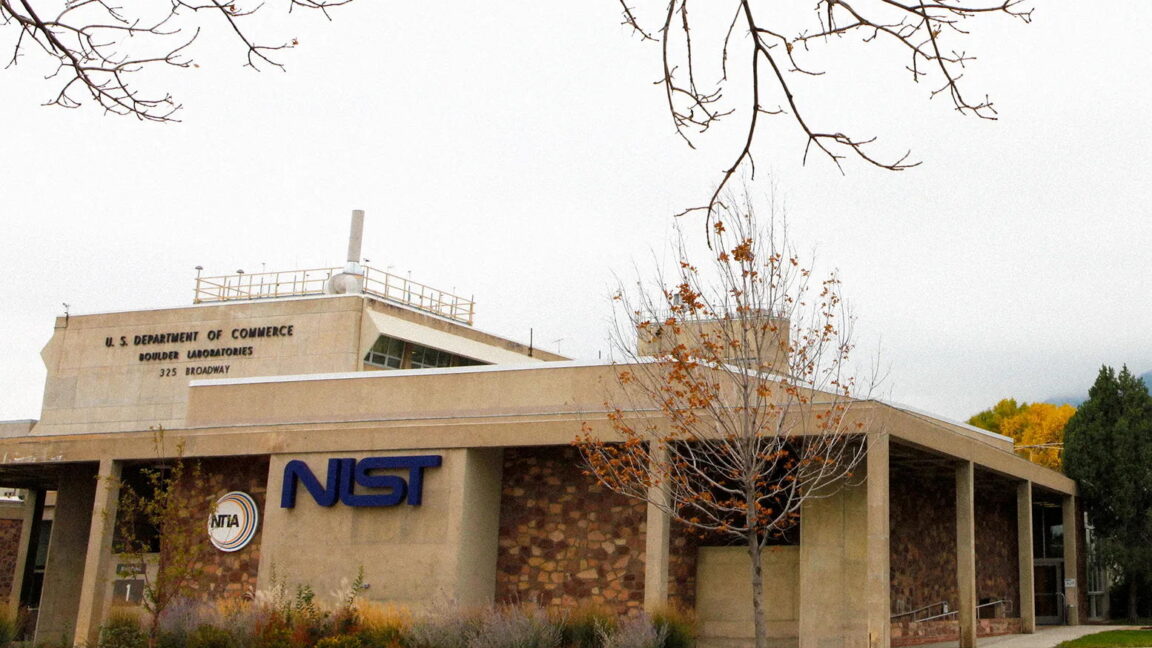
Major government research lab appears to be squeezing out foreign scientists
Key takeaways
- Last month, noncitizens working at a National Institute of Standards and Technology (NIST) lab had their after-hours access revoked.
- This policy change restricts their ability to enter and work at the government research facility outside of regular operational hours.
- The specific reasons for this action and its broader implications for NIST operations or scientific research are not detailed in the available information.
- Such restrictions often prompt discussions regarding national security, intellectual property, and international collaboration within federal research institutions.
What happened
In a recent development reported by Ars Technica, noncitizens associated with a specific National Institute of Standards and Technology (NIST) lab experienced a significant change in their access privileges. As of last month, these individuals lost their after-hours access to the facility. This means that non-U.S. citizens who had previously been able to enter and work within the designated NIST laboratory outside of standard business hours – typically evenings, weekends, or holidays – are no longer permitted to do so.
The policy adjustment directly impacts the operational flexibility and research schedules of affected noncitizen personnel. While the nature of the "NIST lab" is inherently tied to scientific and technological advancement under U.S. government oversight, the precise scope of this access revocation, including the number of individuals affected or the specific projects impacted, has not been disclosed in the provided source material.
Why it matters
The restriction of after-hours access for noncitizens at a federal facility like a NIST lab carries potential significance, even without explicit details on the rationale behind the decision. Government research institutions, including NIST, often rely on a diverse pool of talent, including international scientists, to drive innovation and contribute to critical projects across various scientific and engineering disciplines.
After-hours access is frequently essential for researchers. It allows for flexible work schedules, uninterrupted focus on complex experiments, or the use of specialized equipment that may be unavailable during peak daytime hours. Losing this privilege could potentially hinder research progress, disrupt ongoing projects, and affect the productivity of the noncitizen scientists involved.
More broadly, policy changes concerning access for noncitizens at sensitive government research facilities can raise important questions regarding national security, the protection of intellectual property, and the future of international scientific collaboration. While the immediate causes and specific implications of this particular NIST access change are currently unknown, such actions in federal labs can signal evolving approaches to security protocols or personnel management within critical research environments.
Key details / context
The source information from Ars Technica is concise, stating only that "Noncitizens" lost after-hours access to a "NIST lab" last month. Beyond this core fact, the provided material does not offer additional key details or context. This includes an absence of information regarding:
- The specific NIST lab or division where this policy was implemented.
- The total number of noncitizen researchers or staff members affected by the change.
- The stated reasons or justifications for the revocation of after-hours access.
- Any broader policy shifts within NIST or other government research institutions that might contextualize this decision.
- The direct impact observed on research projects or lab operations.
Therefore, a comprehensive understanding of the situation, including any potential implications for research, collaboration, or wider national policy, cannot be extrapolated from the given information.
What happens next
Based solely on the available source material, there is no information provided to indicate what will happen next. The duration of this restriction, whether it is a temporary measure or a permanent policy change, remains unstated. Furthermore, the potential for noncitizen researchers to regain after-hours access, or any anticipated future adjustments to security or access protocols at NIST labs, is not addressed.
The immediate and long-term consequences for the affected noncitizen personnel, for the specific NIST lab, or for collaborative projects are currently unknown. Without further details from NIST or subsequent reporting, any projections about future developments would be speculative and fall outside the scope of the provided facts.
Related articles

TCG Pocket Responds: A Much-Needed Pace Shift for Pokémon Fans
Pokémon TCG Pocket is rolling out a major update for its second anniversary, primarily addressing player concerns about overwhelming content releases by shifting to a six-week set schedule. This aims to curb player decline and improve overall engagement by giving trainers more time to collect and strategize. The update also adds new collection methods, improved deck-building features, and enhanced trading functionality.

Etzioni on AI: Where I agree with 'doomer' Max Tegmark, and where
AI researcher Oren Etzioni and MIT professor Max Tegmark debated AI's risks, agreeing on the urgent need for action and the failure of self-regulation, but clashing over whether recent incidents are due to "rogue bots" or human error. Etzioni emphasizes human accountability and technical "boxing in" of AI systems, contrasting with Tegmark's focus on existential threats.
This AAA Minesweeper Parody is a Hilarious Shot at Modern Gaming
Dive into Mike Lacher's hilarious browser game, `Triple-A Minesweeper`, a brilliant parody imagining the classic puzzle game as a modern, story-driven blockbuster. Featuring an oblivious protagonist and dramatic character calls inspired by GTA and Cyberpunk, it's a satirical jab at today's gaming trends. Experience the absurdity of a multi-million dollar Minesweeper that thankfully isn't real.

.si Domain Gold Rush: A Speculative Play on "Super Intelligence
Review of the .si domain gold rush: a speculative boom driven by the US government's "Super Intelligence" rebrand. India leads US in registrations, focused on short names. Low cost fuels speculation, but future value is uncertain.

Nadella Honored as U.S. Halts Microsoft's Green Card Path for Workers
Microsoft CEO Satya Nadella was honored with a national medal by President Trump, just hours after the administration suspended Microsoft from the PERM program, a critical pathway for foreign workers to gain permanent residency. Vice President JD Vance accused Microsoft of abusing the system, a move that starkly contrasts with Nadella's own journey from an H-1B visa to U.S. citizenship and leadership of a major tech company.

Sony Passes VR Torch: Meta Snaps Up Over 400 Patents in Major Shake-Up
Sony has agreed to transfer over 400 global VR patents, including for AR and MR, to Meta following a December 2025 agreement. This move signals a potential wind-down of Sony's VR hardware efforts, while strengthening Meta's position despite their Reality Labs division facing massive losses and recent restructuring. The transfer will reshape the future of immersive tech.