
RAMpocalyse USB Core Memory: A Nostalgic, Impractical Marvel
Verdict Polymatt's DIY USB drive featuring hand-threaded magnetic core memory is a fascinating, meticulously crafted homage to computing's past. While utterly impractical for modern storage needs with its 64-bit
Verdict
Polymatt's DIY USB drive featuring hand-threaded magnetic core memory is a fascinating, meticulously crafted homage to computing's past. While utterly impractical for modern storage needs with its 64-bit capacity, its aesthetic appeal, persistent storage, and unique radiation resistance make it a standout for enthusiasts, educators, and anyone appreciating the art of retro-tech.
Introduction: A Response to the RAMpocalyse
In an era dubbed the "RAMpocalyse," where memory prices skyrocket and component crunches frustrate PC builders, some makers are turning to unconventional solutions. One such visionary is Polymatt, who, spurred by these market woes, embarked on a truly unique project: constructing a USB drive utilizing ancient Apollo-era magnetic core memory. This isn't a solution for your gaming rig or workstation, but rather a charming, if anachronistic, feat of engineering that resurrects a fundamental piece of computing history. Our review dives into this intriguing device, offering an honest look at its capabilities, design, and overall value, not as a practical storage solution, but as a compelling piece of tech artistry.
Key Details: Bits, Not Bytes, from Russian Salvage
The most striking detail of Polymatt's creation is its storage capacity: a mere 64 bits, equating to 8 bytes. In an age of terabyte SSDs and gigabyte RAM sticks, this figure is almost comically small. Each of the 64 tiny iron rings, painstakingly hand-threaded, represents a single bit of data. These crucial magnetic rings were salvaged from an old Russian computer, adding a layer of historical intrigue to the build. This core memory technology, once robust enough for the Apollo spacecraft guidance computers, offers a stark contrast to today's silicon-based components.
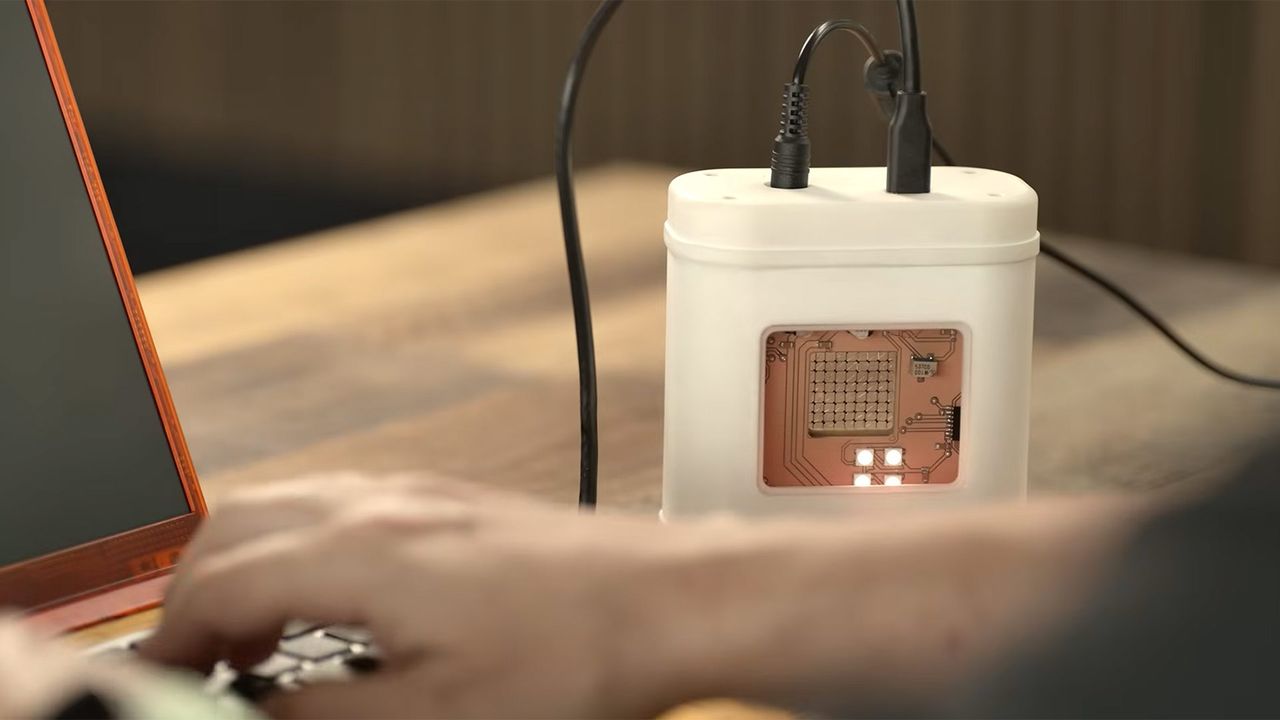
The project itself is a testament to Polymatt's dedication, involving a range of modern maker tools. Components were crafted by hand, with the aid of a soldering iron, a CNC machine, and even a Bambu Lab A2L 3D printer for custom parts. The finished memory array is then encased, thoughtfully immersed in silicon oil—a choice noted by Polymatt for its aesthetic appeal rather than a strict functional requirement. This fusion of salvaged historical components with contemporary fabrication methods creates a truly unique artifact.
Design, Build Quality, and User Experience
From a purely functional standpoint, Polymatt himself humbly refers to his creation as the "world’s worst USB drive" when judged by its capacity-to-weight ratio. And he's not wrong. For anyone accustomed to the sleek, compact, and high-capacity flash drives of today, this device is a behemoth for its data payload. However, to evaluate it solely on these metrics would be missing the point entirely.
Visually, the device is a triumph. The exposed, hand-threaded core memory array, submerged in silicon oil, presents a mesmerizing, almost artistic display. It’s a conversation starter, a physical representation of digital history, and undoubtedly looks "great on the desk." The build quality, given it's a DIY project, appears exceptional, with careful attention paid to both the functional wiring and the overall presentation.
The user experience, however, is decidedly retro. Unlike a modern USB drive that can hold countless files, this device is designed to interact with a single, persistent file called "core.txt." This means you're not dragging and dropping documents or media; you're engaging with the fundamental mechanics of binary data storage. The core memory's inherent non-volatility means data persists even when the device is unplugged, a property verified by Polymatt during testing. This characteristic, along with its notable resistance to radiation bursts (which would typically obliterate modern memory), highlights the niche but significant advantages of this ancient technology.
Pros and Cons: A Tale of Two Eras
Let's break down the advantages and disadvantages of this extraordinary creation:
Pros:
- Unique Aesthetic Appeal: A truly eye-catching device that serves as both a functional (if minimal) memory unit and a piece of technological art.
- Persistent Storage: Unlike volatile RAM, data stored on the magnetic core memory remains intact even without power, offering true non-volatile storage.
- Radiation Resistant: Inherently more robust against electromagnetic interference and radiation bursts than modern semiconductor memory, a fascinating and rare attribute.
- Educational Value: Provides a tangible demonstration of fundamental computer memory principles, making it an excellent learning tool for students and enthusiasts.
- DIY Spirit & Craftsmanship: Showcases impressive ingenuity, patience, and skill in resurrecting an obsolete technology.
- Historical Significance: Revitalizes a technology crucial to early computing and space exploration.
Cons:
- Extremely Low Capacity: 64 bits (8 bytes) is practically useless for any contemporary data storage need.
- Impracticality: Not a viable alternative to modern RAM or USB flash drives in terms of speed, size, or cost-effectiveness.
- Limited Functionality: Designed to store and edit only a single, simple text file.
- Availability: This is a custom, one-off project, not a product you can purchase off the shelf.
- Size/Weight: Undeniably large and heavy for its minuscule storage capacity.
Comparison to Alternatives
Directly comparing Polymatt's core memory USB drive to modern alternatives like SSDs, conventional USB flash drives, or even modern RAM modules is like comparing a vintage abacus to a supercomputer – the functional gap is immense. A standard 128GB USB drive offers roughly 1 trillion times the capacity of this 8-byte marvel. Modern storage is faster, smaller, cheaper per bit, and universally compatible.
The source material does mention one comparable "alternative": another bizarre 128-byte magnetic core memory USB drive created by a Japanese tech enthusiast earlier in the year. While that project boasted double the capacity (128 bytes!), Polymatt's creation is noted to be "rather better finished" aesthetically. This suggests a higher level of polish and presentation in Polymatt's design, particularly with the silicon oil immersion.
In essence, both are more akin to intricate scientific models or art installations than consumer products. The true "alternative" for anyone needing actual storage would be any standard USB flash drive or external SSD available today.
Buying Recommendation
Let's be clear: you cannot "buy" Polymatt's RAMpocalyse USB core memory drive in the traditional sense. It's a bespoke, hand-built project. Therefore, my recommendation isn't about purchasing this specific device, but rather about who would appreciate its existence or who might be inspired to undertake a similar project.
This device is highly recommended for:
- Tech Enthusiasts and Hobbyists: Those with a deep appreciation for computing history, retro-tech, and DIY projects.
- Educators: An excellent demonstration tool for teaching the fundamentals of early computer memory.
- Collectors of Unique Tech Artifacts: If a limited-run, historically significant, and visually striking piece of tech appeals to you, this concept is gold.
It is not recommended for:
- Anyone seeking practical storage: This is not a functional replacement for any modern memory or storage device.
- Budget-conscious consumers: The time, effort, and specialized components likely made this an expensive endeavor for Polymatt, though the final 'price' is irrelevant to a DIY project.
Polymatt's magnetic core memory USB drive is not about utility; it's about the journey, the education, and the sheer delight of bringing a piece of computing history back to life. It stands as a fascinating counterpoint to the relentless pursuit of speed and capacity, reminding us of the foundational technologies upon which our digital world is built.
FAQ
Q: What is the actual storage capacity of this USB drive? A: The device offers 64 bits of storage, which translates to 8 bytes. This is extremely low compared to modern storage devices.
Q: Is this a practical alternative to modern RAM or USB flash drives during a component shortage? A: No, absolutely not. While the project was inspired by high RAM prices (the "RAMpocalyse"), its capacity and functionality make it entirely impractical for any modern computing task. It's a demonstration of historical technology, not a usable contemporary storage solution.
Q: What makes this magnetic core memory unique compared to modern memory? A: Magnetic core memory is non-volatile, meaning it retains its data even when power is removed, similar to flash drives, but unlike modern DRAM (RAM). It is also notably resistant to radiation bursts, a feature that made it suitable for applications like the Apollo spacecraft guidance computers.
Related articles
Android 17 QPR2 Beta 7.1: The Performance Relief You've Been Waiting
Android 17 QPR2 Beta 7.1: Finally Fixing the QPR1 Performance Woes Verdict: Android 17 QPR2 Beta 7.1 is a crucial and highly anticipated software update for Google Pixel users, specifically targeting and resolving the

DJI Solo Video Setups: Smart Choices for Lone Creators
This review delves into DJI's recommended solo video setups, highlighting the Osmo Pocket 3 Creator Combo as a top pick for its integrated camera, gimbal, and mic. It also covers stabilizers like the Osmo Mobile 8 and RS 4, and the DJI Mic Mini series for enhanced audio, providing honest pros, cons, and clear buying advice.

Ars Technica's Rocket Report: Your Essential Space Industry Briefing
Quick Verdict Ars Technica's Rocket Report, presented by veteran space reporter Stephen Clark, offers an invaluable and meticulously organized weekly (or similar frequency, implied by "Edition 9.15") digest of the most

Apple iPhone Duo: A Daring Debut with Notable Compromises
Apple's highly anticipated iPhone Duo, priced at $2,000, has gone on pre-order. While hailed as "Apple's most exciting device in a decade" for its innovative foldable design and immersive display, it comes with significant drawbacks like the absence of FaceID and a premium camera.
KDE Plasma 6.8: A Future-Focused 30th Anniversary Update
Quick Verdict KDE Plasma 6.8, arriving as the "30th Anniversary Edition," is a pivotal release that decisively pushes the desktop environment into the future. With a definitive farewell to native X11 sessions and a
Galaxy Watch One UI 9 Beta: Promising Progress, But Patience Needed
Galaxy Watch 8, Watch Ultra, and Watch 7 are receiving a new One UI 9 Watch beta build with bug fixes and a security patch. Active development signals progress, but a stable release date remains elusive.