
programming: Your MVP doesn’t need a Kubernetes cluster
For startups building an MVP, embracing complex infrastructure like Kubernetes too early can be a major hindrance. This article, inspired by insights from Render's CEO Anurag Goel, argues for prioritizing product development over operational overhead. Learn why simpler, managed platforms are often the best choice for accelerating time-to-market and validating your core business idea.

For many modern software developers, the allure of Kubernetes is undeniable. It promises robust container orchestration, scalable infrastructure, and self-healing applications—capabilities that sound incredibly appealing, especially when envisioning a successful, high-traffic product. However, as experienced developers know, the path from idea to a viable Minimum Viable Product (MVP) is often fraught with choices, and over-engineering infrastructure too early can be a critical misstep.
This perspective is championed by figures like Anurag Goel, CEO and co-founder of Render, who draws on firsthand experience. His journey to building Render was born from the frustrations encountered while "spinning up nodes at Stripe"—a task that, for an early-stage product or even a new feature, represents significant, undifferentiated heavy lifting. The core message is clear: for most startups, beginning with the management of a Kubernetes cluster and its associated cloud infrastructure is simply not the optimal starting point for an MVP.
The Operational Burden of Kubernetes
Kubernetes is a powerful platform, providing unparalleled control over your deployment environment. It excels at managing complex, distributed systems, offering features like automated rollouts, scaling, and self-healing. For a mature product with significant scale and a dedicated operations team, these capabilities are invaluable. However, for an MVP, the extensive setup, configuration, and ongoing maintenance responsibilities can become a massive drain on resources.
Consider the typical journey: setting up a Kubernetes cluster involves selecting a cloud provider, configuring networking, defining deployments, services, ingress controllers, persistent storage, and implementing robust monitoring and logging solutions. Each of these steps introduces complexity and a steep learning curve. An early-stage team, often small and generalist, suddenly finds itself diverting precious engineering hours from developing core product features to becoming Kubernetes experts. This operational overhead can significantly slow down iteration cycles, delay market feedback, and ultimately jeopardize the MVP's viability.
Prioritizing Product Development with Managed Services
Instead of grappling with infrastructure minutiae, the focus for an MVP should be on validating the core business idea and delivering value to early users as quickly as possible. This is where managed platforms, often described as "the cloud for builders"—like Render—come into their own. They offer intuitive infrastructure for scale by abstracting away the complexities of underlying compute, networking, and storage.
These platforms provide streamlined deployment pipelines, automatic scaling for common application types (web services, databases, cron jobs), and integrated monitoring. Developers can deploy their applications with minimal configuration, often connecting directly to a Git repository. This simplicity allows engineering teams to concentrate almost entirely on writing code that directly impacts the user experience and business logic, rather than spending time on infrastructure provisioning and maintenance. The immediate benefits include faster deployment times, quicker bug fixes, and a reduced need for specialized DevOps expertise during the critical initial phases.
Matching Infrastructure to Stage: The MVP Philosophy
An MVP is designed to test hypotheses with the smallest possible investment. Introducing complex infrastructure prematurely goes against this philosophy. When you're trying to determine if your product has market fit, you need agility above all else. A simple Platform-as-a-Service (PaaS) or serverless solution allows you to deploy, iterate, and pivot with minimal friction.
"What if we scale?" is a common question, but for an MVP, it's often a premature optimization. Scaling is a good problem to have, and most managed platforms provide clear, well-documented paths to accommodate growth. Many offer options to upgrade to more powerful instances, add replication, or even migrate to more customized infrastructure as your needs evolve and your team expands. The key is to address scaling challenges when they actually arise, not to build for hypothetical future scale at the expense of current agility.
The Evolving Role of DevOps
One might wonder if embracing simpler infrastructure diminishes the need for DevOps. Anurag Goel's insight is reassuring: "DevOps jobs aren’t going anywhere." This statement highlights an important shift in focus. While managed platforms handle the operational mechanics of deployment and scaling, the strategic aspects of DevOps remain crucial.
For a team leveraging managed services, DevOps professionals transition from managing individual servers or Kubernetes clusters to higher-level concerns: designing robust CI/CD pipelines, optimizing application performance and resource utilization within the managed platform, implementing sophisticated observability, ensuring security best practices, and managing cost efficiency. They become architects of the development and delivery workflow, leveraging the platform's capabilities to build resilient, efficient systems, rather than spending time on basic infrastructure setup.
Practical Takeaways for Your MVP
- Prioritize Value Delivery: Focus intensely on building core product features that solve user problems and validate your business hypothesis. Every hour spent on infrastructure management is an hour not spent on product development.
- Embrace Simplicity: Start with the simplest viable infrastructure that meets your current needs. Managed services, serverless functions, or PaaS offerings are often ideal for MVPs.
- Defer Complexity: Resist the temptation to adopt cutting-edge, complex technologies like Kubernetes purely for their perceived future benefits. Address scaling and advanced orchestration needs when your product demonstrates clear traction and justifies the investment.
- Leverage Abstraction: Utilize platforms that abstract away infrastructure complexities, allowing your team to focus on application code and business logic.
In conclusion, while Kubernetes is a phenomenal technology for large-scale, complex systems, it often represents an unnecessary burden for an MVP. By choosing simpler, managed infrastructure, startups can accelerate their time to market, gather critical user feedback sooner, and increase their chances of building a product that truly resonates with its audience. Save the Kubernetes cluster for when your MVP proves its worth and needs that level of control and scale.
FAQ
Q: Why is Kubernetes considered too complex for an MVP?
A: For an MVP, Kubernetes introduces significant operational overhead related to setup, configuration, maintenance, and a steep learning curve. This diverts critical engineering resources and time away from developing core product features and validating the business idea, slowing down iteration and market feedback.
Q: What are the benefits of using managed platforms (like PaaS or serverless) for an MVP?
A: Managed platforms abstract away infrastructure complexities, offering streamlined deployment, automatic scaling, and integrated monitoring. This allows development teams to focus on core business logic, accelerate time-to-market, reduce operational burden, and lower initial costs (in terms of time and specialized expertise).
Q: Does choosing simpler infrastructure mean DevOps jobs will become obsolete?
A: No, the role of DevOps evolves. Instead of managing individual servers or Kubernetes clusters, DevOps professionals focus on higher-level strategic concerns such as designing robust CI/CD pipelines, optimizing application performance within managed platforms, implementing advanced observability, ensuring security, and managing cost efficiency. The focus shifts from tactical infrastructure management to strategic workflow and system optimization.
Related articles

TCG Pocket Responds: A Much-Needed Pace Shift for Pokémon Fans
Pokémon TCG Pocket is rolling out a major update for its second anniversary, primarily addressing player concerns about overwhelming content releases by shifting to a six-week set schedule. This aims to curb player decline and improve overall engagement by giving trainers more time to collect and strategize. The update also adds new collection methods, improved deck-building features, and enhanced trading functionality.
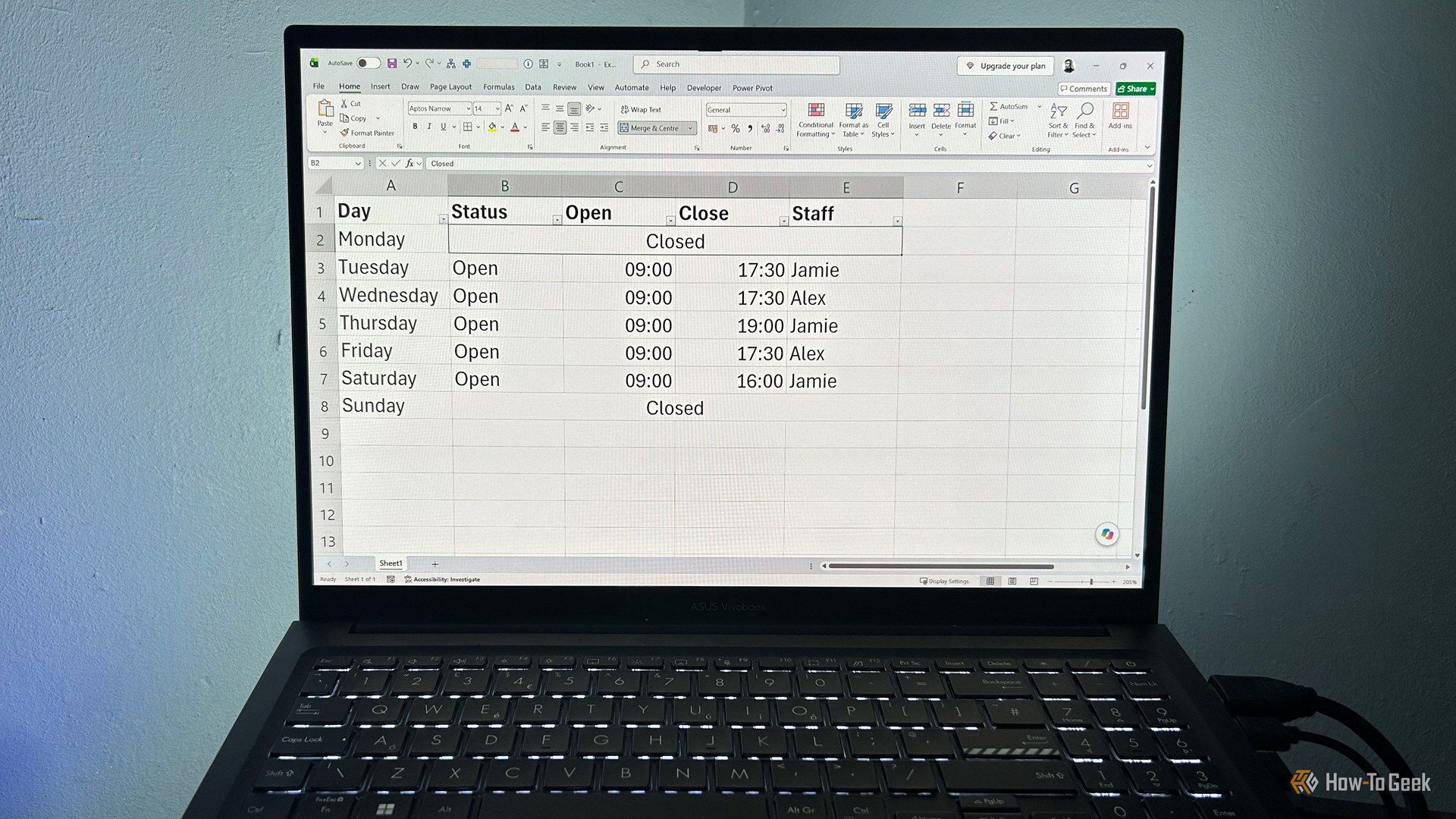
Ditch Merge & Center: The Better Way to Align Text in Excel
Learn to use Excel's "Center Across Selection" to align text across cells without merging, avoiding common data manipulation issues. This guide provides steps to utilize this newly accessible feature and add it to your Quick Access Toolbar.

Ars Technica's Rocket Report: Your Essential Space Industry Briefing
Quick Verdict Ars Technica's Rocket Report, presented by veteran space reporter Stephen Clark, offers an invaluable and meticulously organized weekly (or similar frequency, implied by "Edition 9.15") digest of the most
AI's Confidence vs. Formal Methods' Rigor: Design Flaws & Verification
While AI accelerates code generation, formal methods remain critical for ensuring system correctness. Languages like TLA+ and tools like Quint enable developers to model and verify system designs before coding, catching subtle flaws. Quint makes formal methods more accessible with developer-friendly syntax and executability. This approach is vital for verifying AI-generated code through trace validation and model-based testing, ensuring reliability against real-world data.
Ephemeral PR Preview Environments on GKE: A Deep Dive
Every development team eventually grapples with the limitations of shared staging environments. The familiar scenario: multiple features deployed simultaneously, database migrations clashing, and the phrase "it works on
Galaxy Watch One UI 9 Beta: Promising Progress, But Patience Needed
Galaxy Watch 8, Watch Ultra, and Watch 7 are receiving a new One UI 9 Watch beta build with bug fixes and a security patch. Active development signals progress, but a stable release date remains elusive.