
Pixel 10 Pro XL: Slow Charging is a Dealbreaker
The Pixel 10 Pro XL's sluggish charging speeds make it hard to recommend, especially when rivals offer faster top-ups and longer battery life. A detailed review highlights this critical flaw.
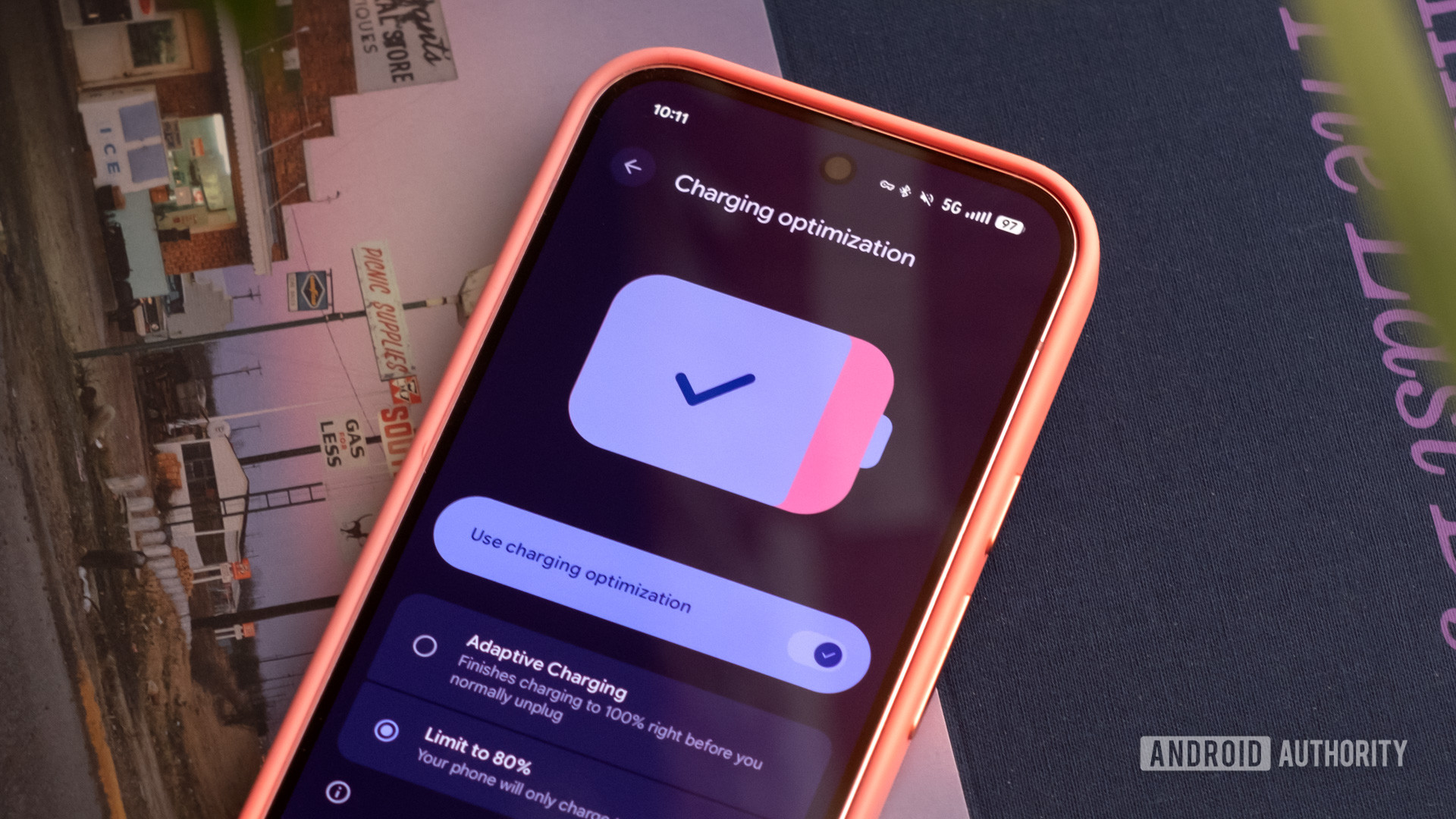
Quick Verdict: A Lagging Powerhouse
The Google Pixel 10 Pro XL showcases impressive cameras and solid gaming performance thanks to its Tensor chip. However, its Achilles' heel is undeniably its charging speed. In an era where rivals offer rapid top-ups in minutes, the Pixel 10 Pro XL's sluggish charging creates significant battery anxiety, making it a frustrating device to rely on for users accustomed to modern fast-charging standards. For many, including this reviewer, it’s a dealbreaker that makes returning to the Pixel impossible.
The Unbearable Slowness of Charging
I admit it: I'm an erratic charger. Between a busy schedule and the usual chaos of getting kids out the door, grabbing my phone off the charger at the last second with fingers crossed for enough battery life is a common occurrence. My recent experiences with devices like the OPPO Find X9 Ultra and Xiaomi 17 Ultra have spoiled me, offering enough power for a full day after just 20 minutes on the cable. This convenience has become a non-negotiable.
So, when I recently picked up the Pixel 10 Pro XL again — primarily to revisit its acclaimed camera system and evaluate gaming on its Tensor chip — the battery anxiety came flooding back almost immediately. It's not that the Pixel 10 Pro XL's 5,200mAh battery life is inherently poor; it's adequate, but far from stellar. The real problem is how long it takes to recover once low. Being tethered to a charger for extended periods or relying on bulky battery packs just isn't practical when you need to quickly snap a photo of a fleeting family moment. My single biggest wish for the upcoming Pixel 11 Pro XL is a significant upgrade in charging speed. Honestly, it's long overdue.
Lagging Far Behind the Competition
My personal frustration isn't just anecdotal; it's backed by concrete testing data. The Pixel 10 Pro XL lags severely behind its competitors. To illustrate, consider the OnePlus 15: it charges roughly twice as fast as the Pixel 10 Pro XL, despite featuring a larger 7,300mAh Si/C Li-Ion battery compared to the Pixel's 5,200mAh cell. Even for quick top-ups, the disparity is stark: 20 minutes on the plug gets the OnePlus 15 to an impressive 64% charge, while the Pixel 10 Pro XL only reaches 45%. This means rival flagships not only boast longer battery life but also spend significantly less time on the charger to achieve it.
The situation is made even more apparent with Samsung's latest flagships. The new Galaxy S26 Ultra, for instance, has adopted 60W charging, allowing it to hit a full charge in just 42 minutes. This matches the fastest Chinese flagships on the market, like the Xiaomi 17 Ultra. While the S26 Ultra has a slightly smaller 5,000mAh battery, it will be fully charged long before the Pixel 10 Pro XL even reaches 80%. Even Samsung’s Plus models offer 45W charging, which marginally outclasses Google’s 37W peak for the Pixel 10 Pro XL, and its regular and Pro models are stuck at an even slower 27W.
Google's top-tier Pixel phones now find themselves in the slow lane alongside only the latest iPhone 17 series in terms of charging speed, and even Apple's USB PD AVS-backed phones charge quicker from empty. What's more concerning is that Google's charging times for its most powerful flagships have remained virtually unchanged for the past three generations. Despite the Pixel 10 Pro XL increasing battery capacity slightly and bumping charging power from 27W to 37W since the Pixel 8 Pro, there's been no meaningful improvement in the time it takes to fully charge the device.
During this same period, Samsung has cut its charging time by a significant 20 minutes between the S24 and S26 Ultras. While Chinese brands like OnePlus and Xiaomi have seen a slight increase in total charging times (around 10 minutes), they still charge much faster than the Pixel and often provide around 40% more battery capacity. This disparity is particularly frustrating given Google's very specific and somewhat niche 20V USB PD PPS charging requirement for its XL smartphones. This requirement complicates charger selection and limits fast-charging interoperability with older plugs, forcing users to buy specific 20V PPS-compatible chargers to avoid being capped at much lower 27W speeds. Beyond the charging speed itself, Pixel devices have also been plagued by well-documented battery heating issues, adding another layer of concern for users.
Pixel Charging Performance Comparison
To provide a clearer picture, here's how the Pixel 10 Pro XL stacks up against some key competitors mentioned in the source:
| Feature | Pixel 10 Pro XL | OnePlus 15 | Samsung Galaxy S26 Ultra |
|---|---|---|---|
| Battery Capacity | 5,200mAh Li-Ion | 7,300mAh Si/C Li-Ion | 5,000mAh Li-Ion |
| Peak Charging Power | 37W | Very High (Implied) | 60W |
| Time to Full Charge (Approx.) | ~85 minutes | ~40 minutes | 42 minutes |
| 20-Minute Top-up | 45% | 64% | Significant (Implied) |
| Specific Charging Needs | 20V USB PD PPS | Standard Fast Charging | 20V/3A (with fallbacks) |
The Path Forward for Pixel 11 Pro XL
Addressing the Pixel's charging woes isn't simple. While many users desire larger batteries for better endurance, simply increasing battery capacity without a proportional boost in charging power would only worsen the 'time-to-full' problem. The two improvements must come hand-in-hand. Unfortunately, there's no indication that Google is embracing advanced battery technologies like silicon-carbon, which Chinese manufacturers utilize, and some reports even suggest a potential battery downgrade for the Pixel 11 Pro Fold.
For impatient users like myself, the Pixel 11 Pro XL (and the entire Pixel 11 series) simply needs to charge faster. Filling a 5,200mAh battery in under an hour isn't an unreasonable expectation for a 2026 flagship. Samsung has demonstrated this is achievable without resorting to proprietary charging standards like SuperVOOC or HyperCharge that often create compatibility issues with generic plugs and power banks.
However, achieving fast and safe charging is technically complex. It requires high-quality batteries, precision integrated circuits (ICs) to manage voltage and current, and efficient power conversion to minimize heat. While Google's use of USB PD PPS is designed to help, its apparent reliance on lower-quality, presumably cheaper batteries and a less optimized hardware configuration hinders performance. More expensive battery technologies, such as the dual-cell designs pioneered by OnePlus and OPPO, could reduce stress and improve efficiency. It's clear that rapid charging is possible on modern smartphones, but it requires a conscious hardware priority from the manufacturer.
This level of hardware investment doesn't come cheap, but it's what consumers should expect from a premium device like the Pixel 11 Pro XL, which is projected to cost upwards of $1,199. Personally, I'd rather see Google invest in essential premium hardware like improved charging than in another AI feature I might never use. Fast charging is rapidly becoming a make-or-break feature for me, especially at this price point. If the Pixel 11 series doesn't address this critical flaw this August, I'll likely be skipping it.
Buying Recommendation
The Google Pixel 10 Pro XL is a competent smartphone in many areas, particularly its camera capabilities and software experience. However, its severely outdated charging speeds are a major drawback in today's market. If you are someone who consistently remembers to charge your phone overnight or doesn't mind prolonged charging times, you might find its other features compelling. However, if you, like me, rely on quick top-ups throughout the day, frequently find yourself low on battery, or simply expect modern flagship performance from a premium device, the Pixel 10 Pro XL's charging limitations will be a source of constant frustration. For a phone costing over $1,199, this is a glaring omission that makes it hard to recommend over faster-charging alternatives. Consider waiting for the Pixel 11 series, hoping Google finally prioritizes this crucial aspect.
FAQ
Q: Is the Pixel 10 Pro XL's battery life inherently bad?
A: Not necessarily bad, but it's not outstanding. The main issue isn't the battery's longevity per se, but rather how long it takes to fully recharge once it's depleted, leading to significant battery anxiety for users who need quick top-ups.
Q: Does the Pixel 10 Pro XL require a special charger for its fastest speeds?
A: Yes, to achieve its peak 37W charging speed, the Pixel 10 Pro XL requires a charger that supports 20V USB PD PPS. Without this specific protocol, it will default to slower charging speeds, often capped at 27W, significantly extending charge times.
Q: How does Pixel's charging compare to other flagship phones?
A: The Pixel 10 Pro XL's charging speeds are notably slower than most contemporary flagships. Rivals like the OnePlus 15 and Samsung Galaxy S26 Ultra can charge their batteries (often larger ones) to full in roughly half the time, and provide much more significant charge percentages from short top-ups (e.g., 20 minutes on the plug).
Related articles

Crystal Lake Series on Peacock: A Deep Dive into Horror's Past
Crystal Lake Series Review: A Deep Dive into Horror's Past Verdict: Is Crystal Lake Worth the Dive? The long-awaited Friday the 13th prequel, Crystal Lake, is finally arriving on Peacock, promising a fresh, in-depth
Google's AI Branding Fix: A Clearer Vision for Gemini
This article critiques Google's fragmented AI branding, proposing a unified 'Gemini Intelligence' system to simplify user experience and strengthen Gemini's identity.

in-depth: The Best 3-in-1 Apple Charging Stations After Testing 30
Wired has released its top picks for 3-in-1 Apple charging stations, extensively tested for iPhone, Apple Watch, and AirPods. The guide highlights six leading models, from premium speedy options to budget-friendly and compact designs, all focused on decluttering and optimizing charging for Apple users.

Chuwi UniBox AI495 Pro Review: A Mini AI Powerhouse
Chuwi's UniBox AI495 Pro review: A powerful mini workstation with 192GB RAM and an AMD Ryzen AI chip for local LLM processing, packed into a compact, Mac Pro-esque design.

Apple AirPods 5 Now Available for Preorder
Apple's AirPods 5 are now available for preorder, with an official launch date of September 18th. The new standard $129 model features active noise cancellation, a premium feature previously exclusive to higher-end AirPods. An upgraded $149 model offers wireless charging, longer battery life, and touch controls.
Pixel Connectivity: Battery Drain, Not Data Speed, Is the Real
Google's Pixel series has consistently offered a compelling Android experience, often earning a spot on recommendation lists for its clean software and camera prowess. However, a recurring shadow has loomed over the