
Osaurus Brings Local and Cloud AI Models to Your Mac
Osaurus, an open-source Mac application, has emerged to bridge the gap between local and cloud AI models, enabling users to choose their preferred AI while keeping data on their own hardware. Founded by Terence Pae, the app originated from a need to offer AI without continuous token costs, prioritizing user control and privacy. It supports numerous models and tools, offering a user-friendly interface and security through a virtual sandbox, aiming to shift AI reliance from data centers to local machines.

A new open-source Mac application called Osaurus is positioning itself as a pivotal software layer in the evolving AI landscape, enabling users to seamlessly integrate and switch between local and cloud-based AI models. Launched by co-founder Terence Pae, formerly of Tesla and Netflix, Osaurus uniquely keeps users' data, memory, and tools securely on their own hardware, offering an appealing blend of flexibility, privacy, and control for Apple users.
The genesis of Osaurus stemmed from an earlier project, Dinoki, an "AI-powered Clippy" desktop companion. Pae observed that Dinoki customers questioned the value of paying for an app if they still incurred token costs from cloud AI providers. This insight spurred a deeper exploration into the viability and benefits of running AI directly on a user's machine, leading to the public, open-source development of Osaurus.
Today, Osaurus functions as a versatile AI harness, connecting a diverse array of locally hosted AI models with prominent cloud providers such as OpenAI and Anthropic. This architecture empowers users to select the AI model best suited for specific tasks, leveraging the unique strengths of different AIs while maintaining all critical data and associated tools within their personal Mac environment. Unlike many existing AI harnesses that cater primarily to developers via command-line interfaces, Osaurus distinguishes itself with an intuitive, user-friendly interface designed for consumers.
Security is a paramount concern, and Osaurus addresses this by running operations within a hardware-isolated, virtual sandbox. This robust containment mechanism limits the AI's scope, thereby protecting the user's computer and sensitive data from potential vulnerabilities that might exist in less secure, developer-focused tools.
Running AI models locally remains a resource-intensive endeavor, currently requiring significant hardware. For optimal performance, users will need at least 64 GB of RAM, with larger models like DeepSeek v4 necessitating approximately 128 GB. Despite these demands, Pae expresses strong confidence in the future of local AI, highlighting the rapid improvements in "intelligence per wattage." He notes that local AI capabilities have advanced dramatically in the past year, evolving from basic sentence completion to performing complex tasks like tool execution, code writing, and browser interaction.
Osaurus supports a broad spectrum of AI models, including MiniMax M2.5, Gemma 4, Qwen3.6, GPT-OSS, Llama, and DeepSeek V4, alongside Apple's on-device foundation models and Liquid AI's LFM family. For cloud integration, it connects with services like OpenAI, Anthropic, Gemini, xAI/Grok, Venice AI, OpenRouter, Ollama, and LM Studio. As a full Model Context Protocol (MCP) server, it also allows compatible clients to access over 20 native plugins for applications such as Mail, Calendar, Vision, macOS Use, XLSX, PPTX, Browser, Music, Git, Filesystem, and Search, with recent updates adding voice capabilities.
Since its launch approximately a year ago, the Osaurus project has garnered over 112,000 downloads, signaling significant interest from the Mac community. Pae and co-founder Sam Yoo are currently participating in the Alliance startup accelerator and are exploring future avenues, including offering Osaurus to enterprise clients in privacy-sensitive sectors like legal and healthcare. They envision local LLM deployments reducing the growing reliance on massive, power-hungry AI data centers, proposing on-premise Mac Studio setups as a more energy-efficient and secure alternative for substantial AI capabilities.
FAQ
Q: What are the primary benefits of using Osaurus?
A: Osaurus allows users to combine local and cloud AI models, offering flexibility in choosing the best AI for a task while keeping all user data, memory, and tools on their Mac for enhanced privacy and control. It also aims to reduce dependence on cloud data centers.
Q: What are the hardware requirements for running local AI models with Osaurus?
A: To run local models, a Mac system will generally require at least 64 GB of RAM. For larger models like DeepSeek v4, approximately 128 GB of RAM is recommended.
Q: How does Osaurus address security concerns for local AI?
A: Osaurus runs its AI operations within a hardware-isolated, virtual sandbox. This limits the AI's access and scope, thereby safeguarding the user's computer and personal data.
Related articles

Apple Unveils iPhone Duo: Pricey Foldable Sees Soaring Demand
Apple has officially entered the foldable smartphone arena with the long-anticipated launch of the iPhone Duo. Priced starting at a hefty $1,999, the device features a 5.4-inch outer display and a larger 7.6-inch inner
Android 17 QPR2 Beta 7.1: The Performance Relief You've Been Waiting
Android 17 QPR2 Beta 7.1: Finally Fixing the QPR1 Performance Woes Verdict: Android 17 QPR2 Beta 7.1 is a crucial and highly anticipated software update for Google Pixel users, specifically targeting and resolving the

in-depth: Chicago-Area Cops Helped HSI Spy on Minnesota Anti-ICE
Chicago-area law enforcement, including local police and HSI agents, conducted undercover surveillance on Minnesota anti-ICE activists at an April 2, 2022, talk in Chicago. This operation was part of a federal conspiracy probe into 15 Minnesota activists facing felony charges related to immigration enforcement resistance. Civil liberties advocates have condemned the surveillance as a troubling intrusion into protected political activity.
TCG Pocket Responds: A Much-Needed Pace Shift for Pokémon Fans
Pokémon TCG Pocket is rolling out a major update for its second anniversary, primarily addressing player concerns about overwhelming content releases by shifting to a six-week set schedule. This aims to curb player decline and improve overall engagement by giving trainers more time to collect and strategize. The update also adds new collection methods, improved deck-building features, and enhanced trading functionality.
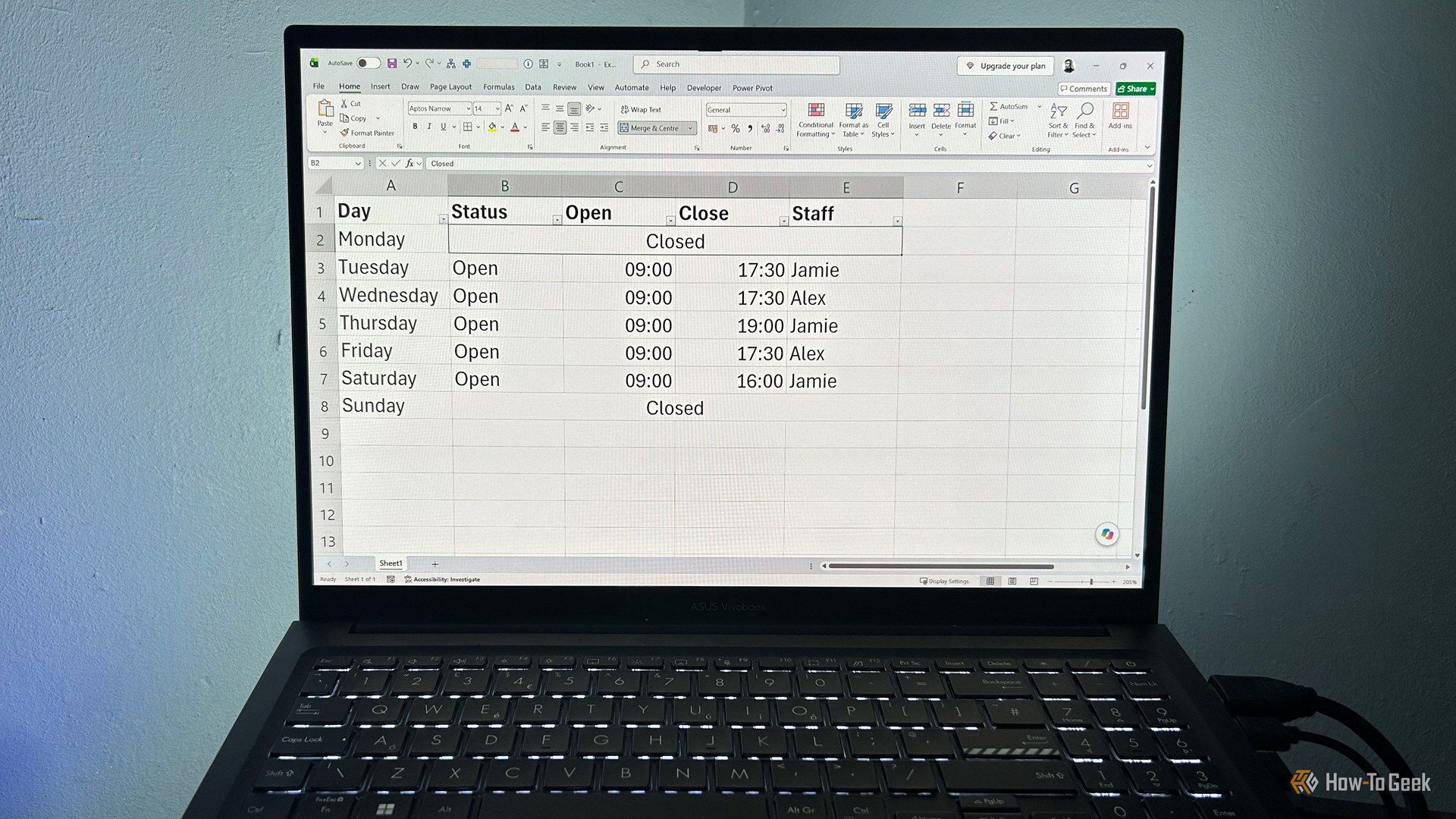
Ditch Merge & Center: The Better Way to Align Text in Excel
Learn to use Excel's "Center Across Selection" to align text across cells without merging, avoiding common data manipulation issues. This guide provides steps to utilize this newly accessible feature and add it to your Quick Access Toolbar.

Mark Wahlberg on using AI in film ‘the right way’ and being open to
Actor Mark Wahlberg believes AI has a place in filmmaking if used responsibly for enhancement, not script generation or actor replacement. At TechCrunch Disrupt, he expressed openness to an AI likeness carrying on his legacy, managed by his family, and emphasized storytelling.