
Nudelman Ghost Gun Operation: A Perilous Application of 3D Printing
Quick Verdict: A Dangerous Evolution in Illicit Firearm Manufacturing The case of Brandon and Justin Nudelman from Staten Island, New York, serves as a stark, cautionary tale regarding the dangerous intersection of
Quick Verdict: A Dangerous Evolution in Illicit Firearm Manufacturing
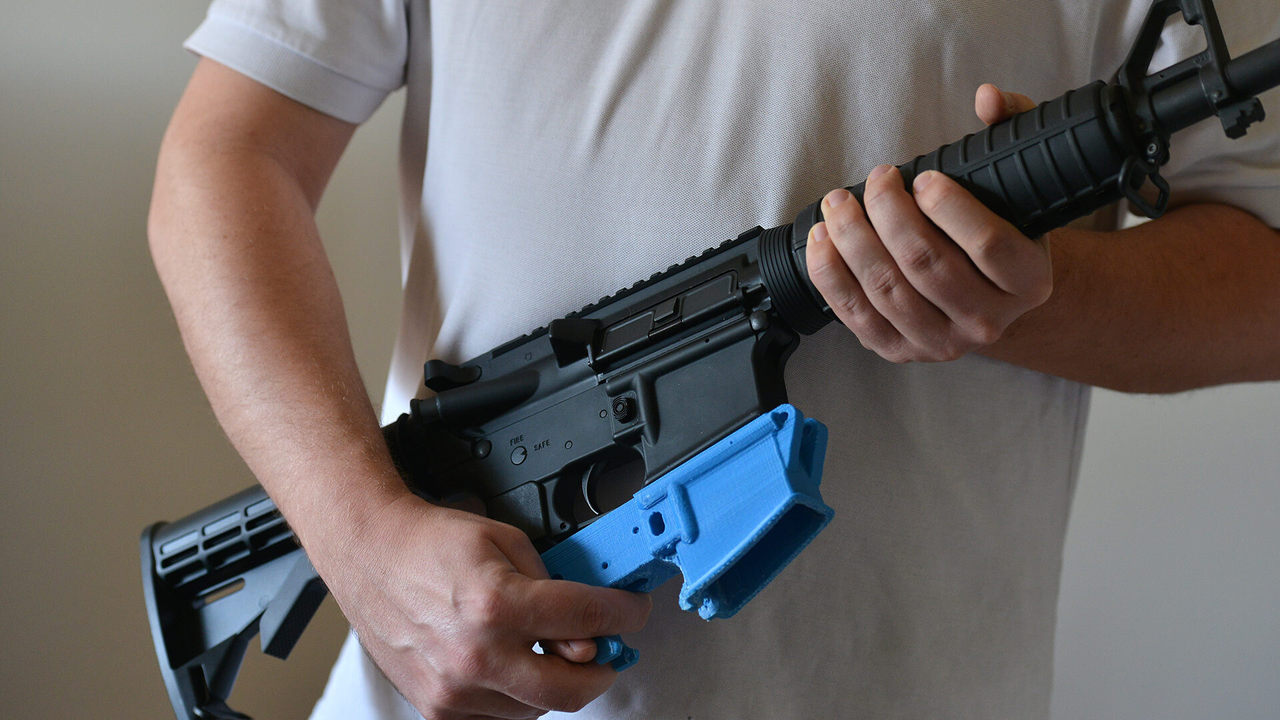
The case of Brandon and Justin Nudelman from Staten Island, New York, serves as a stark, cautionary tale regarding the dangerous intersection of readily available 3D printing technology and illicit firearms manufacturing. What began as a nascent idea reportedly around a pool table rapidly scaled into a sophisticated, interstate operation producing and distributing untraceable 3D printed firearms, commonly known as ghost guns, along with illegal conversion kits. This enterprise, complete with hidden compartments in luxury vehicles and homes, highlights the significant challenges law enforcement faces with emerging technologies. While 3D printing offers immense creative and industrial potential, this operation underscores its grave misuse, contributing to a surge in untraceable weaponry that poses a serious threat to public safety and fuels a contentious debate around technology regulation.
The Technology Behind the 'Ghost Gun Factory'
At the core of the Nudelman brothers' operation was the strategic application of 3D printing technology for manufacturing firearm components. Unlike traditional firearms, these 'ghost guns' derive their name from their untraceable nature, lacking serial numbers. The brothers utilized 3D printers primarily to fabricate gun frames – the essential structural component of a firearm. However, a 3D printed frame alone does not constitute a complete, functional firearm. The operation demonstrated a savvy, modular approach to assembly, with associates reportedly sourcing crucial supplementary parts such as barrels, slides, magazines, and springs through online platforms like eBay. This distributed acquisition method allowed them to complete the firearms, making the entire process difficult to track through conventional supply chains.
Beyond basic untraceable firearms, the Nudelman group also expanded their illicit product line to include conversion kits, deceptively dubbed “Nintendo.” These kits were designed to modify semi-automatic weapons, enabling them to function as fully automatic firearms – a significant and illegal enhancement to weapon capability. This aspect reveals an understanding not just of basic manufacturing, but also of firearm modifications, illustrating a concerning depth of technical engagement within their illegal enterprise.
Operational Design and Evasion Tactics
Far from a crude basement operation, the Nudelman brothers' venture displayed a notable level of organization and a deliberate design to evade scrutiny. The scale of the operation necessitated strategic logistical planning, including the storage of manufactured firearms in a mobile home located in Pennsylvania. This interstate placement was a clear tactic to decentralize their activities and complicate law enforcement efforts to trace and interdict their supply.
Furthermore, the brothers implemented sophisticated security measures and concealment tactics to protect their illicit goods. Brandon Nudelman, for instance, reportedly owned a Lamborghini equipped with a hidden compartment specifically designed to store a handgun. This compartment was activated by a specific button sequence and the placement of a special pen in a cup holder, demonstrating a high degree of technical ingenuity applied to evasion. In addition to vehicle modifications, Nudelman's residence was found to contain multiple secret compartments, only discovered by an associate after his arrest. These details paint a picture of an operation meticulously planned not just for production, but also for concealment and security against detection.
The 'Pros' (of the Method) and 'Cons' (Societal Impact)
From a purely technical standpoint, and unfortunately, from the perspective of those seeking to operate outside the law, the methods employed by the Nudelman operation offered several 'advantages':
Pros (Technical, Illicit Perspective):
- Untraceability: The primary 'advantage' of ghost guns is the absence of serial numbers, making them nearly impossible to trace through conventional means once they enter circulation. This directly circumvents existing firearm regulations.
- Accessibility and Cost-Effectiveness: 3D printers and readily available online components make the initial barrier to entry relatively low for individuals or groups seeking to manufacture firearms. The example of a 3D printed guided missile launcher costing only $96 underscores the potential for low-cost, high-impact illicit builds.
- Modularity and Customization: Combining 3D printed frames with purchased parts allows for flexibility in assembly. The ability to also 3D print conversion kits further demonstrates the potential for enhancing firearm capabilities beyond what is legally permissible.
- Operational Secrecy: The use of hidden compartments and interstate storage solutions indicates a sophisticated approach to maintaining secrecy and evading immediate detection.
However, these technical 'pros' are overwhelmingly overshadowed by profound societal and legal 'cons':
Cons (Societal and Legal Impact):
- Illegality and Severe Penalties: Operating such a factory and distributing untraceable firearms is a serious federal offense, carrying substantial legal consequences, as the Nudelman brothers' conviction demonstrates.
- Public Safety Threat: Ghost guns contribute to a significant rise in untraceable firearms used in crimes, complicating investigations and increasing the danger to communities. High-profile incidents, such as the alleged use of a 3D printed firearm in the assassination of United Healthcare CEO Brian Thompson, underscore this escalating threat.
- Regulatory Challenges: The ease with which 3D printers can produce firearm components presents a formidable challenge to existing gun control legislation, prompting states like New York, Washington, California, and Colorado to introduce new laws.
- Impact on Legitimate 3D Printing Enthusiasts: The push for stricter regulation, often described as 'draconian' by critics, risks limiting the creative freedom and innovation of law-abiding 3D printing hobbyists who fear their legitimate uses of the technology will be curtailed.
- Ongoing Countermeasures: While the operation leveraged the 'untraceable' aspect, researchers are actively developing methods like digital and chemical fingerprinting to link 3D printed parts to their origins, indicating a future where such operations may become more traceable.
A Broader Look at 3D Printing's Dual Nature
The Nudelman case serves as a poignant reminder of the dual-use nature of many powerful technologies. 3D printing offers incredible potential for innovation, rapid prototyping, and personalized manufacturing across countless industries, from medicine to aerospace. However, like any tool, its capabilities can be harnessed for destructive and illegal purposes. The ability for a tech enthusiast to create a functional shoulder-mounted guided missile launcher for under $100 using a 3D printer highlights not just the accessibility, but the sheer transformative power and versatility of this technology. This duality presents a complex challenge for policymakers and the public alike: how to harness the benefits of innovation while mitigating the risks of misuse.
Regulatory Challenges and Future Outlook
The proliferation of ghost guns has undeniably prompted a rapid legislative response. However, the effectiveness and scope of these new laws are subjects of intense debate. Concerns among legitimate 3D printing enthusiasts that new legislation might be overly broad and hinder creative expression are valid. The challenge lies in crafting regulations that effectively target illicit activities without stifling innovation or penalizing responsible technology users.
Looking ahead, the technological arms race continues. The ongoing research into embedding digital fingerprints into 3D printed parts or linking ghost guns to specific filament brands through chemical analysis offers promising avenues for law enforcement. While these countermeasures are still in their early stages, their potential implementation could significantly alter the landscape for illegal ghost gun manufacturers, making their products less 'untraceable' over time. This continuous evolution between illicit manufacturing techniques and detection methods underscores the dynamic nature of this issue.
Recommendation: A Call for Responsibility and Balanced Regulation
It cannot be stressed enough: engaging in the manufacturing, sale, or possession of untraceable firearms, conversion kits, or any other illegal weaponry is extremely dangerous, carries severe legal penalties, and poses a direct threat to public safety. As tech reviewers, we unequivocally condemn such misuse of technology.
For legitimate 3D printing enthusiasts and policymakers, the Nudelman case should serve as a catalyst for constructive dialogue. The recommendation is not to abandon 3D printing, but to advocate for balanced and informed regulation. Laws should be carefully crafted to target the illegal use of 3D printing for firearms without inadvertently stifling the immense positive potential of the technology for legitimate users. Education about the legal ramifications of firearm manufacturing and modification, combined with continued investment in research for detection and tracing technologies, will be crucial in addressing this complex challenge.
FAQ
Q: What exactly are 'ghost guns'?
A: Ghost guns are firearms that are privately manufactured and lack commercially applied serial numbers, making them untraceable by law enforcement. They can be created using various methods, including 3D printing of key components like frames, combined with commercially purchased parts.
Q: How do 3D printers facilitate the production of ghost guns?
A: 3D printers enable individuals to fabricate essential firearm components, most commonly the frame or receiver, which is legally considered the firearm itself. By printing these parts at home, individuals can bypass background checks and traditional manufacturing regulations, contributing to the untraceable nature of the final weapon.
Q: What are the legal implications of 3D printing firearms?
A: The legal landscape around 3D printed firearms is evolving rapidly. While the act of 3D printing a firearm component itself might be legal in some jurisdictions under specific circumstances (e.g., for personal use without intent to sell, and following all other federal, state, and local laws), the manufacturing, distribution, or possession of untraceable firearms, especially with intent to sell or when paired with illegal modifications like fully automatic conversion kits, is a serious federal offense with severe penalties. Many states are also introducing legislation to specifically address and restrict the 3D printing of firearms.
Related articles
Android 17 QPR2 Beta 7.1: The Performance Relief You've Been Waiting
Android 17 QPR2 Beta 7.1: Finally Fixing the QPR1 Performance Woes Verdict: Android 17 QPR2 Beta 7.1 is a crucial and highly anticipated software update for Google Pixel users, specifically targeting and resolving the

DJI Solo Video Setups: Smart Choices for Lone Creators
This review delves into DJI's recommended solo video setups, highlighting the Osmo Pocket 3 Creator Combo as a top pick for its integrated camera, gimbal, and mic. It also covers stabilizers like the Osmo Mobile 8 and RS 4, and the DJI Mic Mini series for enhanced audio, providing honest pros, cons, and clear buying advice.

in-depth: Chicago-Area Cops Helped HSI Spy on Minnesota Anti-ICE
Chicago-area law enforcement, including local police and HSI agents, conducted undercover surveillance on Minnesota anti-ICE activists at an April 2, 2022, talk in Chicago. This operation was part of a federal conspiracy probe into 15 Minnesota activists facing felony charges related to immigration enforcement resistance. Civil liberties advocates have condemned the surveillance as a troubling intrusion into protected political activity.

Ars Technica's Rocket Report: Your Essential Space Industry Briefing
Quick Verdict Ars Technica's Rocket Report, presented by veteran space reporter Stephen Clark, offers an invaluable and meticulously organized weekly (or similar frequency, implied by "Edition 9.15") digest of the most

Apple iPhone Duo: A Daring Debut with Notable Compromises
Apple's highly anticipated iPhone Duo, priced at $2,000, has gone on pre-order. While hailed as "Apple's most exciting device in a decade" for its innovative foldable design and immersive display, it comes with significant drawbacks like the absence of FaceID and a premium camera.
KDE Plasma 6.8: A Future-Focused 30th Anniversary Update
Quick Verdict KDE Plasma 6.8, arriving as the "30th Anniversary Edition," is a pivotal release that decisively pushes the desktop environment into the future. With a definitive farewell to native X11 sessions and a