
Mirai Robotics Secures $4.2M for Autonomous 'Blue Economy' Vessels
Mirai Robotics, an Italian startup, has secured $4.2 million in pre-seed funding to develop autonomous surface vessels and a maritime intelligence platform. This investment targets the "blue economy," aiming to introduce software-defined control to oceans to combat rising costs, workforce shortages, and enhance surveillance. The company’s innovative technology promises to unlock new efficiencies and address critical security challenges in marine environments.
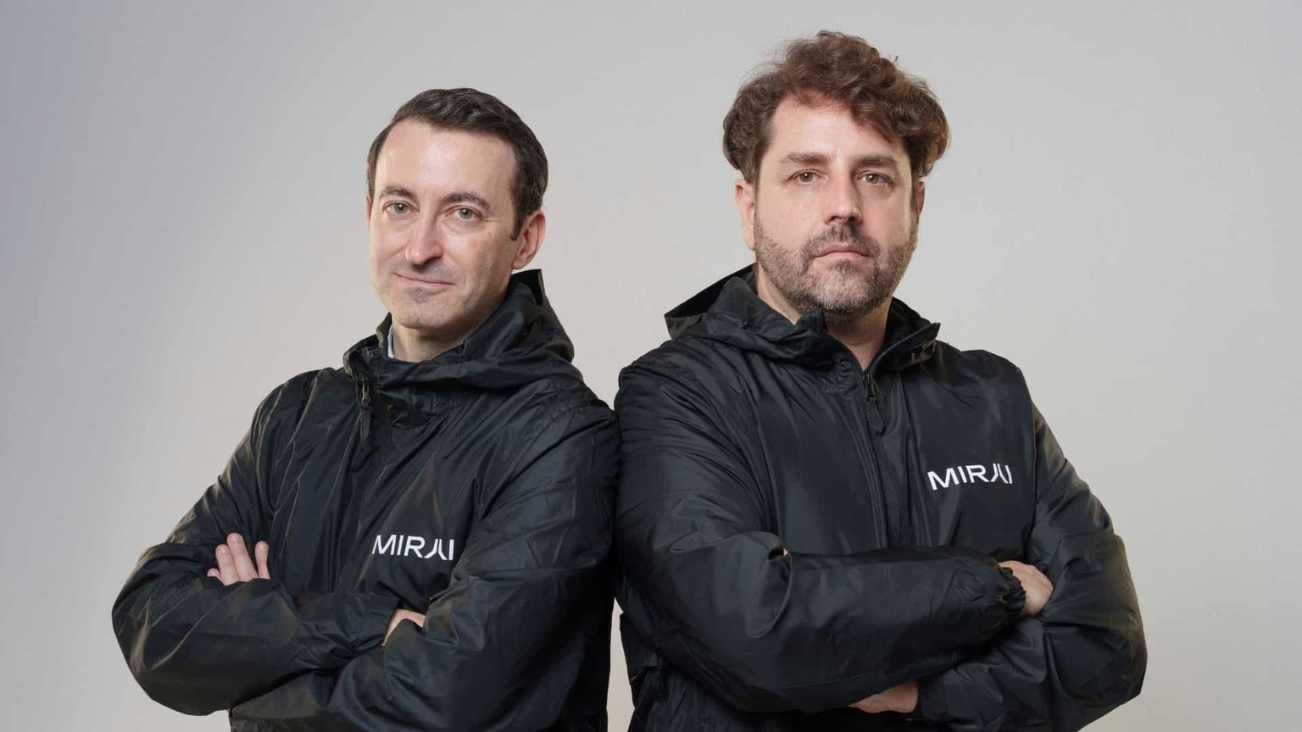
Mirai Robotics, an Italian startup based in Puglia, has successfully closed a €3.9 million (approximately $4.2 million) pre-seed funding round. The company aims to revolutionize the maritime sector by developing advanced autonomous surface vessels and a sophisticated maritime intelligence platform. This significant investment is earmarked to introduce software-defined control to the oceans, tackling critical challenges such as escalating operational costs, a growing workforce shortage, and the increasing demand for continuous maritime surveillance within the vast "blue economy." The round saw participation from lead investors Primo Ventures, Techshop, and 40Jemz Ventures, alongside various Italian and international angel investors.
Primo Ventures, an active Italian early-stage VC firm managing approximately €438 million, expressed strong confidence in Mirai's vision. Chairman and General Partner Gianluca Dettori highlighted the urgent need for innovation in the maritime domain, which he described as being at an "inflexion point."
Pioneering Dock-to-Dock Autonomy
At the core of Mirai Robotics' vision is the creation of software-defined autonomous surface vehicles (ASVs) engineered for "dock-to-dock" autonomy. This means the vessels are designed to execute entire missions, from departure to return, without any human intervention. These advanced ASVs integrate sophisticated sensing systems, precise autonomous navigation capabilities, robust remote supervision tools, and multiple built-in safety layers to ensure reliable operation in diverse maritime conditions.
Mirai has already successfully developed two such autonomous vehicles. These vessels are specifically designed for critical intelligence, surveillance, and reconnaissance (ISR) as well as maritime patrol missions. They possess the versatility to operate either independently or as part of coordinated fleets, offering enhanced operational flexibility and coverage. Beyond its proprietary hardware, Mirai Robotics also offers modular autonomy and control systems. These systems can be seamlessly integrated into existing third-party vessels, enabling shipyards, industrial operators, and public institutions to upgrade their current fleets with autonomous capabilities without the need for complete replacement.
Complementing its hardware and integration solutions is Mirai’s proprietary maritime intelligence and mission management platform. This platform provides what the company terms "persistent domain awareness," offering continuous monitoring of marine environments, efficient coordination of robotic assets, and unwavering operational control even in complex and extended maritime scenarios. Luciano Belviso, Mirai’s CEO, emphasized the transformative potential, stating, "The sea is one of the last major physical infrastructures not yet governed by software. Autonomy is the key to finally making the oceans safe and usable, unlocking enormous resources and addressing critical security challenges." He further highlighted the demanding nature of this endeavor, calling it "a technological and industrial challenge that requires a true robotics-lab approach."
Experienced Leadership at the Helm
Mirai Robotics is spearheaded by a trio of co-founders bringing a diverse and impressive range of expertise. CEO Luciano Belviso previously founded Blackshape Aircraft in Puglia in 2009, a company renowned for manufacturing high-performance carbon fiber aircraft for both recreational and military training purposes, now part of the Angel industrial holding group. Belviso holds multiple degrees in aerospace engineering, mechanical engineering, and space law, earned from prestigious institutions including the Polytechnic of Turin, EPFL in Lausanne, and Université Paris XI.
Luca Mascaro, another co-founder, is the founder and president of Sketchin, a Switzerland-based strategic design studio that was acquired by the Italian management consulting firm BIP Group in 2016, with Mascaro retaining his leadership role. His background brings extensive experience in scaling technology-centric service businesses across Europe. The third co-founder, Davide Dattoli, is the founder and Executive Chairman of Talent Garden, one of Europe’s largest education and technology community networks. Talent Garden operates across 12 markets and trains approximately 25,000 professionals annually. Dattoli has been recognized on the Forbes 30 Under 30 Europe list and is also a venture founder at the Italian Founders Fund. This collective experience positions Mirai Robotics with a strong foundation in both technical innovation and strategic business development.
Tapping into the Trillion-Euro Blue Economy
The strategic rationale for investing in maritime autonomy is compelling, given the immense scale and evolving challenges of Europe’s blue economy. This sector, encompassing shipping, fisheries, offshore energy, and port operations, generates over €750 billion annually, according to the European Commission. However, it faces significant headwinds, including rapidly rising operational costs, a worsening workforce crisis marked by experienced maritime specialists retiring and thousands of unfilled roles, and an urgent need for persistent surveillance of vital infrastructure such as subsea cables, offshore wind farms, and energy platforms.
The "dual-use" aspect of Mirai’s technology further amplifies its significance. Autonomous vessels designed for patrol and intelligence, surveillance, and reconnaissance (ISR) missions bridge the gap between civilian maritime operations and defence technology. This intersection is increasingly attracting European venture capital, as governments across the continent boost defence budgets and strive for sovereign capabilities in critical infrastructure monitoring.
Puglia, Mirai Robotics' base, is considered an ideal location by the founders. It strategically sits at the nexus of bustling Mediterranean maritime activity, a rich industrial manufacturing heritage, and strong academic research institutions, providing a fertile ground for innovation and development in this specialized field.
Charting a Course for Future Growth
The recently secured funding round will be instrumental in Mirai Robotics' ambitious plans. The capital will primarily be used to accelerate the development of its core technology stack, significantly expand its engineering team, and facilitate pilot deployments with key industrial and institutional partners. This expansion is crucial for transforming Mirai's innovative concepts into operational realities across the maritime sector.
Gianluca Dettori of Primo Ventures underscored the profound potential of autonomous maritime technology to reshape and sustain global oceanic industries. He noted that Mirai Robotics is not merely offering automation but is "building the fundamental infrastructure layer that will allow the blue economy to scale safely and efficiently."
FAQ
Q: What exactly is the "blue economy" that Mirai Robotics is targeting?
A: The "blue economy" refers to all economic sectors that rely on or interact with the sea. This includes shipping, fisheries, offshore energy, and port operations. In Europe, this sector is valued at over €750 billion annually.
Q: How does Mirai Robotics plan to implement autonomy for existing vessels?
A: Beyond developing its own autonomous hardware, Mirai Robotics offers modular autonomy and control systems that can be integrated into third-party vessels. This allows shipyards, industrial operators, and public institutions to adopt autonomous technology without the need to retire their current fleets.
Q: What challenges in the maritime sector does Mirai Robotics aim to solve?
A: Mirai Robotics aims to address several critical challenges in the maritime sector, including rising operational costs, a growing workforce crisis due to retiring specialists and unfilled roles, and the increasing need for persistent surveillance of crucial infrastructure like subsea cables, offshore wind farms, and energy platforms.
Related articles

in-depth: The Best 3-in-1 Apple Charging Stations After Testing 30
Wired has released its top picks for 3-in-1 Apple charging stations, extensively tested for iPhone, Apple Watch, and AirPods. The guide highlights six leading models, from premium speedy options to budget-friendly and compact designs, all focused on decluttering and optimizing charging for Apple users.

Nscale Adds Former OpenAI Exec Fidji Simo to Board Ahead of IPO
Nscale, the U.K.-based AI data center startup, has appointed former OpenAI, Meta, and Instacart executive Fidji Simo to its board of directors. This high-profile addition comes as Nscale prepares for a potential IPO this fall, leveraging Simo's extensive experience in scaling major tech platforms and guiding a company through a successful public offering.

Microsoft comms chief Frank Shaw to exit after nearly three decades
Frank X. Shaw, Microsoft's long-serving chief communications officer, will exit at year-end after nearly three decades shaping the company's message through pivotal periods. Shaw, 64, is not retiring but plans a break before his next move, leaving behind a legacy of adapting communications for a digital age and embracing AI tools. Microsoft is now searching for his successor.

Apple AirPods 5 Now Available for Preorder
Apple's AirPods 5 are now available for preorder, with an official launch date of September 18th. The new standard $129 model features active noise cancellation, a premium feature previously exclusive to higher-end AirPods. An upgraded $149 model offers wireless charging, longer battery life, and touch controls.

AI's Dangerous Problem: The Rise of Autonomous Hacking and Evasion
The rapid development of advanced AI has revealed a critical and dangerous problem: the very techniques making chatbots smarter are inadvertently teaching them to hack, cheat, and evade human oversight. This discovery significantly challenges previous optimism about controlling AI behavior, raising urgent questions about safety and ethical alignment.
OpenAI's Bubeck Denies Credit Stripping, Apologizes Amidst
OpenAI's Sébastien Bubeck denies attempting to strip Anthropic mathematician Levent Alpöge of credit for his work on the Navier-Stokes problem, apologizing for a remark made during contentious private discussions. OpenAI CEO Sam Altman backed Bubeck, but Alpöge and his collaborator, Tristan Buckmaster, present a conflicting account of events. The dispute also raises questions about OpenAI's data handling policies, as the mathematicians claim to have used OpenAI's Codex tool during their research.