
AI Optimism Meets Backlash at Seattle AI Week Kickoff
Seattle AI Week kicked off Monday amidst a striking display of both technological optimism and fervent protest, as climate activists disrupted the event to condemn the rapid expansion of data centers. While tech and
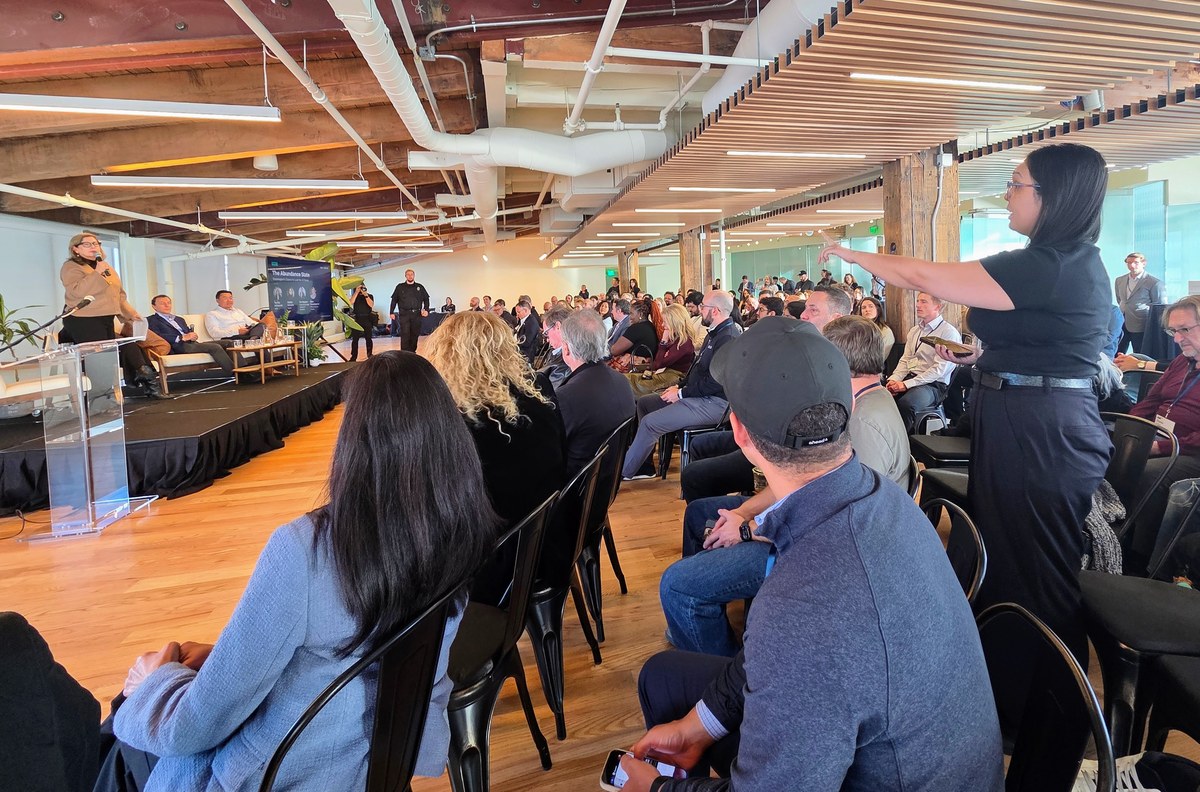
Seattle AI Week kicked off Monday amidst a striking display of both technological optimism and fervent protest, as climate activists disrupted the event to condemn the rapid expansion of data centers. While tech and business leaders championed Washington state's potential to lead the artificial intelligence economy, members of the group Troublemakers voiced urgent concerns about the environmental impact and community risks associated with the burgeoning AI infrastructure.
The highly anticipated opening panel, designed to highlight AI's economic promise, was repeatedly interrupted by protesters inside Seattle's AI House. Simultaneously, other activists navigated Elliott Bay in kayaks, displaying a banner that read, "Power for People, Not for Tech." Their unified message: the unchecked proliferation of data centers, essential for powering AI, jeopardizes local communities, jobs, and the environment, urging instead investment in sustainable green industries and clean energy.
Protests Highlight Growing Data Center Concerns
Inside the venue, a protester directly confronted Beau Perschbacher, Governor Bob Ferguson's senior policy advisor, declaring, "These are not your constituents — we are." The sentiment underscored a widening rift between the tech industry's ambitions and public anxieties. The Troublemakers' actions echo a broader statewide movement, including the Seattle City Council's unanimous vote in June to implement a one-year moratorium on new large data centers within the city. Additionally, the Washington AI Resistance group organized nearly two dozen protests across the state this month, advocating for a comprehensive statewide ban.
This localized opposition comes as the tech giant Microsoft announced voluntary buyouts for approximately 60,000 employees, nearly a quarter of its workforce, on the very day of the Seattle AI Week kickoff. This development adds a layer of complexity, juxtaposing significant corporate restructuring with massive investments in AI infrastructure.
Leaders Champion AI's Economic Potential
In stark contrast to the protests, former Washington Gov. Chris Gregoire, now CEO of Challenge Seattle, delivered an impassioned address at the event. She asserted that Washington, a historic leader in technology, possesses an "extraordinary opportunity to lead the AI economy of the next generation." Gregoire cited practical applications already in motion, such as an AI-powered permitting pilot in Everett designed to drastically reduce wait times for accessory dwelling unit permits. She also highlighted Nobel laureate David Baker's protein design work at the University of Washington, which holds promise for environmental, agricultural, and healthcare solutions.
Despite Washington ranking second in North America for tech talent, Gregoire cautioned that the state's overall business climate lags, making it vulnerable to other states actively courting its companies and jobs. This narrative of economic imperative framed much of the discussion among business and tech leaders.
Navigating Environmental and Energy Challenges
Gov. Ferguson's policy advisor, Beau Perschbacher, addressed the data center issue head-on, noting the administration's focus on the topic since taking office. A state work group, he explained, found no communities demonstrably harmed by data centers and determined their water usage was consistent with typical industrial users. Perschbacher also clarified that new data centers would not be permitted to rely on diesel generators for continuous operation. However, he acknowledged a significant hurdle: the immense electricity consumption of data centers, compounded by rising demand from electric vehicles and heat pumps, poses a "major challenge" to the state's power grid.
Perschbacher directly engaged the protesters, asserting that Washington's environmental laws are among the nation's strictest, and the state's data center work group reinforced, rather than weakened, these regulations. He indicated that upcoming legislative sessions would likely see bills introduced concerning ratepayer protections and increased transparency for data center operations. State Sen. Marko Liias, speaking on a subsequent panel, reinforced this stance, stating that data centers seeking to establish in Washington must meet "strident expectations," including contributing clean energy to the grid, recycling water, and abandoning nondisclosure agreements that often obscure their impact. Liias firmly stated, "When energy becomes scarce, I do think we need to be clear that our communities deserve access to that energy before the data centers do."
Joe Braidwood, founder of AI governance startup Glacis, observed that the protest, though disruptive, highlighted a crucial public interest. "I think that’s actually kind of promising that people care enough to want to come together and talk and disagree and figure this out," he remarked.
Bridging the Perception Gap
OpenAI's global head of community programs, Mattie Zazueta, emphasized the industry's responsibility to better communicate AI's benefits, arguing that many public fears stem from "scary headlines" rather than direct experience. She mentioned OpenAI's initiatives to conduct AI literacy workshops and train community groups to lead their own. However, this approach was met with skepticism by one protester, who interpreted it as an attempt to "infiltrate our communities" and dismissed public concerns as merely products of negative media.
Joe Nguyen of the Seattle Metropolitan Chamber of Commerce, initially telling the protesters to "have your own event," later acknowledged their concerns as "very warranted." He argued that Washington's stringent energy policies uniquely position the state to balance innovation with environmental values. Yet, Nguyen also highlighted the inherent contradiction of criticizing data centers while relying on the AI-powered services they enable, humorously suggesting that those upset with data centers should print emails and deliver them by hand.
Ultimately, the kickoff of Seattle AI Week underscored the complex and often contentious dialogue surrounding artificial intelligence. As Washington seeks to solidify its role as an AI leader, it must confront the dual challenge of fostering technological advancement while addressing legitimate public concerns about resource consumption, environmental impact, and community welfare.
FAQ
Q: Who were the protesters and what was their main message?
A: The protesters were members of "Troublemakers," a Seattle climate activism group. They disrupted Seattle AI Week to object to the construction of more data centers, arguing that the rush for AI expansion puts communities, jobs, and the environment at risk, and that the state should prioritize green jobs and clean energy.
Q: What is the Washington state government's perspective on data centers?
A: Governor Ferguson's administration has formed a work group to study data center impacts, finding their water use comparable to other industrial users and no direct community harm. However, they acknowledge the significant electricity demand and are looking to implement stricter regulations, including prohibiting continuous diesel generator use, enhancing ratepayer protections, and requiring transparency and clean energy contributions from new facilities.
Q: How do AI industry leaders propose addressing public skepticism about AI and data centers?
A: Industry leaders, such as OpenAI's Mattie Zazueta, believe the sector needs to do a better job showcasing AI's benefits to the public through initiatives like AI literacy workshops. They aim to counter fears stemming from negative media coverage by demonstrating how the technology applies positively to daily life.
Related articles

Here’s where you can preorder the new OLED-equipped iPad Mini: Apple
Apple has officially opened preorders for its eighth-generation iPad Mini, featuring a vibrant 8.5-inch OLED display and powerful A20 Pro chip. Starting at $699, the device can be preordered from Apple and Best Buy before its November 6th release, promising significant upgrades in visual technology and performance.

Xreal Unveils Aura Wired Smart Glasses Running Android XR
At the Android Dev Summit on Wednesday, Xreal, Google's smart glasses collaborator, officially introduced its new Xreal Aura wired smart glasses. The device, which had been teased earlier in the year at Google's I/O

ICE's Covert Anti-Left Surveillance Operations Uncovered
New evidence reveals ICE is running a vast, potentially unconstitutional surveillance operation against left-wing activists nationwide. Leveraging post-9/11 tools and extensive data, experts liken it to a 'COINTELPRO 2.0,' marking an unprecedented scale of domestic spying.

Your Guide to LG's 115-inch QNED evo TV: Features, Gaming & Price
Welcome to an exciting exploration of LG's latest innovation in home entertainment: the colossal 115-inch QNED evo AI Mini LED TV. This guide is designed to walk you through everything you need to know about this

GM Pivots to Hybrids with $2 Billion Investment in Lansing Plant
In a significant strategic shift, General Motors has announced plans to invest over $2 billion in its Lansing region operations, including $1.25 billion specifically for its Lansing Delta Township Assembly plant. This

The Super Mouse puts a touchscreen macro pad under your hand: Tech
Arctic Fox Technologies has launched the Super Mouse, an innovative peripheral featuring a 3.1-inch touchscreen for dynamic app controls, macros, and enhanced productivity. Available on Kickstarter for $199, this wired mouse aims to consolidate multiple desktop devices into one intuitive command center. Its contextual display and advanced features redefine user interaction.