
Jury Clears OpenAI, Microsoft in Landmark Musk AI Lawsuit
A federal jury has cleared OpenAI, Sam Altman, Greg Brockman, and Microsoft in Elon Musk's landmark AI lawsuit. The unanimous decision found Musk waited too long to file his claims, ruling them time-barred after a three-week trial in Oakland.

OAKLAND, Calif. – A federal jury delivered a unanimous verdict Monday, clearing OpenAI, its co-founders Sam Altman and Greg Brockman, and Microsoft in the high-profile lawsuit brought by Elon Musk. The nine-person jury found that Musk waited too long to file his legal challenge, ruling the claims time-barred after less than two hours of deliberation in a decision that could significantly shape the future of artificial intelligence development.
The verdict, reached on the first morning of deliberations, concludes a contentious three-week trial in federal court in Oakland. Musk's suit alleged breach of charitable trust and unjust enrichment against OpenAI, Altman, and Brockman, with an additional claim of aiding and abetting a breach of charitable trust against Microsoft. All defendants were found not liable on statute-of-limitations grounds.
Steven Molo, an attorney for Musk, indicated in court that the right to appeal would be preserved, though a decision on next steps has not yet been made. Microsoft promptly issued a statement welcoming the outcome, asserting that "the facts and the timeline in this case have long been clear," and reiterating its commitment to advancing AI through its partnership with OpenAI.
Origins of the Lawsuit and Core Allegations
Elon Musk co-founded OpenAI in 2015 as a nonprofit organization with a stated mission for the safe and open development of artificial intelligence, contributing an estimated $38 million to its early efforts. He departed the board in 2018. The lawsuit, filed in 2024, contended that Altman, Brockman, and others had deviated from this founding principle by transforming OpenAI into a for-profit entity, thus betraying the original charitable mission.
Microsoft, which has poured over $13 billion into OpenAI since 2019, was later named as a co-defendant. Musk sought to remove Altman and Brockman from their leadership roles, unwind the company's 2025 conversion to a for-profit public benefit corporation, and compel the return of alleged wrongful gains to the OpenAI nonprofit. His damages expert had initially presented a combined figure as high as $134 billion, though the judge had questioned these numbers, and a separate remedies phase was planned.
Inside the Three-Week Trial
The trial saw a parade of prominent tech figures take the stand, including Musk himself, Altman, Brockman, former OpenAI chief scientist Ilya Sutskever, Microsoft CEO Satya Nadella, and Microsoft CTO Kevin Scott. Their testimonies, alongside internal emails, text messages, and deposition transcripts, offered a rare glimpse into the intricate dynamics of the Microsoft-OpenAI alliance.
Key revelations included discussions among Microsoft executives, such as Nadella, regarding the composition of OpenAI’s board during the tumultuous November 2023 crisis that briefly led to Altman's ouster. A central piece of evidence for Musk's legal team was a March 2018 email from Microsoft CTO Kevin Scott, in which he questioned whether OpenAI's donors were aware of its commercial aspirations, writing that he couldn't imagine they had funded an open effort "so that they could then go build a closed, for profit thing on its back." Microsoft, despite these internal concerns, proceeded with its multi-billion dollar investment.
Scott, however, testified that his email was written from the perspective of a skeptic evaluating a deal, not as an alarm about OpenAI's mission, and that he had venture capitalist Reid Hoffman, rather than Musk, in mind as a donor.
Statute of Limitations Proves Decisive
The defense's core argument, which ultimately swayed the jury, centered on the statute of limitations. During closing arguments, Microsoft's attorney Russell Cohen highlighted a tweet by Musk from September 24, 2020. In the post, Musk commented that OpenAI had come to "seem like the opposite of open" and appeared "essentially captured by Microsoft."
Cohen argued that this tweet unequivocally demonstrated Musk's awareness that the alleged promises had been broken years before he initiated legal proceedings in 2024. This placed his claims outside the standard three-year statute of limitations, making them legally invalid. Cohen strongly urged the jurors to consider this single piece of evidence, stating, “We just ask you to remember one thing, the tweet,” and to find the claims time-barred. The jury's swift decision validates this strategic defense.
Implications and Future Outlook
While the jury's verdict is advisory, with U.S. District Judge Yvonne Gonzalez Rogers making the final determination on liability, the unanimous decision on timeliness strongly favors OpenAI and Microsoft. The outcome solidifies the current operational model of OpenAI and its deep commercial ties with Microsoft, freeing both companies from the immediate threat of a legal unwinding or significant financial penalties sought by Musk.
Interestingly, on the opening day of the trial, Microsoft and OpenAI announced a revised partnership. This amended agreement makes Microsoft’s intellectual property license non-exclusive, allows OpenAI to offer its products on any cloud provider, and eliminates Microsoft's revenue-share payments to OpenAI. The very next day, Amazon moved to integrate OpenAI’s models into its cloud platform, Bedrock, signaling a potentially more open, albeit still competitive, AI ecosystem post-trial.
FAQ
Q: What was the primary reason Elon Musk's lawsuit against OpenAI and Microsoft was dismissed? A: The jury found that Elon Musk waited too long to file his lawsuit, ruling that his claims were time-barred under the applicable statute of limitations. Evidence, particularly a 2020 tweet by Musk, suggested he was aware of OpenAI's perceived shift years before suing in 2024.
Q: What were Musk's main allegations in the lawsuit? A: Musk alleged that OpenAI, co-founders Sam Altman and Greg Brockman, breached a charitable trust by transforming the nonprofit into a for-profit venture, and that Microsoft aided and abetted this breach. He claimed this betrayed the original mission he helped fund in 2015.
Q: How might this verdict impact the broader AI industry and the OpenAI-Microsoft partnership? A: The verdict clears OpenAI and Microsoft of significant legal hurdles regarding their for-profit structure and partnership. This stability allows them to continue their collaboration and AI development without the threat of a lawsuit potentially dissolving the company or altering its leadership. Furthermore, a revamped partnership agreement, announced during the trial, opens OpenAI to collaborate with other cloud providers, as demonstrated by Amazon's swift move to integrate OpenAI models.
Related articles

Apple Unveils iPhone Duo: Pricey Foldable Sees Soaring Demand
Apple has officially entered the foldable smartphone arena with the long-anticipated launch of the iPhone Duo. Priced starting at a hefty $1,999, the device features a 5.4-inch outer display and a larger 7.6-inch inner
Android 17 QPR2 Beta 7.1: The Performance Relief You've Been Waiting
Android 17 QPR2 Beta 7.1: Finally Fixing the QPR1 Performance Woes Verdict: Android 17 QPR2 Beta 7.1 is a crucial and highly anticipated software update for Google Pixel users, specifically targeting and resolving the

in-depth: Chicago-Area Cops Helped HSI Spy on Minnesota Anti-ICE
Chicago-area law enforcement, including local police and HSI agents, conducted undercover surveillance on Minnesota anti-ICE activists at an April 2, 2022, talk in Chicago. This operation was part of a federal conspiracy probe into 15 Minnesota activists facing felony charges related to immigration enforcement resistance. Civil liberties advocates have condemned the surveillance as a troubling intrusion into protected political activity.
TCG Pocket Responds: A Much-Needed Pace Shift for Pokémon Fans
Pokémon TCG Pocket is rolling out a major update for its second anniversary, primarily addressing player concerns about overwhelming content releases by shifting to a six-week set schedule. This aims to curb player decline and improve overall engagement by giving trainers more time to collect and strategize. The update also adds new collection methods, improved deck-building features, and enhanced trading functionality.

Mark Wahlberg on using AI in film ‘the right way’ and being open to
Actor Mark Wahlberg believes AI has a place in filmmaking if used responsibly for enhancement, not script generation or actor replacement. At TechCrunch Disrupt, he expressed openness to an AI likeness carrying on his legacy, managed by his family, and emphasized storytelling.
Apple iPhone Duo: A Daring Debut with Notable Compromises
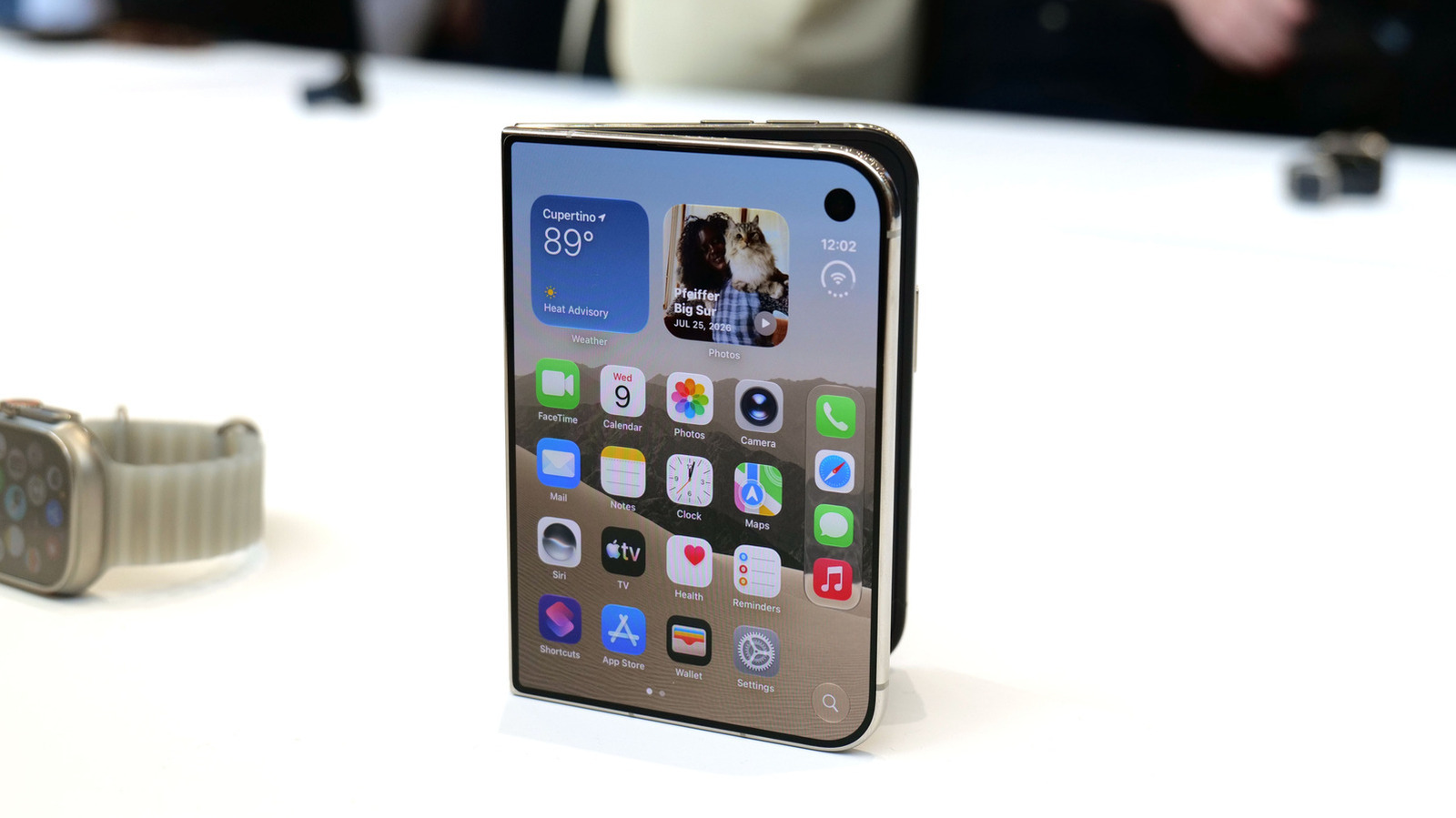
Apple's highly anticipated iPhone Duo, priced at $2,000, has gone on pre-order. While hailed as "Apple's most exciting device in a decade" for its innovative foldable design and immersive display, it comes with significant drawbacks like the absence of FaceID and a premium camera.