
Intel's Robot Waiver: A Chipmaking Conundrum
Intel is seeking an FCC waiver to continue using foreign-made Automated Guided Vehicles (AGVs) in its US fabs, highlighting a critical conflict between national security bans and the practical realities of advanced semiconductor manufacturing. The move underscores the lack of domestic alternatives and the potential for the ban to cripple US chip production.

Verdict
Intel's recent plea to the Federal Communications Commission (FCC) for a waiver to continue purchasing foreign-made Automated Guided Vehicles (AGVs) highlights a critical intersection of national security policy, industrial realities, and the future of advanced semiconductor manufacturing in the United States. While the FCC's "sweeping robot ban" aims to bolster domestic manufacturing and mitigate security risks, its immediate application to highly specialized equipment like AGVs, for which no viable domestic alternatives exist, threatens to cripple US chip production. Granting Intel's conditional waiver is a pragmatic necessity to ensure the continuous operation and expansion of chip fabs, buying crucial time for the development of a robust domestic supply chain for these indispensable tools.
The Unseen Workhorses of Chipmaking
At the heart of Intel's request are Automated Guided Vehicles (AGVs), which are specialized robots vital to modern semiconductor fabrication plants (fabs). These niche machines operate within cleanroom environments, meticulously transporting sensitive silicon wafers, critical materials, containers, and other supplies between various manufacturing tools and sections of the fab. Their role is not just about automation; it's about maintaining the ultraclean conditions essential for producing advanced chips, where even a microscopic particle can render a wafer unusable. Without AGVs, the precise, contamination-free movement of materials within a fab would be severely hampered, if not impossible, for high-volume manufacturing.
The FCC's Sweeping Robot Ban and Its Impact
Intel's concern stems from the FCC's recent decision to add foreign-made robots to its Covered List, essentially instituting a blanket prohibition on their import and use. This policy is part of a broader government initiative to reduce reliance on foreign technology, particularly from certain countries, and to foster domestic manufacturing capabilities across various sectors. Previous FCC bans have targeted consumer products like foreign-made drones from companies like DJI and routers from brands like TP-Link, forcing companies to either establish US manufacturing or face severe restrictions on new product introductions and software updates. While the FCC later walked back the ban on software updates for existing foreign-made devices until 2029 due to cybersecurity concerns, the prohibition on registering new foreign-made products remains firmly in place.
For Intel, this ban directly impacts their existing fleet of AGVs, which require continuous maintenance, including essential software and firmware updates. More critically, it prevents them from procuring new units from their established, predominantly foreign, suppliers for current operations and future expansions. The chipmaker argues that if forced to find a local supplier for AGVs immediately, it would take years to develop or identify suitable domestic alternatives, an outcome that would severely cripple the United States' ambitious chipmaking efforts under initiatives like the CHIPS Act.
Current Market Landscape and the Need for a Waiver
The global market for AGVs in semiconductor manufacturing is dominated by Japanese companies such as Murata Machinery and Daifuku Co., with smaller firms from South Korea and Taiwan also attempting to enter the space. Currently, there are no suitable or scalable domestic manufacturers capable of meeting the highly specialized demands of advanced chip fabs in the U.S. This lack of a viable American alternative is the core of Intel's predicament.
Intel is seeking a conditional waiver "out of an abundance of caution" to ensure the ongoing operation of its specific AGV units. They've explicitly stated that it's unclear if even software updates to their current AGVs would fall afoul of the new FCC regulations, highlighting the ambiguity and potential operational paralysis without clarification.
This isn't just an Intel problem. As other major players like TSMC, Samsung, and even Elon Musk's Terafab move forward with their significant investments in new US-based fabs, they will undoubtedly face the same challenge. TSMC alone plans to build 12 more fabs and four packaging facilities in Arizona, while Samsung's Taylor, Texas, fab is a massive undertaking. These facilities cannot operate efficiently, or at all, without these specialized transport systems.
Operational Impact: Pros and Cons
Pros of a Conditional Waiver (Allowing Foreign AGVs):
- Ensures Operational Continuity: Crucial for Intel's existing fabs and the massive expansion projects by Intel, TSMC, Samsung, and Terafab in the US.
- Prevents Crippling Delays: Avoids years of stagnation in US chip production by allowing access to proven, reliable equipment.
- Supports National Semiconductor Goals: Facilitates the CHIPS Act's objective of boosting domestic chip manufacturing capacity, even if the tools themselves are foreign initially.
- Maintains Supply Chain Stability: Acknowledges the globalized nature of high-tech manufacturing and the current lack of domestic alternatives, preventing immediate supply chain shocks.
Cons of the FCC Ban (Without a Waiver):
- Impedes US Chipmaking Growth: Directly undermines efforts to increase domestic chip production by blocking essential equipment.
- Operational Instability: Leaves existing fabs vulnerable to compliance issues for maintenance and updates, creating cybersecurity risks if updates are blocked (though partially addressed for general products, Intel's specific situation is in question).
- Unrealistic Expectations: The policy outpaces the current reality of the domestic manufacturing base for highly specialized equipment.
Pros of the FCC Ban (As Intended):
- Promotes Domestic Manufacturing: Creates strong incentives for US companies to develop and produce AGVs and similar specialized robots.
- Enhances National Security: Reduces reliance on foreign technology that could pose security risks, strengthening the domestic supply chain long-term.
Cons of a Conditional Waiver (Potential Drawbacks):
- Slows Domestic Development: Could lessen the immediate pressure on US companies to innovate and compete in the AGV market.
- Perpetuates Foreign Dependence: Continues reliance on foreign suppliers for critical manufacturing infrastructure.
Comparison with Alternatives: The Netgear Example
The article highlights that some companies, like Netgear, have already secured conditional approval from the FCC. This allows them to continue importing foreign-made routers while committing to establish a manufacturing base in the US by a certain deadline (October 2027 in Netgear's case). This demonstrates a viable pathway for companies to comply with the spirit of the ban while managing practical realities.
The difference here is that Netgear is an American company importing its own products made abroad. For AGV suppliers, predominantly Japanese, South Korean, and Taiwanese firms, it's unclear why they haven't pursued similar conditional approvals. This could be due to the highly specialized and capital-intensive nature of fab equipment, making a rapid shift to US manufacturing a much larger undertaking than for consumer electronics, or perhaps a lack of clear incentives or guidance from the FCC for these specific suppliers. Intel, as the end-user, is stepping in to request the waiver, underscoring the urgency from the chipmakers' perspective.
Buying Recommendation (Policy Recommendation)
From a pragmatic and industry-forward perspective, the FCC should grant Intel's requested conditional waiver for foreign-made AGVs. This isn't a recommendation to abandon the goal of domestic manufacturing but a recognition of the immediate operational realities of advanced chip production. The waiver should be accompanied by clear, aggressive timelines and incentives for AGV manufacturers (both foreign incumbents and potential domestic startups) to establish US production capabilities. Without this immediate flexibility, the very industry the US government seeks to bolster—domestic advanced chip manufacturing—will be significantly hampered, leading to delays, increased costs, and a failure to meet strategic objectives. This phased approach allows US fabs to continue operating and expanding critical infrastructure while simultaneously nurturing a vital domestic supply chain for the future.
FAQ
Q: What exactly are AGVs, and why are they so critical for chip manufacturing?
A: AGVs (Automated Guided Vehicles) are specialized robots used in semiconductor fabs to automatically transport silicon wafers, materials, and supplies between different processing stations. They are critical because they maintain the ultraclean, contamination-free environment necessary for chip production, ensuring precision and efficiency that human operators cannot match in such controlled settings.
Q: Why can't Intel simply buy American-made AGVs?
A: According to Intel, there are currently no suitable or scalable domestic manufacturers that can produce the highly specialized AGVs required for advanced chip fabrication. Developing such a domestic supply chain from scratch would take years, which would severely delay or halt current and planned chip manufacturing operations in the US.
Q: How does this situation affect the broader US semiconductor industry beyond Intel?
A: The issue extends beyond Intel to other major chipmakers investing heavily in US fabs, including TSMC, Samsung, and Elon Musk's Terafab. Without access to these essential foreign-made AGVs, their plans for expanding chip production in the US would face similar, if not greater, challenges, potentially undermining the nation's strategic goals for semiconductor independence and technological leadership.
Related articles

YouTube Dislike Button Test: A Step Backward
YouTube's latest experiment to tuck away the dislike button on regular videos is a concerning move, further eroding a vital feedback mechanism for viewers and potentially allowing low-quality content to thrive unchecked.
UGREEN 25W MagFlow: Portable 2-in-1 Charger Hits Record Low
The UGREEN 25W MagFlow, a foldable 2-in-1 magnetic wireless charger for iPhones and earbuds, is back to its record-low Prime Day price. Offering Qi2 25W charging and a compact design, it's ideal for travelers and minimalists.
FADU FS-SSD: A Glimpse into the Future of Storage
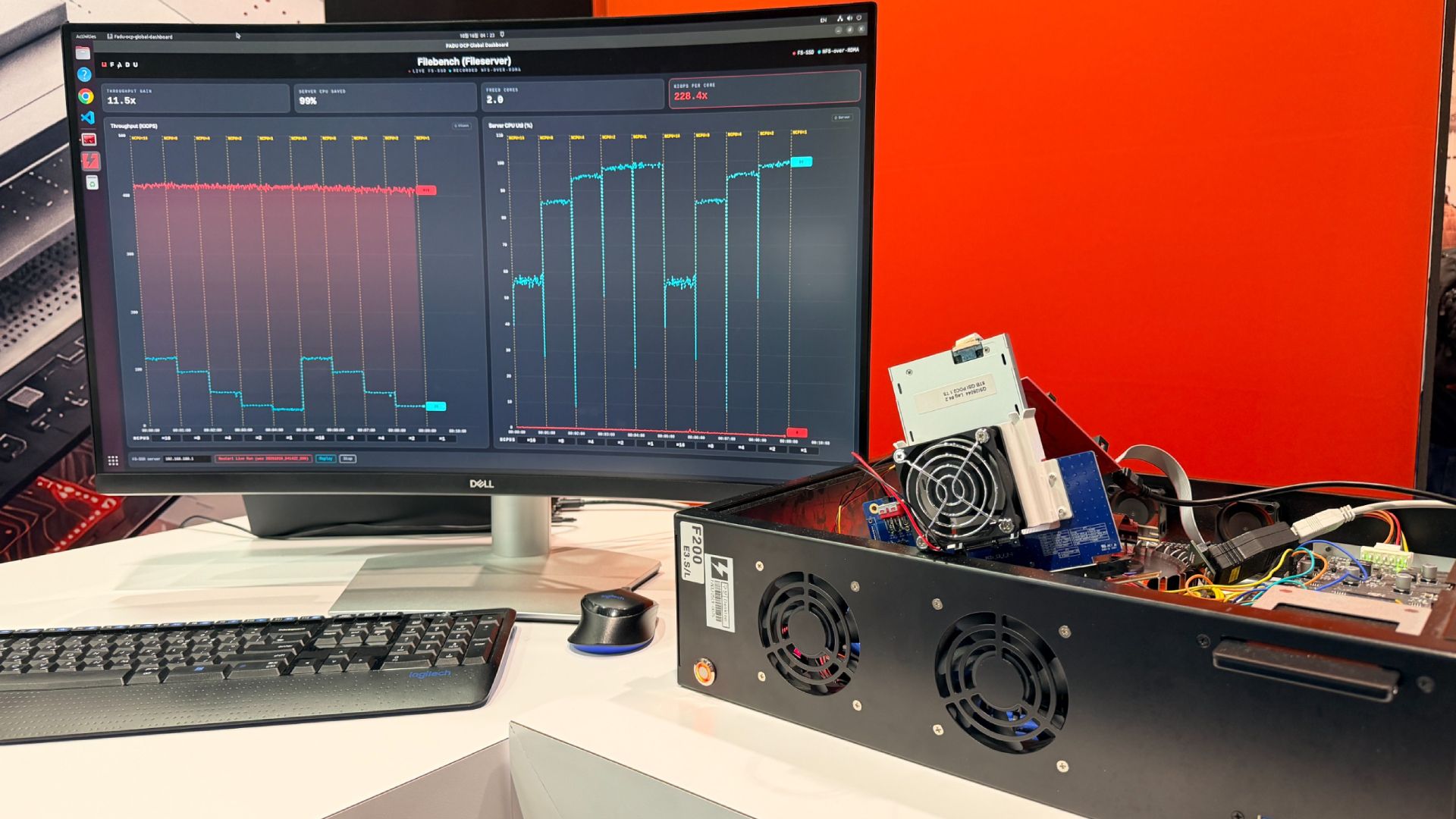
FADU's File-Semantic SSD moves the filesystem directly into the drive, aiming to dramatically reduce host CPU overhead for file operations, especially for GPUs and DPUs. Promising early results, but a long wait for samples (Q3 2027).

Google's Personalized Gemini AI Hits Cars, Leveraging User Data
Google is introducing "Personal Intelligence" to Gemini AI in cars, allowing the assistant to leverage user data from Google apps like Gmail, Calendar, and Maps for highly personalized assistance. Rolling out to Android Auto today and to cars with Google built-in soon, this update offers contextual help like checking flight statuses or navigating to appointments. Users must opt-in to enable this feature, and personalized responses only work when a phone is connected, emphasizing user control over privacy.

SpaceX's AI Business Fuels Explosive Q3 2026 Revenue Growth
SpaceX reported Q3 2026 revenues of $14.6 billion, a 161% jump, primarily driven by an 830% year-over-year surge in its Super Intelligence (SI) division. This growth was fueled by new cloud services, the Cursor acquisition, and wider Grok AI adoption, alongside robust performance in its Starlink Connectivity business.

OpenBSD 8.0: Unwavering Security, Specialized Performance
OpenBSD 8.0: Unwavering Security, Specialized Performance OpenBSD 8.0 has officially landed, marking the 61st release for this highly specialized operating system. True to its roots, OpenBSD 8.0 reinforces its