
How to 3D Print Top Thingiverse Models - Discover Your Favorites
Learn to successfully 3D print Thingiverse's top models, including Benchy, an articulated octopus, and functional items, with detailed steps and tips for optimal results.
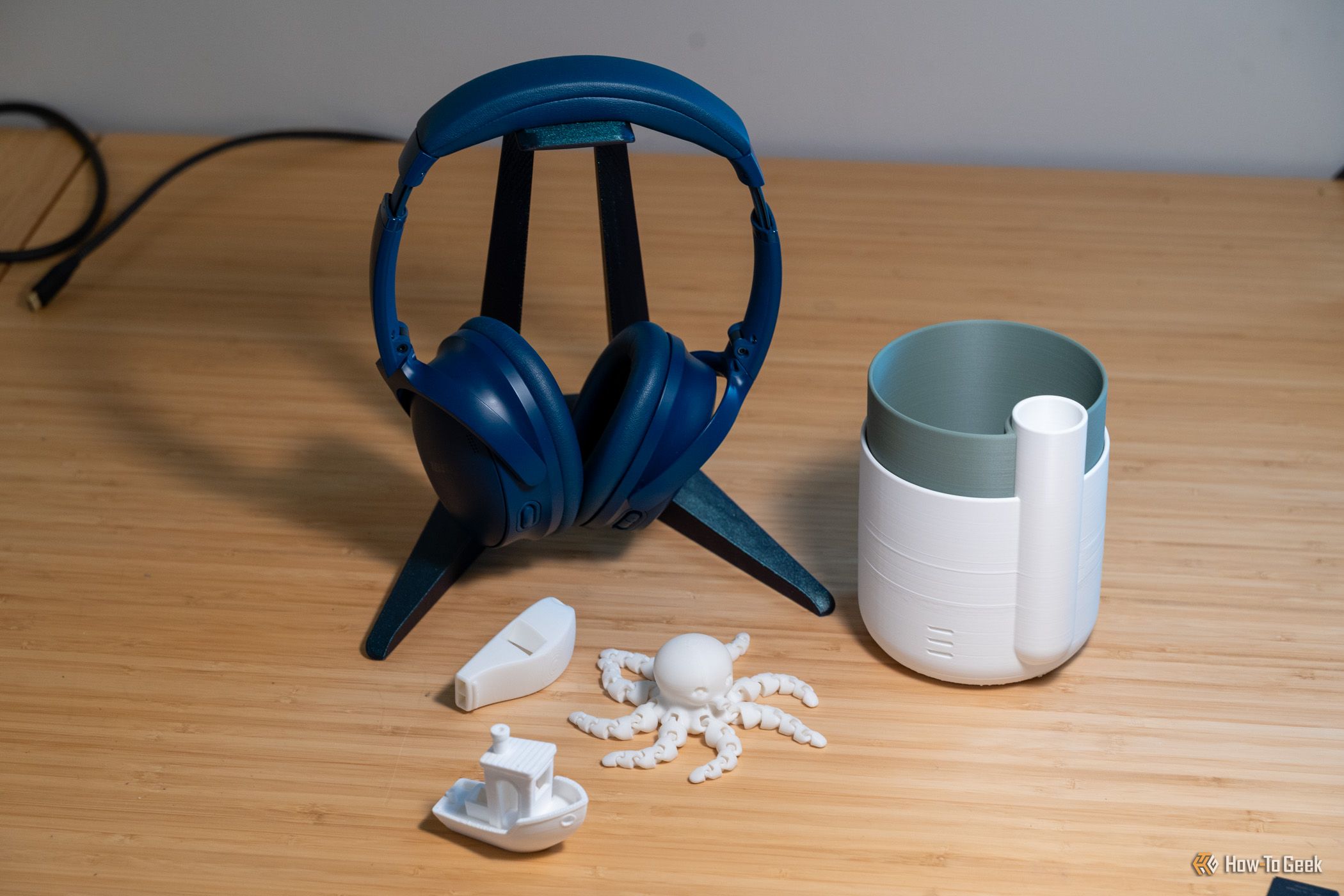
So many 3D models exist online, but some rise to the top for a reason. Thingiverse, a well-known repository for 3D print files, hosts hundreds of thousands of models, with a select few achieving immense popularity. This guide will walk you through successfully printing some of these highly-ranked models, sharing insights and practical tips from a recent printing experience. You'll learn what makes these models stand out and how to get excellent results on your own printer.
Prerequisites
Before you begin printing these top Thingiverse models, ensure you have the following:
- A 3D Printer: Any FDM (Fused Deposition Modeling) 3D printer should work, though modern printers like the Bambu Lab P2S or X2D can offer faster and more reliable results. The author used these models.
- Filament: Standard PLA filament is suitable for most of these prints. Matte PLA was specifically used for some models.
- Slicer Software: You'll need software like PrusaSlicer, Cura, or Bambu Studio to prepare your models for printing.
- Internet Access: To download the model files from Thingiverse.
- Basic 3D Printing Knowledge: Understanding layer height, infill, walls, and supports will be beneficial.
Printing and Ranking Thingiverse's Most Popular Models
Here's a step-by-step breakdown of how to print some of Thingiverse's most popular models, along with insights into why they earned their spot. We'll follow the author's ranking from fifth to first.
5. Print a Surprisingly Functional Whistle
Despite its simple appearance, a whistle consistently ranks high on Thingiverse's popularity charts. It's a quick and rewarding print.
- Locate the Model: Search Thingiverse for "Whistle V29" (Thing:1179160). The link provided in the source directly points to the files section.
- Download and Slice: Download the STL file. The author noted it printed perfectly with standard settings. You likely won't need to adjust much beyond your printer's default PLA profile, perhaps a 0.2mm layer height.
- Print: Initiate the print. It's a small model, so it should finish relatively quickly.
Why it's popular: This whistle functions surprisingly well and is quite loud, making it a fun and practical item to print. The fact that it printed perfectly on the first try, despite being an older design, highlights its robust design and reliability.
4. Create a Water-Tight Self-Watering Planter
This functional print is ideal for small plants and demonstrates how well a well-designed model can hold up over time, even with older origins.
- Find the Planter: Search Thingiverse for "Self-watering planter" (Thing:903411). The provided link leads to the files section.
- Prepare for Printing: This model was last updated in 2018, so it only provides an STL file without baked-in settings. You'll need to configure your slicer manually.
- Orientation: The author spent time figuring out the optimal orientation. Consider printing it in its upright position to minimize supports and achieve better surface finish for the reservoir.
- Settings for Water-Tightness: The author successfully used 0.2mm layer height, four walls, and five bottom shell layers on a Bambu Lab P2S/X2D to ensure it was water-tight. These specific settings are crucial for a functional, leak-free planter.
- Print and Test: Print both parts of the planter. Once complete, test the reservoir for leaks by filling it with water before adding soil and a plant.
Why it's popular: It's a highly functional design that works great as intended. Its enduring popularity despite its age is a testament to its effective self-watering mechanism and ease of assembly once printed successfully.
3. Fashion a Stylish Headphone Stand
Keep your desk organized and your headphones safe with this aesthetically pleasing stand. It's a straightforward print with great results.
- Discover the Stand: Look for "Headphone Stand" (Thing:2050885) on Thingiverse. The link points to the files.
- Slice with Ease: The author noted the model came pre-oriented correctly in their slicer. It prints without the need for any supports, simplifying the process. Use your printer's default settings for PLA, such as a 0.2mm layer height.
- Print: Start the print job. It's a relatively quick print, and you should have a finished stand in just a few hours.
Why it's popular: This stand combines practicality with a clean aesthetic. Its popularity stems from its simple design, ease of printing (no supports!), and immediate utility, making it a perfect functional addition to any desk.
2. Print a Fun, Flexy Mini Octopus Fidget Toy
Sometimes, a fun, non-functional print is just what you need. This articulated mini octopus is a fantastic fidget toy and a great demonstration of flexible 3D printing.
- Locate the Octopus: Search Thingiverse for "Flexy Mini Octopus" (Thing:3495390). The source provides a direct link to the files.
- Default Settings: The author printed this model with zero tuning required. Simply send the print job to your printer using your default 0.2mm layer height settings for PLA filament (e.g., Elegoo Matte PLA).
- Enjoy the Flex: Once printed, the articulated tentacles should be immediately flexible without needing to break apart any joints. It's ready to play with right off the build plate.
Why it's popular: It's a charming and interactive toy that prints surprisingly well without any special settings or post-processing. Its instant playability and appealing design make it a satisfying print for both beginners and experienced users.
1. Master the Iconic Benchy Calibration Boat
No list of top 3D prints is complete without Benchy. It's more than just a boat; it's the unofficial mascot and a universal benchmark for 3D printer performance.
- Find the Benchy: Search Thingiverse for "3D Benchy" (Thing:763622). The link in the source goes directly to the model.
- Print with Stock Settings: Modern printers are expected to print a Benchy perfectly right out of the box. Use your printer's standard PLA settings, typically a 0.2mm layer height. The author noted a Benchy prints in about 46 minutes with stock settings, and as fast as 24 minutes with tuned settings on a Bambu Lab X2D.
- Inspect Your Print: Examine your Benchy for common printing issues like stringing, layer lines, overhang performance, and bridging. A well-printed Benchy indicates a well-calibrated printer, while flaws highlight areas for improvement.
Why it's popular: Benchy is iconic because it's designed to test nearly every aspect of a 3D printer's capabilities. What once was a two-hour "torture test" is now a standard, quick print, proving its enduring utility as a diagnostic tool and a symbol of 3D printing itself.
Troubleshooting Common Printing Issues
While these models are known for being relatively easy to print, issues can still arise:
- Layer Adhesion Issues: Ensure your print bed is clean and properly leveled. Adjust bed temperature or use an adhesive if necessary.
- Stringing or Blobs: These often indicate incorrect retraction settings or temperatures that are too high. Run calibration tests on your printer if you encounter these consistently.
- Failed Articulation (Octopus): If the octopus's joints fuse, your print might be over-extruding, or your printer's tolerances aren't fine enough. Try slightly reducing flow or checking your layer height consistency.
- Planter Leaks: If your self-watering planter isn't water-tight, increase the number of walls and bottom layers further, or try increasing infill percentage to ensure a solid seal. Printing slower can also help.
- Poor Benchy Quality: A Benchy that shows many flaws suggests your printer needs calibration. Check belt tension, eccentric nuts, flow rate, and temperatures.
Tips for Success
- Start Simple: Popular models like these are often well-tested by the community, making them excellent starting points for beginners or for testing a new printer.
- Experiment with Settings: Don't be afraid to adjust slicer settings for older models, especially if you have a newer, more capable printer. Modern printer capabilities often exceed what older model designers anticipated.
- Embrace Both Utility and Fun: While functional prints are great, remember that purely fun models can be just as rewarding and can help you hone your printing skills.
Conclusion
The most popular models on Thingiverse earn their reputation for a good reason: they are often well-designed, print reliably, and offer either significant utility or simple enjoyment. By following these steps, you can successfully 3D print these community favorites and perhaps even find new ways to incorporate 3D printing into your daily life. Try printing them yourself and discover which ones you'd rank as your personal top models!
FAQ
Q: Do I need a specific 3D printer model to print these successfully?
A: While the author used Bambu Lab P2S and X2D printers for their speed and accuracy, these models are popular because they generally print well on a wide range of FDM 3D printers, including older or more budget-friendly options like the Creality Ender 3. Adjusting your slicer settings to match your printer's capabilities is key.
Q: Are these models difficult to print for beginners?
A: No, these models are generally considered quite beginner-friendly. Many of them require minimal or no supports and print well with default settings. The self-watering planter is the most challenging due to its age and the need for specific settings to ensure water-tightness, but it's still manageable for those with basic slicer experience.
Q: How do I ensure my self-watering planter is truly water-tight?
A: The most critical settings for a water-tight planter are a sufficient number of walls and bottom layers. The author successfully used four walls and five bottom shell layers. Additionally, ensure your filament is dry, your print speed isn't too fast, and layer adhesion is strong. You can also try a small amount of silicone sealant on the inside after printing if you still experience minor leaks.
Related articles

Ditch Merge & Center: The Better Way to Align Text in Excel
Learn to use Excel's "Center Across Selection" to align text across cells without merging, avoiding common data manipulation issues. This guide provides steps to utilize this newly accessible feature and add it to your Quick Access Toolbar.

Ars Technica's Rocket Report: Your Essential Space Industry Briefing
Quick Verdict Ars Technica's Rocket Report, presented by veteran space reporter Stephen Clark, offers an invaluable and meticulously organized weekly (or similar frequency, implied by "Edition 9.15") digest of the most

Stop Android Auto Battery Drain: Essential Features to Disable and
Android Auto offers unparalleled convenience, bringing your phone's most useful features directly to your car's display. From navigation and calls to messages and music, it keeps you connected without distracting you

Turn Your Android Phone into a Powerful Desktop Replacement
Learn how to transform your Android phone into a full-fledged desktop computer using external displays and accessories, providing a cost-effective and integrated alternative to new Googlebooks.

howto: Four Ways the Fitbit Edge Is Better Than the Charge 6, and Two
Learn the key differences between the Fitbit Edge and Charge 6, including four advantages of the Edge and two areas where it falls short, to help you choose the best fitness tracker for your needs.
How to Connect Your Googlebook to a Printer - Print Documents with
Learn to quickly connect your Googlebook to a printer via Wi-Fi, USB, or Bluetooth and print documents in minutes. This guide covers direct printing, app-specific connections, troubleshooting, and even printing screenshots as a workaround.