
FreeBSD 14.4-RELEASE: Next-Gen Security, VM Sharing, Cloud-Ready
The FreeBSD Project has rolled out FreeBSD 14.4-RELEASE, marking the fifth iteration in the stable/14 branch. This release, dated March 10, 2026, brings a suite of updates focusing on security, virtualization
The FreeBSD Project has rolled out FreeBSD 14.4-RELEASE, marking the fifth iteration in the stable/14 branch. This release, dated March 10, 2026, brings a suite of updates focusing on security, virtualization enhancements, and improved cloud deployment capabilities. For developers and system administrators, 14.4-RELEASE introduces significant features that address modern infrastructure demands, from advanced cryptographic resilience to seamless virtual machine interactions.
Embracing Post-Quantum Security with OpenSSH
In an era where the threat of quantum computing looms over conventional encryption methods, FreeBSD 14.4-RELEASE takes a proactive step by upgrading OpenSSH to version 10.0p2. A standout feature of this update is the default adoption of the mlkem768x25519-sha256 hybrid post-quantum algorithm. This represents a significant shift towards future-proofing secure communications.
For developers managing critical infrastructure or handling sensitive data, this means an immediate uplift in cryptographic security. While hybrid algorithms combine classical and post-quantum techniques to mitigate potential weaknesses of either, it's important to understand the implications. Such advanced cryptographic primitives may introduce a slight overhead, but the trade-off for enhanced long-term security is often worthwhile, especially for applications requiring robust protection against future threats. This move positions FreeBSD as a forward-thinking operating system for secure deployments.
Enhanced Virtualization: bhyve with p9fs(4) File Sharing
Virtualization is a cornerstone of modern development and deployment workflows. FreeBSD's native hypervisor, bhyve, receives a compelling upgrade in this release: the introduction of p9fs(4). This new driver enables bhyve virtual machines to seamlessly share file systems directly with their host.
Previously, sharing files between a bhyve guest and host might involve network shares or other, more complex mechanisms. With p9fs(4), developers can set up a shared directory that is directly accessible by the guest, streamlining development environments, facilitating quicker iterations on code, and simplifying data exchange for testing or build processes. This direct integration enhances bhyve's utility, making it a more attractive option for local development and testing environments where frequent file synchronization is crucial.
Cloud Compatibility and OpenZFS Improvements
Cloud deployments continue to be a dominant paradigm, and FreeBSD 14.4-RELEASE further solidifies its position as a robust cloud platform. The nuageinit utility, responsible for initial cloud instance configuration, now boasts significantly improved cloud-init compatibility. This enhancement translates into a smoother, more reliable experience for automated provisioning and configuration of FreeBSD instances across various cloud providers. For anyone orchestrating cloud infrastructure, this means fewer manual interventions and more predictable deployments.
Furthermore, the core OpenZFS file system has been updated to version 2.2.9. While specific new features aren't detailed in the announcement, version bumps in OpenZFS typically imply a range of stability improvements, performance optimizations, and bug fixes that benefit all users relying on its advanced data integrity and management capabilities.
Rounding out general system improvements, the documentation experience also gets a boost with significant enhancements in manual page tooling and content. Better documentation always contributes to a more efficient developer experience.
Flexible Deployment Options
FreeBSD 14.4-RELEASE maintains its commitment to broad platform support, with availability for amd64, i386, aarch64, armv7, powerpc, powerpc64, and riscv64 architectures. Installation media is diverse, catering to various scenarios:
-
ISO Images:
dvd1(full installation with packages, livefs),disc1(base system, livefs), andbootonly(network install). -
USB Memory Sticks:
memstickfor full installs andmini-memstickfor network-based boots. Foramd64, you can write an ISO to a USB stick, for example: bashdd if=FreeBSD-14.4-RELEASE-amd64-dvd1.iso \\
of=/dev/da0 bs=1m conv=syncCare should be taken to ensure the correct target device (
of=). -
ARM SD Card Images: For supported ARM systems, these images include a full FreeBSD installation. Notably, they come with default
freebsd:freebsdandroot:rootcredentials for SSH access, which are strongly recommended to be changed immediately after gaining system access.
For virtualized environments, pre-installed images in QCOW2, VHD, VMDK, and raw formats are available for amd64, i386, AArch64, and RISCV architectures.
Cloud integration is robust, with dedicated images for:
-
FreeBSD Amazon EC2: AMI IDs are retrievable via the Systems Manager Parameter Store or directly from the AWS Marketplace for both UFS and ZFS variants across
amd64andaarch64. -
Google Compute Engine: Instances can be provisioned using the
gcloudutility. For instance: bash % gcloud compute instances create INSTANCE \\ --image freebsd-14-4-release-amd64-ufs \\ --image-project=freebsd-org-cloud-devImages are also listed in the Google Compute Engine Marketplace.
-
Microsoft Azure: Virtual machine images are anticipated to be available soon on the Azure Marketplace.
For containerized workloads, OCI container images are available for download and through Docker and GitHub container repositories.
Support and Longevity
FreeBSD 14.4-RELEASE will receive support until December 31, 2026. The broader FreeBSD 14 release series is scheduled for support until November 30, 2028, providing a stable foundation for long-term deployments. Comprehensive release notes, hardware compatibility guides, and errata lists are available on the FreeBSD website.
This release, dedicated to the memory of former Release Engineering lead Ken Smith, represents a thoughtful evolution of the FreeBSD operating system, blending cutting-edge security with practical enhancements for virtualization and cloud operations.
FAQ
Q: What is the primary security enhancement introduced in FreeBSD 14.4-RELEASE?
A: The primary security enhancement is the upgrade of OpenSSH to version 10.0p2, which now uses the mlkem768x25519-sha256 hybrid post-quantum algorithm by default. This change aims to provide stronger cryptographic resilience against potential future quantum computing threats.
Q: How does p9fs(4) benefit bhyve users in this release?
A: The new p9fs(4) driver allows bhyve virtual machines to share file systems directly with the host system. This simplifies development and testing workflows by providing a straightforward method for guests and hosts to exchange files, eliminating the need for more complex network-based sharing solutions.
Q: What are the main options for deploying FreeBSD 14.4 in cloud environments?
A: FreeBSD 14.4-RELEASE offers various cloud deployment options, including pre-built AMI IDs for Amazon EC2 (for both amd64 and aarch64 with UFS/ZFS), images deployable via gcloud on Google Compute Engine, and upcoming virtual machine images on Microsoft Azure. Additionally, improved cloud-init compatibility in nuageinit facilitates smoother automation on these platforms.
Related articles

AI's Impact on Malware Detection: Next-Gen Protection Deep Dive
The landscape of cybersecurity has transformed dramatically. Gone are the days when a simple virus attached itself to a file, easily quarantined by an antivirus scanner. Today, malware is sophisticated, multifaceted,

AI Cybersecurity: The Perpetual Cat and Mouse Game
In the rapidly evolving digital landscape, the interplay between artificial intelligence and cybersecurity has created a dynamic, ceaseless challenge—a true cat and mouse game. AI is not merely a tool for defense; it's
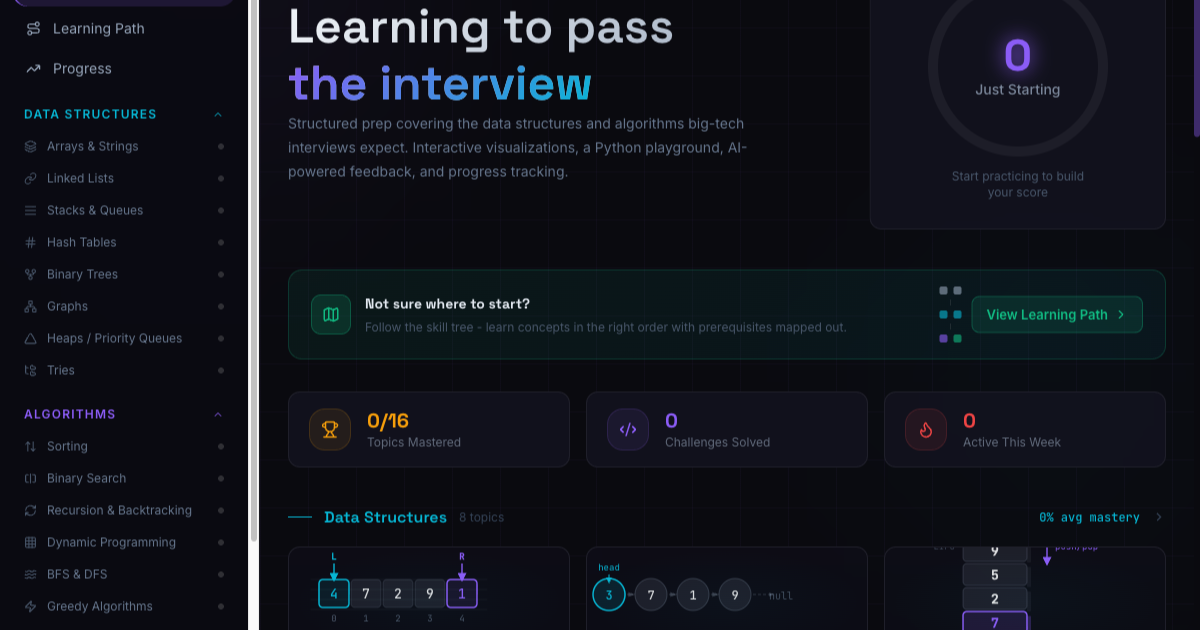
Learningto/Pass: Free, AI-Powered Interview Prep for Developers
Landing a role at a top-tier tech company often hinges on mastering complex data structures and algorithms, coupled with a solid grasp of system design. The problem for many aspiring software developers is that quality

The Composite Design Pattern: Unifying Individual Objects and Groups
As software engineers, we frequently encounter scenarios where we need to manage collections of objects that can be either individual entities or groups containing other entities. Think of a file system with files and

Google Chrome: Bi-Weekly Security Updates - A Major Win for Safety
Google Chrome's Bi-Weekly Security Updates: A Major Win for Safety Quick Verdict: Google Chrome's strategic pivot to bi-weekly security updates, significantly aided by AI, marks a crucial advancement in online safety.
Java's Secret Weapon: How Age Powers Its AI Future
Java's extensive history is a key AI superpower, offering a stable foundation for agent-generated code and an unparalleled dataset for training AI models. Its mature ecosystem of libraries and agentic harnesses further enable developers to build robust, integrated AI applications. This positions Java as a powerful, reliable choice for future AI-driven software development.