
EV Adoption in America: A Mixed Signal Market
EV Adoption in America: A Mixed Signal Market America's electric vehicle (EV) market is currently a complex tapestry of contrasting trends and performances. In Q1 2026, the landscape saw significant shifts, with some
EV Adoption in America: A Mixed Signal Market
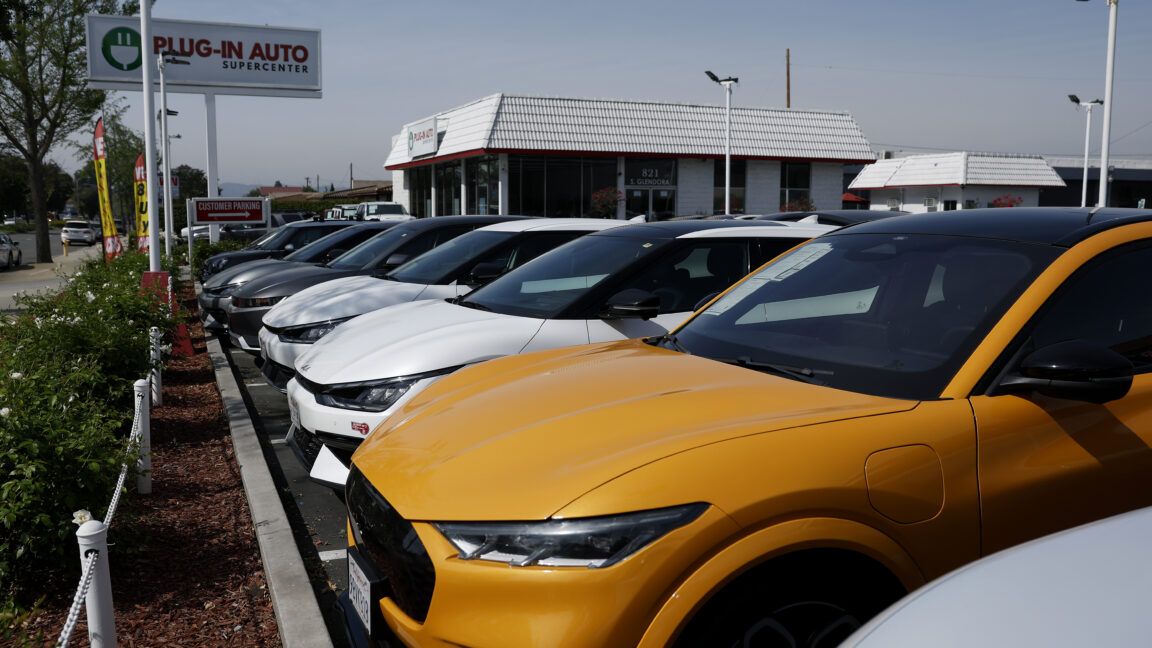
America's electric vehicle (EV) market is currently a complex tapestry of contrasting trends and performances. In Q1 2026, the landscape saw significant shifts, with some automakers celebrating robust growth while others faced substantial declines. Influenced by geopolitical events driving up fuel prices, shifts in government incentives, and evolving consumer preferences, the story of EV adoption is far from uniform. While new EV sales are experiencing headwinds, the used EV market is blossoming, offering compelling value propositions.
The Shifting Sands of EV Adoption
The first quarter of 2026 has been marked by a turbulent environment for EV adoption in the US. Fuel prices, propelled by the ongoing war in the Persian Gulf, have surged by approximately a dollar per gallon, representing a 25 percent increase. Historically, such price hikes often spark consumer interest in more fuel-efficient vehicles. Robby DeGraff of AutoPacific notes that when gas prices cross the $4/gallon threshold, 30 percent of vehicle owners consider changing their vehicle type, with 22 percent looking at different segments. He suggests that a sustained increase of $1.86 to $2 per gallon would be needed for a powertrain switch, while a $1.25 per gallon rise could prompt a segment change.
However, this potential shift is occurring against a backdrop of unfavorable policy changes. The federal tax credit for both new and used EVs was abolished at the end of September by the previous administration. This, coupled with battery factory cancellations or repurposing, and significant cuts to EV lineups by automakers, has created a challenging environment. Major OEMs have reported billions in write-downs, signaling a difficult period for the industry.
Analysts have offered varied outlooks. Cox Automotive predicted a 6.5 percent overall decrease in new car sales for Q1 2026, with EV sales specifically forecast to drop by a steep 28 percent. Stephanie Valdez Streaty, Cox's director of industry insights, emphasized that for consumers to truly alter their buying behavior towards more efficient vehicles, they would need confidence that high gas prices are here to stay for years, not just months.
First Quarter Triumphs and Tribulations: Who's Leading, Who's Lagging?
Q1 2026 sales data reveals a clear divergence in performance among automakers:
The Winners:
- Rivian: A standout performer, Rivian saw a 20 percent increase year-on-year, delivering 10,365 R1S SUVs and R1T pickup trucks. With a successful software development milestone in its joint venture with Volkswagen Group and the upcoming debut of the more affordable R2 SUV, Rivian's outlook for 2026 appears strong.
- Toyota & Lexus: Despite its historical reluctance towards a full EV transition, Toyota proved its adaptability. Its bZ crossover saw an impressive 78 percent increase in sales, reaching 10,029 units. Lexus's RZ model recorded an even more substantial 207 percent growth year-on-year, selling 4,456 units. This growth is particularly notable given that Toyota's overall sales declined in March, but its EV and hybrid sales increased.
- Hyundai: While its Ioniq 6 sedan struggled with a 75 percent sales drop, the locally built Ioniq 5 saw a healthy 14 percent increase, selling 9,790 units. The new electric three-row Ioniq 9, also built locally, added 1,990 units to the tally. This highlights a consumer preference for SUV-style EVs.
- Cadillac (GM): Within GM's portfolio, the diminutive Cadillac Optiq experienced a 66 percent increase with 2,847 units sold, and the Vistiq, positioned between the Lyriq and Escalade, found 1,902 buyers (up from just one in Q1 2025). This indicates specific luxury EV models are finding traction.
The Losers:
- Ford: Taking a significant hit, Ford's Q1 EV sales plummeted by 69.6 percent to just 6,860 vehicles. The E-Transit and F-150 Lightning, both now canceled, accounted for a portion of these sales. The Mustang Mach-E is currently its sole US EV until a new midsize electric pickup arrives next year.
- BMW: The luxury automaker reported a 50 percent decline in combined plug-in hybrid and battery EV sales, totaling 9,856 units.
- Tesla: While global deliveries increased, Tesla underperformed expectations and ended Q1 with higher inventory. In the US, Cox estimates Tesla's sales declined by approximately 5 percent compared to Q1 2025.
- General Motors: Despite being the second-largest EV seller in the US after Tesla with 24,698 units, GM faced challenges. Its factory for full-size EV pickups and SUVs was idled, and the midsize Blazer EV saw an 83 percent decline in sales, moving only 1,077 units.
- Hyundai (Sedans): The Ioniq 6's substantial drop underscores a broader trend: EV buyers in the US are less keen on electric sedans than SUVs.
The Unexpected Bargain: The Used EV Market
Amidst the struggles of new EV sales, the used EV market presents a contrasting picture. Q1 2026 saw an estimated 93,500 used EVs sold, marking a 12 percent increase over the previous year. These used EVs are often a year newer and have 30,000 fewer miles than their gasoline counterparts. This trend is driven by consumer apprehension regarding battery longevity and charging times in new EVs, making older models a significant bargain. Furthermore, the supply of used EVs is expected to surge over the next two years as more vehicles, initially leased under previous clean energy incentives, complete their lease terms and enter the secondary market. This presents a golden opportunity for budget-conscious buyers.
The Good, The Bad, and The Complicated: Pros and Cons
Pros:
- Emergent Growth Segments: Specific automakers like Rivian, Toyota, and certain Hyundai and Cadillac models are demonstrating strong sales growth, particularly in the SUV/crossover category, indicating market demand for the right products.
- Robust Used EV Market: The availability of high-quality, relatively new used EVs at attractive prices provides excellent value for consumers and offers an entry point for those hesitant to commit to a new EV.
- Future Supply: The upcoming influx of off-lease EVs promises an even greater selection and potentially lower prices in the used market.
- Gas Price Impact: Sustained high gas prices could eventually push more consumers towards EVs, overcoming current reservations.
Cons:
- Policy Headwinds: The abolition of federal tax credits has significantly impacted new EV purchasing incentives, making them less attractive.
- Industry Setbacks: Cancellations of battery factories, slashing of EV lineups, and multi-billion dollar write-downs by major manufacturers signal significant challenges in scaling production and profitability.
- New EV Sales Slump: Overall new EV sales declines, as forecasted by Cox Automotive, indicate a slowing in the pace of adoption in the new vehicle market.
- Consumer Hesitation: Persistent fears regarding battery degradation, range anxiety, and charging infrastructure continue to deter mainstream buyers, even with lower prices in the used market.
- Market Imbalance: While some models perform well, others (especially sedans and certain mid-size SUVs) are experiencing sharp declines, leading to high inventory levels for some brands like Tesla.
Recommendation: Navigating the EV Landscape
The American EV market is in a crucial phase of recalibration. For potential buyers, the advice depends heavily on budget and priorities.
For New EV Buyers: Be strategic. The market is showing a strong preference for SUV and crossover body styles. Research models from brands that are demonstrating growth and commitment, such as Rivian, Toyota, and specific Hyundai and Cadillac offerings. Be aware that the lack of federal tax credits means the upfront cost is higher, though rising gas prices might offset some of this.
For Budget-Conscious Buyers: The used EV market is an absolute goldmine. With increasing supply from expiring leases, you can find newer models with fewer miles at significantly lower prices than their gasoline counterparts. Options are plentiful across various price points (from $5,000 to $20,000). While concerns about battery longevity and charging speeds are valid, many modern used EVs offer compelling performance and range for daily driving. This is currently the clearest winning segment for consumers.
Overall, the market is sorting itself out. While the initial hyper-growth phase for new EVs might be leveling off, the underlying technology continues to improve, and the used market offers an increasingly accessible entry point to electric mobility.
FAQ
Q: Are new EVs still a good purchase in the current market? A: While some specific new EV models and brands are seeing strong sales, the overall new EV market is experiencing declines due to factors like the abolition of federal tax credits and consumer hesitation. If considering a new EV, focus on models in the SUV/crossover segment from brands that have shown growth, and be prepared for the full upfront cost without federal incentives.
Q: What's the biggest factor currently impacting EV adoption in America? A: Several major factors are at play. Geopolitical events driving up gas prices could theoretically boost interest, but the removal of federal tax credits has significantly disincentivized new EV purchases. Additionally, consumer concerns about battery life and charging infrastructure, coupled with automakers restructuring their EV strategies, are creating a complex and fluctuating market.
Q: Is it a good time to buy a used EV? A: Absolutely. The used EV market is thriving, with an estimated 12 percent increase in sales in Q1 2026. Used EVs are often newer and have fewer miles than comparable gasoline vehicles, offering excellent value. With a projected increase in supply from expiring leases, the used EV market is expected to remain a strong buyer's market, providing numerous affordable options.
Related articles
Android 17 QPR2 Beta 7.1: The Performance Relief You've Been Waiting
Android 17 QPR2 Beta 7.1: Finally Fixing the QPR1 Performance Woes Verdict: Android 17 QPR2 Beta 7.1 is a crucial and highly anticipated software update for Google Pixel users, specifically targeting and resolving the

DJI Solo Video Setups: Smart Choices for Lone Creators
This review delves into DJI's recommended solo video setups, highlighting the Osmo Pocket 3 Creator Combo as a top pick for its integrated camera, gimbal, and mic. It also covers stabilizers like the Osmo Mobile 8 and RS 4, and the DJI Mic Mini series for enhanced audio, providing honest pros, cons, and clear buying advice.

Ars Technica's Rocket Report: Your Essential Space Industry Briefing
Quick Verdict Ars Technica's Rocket Report, presented by veteran space reporter Stephen Clark, offers an invaluable and meticulously organized weekly (or similar frequency, implied by "Edition 9.15") digest of the most

Apple iPhone Duo: A Daring Debut with Notable Compromises
Apple's highly anticipated iPhone Duo, priced at $2,000, has gone on pre-order. While hailed as "Apple's most exciting device in a decade" for its innovative foldable design and immersive display, it comes with significant drawbacks like the absence of FaceID and a premium camera.
KDE Plasma 6.8: A Future-Focused 30th Anniversary Update
Quick Verdict KDE Plasma 6.8, arriving as the "30th Anniversary Edition," is a pivotal release that decisively pushes the desktop environment into the future. With a definitive farewell to native X11 sessions and a
Galaxy Watch One UI 9 Beta: Promising Progress, But Patience Needed
Galaxy Watch 8, Watch Ultra, and Watch 7 are receiving a new One UI 9 Watch beta build with bug fixes and a security patch. Active development signals progress, but a stable release date remains elusive.